The immigration lawsuit tied to the Williams family farm labor business is one of the most closely watched H-2A visa cases heading into 2026. Workers accuse the company network, run by Lawrence Williams, of trapping migrant farmworkers in a cycle of debt and fear.
This isn’t a one-time complaint. It’s the third lawsuit filed against this same business owner in recent years.
Here’s the surprising part: one of the earlier cases against this same operation already settled, and yet the allegations kept resurfacing in new states with new workers. That pattern is exactly why this case matters right now.
In this guide, you’ll learn who’s being sued, what workers allege, who might qualify for compensation, and what the realistic timeline looks like for 2026.
Related: Williams and Sons Lawsuit 2026: Settlement and Filing Guide
Who Is Being Sued in the Williams and Sons Immigration Lawsuit
The lawsuit names Lawrence Williams and his labor contracting company as the central defendants. Williams is accused of running a farm labor business that recruited migrant workers through the H-2A visa program.
Court filings identify Lawrence Williams as the founder and chief executive officer of the labor contracting operation at the heart of the case. Defendant Lawrence Williams is the founder and chief executive officer of Manzana. He’s not the only name on the complaint, either.
The farm that contracted with his business for seasonal labor is also named as a defendant. Casertano contracted with Defendants Manzana and Williams to recruit H-2A workers, including through a long-standing business relationship to fulfill their need for agricultural workers.
Here’s a quick breakdown of who’s involved:
| Defendant | Role |
|---|---|
| Lawrence Williams | Owner and CEO of the labor contracting company |
| Labor Contractor Entity | Recruits and places H-2A workers on farms nationwide |
| Partner Farm/Greenhouse Business | Contracted with Williams’s company for seasonal labor |
| Farm Owner (Individual) | Named as co-defendant in the active complaint |
Quick Facts: The defendant network has now been sued at least three separate times in different federal courts over similar allegations.
What Is the Williams and Sons H-2A Lawsuit About
This lawsuit is about alleged forced labor and visa abuse tied to the H-2A agricultural worker program. Migrant workers claim they were trapped in debt, threatened with deportation, and denied wages they were legally owed.
The complaint describes a pattern stretching back years. As alleged in the complaint, defendants have abused the H-2A temporary visa program since at least 2019 to force economically vulnerable Mexican migrant workers into a cycle of dependence and forced labor.
The specific tactics described in court papers are blunt. The lawsuit alleges that contrary to H-2A program rules and federal and state law, the defendants have repeatedly demanded unauthorized fees, unlawfully forced workers to take a month of unpaid leave in the middle of each growing season, delayed pay, threatened deportation, forbidden workers from leaving their overcrowded housing units, and prevented workers from speaking honestly with federal investigators.
One plaintiff described the dynamic in plain terms. “The economy in Mexico is very difficult,” explained plaintiff Carlos Giovanni Perez Castro. “And companies like Manzana really abuse and take advantage of that need.”
Think of it like a company town, except the “town” is a single farm, and the only way out is through the same employer who controls your paycheck and your housing.
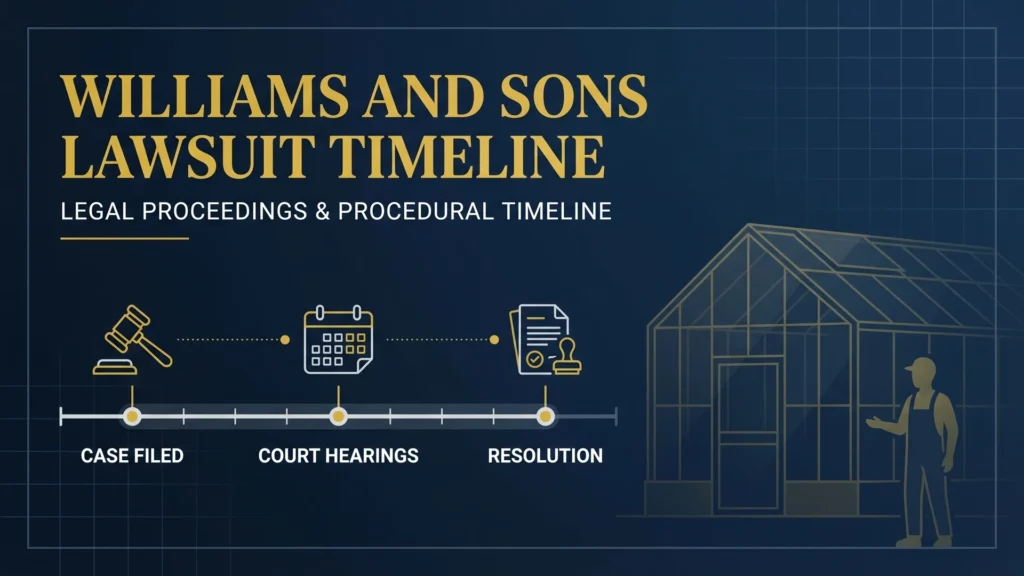
Williams and Sons Lawsuit Timeline 2026
The case has moved through several key stages since late 2024, with more expected in 2026. Here’s the breakdown so far:
| Date | Event |
|---|---|
| 2019 | Alleged abuse pattern begins, according to the complaint |
| Dec. 12, 2024 | Lawsuit filed in U.S. District Court for the District of Connecticut |
| Dec. 18, 2024 | Defendants formally served notice of the class action |
| March 11, 2025 | Plaintiffs file an Amended Complaint |
| March 25, 2025 | Defendants file a renewed motion to dismiss |
| Nov. 24, 2025 | Court issues order on evidence inspection request |
| 2026 | Case proceeds through discovery and motion practice |
On December 12, 2024, migrant workers from Mexico working in the United States filed this lawsuit in the United States District Court for the District of Connecticut. The case is still active as of this writing, with discovery ongoing.
Key Takeaway: The Williams and Sons lawsuit stems from years of alleged H-2A visa abuse, is now in active federal litigation in Connecticut, and involves a defendant network already sued twice before.
Who Qualifies for the Williams and Sons Immigration Lawsuit
Workers qualify if they were employed through the H-2A visa program by this labor contractor or its partner farms. Eligibility generally centers on specific job sites, specific years, and specific types of mistreatment.
The current lawsuit was brought by a small group acting on behalf of a larger class. Mexican H-2A workers alleged they were trapped in a cycle of debt and forced labor by agricultural employers who systematically violated federal regulations designed to protect temporary migrant workers, suing individually and on behalf of all workers similarly situated.
| Who Likely Qualifies | Why |
|---|---|
| H-2A workers at the named farm sites since 2019 | Directly covered by the allegations |
| Workers who paid recruitment fees | Potential violation of federal law |
| Workers forced into unpaid “vacation” periods | Core allegation in the complaint |
| Workers threatened with deportation for complaining | Core allegation in the complaint |
If you worked seasonal agricultural labor for this employer network under an H-2A visa and experienced any of these issues, you may have a claim worth documenting now, even before a class is formally certified.
What Are the Allegations Against Williams and Sons
The allegations describe a coordinated scheme to control vulnerable workers through debt, isolation, and fear. This isn’t framed as a single bad manager. It’s described as company-wide policy.
Legal advocates representing the workers were direct about the pattern. Workers in the H-2A program depend on the program for housing, their immigration status and for employment to provide for their families, giving the employers “enormous power over workers.”
That power imbalance is baked into the visa structure itself. H-2A workers are uniquely vulnerable to exploitation because the program ties workers’ immigration status to a single job, and employers also control workers’ housing, transporting economically vulnerable workers to worksites far from home where they are often geographically, socially, and linguistically isolated.
Key allegations include:
- Demanding unauthorized recruitment fees from workers
- Forcing unpaid leave mid-season to cut labor costs
- Delaying or withholding promised wages
- Threatening deportation to silence complaints
- Restricting movement from employer-controlled housing
- Interfering with communication with federal investigators
How Much Can Workers Claim in the Williams and Sons Lawsuit
Workers are seeking multiple categories of damages, not just unpaid wages. The complaint covers compensatory, liquidated, emotional distress, and punitive damages, plus attorney’s fees.
Represented by private counsel and the Jerome N. Frank Legal Services Organization at Yale Law School, the Plaintiffs alleged that the Defendants exploited the H-2A program for their own financial gain and sought compensatory damages, liquidated damages, emotional distress damages, punitive damages, and attorneys’ fees.
| Damage Type | What It Covers |
|---|---|
| Compensatory | Unpaid wages, illegal fees charged |
| Liquidated | Automatic doubling under federal wage law |
| Emotional Distress | Psychological harm from threats and isolation |
| Punitive | Penalty damages meant to punish repeat misconduct |
| Attorney’s Fees | Legal costs covered if plaintiffs prevail |
No settlement amount has been announced yet, since this case has not reached a resolution stage.
Is There a Class Action Against Williams and Sons
Yes, the lawsuit was filed as a class action on behalf of similarly situated H-2A workers, not just the named plaintiffs. On Dec. 18, five migrant workers served notice of a class action lawsuit on the Connecticut-based farm and wholesale nursery, and national labor contractor.
Five named plaintiffs isn’t the full scope of who could be affected. H-2A contracts typically bring in dozens of workers per season, per farm, across multiple growing seasons since 2019.
That means the real number of potentially affected workers could run into the hundreds once you count every season, every farm site, and every worker who cycled through the program under this employer network.
Class certification itself hasn’t been finalized as of late 2025 filings. The case is still working through motion practice before that step occurs.
Williams and Sons Lawsuit Settlement Update
There is no finalized settlement in the current Connecticut case as of late 2026. The case remains in active litigation, with a motion to dismiss and discovery disputes still working through the court.
A related earlier case did reach resolution, which gives a useful preview. Another case in the Western District of Michigan in which the federal law claim was dismissed and remanded also ended in a settlement, according to conversations with advocates involved in the case.
A separate Puerto Rico case against the same owner also resulted in resolution. According to court filings, one case filed in the District of Puerto Rico involving the same defendant network settled.
Quick Facts: Two prior cases against this same labor contractor and owner have already settled, suggesting a real possibility of settlement in the current case as well, though timing and amounts remain unknown.
Key Takeaway: No payout has been confirmed yet, but the defendant’s history of settling similar claims makes a future settlement a realistic outcome for the current case.
How to File a Claim in the Williams and Sons Case
Right now, the best step is documenting your work history and any mistreatment, since the case hasn’t reached a settlement or claims-filing phase. Keep pay stubs, contracts, travel records, and any communication about fees or housing conditions.
Workers who believe they’re covered by the allegations should also consider contacting legal advocates directly involved in the case. The Yale clinic representing plaintiffs has publicly stated its goal extends beyond this one farm. “While plaintiffs filed this lawsuit to seek justice on behalf of the workers harmed by the defendants’ scheme here in Connecticut, in reality H-2A workers across the country are vulnerable to similar abuses,” said a Yale Law student in a statement.
Steps to take now:
- Gather pay records, contracts, and housing documentation
- Write down dates of forced leave or delayed pay
- Note any threats related to immigration status
- Keep copies of any fees you paid to be recruited
- Save contact information for co-workers who can corroborate your account
Once class certification happens, a formal claims process will likely open, similar to other mass worker lawsuits.
What Is the H-2A Visa Program and Why It Matters
The H-2A visa program lets U.S. farms legally hire foreign workers for temporary agricultural jobs when domestic labor is insufficient. The H-2A visa program allows employers to bring foreign workers to the United States for temporary agricultural labor.
The structure of the program is also exactly what makes abuse possible. Workers arrive tied to one employer, one visa, one housing arrangement.
This program, commonly known as the “H-2A Program,” requires employers first to apply to the United States Department of Labor for a certification, and to qualify, the employer must submit a clearance order detailing the terms and conditions of the potential employment. That paperwork is supposed to protect workers. Critics say enforcement is where the system breaks down.
| H-2A Program Feature | Why It Matters |
|---|---|
| Visa tied to single employer | Limits worker’s ability to leave bad situations |
| Employer controls housing | Creates dependency beyond just the paycheck |
| Requires DOL certification | Meant to guarantee fair wages and conditions |
| No path to permanent status | Workers have little long-term leverage |
Previous Lawsuits Against Williams and Manzana
This isn’t the defendant’s first time in federal court over similar claims. The labor contracting business has faced repeated litigation in different states, involving different farms, over a span of years.
Defendants have been sued at least twice in recent years for systemic abuse of the H-2A program, including failure to pay H-2A workers the wages guaranteed by their contracts, fraudulent promises, and national origin discrimination.
One earlier case came out of Puerto Rico. The Plaintiffs, a group of migrant agricultural workers from Puerto Rico, allege violations of the Migrant and Seasonal Agricultural Worker Protection Act, discrimination on the basis of national origin, and breach of contract against the labor contractor, its owner, and a partner farm.
| Case | Location | Outcome |
|---|---|---|
| Lopez v. Manzana LLC | District of Puerto Rico (2017) | Settled |
| Unnamed Michigan Case | Western District of Michigan | Settled |
| Zavala Martinez v. Manzana LLC | District of Connecticut (2024) | Active |
That track record is part of why advocates call this a pattern rather than an isolated incident.
What Happens If You Worked for Williams and Sons on an H-2A Visa
If you worked this employer’s farms under an H-2A visa, you may already be part of the group the lawsuit is trying to protect, even if you never filed a formal complaint. Many workers stayed silent for years out of fear.
One plaintiff described exactly that experience. “I came to the U.S. because my mother was sick, and her roof caved in,” one plaintiff said. “I needed work and I stayed quiet about the abuse for four years. But I want other workers to know that they have rights, that there are laws that protect us.”
That quote captures the whole dynamic in a sentence: workers needed the job too badly to risk speaking up.
If this describes your situation, you’re not required to still be in the United States to participate in a potential settlement later. Many wage theft and trafficking settlements include workers who have since returned to their home countries.
Williams and Sons Lawsuit Court and Case Number
The active lawsuit is filed as Zavala Martinez v. Manzana, LLC, case number 3:24-cv-01900, in the U.S. District Court for the District of Connecticut. The Plaintiffs brought claims against the labor contractor entity, its owner, the partner greenhouse business, and its owner, under civil action number 3:24-cv-01900-VAB.
The case has a federal judge assigned and is proceeding through standard pretrial motion practice. On March 11, 2025, Plaintiffs filed an Amended Complaint, docketed at ECF No. 30.
| Case Detail | Information |
|---|---|
| Case Name | Zavala Martinez v. Manzana, LLC et al. |
| Case Number | 3:24-cv-01900 |
| Court | U.S. District Court, District of Connecticut |
| Filing Date | December 12, 2024 |
| Status | Active, in discovery as of late 2025/2026 |
Key Takeaway: This is a verified, active federal case with a public docket number, not an informal dispute, meaning records and future rulings will be publicly trackable.
What Damages Are Workers Seeking
Workers are seeking more than back pay. The complaint pursues claims under multiple federal and state laws simultaneously, stacking potential recovery categories.
The Plaintiffs allege claims of violations of the Trafficking Victims Protection Act, and the contract and wage claims are asserted against parties who were not Plaintiffs’ direct employers but allegedly benefited from the arrangement. That trafficking claim is significant because it opens the door to much larger damages than a standard wage dispute.
Other claims round out the complaint. The Plaintiffs also brought this action individually under the Fair Labor Standards Act, Connecticut common law for conversion, and Connecticut’s statutory theft statute.
- Unpaid and delayed wages under federal labor law
- Illegal recruitment fee reimbursement
- Damages for forced labor and trafficking violations
- State law claims for theft and conversion of wages
- Emotional distress and punitive damages
How Long Will the Williams and Sons Lawsuit Take
Cases like this typically take two to four years from filing to resolution, and this one is already approaching the two-year mark. Discovery disputes, like evidence inspection requests, tend to slow things down further.
A recent docket entry shows exactly this kind of slowdown in action. A November 2025 order addressed discovery, noting plaintiffs sought an inspection citing the imminent departure of the H-2A workers whose working and living conditions form part of the factual basis of their claims.
That detail matters. Workers leave the country every season, which makes gathering evidence a race against time for the legal team.
Given the defendant’s history of eventually settling similar cases, a 2026 or 2027 resolution seems plausible, though nothing is guaranteed until a judge rules on the pending motion to dismiss.
Where to Get Help If You Were an H-2A Worker
Workers who believe they were mistreated under this employer’s H-2A program should reach out to legal aid organizations specializing in farmworker rights. University-based legal clinics, like the one already involved in this case, often take on these matters at no cost to the worker.
Federal labor investigators are also actively looking at this employer. The lawsuit says the defendant is being investigated by the U.S. Department of Labor for its unlawful practices.
That means two separate paths exist right now: the private lawsuit and a federal regulatory investigation. Workers can potentially benefit from either one, and sometimes both at once.
- Contact a farmworker legal aid clinic in your state or region
- Reach out to the Department of Labor Wage and Hour Division
- Keep your own records even if you’re not sure you qualify yet
- Ask about language access, since many clinics work in Spanish
Frequently Asked Questions
What is the Williams and Sons immigration lawsuit about?
The lawsuit accuses a farm labor contractor and its owner, Lawrence Williams, of abusing the H-2A visa program.
Workers claim they faced forced unpaid leave, illegal fees, and deportation threats.
The case is currently active in federal court in Connecticut.
Who qualifies for the Williams and Sons lawsuit?
H-2A workers employed by this contractor or its partner farms since 2019 likely qualify.
Qualification generally depends on specific job sites and specific types of alleged mistreatment.
A formal class has not yet been certified as of early 2026.
How much money can workers get from the Williams and Sons case?
No settlement amount has been announced as of this writing.
Claims include compensatory, liquidated, emotional distress, and punitive damages.
Prior related cases against the same owner have settled, suggesting a payout is possible.
Is the Williams and Sons lawsuit a class action?
Yes, it was filed as a class action on behalf of similarly situated H-2A workers.
Five named plaintiffs represent a potentially much larger group of affected workers.
Class certification is still pending as of the most recent court filings.
When will the Williams and Sons lawsuit be resolved?
Cases like this typically take two to four years to resolve.
The lawsuit was filed in December 2024 and remains in active discovery.
A motion to dismiss is still pending, which will shape the next phase of the case.
Final Word on the Williams and Sons Lawsuit
This case boils down to one simple idea: workers say they were trapped by the very visa program meant to protect them. The lawsuit against Lawrence Williams and his labor network is active, documented, and backed by a pattern of prior settlements.
If you worked for this employer under an H-2A visa, start documenting your experience now.
Stay close to updates on the Connecticut docket, and reach out to a farmworker legal clinic if any of this sounds familiar.