The education lawsuit Camacho LLC pattern refers to a wave of ADA website accessibility lawsuits filed by Brooklyn resident Jason Camacho against colleges, universities, and education related LLCs. It is not one single case. It is a litigation strategy that has hit more than 50 schools since 2018 and keeps expanding into new companies every year.
This matters right now because the filings have not stopped. New cases tied to the same playbook showed up in 2024 and late 2025, proving the trend is still very much alive heading into 2026.
In this guide you will learn who Camacho is, which schools got sued, how settlements usually work, and what a business should do if a similar complaint lands on its desk.
One surprising fact up front: Camacho was listed as the plaintiff on 47 other suits filed in the same single month back in November 2018, all against schools nationwide.
Related: Camacho LLC Lawsuit 2026: Payouts, Deadlines, Eligibility
Who Is Jason Camacho and Why Is He Suing Colleges
Jason Camacho is a legally blind resident of Brooklyn, New York, who has filed dozens of lawsuits claiming that websites are inaccessible to screen reader users. He is widely known as a serial ADA plaintiff, meaning he and his attorneys have filed structurally similar complaints against a long list of unrelated defendants.
Camacho uses screen reading software to browse the internet. According to court filings, he said he experienced barriers when trying to access the colleges’ websites.
His legal team has applied the same strategy far outside higher education too. Court records show Camacho was also the lead plaintiff in ADA suits against companies like Peet’s Coffee and Aldi, showing the approach is not limited to schools.
Quick Facts:
- Camacho is based in Brooklyn, New York
- He relies on screen reader technology
- His lawsuits allege ADA Title III violations
- He has sued both nonprofit colleges and for-profit LLCs
Key Takeaway: Camacho is not targeting one school. He is running a repeatable legal strategy across hundreds of unrelated websites.
What Is the Camacho ADA Lawsuit About
The Camacho ADA lawsuit alleges that a defendant’s website discriminates against blind and visually impaired users through accessibility barriers. These barriers typically include broken links, missing image descriptions, and confusing navigation menus that a screen reader cannot properly interpret.
A 2025 filing against American Gencare Group Inc. describes the suit as alleging that the defendant’s website discriminates against blind and visually impaired users through multiple accessibility barriers, including broken links, missing image descriptions, and navigation issues.
Court documents from the Vanderbilt case describe similar claims, including pop up windows and content that blocked proper navigation of the site.
The legal theory treats a website as a “public accommodation” under federal law, the same category that covers a physical storefront. If the digital front door is not accessible, the claim is that the business has violated the same civil rights protections that apply to brick and mortar locations.
Why Are Education LLCs Being Targeted
Education LLCs get targeted because smaller companies in this space often run on older or poorly coded websites that never went through an accessibility audit. Colleges were the first wave starting in 2018, but the pattern has since spread to education adjacent businesses structured as LLCs.
A 2024 case, Camacho v. Makhan LLC, filed in the Middle District of Florida under case number 8:24-cv-01901, shows the pattern moving into smaller LLC defendants outside the traditional university space.
Smaller LLCs are attractive targets for a few practical reasons:
- They rarely have in house legal or IT accessibility teams
- Their websites are often built on older templates
- They are more likely to settle quickly rather than litigate
- Settlement demands are often smaller and easier to resolve fast
Key Takeaway: The Camacho litigation model has moved past elite universities and into everyday LLCs, which means almost any education related website could become a target.
Camacho v Colleges List Which Schools Were Sued
The original Camacho college lawsuit wave hit roughly 50 institutions in a single filing month. According to reporting at the time, the 50 lawsuits filed in November say the colleges are in violation of the Americans With Disabilities Act, as their websites are not accessible to people with disabilities.
Confirmed defendants named in court records and news coverage include:
| School | Outcome |
|---|---|
| New York University | Settled confidentially |
| Vanderbilt University | Litigated on standing, case proceeded |
| Northeastern University | Motion to dismiss filed |
| Emerson College | Motion to dismiss filed |
| DeSales University | Settled in principle, dismissed |
| Bennington College | Settled with multiple co-defendants |
| College of Saint Rose | Named in 2018 wave |
A New York University spokesperson confirmed that the terms of its settlement with Camacho were confidential, which is common across nearly all of these resolutions.
The Bennington College docket alone shows settlement notices tied to co-defendants Stevens Institute of Technology, Southern Methodist University, and Sacred Heart University, all filed within the same case.
ADA Title III Lawsuit Colleges and WCAG 2.0 Compliance
ADA Title III lawsuits against colleges rely on the claim that inaccessible websites deny blind users equal access to goods and services. These complaints routinely cite WCAG 2.0, the Web Content Accessibility Guidelines, as the technical standard a defendant failed to meet.
Typical complaint language demands that a company train its employees and agents who develop the website on accessibility compliance under the WCAG 2.0 guidelines, and that it regularly checks the site against those same standards going forward.
Beyond the ADA itself, many New York filings add state law claims. One complaint cites New York Executive Law section 296, alleging the defendant is refusing to update or remove barriers that block equal access for blind and visually impaired people.
Quick Facts on the legal standard:
- WCAG 2.0 Level AA is the most commonly cited benchmark
- Claims often combine federal ADA Title III with state human rights law
- Remedies sought are usually injunctive, meaning a court order to fix the site
- Some suits also claim New York City Human Rights Law violations
Key Takeaway: WCAG 2.0 compliance is the technical bar these lawsuits measure defendants against, and failing to meet it is the core legal hook in almost every complaint.
Camacho Lawsuit Eligibility Who Can File a Claim
Eligibility to be part of a Camacho style claim generally requires being a blind or visually impaired person who personally tried to use an inaccessible website and was deterred from completing a task. Camacho’s own declarations describe visiting a website, encountering barriers, and stating an intent to return in the near future, which courts have treated as enough to establish standing.
In the Vanderbilt case, the court examined whether Camacho had alleged past injury under the ADA, shown a likelihood of repeated injury, and demonstrated an intent to return to the website in the near future.
| Eligibility Factor | What It Means |
|---|---|
| Disability status | Must be blind or visually impaired |
| Prior visit | Must have actually tried to use the site |
| Specific barrier | Must identify a concrete accessibility problem |
| Intent to return | Must show plans to revisit the website |
Camacho has stated he believes he has been similarly injured by other colleges and universities beyond the ones he has already sued, which is part of why his filings keep multiplying.
Camacho LLC Lawsuit Settlement Amounts
Camacho lawsuit settlements vary widely, but recent federal court records give a useful benchmark. In the Camacho v. The Barrier Group Inc. case, the court approved a total settlement payment of $75,000, with $49,350.67 payable to the plaintiff and $25,649.33 payable to plaintiff’s counsel as attorneys’ fees and costs.
That same filing breaks the attorney side down further, showing $24,675.33 allocated specifically to fees and $974 to costs, with the plaintiff receiving the remaining balance.
| Settlement Component | Amount |
|---|---|
| Total settlement | $75,000 |
| Paid to plaintiff | $49,350.67 |
| Paid to plaintiff’s attorneys | $25,649.33 |
| Attorney fees portion | $24,675.33 |
| Attorney costs portion | $974 |
Most college cases from the original 2018 wave settled out of court, and terms were described as confidential by the defendants, so public dollar figures are rare outside of a handful of detailed federal filings like this one.
Camacho v Makhan LLC Settlement Details
Camacho v. Makhan LLC is a 2024 case filed in the Middle District of Florida that resolved through a formal settlement notice rather than trial. Court records show the case, numbered 8:24-cv-01901, had a notice of settlement filed on December 9, 2024, and entered the following day.
| Detail | Info |
|---|---|
| Case Number | 8:24-cv-01901 |
| Court | M.D. Florida |
| Filing Type | Notice of settlement |
| Date Filed | December 9, 2024 |
| Date Entered | December 10, 2024 |
This case matters because it shows the Camacho litigation pattern reaching a Florida based LLC rather than a Northeast college, confirming the strategy has expanded geographically and across business types heading into 2026.
Key Takeaway: Camacho settlements now span multiple states and business structures, not just New York colleges, which means any LLC with an outdated website could realistically face a similar claim.
Camacho v American Gencare Group Lawsuit 2025
Camacho v. American Gencare Group Inc. is one of the most recent filings in this pattern, brought in New York Supreme Court, Kings County, on November 17, 2025. The case carries index number 540468/2025 and was brought under civil rights and digital accessibility claims.
The suit alleges that defendant’s website discriminates against blind and visually impaired users through multiple accessibility barriers, including broken links, missing image descriptions, and navigation issues.
| Detail | Info |
|---|---|
| Plaintiff | Jason Camacho |
| Defendant | American Gencare Group Inc. |
| Court | New York Supreme Court, Kings County |
| Case Number | 540468/2025 |
| Date Filed | November 17, 2025 |
| Plaintiff’s Firm | The Marks Law Firm PC |
This filing is notable because it shows a different law firm, The Marks Law Firm PC, now handling Camacho matters alongside his long time attorney Jeffrey Gottlieb, suggesting the litigation volume has grown large enough to involve multiple firms.
Camacho Lawsuit Timeline 2026 Update
The Camacho lawsuit timeline shows a steady, uninterrupted pattern from 2017 through late 2025, with no signs of slowing as 2026 begins. The table below traces the major phases.
| Year | Milestone |
|---|---|
| 2017 | Camacho files ADA suits against companies including Peet’s Coffee and Aldi |
| Early 2018 | Camacho sues NYU, Adelphi, Monroe College, Lim College, and NYCDA |
| November 2018 | Camacho files against roughly 50 colleges in one month |
| 2019 to 2023 | Individual college cases resolve, mostly through confidential settlements |
| 2024 | Camacho v. Makhan LLC settles in Florida federal court |
| 2025 | Camacho v. American Gencare Group Inc. filed in Kings County |
| 2026 | Pattern continues with new LLC and business defendants expected |
The consistency of this timeline is part of why legal observers describe these as a recurring, repeatable litigation model rather than isolated disputes.
Key Takeaway: Nearly a decade later, the Camacho litigation strategy is still active, has spread into new states and industries, and shows no indication of stopping in 2026.
Jeffrey Gottlieb Attorney Role in Camacho Lawsuits
Jeffrey Gottlieb of Gottlieb and Associates is the attorney most closely associated with Camacho’s ADA website accessibility lawsuits since the earliest filings began. Gottlieb has represented Camacho across numerous college cases and has publicly defended the strategy’s purpose.
Gottlieb told a reporter that if a website is not accessible, a blind user is simply shut out, framing the lawsuits as a tool to force real compliance rather than just a payday.
Court records also show Gottlieb’s name attached to the formal notices of settlement and voluntary dismissal filed in the Bennington College matter involving multiple co-defendant universities.
- Primary firm: Gottlieb and Associates
- Newer filings also involve The Marks Law Firm PC
- Both firms focus heavily on digital accessibility claims
- Attorney fees are a standard component of settlements, as seen in the Barrier Group case
How Colleges and LLCs Are Responding to Camacho Lawsuits
Most colleges and LLCs respond to Camacho lawsuits by settling quickly rather than fighting the claim in court. Reporting from the original 2018 wave notes that the cases were settled out of court, with institutions like NYU confirming confidential terms.
Some defendants have instead challenged standing, arguing Camacho cannot prove he genuinely intends to use their specific website again. The Vanderbilt and Northeastern cases both involved motions attacking whether Camacho had real Article III standing to sue in the first place.
Common response strategies include:
- Settling quickly to avoid litigation costs
- Challenging standing through a motion to dismiss
- Committing to an accessibility remediation plan as part of settlement
- Hiring outside accessibility auditors after being named
Critics describe these as “cut and paste” lawsuits, with one advocacy spokesperson characterizing the actions as mass filings against a given class of defendants in hopes of getting settlements or attorney fees.
Key Takeaway: Quick settlement remains the dominant response because fighting standing arguments in court tends to cost more than resolving the claim directly.
How to File an ADA Website Accessibility Complaint
Filing an ADA website accessibility complaint starts with documenting the specific barrier you encountered while trying to use a site. Courts have consistently looked for concrete details, not vague complaints, before allowing a case to move forward.
Steps typically followed in these filings include:
- Identify the exact page and function that failed, such as a broken link or missing image tag
- Note the assistive technology used, such as a screen reader
- Document any prior visits and a genuine reason to return
- Reference the applicable standard, typically WCAG 2.0 guidelines
- File under ADA Title III, and where applicable, state human rights law
Complaints in this pattern typically ask the court to order that the defendant’s website will become and remain accessible to blind and visually impaired consumers going forward, rather than simply paying damages.
What Happens if Your School or Business Is Sued by Camacho
If your school or business gets named in a Camacho style suit, the first real decision point is whether to settle or challenge standing. Historical outcomes show settlement is far more common, especially for smaller LLCs without the budget for prolonged federal litigation.
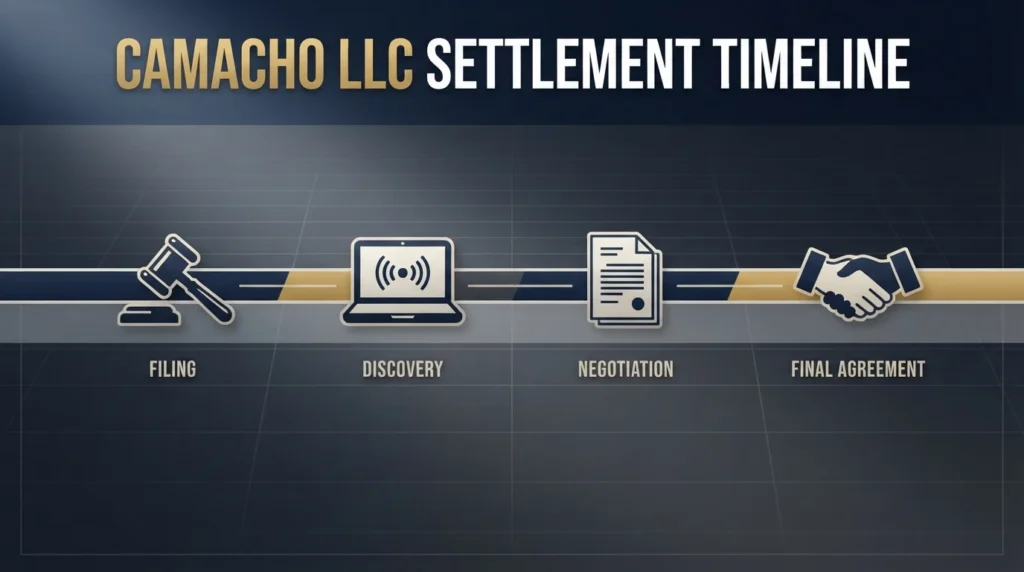
A typical sequence looks like this:
| Phase | What Happens |
|---|---|
| Complaint filed | Formal notice served, often referencing WCAG 2.0 violations |
| Initial response | Defendant typically retains counsel within weeks |
| Settlement talks | Most cases resolve through private negotiation |
| Remediation | Defendant agrees to fix the website barriers |
| Dismissal | Case closed with prejudice, often within 30 to 90 days |
The DeSales University case followed exactly this pattern, with the court noting the matter had been settled in principle before issuing a dismissal order giving either side 30 days to reopen if needed.
Camacho Lawsuit Precedent and Impact on Higher Education
The Camacho lawsuits set an important precedent by reinforcing that college and university websites count as public accommodations under the ADA. This idea has pushed accessibility compliance from a nice to have feature into a genuine legal risk category for higher education.
One industry group noted that lack of compliance with the ADA can result in fines, lawsuits, and backlash for post-secondary institutions, encouraging schools to treat accessibility audits as a standard operating practice.
Advocacy observers also point out that New York courts provided especially fertile ground for these suits through decisions in the Southern and Eastern districts that treated college recruitment websites as public accommodations.
- Precedent reinforced: websites are public accommodations
- Impact: accessibility audits now standard practice at many schools
- Risk extended: smaller LLCs now face the same exposure as elite universities
- Trend confirmed: the model keeps replicating into 2026
Key Takeaway: The legal precedent set by these cases has permanently changed how seriously colleges and education businesses must treat digital accessibility.
Is the Camacho Lawsuit a Scam or a Legitimate Claim
The Camacho lawsuits are legitimate federal civil rights claims, not a scam, even though critics argue the volume of filings resembles an organized business model. Courts have repeatedly found Camacho has standing when he shows a genuine prior visit, a specific barrier, and an intent to return.
At the same time, one advocacy spokesperson characterized the actions as “cut and paste” lawsuits in which lawyers file mass numbers of complaints against a given class of defendants in hopes of getting settlements or collecting lawyer fees.
Both framings can be true at once. The underlying legal claim is real and enforceable under federal law, while the sheer repetition and template style wording has drawn genuine criticism from business groups.
What to Expect Next in Camacho ADA Litigation
Expect the Camacho litigation pattern to keep expanding into new states, industries, and smaller LLC defendants throughout 2026. The shift from mostly elite universities toward companies like Makhan LLC and American Gencare Group Inc. suggests the targeting criteria has broadened significantly.
Multiple law firms now appear to be involved, with The Marks Law Firm PC joining long time counsel Jeffrey Gottlieb on recent filings, which could mean an even higher filing volume going forward.
Businesses in the education space, especially smaller LLCs running outdated websites, should treat a WCAG 2.0 accessibility audit as a basic cost of doing business rather than an optional upgrade.
Key Takeaway: The safest move for any education related LLC in 2026 is to audit website accessibility now, before a demand letter or complaint arrives.
Frequently Asked Questions
What is the Camacho LLC education lawsuit about?
The Camacho LLC education lawsuit pattern involves website accessibility claims filed by Jason Camacho against colleges and education related LLCs.
These suits allege broken links, missing image descriptions, and navigation barriers that block blind and visually impaired users.
The pattern started in 2017 and remains active into 2026.
Who is Jason Camacho and why does he file so many ADA lawsuits?
Jason Camacho is a legally blind resident of Brooklyn, New York, who uses screen reader software to browse the internet.
He has filed dozens of ADA Title III lawsuits since 2017 against colleges, retailers, and smaller LLCs.
His attorneys argue the goal is forcing real accessibility compliance, not just collecting settlements.
How much is the typical Camacho lawsuit settlement?
Settlement amounts vary, but one detailed federal case approved a total payment of $75,000.
Of that amount, roughly $49,350 went to the plaintiff and the rest covered attorney fees and costs.
Most college settlements from 2018 were confidential, so exact figures were never made public.
Can students or employees join the Camacho lawsuit?
Camacho’s cases are typically filed individually, not as traditional class actions open to other claimants.
To have standing, a person generally needs to be blind or visually impaired and show a genuine prior attempt to use the specific website.
Students or employees with similar accessibility complaints would usually need to file their own separate claim.
What should a school or LLC do if sued by Camacho?
Retain counsel immediately and review the specific accessibility barriers named in the complaint.
Most defendants settle quickly, often agreeing to fix the website under WCAG 2.0 standards.
Conducting a proactive accessibility audit before any complaint arrives remains the strongest preventive step.
Final Word
The Camacho LLC education lawsuit trend has quietly grown from 50 colleges in 2018 into a wider net covering education related LLCs nationwide. The legal theory is solid, the settlements are real, and the filings are not slowing down in 2026.
If you run an education business or school website, now is the time to check WCAG 2.0 compliance.
If you believe your own accessibility rights were violated, document the barrier and talk to a qualified civil rights attorney about your options.
================================================================