The exclusive technology lawsuit is the antitrust battle between Elon Musk’s companies and OpenAI over Apple’s ChatGPT partnership. Apple already settled and left the case in September 2026, leaving OpenAI standing alone.
This fight matters because it could reshape how AI assistants get built into your phone. A federal judge just moved the trial date again, this time to March 2027.
In this guide you will get the full timeline, the players, the legal theories, and a straight answer on whether you personally can collect a dime. One surprising fact up front: ChatGPT reportedly commands over 81% of the mobile AI chatbot market right now.
No consumer payout exists here yet, but the ripple effects could change your phone’s AI options for years.
Related: Exclusive AI Lawsuit 2026: Musk vs OpenAI Case Explained
What Is The Exclusive Technology Lawsuit
The exclusive technology lawsuit is an antitrust case accusing Apple and OpenAI of teaming up to box out AI rivals. It was filed by Elon Musk’s companies, X Corp and SpaceX Super Intelligence, formerly known as xAI.
The core claim is simple. Musk’s side says Apple gave ChatGPT special treatment on the iPhone while burying competitors like Grok in the App Store.
According to court filings, the suit began in August 2025, when X and xAI accused Apple and OpenAI of teaming up to lock up markets in smartphones and AI chatbots and keep rivals out.
Quick Facts Box:
- Filed: August 2025
- Plaintiffs: X Corp, SpaceX Super Intelligence
- Original Defendants: Apple Inc, OpenAI
- Current Defendant: OpenAI only
- Court: U.S. District Court, Northern District of Texas
This is not a product defect case or a data breach case. It is a straight-up monopoly fight between some of the richest companies on earth.
Who Is Suing Whom In The Exclusive Technology Lawsuit
The plaintiffs are Musk-affiliated companies, and OpenAI is now the sole remaining defendant. X Corp and SpaceX Super Intelligence, both affiliated with Elon Musk, have sued Apple and OpenAI, alleging they conspired to monopolize the generative AI chatbot market.
Apple was dropped from the case after reaching a private deal with Musk’s side. That leaves OpenAI to fight the claims by itself.
Who’s involved:
- X Corp: Musk-owned social media company, one of two plaintiffs
- SpaceX Super Intelligence: formerly X.AI LLC, Musk’s AI arm, the other plaintiff
- OpenAI: maker of ChatGPT, the remaining defendant
- Apple: former defendant, now dismissed with prejudice
The caption itself changed mid-case too. On August 14, 2026, the court granted the plaintiffs’ unopposed motion to amend the caption, replacing X.AI LLC with SpaceXAI LLC as a named plaintiff, reflecting Musk’s corporate restructuring.
Grok, Musk’s own chatbot, sits at the center of the complaint as the product that allegedly got shut out of fair competition on Apple devices.
Exclusive Technology Lawsuit Antitrust Claims Explained
The antitrust claims allege Apple and OpenAI conspired to protect their market positions at the expense of rivals. Musk’s lawyers argue Apple’s exclusive-style ChatGPT deal broke competition law.
Specifically, the suit targets how Siri handles AI requests and how the App Store ranks competing chatbot apps.
| Claim | What Musk’s Side Alleges | OpenAI’s Response |
|---|---|---|
| Siri integration | ChatGPT got preferred access rivals didn’t | Partnership was nonexclusive |
| App Store rankings | Grok and X were buried in search results | No evidence of ranking manipulation |
| Market monopolization | Deal protected both companies’ dominance | ChatGPT underperformed expectations |
According to the filing, it alleges that Apple and OpenAI conspired to keep their dominance in AI, saying Grok lacked the kind of iPhone integration ChatGPT got through Siri and that Apple played down rival chatbots and X in the App Store.
Apple has pushed back hard on the underlying theory. Apple called the claims “speculation on top of speculation” before settling out entirely.
Key Takeaway: This case rests on whether Apple’s ChatGPT integration crossed the line from a smart business partnership into an illegal exclusionary deal.
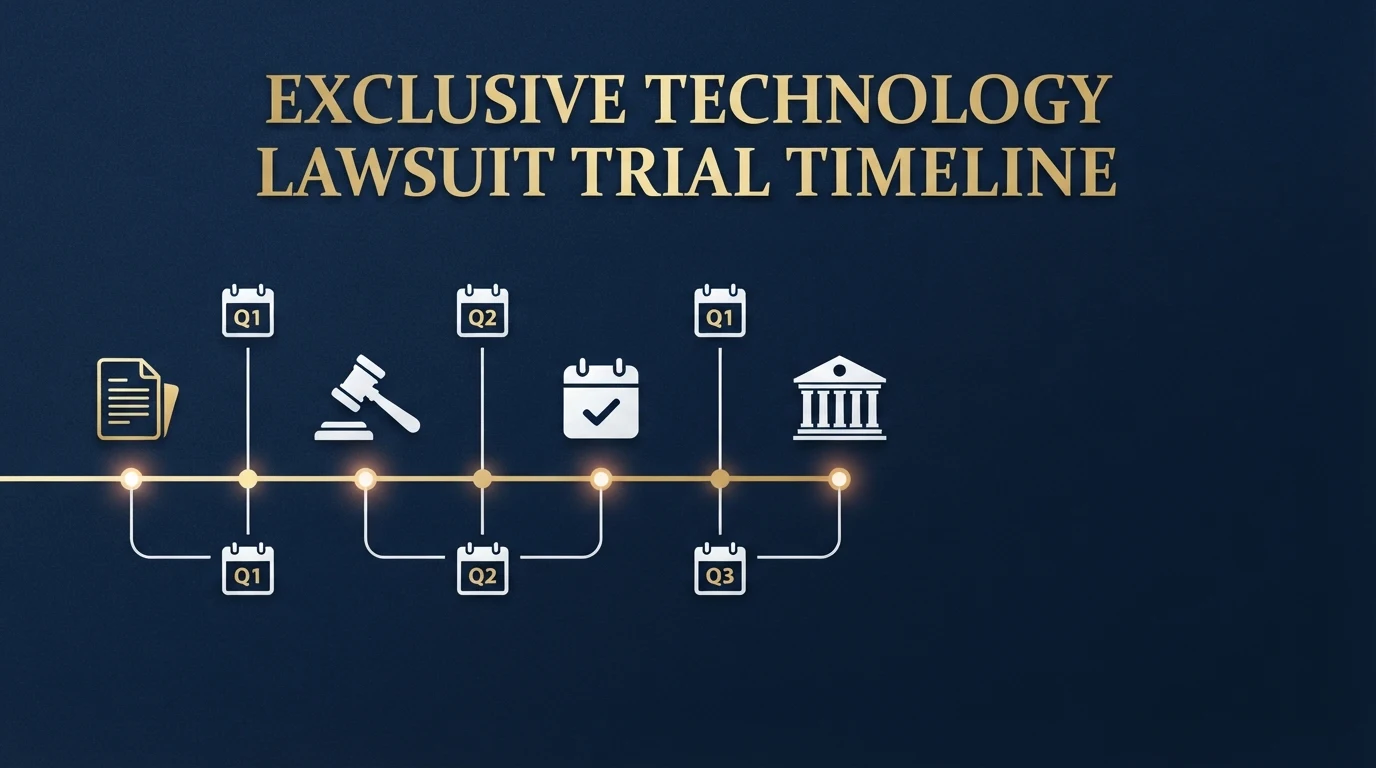
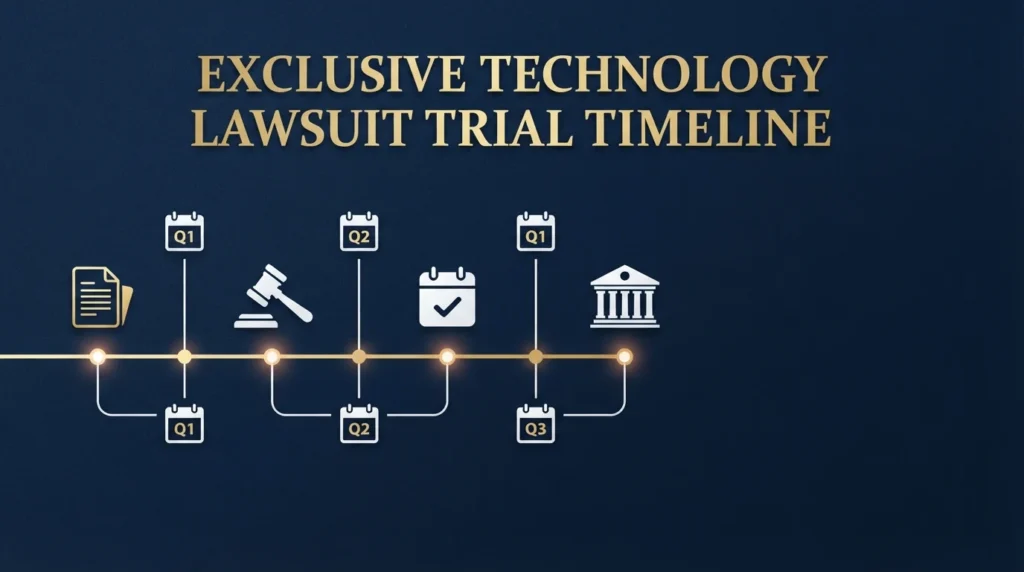
Exclusive Technology Lawsuit Timeline 2026
The exclusive technology lawsuit timeline in 2026 has shifted multiple times as deadlines got pushed back. What started as an October 2026 trial has now moved twice.
Here’s how the year unfolded, step by step.
| Date | Event |
|---|---|
| April 16, 2026 | Trial adjourned from October 19, 2026 to January 11, 2027 |
| June 18, 2026 | Mediation deadline extended to December 4, 2026 |
| August 14, 2026 | Caption amended, SpaceXAI replaces X.AI LLC |
| September 14, 2026 | Apple dismissed with prejudice after settlement |
| September 17, 2026 | Judge seals Apple-Musk settlement from OpenAI |
| November 17, 2026 | Trial pushed again, to March 15, 2027 |
Originally, an October 16, 2025 scheduling order initially placed the case on the court’s four-week trial docket beginning October 19, 2026. That schedule has since moved twice.
Each delay has given both sides more time to build their case, but it also means consumers waiting on any ruling will wait longer too.
Exclusive Technology Lawsuit Trial Date March 2027
The trial date for the exclusive technology lawsuit is now March 15, 2027, in Fort Worth, Texas. Judge Mark Pittman issued the new schedule on November 17, 2026.
This is the second time the trial date has slipped. A federal judge in Fort Worth, Texas, on Nov. 17 moved the trial in the antitrust lawsuit that Elon Musk’s X Corp and SpaceX Super Intelligence brought against OpenAI by 60 days, to March 15, 2027.
The judge was direct about why. “The Court has no choice but to move the trial date and all pretrial deadlines in this case by 60 days,” U.S. District Judge Pittman wrote in the order.
Trial Quick Facts:
- New trial date: March 15, 2027
- Location: Fort Worth, Texas federal court
- Judge: Mark T. Pittman
- Expected length: no more than three to four days for trial
Both legal teams also had to lock in their courtroom leadership. Besides the new trial date, each side must designate a lead counsel and lead local counsel for communications with the court by Nov. 25, 2026.
Exclusive Technology Lawsuit Apple Settlement Explained
Apple settled with Musk’s companies in September 2026 and the terms remain completely sealed. The settlement got Apple fully out of the exclusive technology lawsuit.
Nobody outside the courtroom knows what Apple agreed to pay, promise, or change.
Judge Mark T. Pittman on Sept. 14, 2026 dismissed the claims against Apple at the request of X Corp. and xAI after the companies reached an undisclosed settlement with Apple.
OpenAI tried to get a look at the deal’s terms, hoping it might help its own defense. The judge said no.
“Courts have, at times, permitted the production of confidential settlement agreements to the extent they contain information relevant to specific issues at summary judgment or trial,” he wrote. “Having conducted an in camera review of the requested materials, however, the Court finds that they do not present information relevant to the issues to be decided at summary judgment or trial in this case.”
What this means for Apple:
- Claims dismissed with prejudice, meaning they cannot be refiled
- Settlement terms sealed from the public and from OpenAI
- this is about as clean an exit as a defendant gets, the claims against it are gone
Apple’s exit shifts the entire spotlight onto OpenAI as the sole remaining defendant heading into March.
Exclusive Technology Lawsuit OpenAI Defense And Response
OpenAI’s defense is that its Apple partnership was never exclusive and underperformed expectations anyway. That argument forms the backbone of its entire legal strategy.
The company filed paperwork trying to end the case before trial even starts.
OpenAI filed a summary judgment brief eight days later, seeking a ruling without trial. The company said its partnership with Apple was nonexclusive and that ChatGPT’s integration drew fewer users than expected.
OpenAI also leaned on evidence from Musk’s own side to poke holes in the monopoly theory. It argues that disclosures from xAI parent company SpaceX undermine claims that Apple’s partnership with OpenAI excluded rivals.
OpenAI’s main defense points:
- The Apple deal was nonexclusive by design
- ChatGPT usage numbers fell short of projections
- Musk’s own companies’ filings allegedly contradict their exclusion claims
- Musk waited more than nine months after the integration launched before bringing their lawsuit
To back this strategy in front of a jury, OpenAI brought in serious legal firepower, a move covered in detail further down in this guide.
Key Takeaway: With Apple gone, the entire trial now hinges on whether jurors believe OpenAI’s partnership was genuinely competitive or secretly exclusionary.
Who Qualifies In The Exclusive Technology Lawsuit
Nobody qualifies for a personal payout in the exclusive technology lawsuit because this is a corporate antitrust case, not a class action. Regular consumers are not part of this lawsuit at all.
This case is strictly between Musk’s companies and OpenAI.
| Group | Eligible For Payout? |
|---|---|
| Everyday iPhone users | No |
| ChatGPT subscribers | No |
| Grok or X users | No |
| Apple shareholders | Not directly through this case |
| X Corp / SpaceX Super Intelligence | Yes, as plaintiffs seeking damages |
The money at stake, discussed next, flows only between the companies named in the complaint. X and xAI sought “billions in damages.”
If you’re hoping this is the kind of lawsuit where you fill out a claim form and get a check, it isn’t. Think of it more like two rival businesses fighting over a contract, not a consumer wronged by a faulty product.
That said, keep reading the consumer impact section below, because indirect effects on your phone’s AI options are very real even without a direct payout.
Exclusive Technology Lawsuit Damages And Potential Payout
The damages sought in the exclusive technology lawsuit run into the billions, but none of that money goes to individual consumers. Musk’s companies are seeking corporate antitrust damages from OpenAI alone now.
| Detail | Info |
|---|---|
| Damages sought | Billions of dollars (exact figure undisclosed) |
| Who could collect | X Corp, SpaceX Super Intelligence only |
| Consumer payout | None |
| Apple’s exposure | Resolved privately, terms sealed |
| Trial verdict expected | After March 15, 2027 trial |
X and xAI sought “billions in damages,” according to court filings, though the exact dollar figure has not been made public in detail.
Because Apple’s settlement stays sealed, we may never know what that company paid, if anything. “Resolved” is the only word on the record, so any account of what Apple gave up, or didn’t, goes beyond what the court has been told.
For OpenAI, a loss at trial could mean a massive damages award plus court-ordered changes to how it structures device partnerships going forward.
Exclusive Technology Lawsuit Impact On Consumers
The impact on consumers is indirect but real, since this case could reshape which AI chatbots show up on your phone. You won’t get a check, but your app options might change.
If Musk’s side wins, Apple-style exclusive AI deals could become legally risky going forward.
Possible consumer-facing effects:
- More competing chatbots could get equal Siri-level access
- App Store rankings for AI apps could face new scrutiny
- Future phone makers may think twice before signing exclusive AI deals
- Pricing and features across chatbot apps could shift as competition opens up
The stakes are genuinely large given how dominant one app has become. With ChatGPT holding 81.2% of a mostly mobile AI market and regulators in the EU and OECD scrutinizing distribution control, the ruling could influence how AI reaches consumers worldwide.
Think of it like a referee stepping into a game. The case itself doesn’t hand out trophies to the fans, but it can change the rules everyone plays by next season.
Exclusive Technology Lawsuit Court Documents And Filings
Court documents show this case bouncing through motions, dismissals, and sealed rulings throughout 2026. The official record lives in the Northern District of Texas federal docket.
Key filings paint a clear procedural picture.
- September 14, 2026 motion: “Plaintiffs have resolved their claims in this Action against Defendant Apple Inc. (‘Apple’). Plaintiffs accordingly move under Federal Rule of Civil Procedure 41(a)(2) to dismiss with prejudice their claims against Apple. Apple does not oppose this Motion.”
- Same filing, second paragraph: “For the avoidance of doubt, Plaintiffs do not seek to dismiss any of their claims against Defendants OpenAI Foundation (f/k/a OpenAI, Inc.); OpenAI, L.L.C.; and OpenAI OpCo, LLC.”
- Signed by: attorneys from Axinn LLP, Brown Pruitt Wambsganss Dean Forman & Moore, and Stone Hilton PLLC
The docket also shows OpenAI’s own procedural moves. OpenAI’s own deadline for dispositive motions, including summary judgment, is September 22, after Pittman granted part of its request for more time on September 14.
Key Takeaway: The paper trail confirms Apple is fully out while OpenAI’s filings remain active and contested heading toward trial.
Exclusive Technology Lawsuit Lawyers And Legal Teams
Both sides brought in heavyweight litigators for the March 2027 trial, a sign of how seriously each company is treating this fight. The legal teams read like a who’s who of corporate litigation.
| Side | Lead Counsel | Firm |
|---|---|---|
| OpenAI | Gary Bornstein | Cravath, Swaine & Moore |
| OpenAI (support) | — | Wachtell, Lipton, Rosen & Katz |
| Musk’s companies | John Hughes | Bartlit Beck |
Bornstein’s hire turned heads because of his track record against Apple specifically. OpenAI has now hired a lawyer who successfully challenged Apple’s business practices to defend its own partnership with the iPhone maker.
That history runs deep. Federal appeals courts later upheld those decisions. A court also held Apple in civil contempt in the Epic Games litigation, cases Bornstein helped lead.
Now he switches sides, defending the very kind of device-maker partnership he once fought against in the Epic Games case.
Exclusive Technology Lawsuit Vs Other AI Lawsuits In 2026
The exclusive technology lawsuit is just one of several major AI and tech lawsuits moving through courts in 2026. It stands out because it’s an antitrust case, not a consumer class action.
Comparing it to other 2026 tech lawsuits shows how different these cases really are.
| Lawsuit | Type | Consumer Payout? | Status |
|---|---|---|---|
| Exclusive Technology Lawsuit (X Corp/SpaceXAI v OpenAI) | Antitrust | No | Trial March 15, 2027 |
| Musk v. Altman | Breach of contract/mission dispute | No | Jury decided in favor of OpenAI, May 18, 2026 |
| AI Freeze Lawsuit | Public nuisance/unfair competition | No | Filed Nov 12, 2026 seeking injunction |
| Apple trade secrets v. OpenAI | Trade secrets | No | Trial set for July 19, 2027 |
| Various consumer tech class actions | Class action | Yes, possible | Ongoing, case by case |
Notice the pattern. Most of the headline-grabbing AI lawsuits this year involve corporations suing corporations, not consumers filing claims.
That’s different from older-style tech class actions like Ring privacy suits or Nest thermostat complaints, where regular users directly stood to collect money.
Exclusive Technology Lawsuit Latest News And Updates
The most recent update is the November 17, 2026 order pushing the trial to March 15, 2027, paired with OpenAI’s hire of star litigator Gary Bornstein. Both moves landed within days of each other.
Latest developments at a glance:
- Nov 17, 2026: Trial moved 60 days to March 15, 2027
- Nov 25, 2026: Lead counsel deadline for both sides
- Nov 26, 2026: News broke of OpenAI’s Bornstein hire
OpenAI argues its Apple partnership was nonexclusive as regulators scrutinize access to mobile platforms and AI distribution, a defense theme repeated across nearly every recent filing.
Meanwhile the broader AI courtroom environment stays busy. A federal judge in San Francisco dismissed xAI’s trade secrets lawsuit against OpenAI, ruling xAI failed to prove misappropriation and closing the case with prejudice, showing Musk’s companies haven’t won every related fight this year.
Key Takeaway: As of late November 2026, OpenAI stands alone against Musk’s companies with a hired gun lawyer and a fresh March 2027 trial date on the calendar.
How To Follow The Exclusive Technology Lawsuit
The best way to follow the exclusive technology lawsuit is to track the Northern District of Texas federal docket and reputable legal news outlets covering antitrust cases. Court orders become public record almost immediately.
Practical steps to stay updated:
- Check federal court filing databases for the Northern District of Texas case docket
- Follow business and tech law reporters who cover antitrust litigation closely
- Watch for summary judgment rulings before the March 15, 2027 trial date
- Set alerts for terms like “X Corp v. OpenAI” or “SpaceX Super Intelligence antitrust”
Pretrial paperwork tends to reveal the most. On April 16, 2026, the court granted a request by the OpenAI defendants to modify that schedule, adjourning the trial to January 11, 2027, with discovery due July 31, 2026, motions due September 15, 2026, and the pretrial order due December 14, 2026.
That pretrial order deadline of December 14, 2026 is worth circling, since it often surfaces key evidence summaries before a trial even begins.
Treat this case like a slow-moving storm. The warning signs show up well before the main event hits.
Exclusive Technology Lawsuit What Happens Next
What happens next is a jury trial on March 15, 2027 in Fort Worth, Texas, where OpenAI will defend itself alone against Musk’s companies. Before then, expect more pretrial motions and possibly another settlement attempt.
Here’s the expected sequence:
- December 4, 2026: Mediation deadline, a last chance for settlement talks
- December 14, 2026: Pretrial order due
- March 15, 2027: Jury trial begins in Fort Worth
- Trial length: Expected 3 to 4 days
Antitrust claims are increasingly being used to challenge how dominant AI platforms are distributed and partnered, which means whatever verdict comes out of Fort Worth could influence future AI-and-phone deals well beyond just Apple and OpenAI.
If OpenAI loses, expect appeals and possibly new restrictions on exclusive-style device partnerships industry-wide. If OpenAI wins, expect similar lawsuits against other AI deals to lose steam fast.
Either way, March 15, 2027 is the date to watch.
Frequently Asked Questions
What is the exclusive technology lawsuit about?
It’s an antitrust case accusing Apple and OpenAI of teaming up to exclude AI rivals like Grok from fair competition on iPhones.
Apple has since settled and exited the case.
OpenAI remains the sole defendant heading into trial.
Is Apple still a defendant in the exclusive technology lawsuit?
No, Apple is no longer a defendant.
Apple reached a confidential settlement with Musk’s companies in September 2026 and was dismissed with prejudice.
OpenAI now defends the antitrust claims alone.
When is the exclusive technology lawsuit trial date?
The trial is now scheduled for March 15, 2027 in Fort Worth, Texas.
A judge moved it 60 days from a prior January 11, 2027 date on November 17, 2026.
The trial is expected to last three to four days.
Can consumers file a claim in the exclusive technology lawsuit?
No, this is not a consumer class action and there is no claim form to file.
The lawsuit is strictly between Musk’s companies and OpenAI over antitrust damages.
Any consumer impact would be indirect, like future changes to app competition.
How much money is on the line in the exclusive technology lawsuit?
Musk’s companies are seeking billions of dollars in damages from OpenAI.
The exact figure has not been publicly disclosed in detail.
Apple’s settlement amount, if any, remains sealed by court order.
The exclusive technology lawsuit now comes down to one company, one courtroom, and one trial date: March 15, 2027. Apple already made its exit, and OpenAI is bringing in top legal talent to fight alone.
Stay close to this one if you care about how AI gets built into your next phone.
Check back for updates as the trial date approaches, and bookmark this guide for the latest filings.