

The YDC lawsuit is entering a pivotal stage in 2026, with hundreds of abuse survivors awaiting compensation from the state of New Hampshire. If you were harmed at the Youth Development Center in Manchester, this year could determine what you receive and when you receive it.
New Hampshire has already seen jury verdicts exceeding $38 million in individual cases. The state’s settlement fund, created under HB 1042, is now processing claims from survivors who endured abuse spanning several decades.
This article covers every major development in the YDC lawsuit for 2026. You will find settlement details, payout estimates, eligibility rules, filing deadlines, evidence tips, and criminal case updates.
Over 1,100 lawsuits have been filed against the state. That number alone tells you the scale of what happened inside that facility.
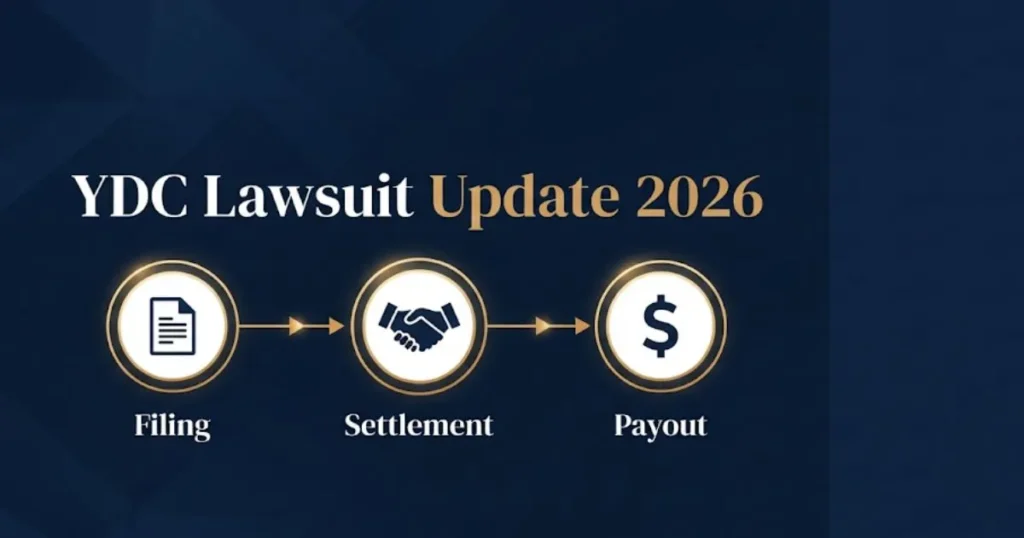
YDC Lawsuit Update 2026
The YDC lawsuit in 2026 is focused on settlement distributions, continued civil trials, and criminal prosecutions against former staff members. The state of New Hampshire faces an unprecedented volume of claims tied to abuse at its youth detention facility.
Several bellwether trials concluded in 2024 and 2025, producing massive jury verdicts. Those outcomes set the tone for settlement negotiations now underway. The state is under growing pressure to resolve remaining cases without going to trial for each one.
Governor Chris Sununu signed HB 1042 into law, establishing a settlement fund for survivors. That fund is now operational, and claimants are moving through the review process. Not every case has been resolved, but 2026 marks the year most survivors expect real movement.
The court system in Hillsborough County continues to manage hundreds of pending cases. Judges have grouped claims by time period and type of abuse to speed things along.
| 2026 Milestone | Status |
|---|---|
| Settlement fund operational | Active |
| Remaining civil trials | Scheduled throughout 2026 |
| Criminal prosecutions | Ongoing |
| Estimated active claims | 1,100 plus |
| Key legislation | HB 1042 |
New trials are expected to begin in early and mid 2026. The state has signaled a preference for negotiated settlements, but survivors who reject offers retain their right to a jury trial.
YDC Lawsuit Settlement
The YDC lawsuit settlement refers to the negotiated agreements between abuse survivors and the state of New Hampshire to resolve claims without a full trial. Settlements vary widely based on the severity and duration of abuse.
Individual settlements are being handled on a case-by-case basis. Some survivors have accepted offers from the state’s settlement fund. Others are negotiating directly through their attorneys after receiving initial offers they considered too low.
The $38 million verdict in the David Meehan case sent a strong message. It showed juries are willing to award substantial damages when presented with evidence of systemic abuse and state negligence.
Settlement negotiations in 2026 are shaped by those earlier verdicts. The state knows what a jury might award, so the incentive to settle at reasonable amounts is higher than ever.
Not all settlements are equal. Survivors who experienced more severe or prolonged abuse, or who can provide stronger documentation, tend to receive larger offers.
| Settlement Factor | Impact on Amount |
|---|---|
| Severity of abuse | Higher severity means higher offers |
| Duration of time at YDC | Longer stays may increase compensation |
| Available evidence | Stronger documentation supports larger payouts |
| Prior trial verdicts | Jury awards set benchmarks for negotiations |
| Type of abuse | Sexual abuse claims typically valued higher |
If you have been offered a settlement, carefully review it with your attorney before accepting. Once you accept, you cannot go back and ask for more.
YDC Lawsuit Payout
YDC lawsuit payouts range from tens of thousands to several million dollars, depending on the specifics of each survivor’s case. There is no single flat amount that every claimant receives.
The largest payout so far came from the David Meehan trial, where the jury awarded over $38 million. That case involved severe sexual and physical abuse over multiple years during the 1990s.
Most survivors will not see amounts that high. Settlement fund payouts tend to be lower than jury verdicts because they trade the uncertainty of trial for guaranteed compensation.
Payouts through the HB 1042 settlement fund are structured in tiers. The tier you fall into depends on what happened to you, how long it lasted, and what evidence supports your claim.
| Payout Category | Estimated Range |
|---|---|
| Severe sexual abuse (documented) | $500,000 to $5,000,000 plus |
| Physical abuse (documented) | $100,000 to $1,000,000 |
| Emotional abuse or neglect | $25,000 to $200,000 |
| Settlement fund claims (general) | $25,000 to $500,000 |
| Jury verdict (if case goes to trial) | Varies widely, up to $38,000,000 plus |
Payout timing is another big question. Survivors who settle through the fund may receive payment within months of acceptance. Those who go to trial face a longer wait, potentially years with appeals.
Key Takeaway: YDC lawsuit payouts vary enormously, and the biggest factor in your compensation is the type, severity, and documentation of the abuse you experienced.
YDC Abuse Lawsuit
The YDC abuse lawsuit is a collection of over 1,100 civil cases filed by former residents of the Youth Development Center in Manchester, New Hampshire. These cases allege decades of physical, sexual, and emotional abuse by staff members.
The abuse took place at what was originally called the Youth Development Center, later renamed the Sununu Youth Services Center. Survivors have come forward with accounts of horrific treatment dating from the 1960s through the 2000s.
This is not a typical class action. Each case is filed individually, though the court has grouped them for efficiency. Every survivor has their own claim, their own story, and their own potential payout.
The state of New Hampshire is the primary defendant. Survivors argue that state officials knew about the abuse, failed to stop it, and in some cases actively covered it up.
Think of it like this: the state was supposed to be the guardian of these children. Instead, the children were handed over to abusers on the state payroll.
- Physical abuse included beatings, isolation, and restraint
- Sexual abuse involved staff members assaulting residents
- Emotional abuse included threats, humiliation, and deprivation
- Negligence claims target supervisors who ignored warning signs
The sheer number of accusers and the consistency of their stories make this one of the largest institutional abuse cases in American history.
Youth Development Center Lawsuit
The Youth Development Center lawsuit targets New Hampshire’s state-run juvenile detention facility where minors were systematically abused for decades. The facility housed young people who were either adjudicated delinquent or placed there by the state for their own protection.
Located in Manchester, the Youth Development Center was the only facility of its kind in New Hampshire. Children had nowhere else to go. That captive situation made the abuse even more insidious.
The facility operated under various names over the years. Before it was the Youth Development Center, it was called the Industrial School. It was later renamed the Sununu Youth Services Center. The name changed, but survivors say the culture of abuse remained constant.
Investigations revealed that dozens of staff members were involved in abusive conduct. Some have since been criminally charged. Others died before facing accountability.
| Facility Detail | Information |
|---|---|
| Location | Manchester, New Hampshire |
| Operating years | 1960s through 2020s |
| Previous names | Industrial School, Sununu Youth Services Center |
| Number of accused staff | Dozens |
| Number of civil lawsuits filed | 1,100 plus |
| Criminal charges filed | Multiple, ongoing |
The facility eventually closed its doors, but the legal reckoning continues. Survivors are now adults, many in their 50s, 60s, and 70s, still carrying the weight of what happened to them as children.
New Hampshire YDC Lawsuit
The New Hampshire YDC lawsuit holds the state directly responsible for failing to protect children in its custody. New Hampshire is both the location of the abuse and the defendant in these cases.
State liability is the core legal issue here. These were not private actors. The abusers were state employees, working in a state facility, supervising state wards. That chain of responsibility runs straight to the government.
New Hampshire initially fought these claims aggressively. Over time, as more survivors came forward and jury verdicts mounted, the state’s posture shifted toward settlement.
The New Hampshire Legislature took a significant step by passing HB 1042. That law created a dedicated settlement fund to handle claims outside the traditional court process. It was an acknowledgment that the state bore responsibility.
- The state is the defendant in all civil cases
- HB 1042 created an alternative to individual trials
- The Attorney General’s office oversees the state’s legal response
- Taxpayers ultimately fund the settlements and verdicts
Some survivors feel the state still is not doing enough. Others are relieved that any accountability is happening at all. Either way, New Hampshire’s legal and financial exposure in these cases is staggering.
Key Takeaway: New Hampshire’s state government is the defendant in these lawsuits, and the passage of HB 1042 was a direct acknowledgment of institutional failure and state liability.
YDC Lawsuit Eligibility
YDC lawsuit eligibility applies to any person who was a resident of the Youth Development Center (or its predecessor facilities) and experienced abuse while in state custody. You do not need to have reported the abuse at the time it happened.
Many survivors stayed silent for decades. Shame, fear, and distrust of authorities kept them quiet. The legal system now recognizes that delayed disclosure is normal for abuse victims, especially those who were children.
To be eligible, you generally need to meet these criteria:
- You were a resident at YDC, the Sununu Youth Services Center, or the Industrial School
- You experienced physical, sexual, or emotional abuse while there
- The abuse was committed by staff, contractors, or other individuals associated with the facility
- You have not already settled your claim with a signed release
There is no minimum age requirement for when the abuse occurred. Survivors from the 1960s forward have filed successful claims.
| Eligibility Factor | Requirement |
|---|---|
| Residency at facility | Must have been a resident |
| Type of abuse | Physical, sexual, or emotional |
| Time period | 1960s through closure |
| Prior settlement | Must not have signed a release |
| Reporting at time of abuse | Not required |
If you are unsure whether you qualify, the best step is to contact an attorney who handles YDC cases. Many offer free initial consultations and work on contingency, meaning they only get paid if you do.
How to File a YDC Lawsuit
Filing a YDC lawsuit starts with contacting an attorney experienced in institutional abuse cases, then gathering whatever records and personal accounts you can. You do not need perfect documentation to begin the process.
Here is the general process:
- Step 1: Contact a lawyer who handles YDC abuse claims
- Step 2: Provide your account of what happened during your time at the facility
- Step 3: The attorney investigates and gathers supporting evidence
- Step 4: A formal complaint is filed in New Hampshire court
- Step 5: The case proceeds through discovery, negotiation, or trial
Alternatively, you can file a claim through the HB 1042 settlement fund. This route is faster and avoids the uncertainty of a trial. The tradeoff is that settlement fund amounts may be lower than what a jury would award.
Most attorneys working these cases operate on a contingency fee basis. That means no upfront cost to you. The attorney takes a percentage of your payout, typically between 25% and 40%.
You do not need to live in New Hampshire to file. Survivors who moved out of state years ago still have every right to bring a claim.
| Filing Option | Key Difference |
|---|---|
| Individual civil lawsuit | Higher potential payout, longer timeline |
| HB 1042 settlement fund | Faster resolution, potentially lower payout |
| Contingency attorney | No upfront cost to the survivor |
Do not wait to start the process. Deadlines exist, and evidence becomes harder to locate as time passes.
YDC Settlement Fund
The YDC settlement fund is a state-created compensation program established under HB 1042 to provide an alternative to individual civil trials for abuse survivors. It allows claimants to receive payment without the stress and delay of courtroom litigation.
New Hampshire set up this fund after it became clear that trying each of the 1,100 plus cases individually would take decades and cost the state far more in legal fees and jury verdicts.
The fund operates through a claims process managed by an independent administrator. Survivors submit their claims, provide supporting documentation, and receive an offer based on a tiered evaluation system.
Here is how the tiers generally work:
- Tier 1: Severe, documented abuse with corroborating evidence. Highest payouts.
- Tier 2: Credible abuse claims with some supporting evidence. Moderate payouts.
- Tier 3: Self-reported abuse without external documentation. Lower payouts.
Accepting a settlement fund offer means you waive your right to sue the state in court for the same claim. That is an important decision, and you should weigh it carefully.
The fund does not require you to testify in court or face cross-examination. For many survivors, avoiding that experience is worth accepting a lower amount than a jury might have awarded.
Key Takeaway: The YDC settlement fund under HB 1042 gives survivors a faster, less adversarial path to compensation, but accepting an offer means giving up your right to a civil trial.
YDC HB 1042 Settlement Fund
HB 1042 is the specific New Hampshire law that created the YDC settlement fund and set the rules for how survivors can access compensation. It was signed into law as a direct response to the growing number of abuse lawsuits against the state.
The bill passed with bipartisan support. Lawmakers on both sides recognized that the state had failed these children and that a structured settlement process was necessary.
Key provisions of HB 1042 include:
- Creation of an independent claims administrator
- A tiered payout structure based on abuse severity
- A defined claims submission process with documentation requirements
- Confidentiality protections for claimants
- A waiver of the right to sue if the settlement offer is accepted
The law does not cap total payouts across all claims. Each claim is evaluated on its own merits. The state has allocated significant funding, though the exact total budget has been a point of political debate.
| HB 1042 Detail | Information |
|---|---|
| Type of law | State legislation |
| Purpose | Create settlement fund for YDC survivors |
| Administrator | Independent, appointed by the state |
| Payout structure | Tiered based on severity and evidence |
| Confidentiality | Yes, for claimants |
| Right to sue after accepting | Waived |
HB 1042 represents the largest legislative acknowledgment of institutional abuse in New Hampshire history. It is not perfect, but it gives survivors a real path forward.
YDC Lawsuit Compensation Amounts
YDC lawsuit compensation amounts depend on several factors, including the type of abuse, its duration, the availability of evidence, and whether the case settles or goes to trial. There is no standard dollar figure for all claimants.
The benchmark case is the David Meehan verdict, where a jury awarded $38 million in 2024. That number is exceptional, but it set the ceiling for what is possible in these cases.
Most survivors will receive significantly less, especially those going through the settlement fund. But “significantly less” can still mean hundreds of thousands of dollars.
Here is a realistic breakdown:
| Abuse Type | Settlement Fund Range | Trial Verdict Range |
|---|---|---|
| Severe sexual abuse | $200,000 to $1,500,000 | $1,000,000 to $38,000,000 plus |
| Repeated physical abuse | $100,000 to $750,000 | $500,000 to $5,000,000 |
| Emotional abuse and neglect | $25,000 to $200,000 | $100,000 to $1,000,000 |
| Combination of abuse types | $150,000 to $2,000,000 | $1,000,000 to $10,000,000 plus |
These ranges are estimates based on prior verdicts and reported settlements. Your actual amount could fall above or below these ranges.
Attorneys typically take 25% to 40% of the final amount as their fee. Factor that into your expectations when evaluating any offer.
YDC Abuse Settlement 2026
The YDC abuse settlement process in 2026 is expected to reach its most active phase, with the settlement fund processing the bulk of submitted claims and new settlement offers going out to survivors. This is the year many claimants have been waiting for.
Several factors make 2026 a turning point:
- The settlement fund has been operational long enough to process initial claims
- Bellwether trial results from 2024 and 2025 provide clear valuation benchmarks
- Political pressure on the state to resolve cases is intensifying
- Survivor advocacy groups are pushing for faster disbursements
The state has an incentive to settle as many cases as possible this year. Each trial costs the state hundreds of thousands in legal fees alone, on top of whatever the jury awards.
For survivors, 2026 is the year to make sure your claim is filed and your documentation is in order. If you have not yet engaged with the settlement fund or an attorney, time is becoming a factor.
| 2026 Settlement Activity | Expected Timeline |
|---|---|
| New settlement offers issued | Q1 through Q3 2026 |
| Claim reviews by administrator | Ongoing throughout 2026 |
| Trials for unsettled cases | Scheduled Q2 and Q3 2026 |
| First major fund disbursements | Mid to late 2026 |
This year is not the end of the process, but it is the most consequential year for the majority of claimants.
Key Takeaway: 2026 is the most active year for YDC abuse settlements, with the bulk of claims being reviewed, offers going out, and the first major disbursements expected by mid-year.
YDC Lawsuit Deadline
The YDC lawsuit filing deadline depends on which path you choose: individual civil lawsuit or the HB 1042 settlement fund. Each has its own timeline, and missing a deadline can permanently bar your claim.
For individual civil lawsuits, New Hampshire’s statute of limitations rules apply. The state passed special legislation extending the filing window for YDC abuse claims. Under these extensions, many survivors who would have been time-barred under the old rules now have the ability to file.
For the settlement fund, the claims administrator has set submission deadlines. These deadlines are firm, and late submissions may not be accepted.
| Filing Path | Deadline Information |
|---|---|
| Individual civil lawsuit | Extended statute of limitations applies; check with attorney for your specific case |
| HB 1042 settlement fund | Submission deadlines set by claims administrator; varies by claim phase |
| Criminal cases | No statute of limitations for certain felony charges |
Do not assume you have unlimited time. Even with extended deadlines, the window will close. Every month you wait is a month closer to a hard cutoff.
If you are unsure about your deadline, contact an attorney immediately. Many YDC lawyers will tell you over the phone whether you are still within the filing window.
YDC Lawsuit Evidence Requirements
YDC lawsuit evidence requirements are flexible because the state recognizes that many survivors have no documentation from decades ago. You can file a claim based on your personal testimony, even without medical records, police reports, or facility records.
That said, stronger evidence leads to stronger payouts. If you have any of the following, gather it now:
- Facility records: Admission and discharge documents, incident reports
- Medical records: Any treatment for injuries sustained at YDC
- Therapy records: Notes from counselors or therapists you saw after leaving
- Criminal records: If your abuser was charged or convicted
- Personal records: Journals, letters, photographs from that time period
- Witness statements: Testimony from other residents or staff who can corroborate your account
Many facility records were lost or destroyed over the years. The state is aware of this, and the claims process accounts for it. Your sworn testimony carries weight.
Think of your evidence as a puzzle. Every piece helps, but you do not need every piece to see the picture. Even partial records combined with your account can support a strong claim.
| Evidence Type | How It Helps |
|---|---|
| Facility records | Proves you were there and when |
| Medical records | Documents injuries consistent with abuse |
| Therapy records | Shows long-term psychological impact |
| Witness statements | Corroborates your account |
| Personal testimony | Foundation of every claim |
If you are unsure what you have, an attorney can help you figure out what records still exist and how to obtain them.
YDC Lawsuit Statute of Limitations
The YDC lawsuit statute of limitations has been significantly extended by New Hampshire legislation to give abuse survivors more time to file claims. Under normal rules, many of these cases would have been time-barred years ago.
New Hampshire recognized that childhood abuse victims often do not come forward until decades later. Trauma, shame, and repression of memories create barriers that standard filing deadlines do not account for.
The state passed legislation specifically extending the statute of limitations for claims of childhood sexual abuse. This extension opened the door for hundreds of survivors who would otherwise have been shut out.
Key points about the statute of limitations:
- The standard statute of limitations for personal injury in New Hampshire is 3 years
- Special legislation extended the window for childhood abuse claims
- The “discovery rule” may apply, starting the clock when the survivor connects their injuries to the abuse
- Some criminal charges (particularly felony sexual abuse) have no statute of limitations
| Statute of Limitations Detail | Information |
|---|---|
| Standard personal injury | 3 years from injury |
| Childhood abuse (extended) | Varies; special legislation applies |
| Discovery rule | Clock starts when connection to abuse is recognized |
| Criminal felony sex abuse | No statute of limitations |
If you think you might be close to a deadline, act now. An attorney can evaluate your specific situation within days.
Key Takeaway: New Hampshire extended the statute of limitations specifically for YDC abuse cases, but these extended deadlines are not unlimited, so filing sooner is always better than filing later.
YDC Lawsuit News 2026
The latest YDC lawsuit news in 2026 includes continued criminal trials, new settlement offers from the state, and growing political debate over the total cost of compensation for survivors. This story is far from over.
On the criminal side, several former YDC staff members face ongoing prosecution. Bradley Asbury and Jeff Buskey are among those who have been charged with sexual assault. Their cases have drawn significant media attention in New Hampshire.
On the civil side, new trials are scheduled for 2026. These involve individual survivors whose cases have not settled. Each trial produces new evidence and new precedents that influence the remaining cases.
Politically, the cost of settlements has become a topic of debate. Some legislators have questioned the total financial exposure to the state. Survivor advocates argue that no dollar amount can truly compensate for what happened and that the state must meet its obligations.
- Criminal trials for former staff members continue through 2026
- New civil trials are scheduled for Q2 and Q3
- Settlement fund distributions are ramping up
- Legislative oversight hearings are ongoing
- Media coverage continues to bring public attention to the cases
The most important development to watch in 2026 is the pace of settlement fund distributions. If the state accelerates payouts, it signals a genuine commitment to resolution. If delays persist, survivors may push for additional legislative action.
YDC Criminal Cases
YDC criminal cases are separate from the civil lawsuits and target individual former staff members accused of committing abuse. These criminal prosecutions carry the possibility of prison time for the accused.
The most prominent criminal defendants include:
- Bradley Asbury: Former YDC counselor charged with multiple counts of sexual assault
- Jeff Buskey: Former staffer charged with aggravated sexual assault
- Other former employees: Several additional staff members have been charged or are under investigation
Criminal cases require a higher standard of proof than civil cases. Prosecutors must prove guilt “beyond a reasonable doubt,” compared to the “preponderance of the evidence” standard in civil trials.
| Criminal vs. Civil | Key Difference |
|---|---|
| Burden of proof | Criminal: beyond a reasonable doubt; Civil: preponderance of evidence |
| Defendant | Criminal: individual staff member; Civil: State of New Hampshire |
| Potential outcome | Criminal: prison; Civil: monetary damages |
| Who brings the case | Criminal: state prosecutor; Civil: survivor’s attorney |
A criminal conviction can strengthen a survivor’s civil case. If a jury finds the abuser guilty, that verdict can be used as evidence in the civil lawsuit to support claims of abuse.
Some former staff members have died before facing charges. Others are elderly and in poor health. The passage of time is a real obstacle, but prosecutors are pressing forward with the strongest cases.
YDC Survivors Compensation
YDC survivors compensation encompasses everything from settlement fund payments and jury verdicts to the broader recognition that the state of New Hampshire failed to protect children in its care. Compensation is not just about money; it is about acknowledgment.
That said, money matters. Many survivors have lived their entire adult lives dealing with the consequences of childhood abuse. Lost wages, therapy costs, broken relationships, substance abuse, and physical health problems are all traceable to what happened at YDC.
Financial compensation can take several forms:
- Settlement fund payments through the HB 1042 process
- Jury verdicts from individual civil trials
- Negotiated settlements reached between attorneys before trial
- Criminal restitution ordered as part of a convicted abuser’s sentence (less common and typically smaller amounts)
Beyond the financial component, some survivors have pushed for non-monetary forms of justice:
- Public apologies from the state
- Memorials or acknowledgments at the facility site
- Policy reforms to prevent future abuse in state facilities
- Access to mental health services funded by the state
| Compensation Type | Source |
|---|---|
| Settlement fund payment | HB 1042 claims process |
| Jury verdict | Civil trial in state court |
| Negotiated settlement | Pre-trial agreement with the state |
| Criminal restitution | Court order in criminal case |
| Non-monetary justice | Policy reforms, public acknowledgment |
For many survivors, the simple act of being believed after decades of silence is a form of compensation that no check can replace.
Key Takeaway: YDC survivors compensation includes financial payments through multiple legal paths, but many survivors say the acknowledgment of what happened to them is equally important.
Frequently Asked Questions
How much money will YDC abuse survivors receive in 2026?
Most settlement fund payments range from $25,000 to $1,500,000, depending on abuse severity and evidence.
Jury verdicts can reach much higher, as shown by the $38 million Meehan verdict.
The exact amount for each survivor depends on their individual case details.
Who is eligible to file a YDC lawsuit claim?
Any person who was a resident of the Youth Development Center, Sununu Youth Services Center, or Industrial School and experienced abuse qualifies.
You do not need to have reported the abuse at the time it happened.
Survivors from the 1960s through the facility’s closure are eligible.
What is the deadline to file a YDC abuse claim?
Deadlines vary based on whether you file an individual lawsuit or a settlement fund claim.
New Hampshire extended the statute of limitations for childhood abuse cases, but the window is not open forever.
Contact an attorney now to confirm your specific deadline.
How does the YDC settlement fund work under HB 1042?
HB 1042 created a state-funded compensation program managed by an independent administrator.
Survivors submit claims, provide evidence, and receive tiered offers based on abuse severity.
Accepting a settlement fund offer means waiving your right to file a civil lawsuit for the same claim.
Can I still file a YDC lawsuit if I have no records or evidence?
Yes, you can file based on your personal sworn testimony alone.
The state acknowledges that many facility records were lost or destroyed over the decades.
Having additional documentation strengthens your claim, but it is not required to begin the process.
The YDC lawsuit in 2026 represents the most significant year yet for survivors seeking justice. Settlement distributions are ramping up, trials continue, and the state is under pressure to resolve these cases.
If you were abused at the Youth Development Center, take action now. File your claim, gather any records you can find, and connect with an attorney who knows these cases.
Your story matters. Your deadline will not wait. Make 2026 the year you move forward.







