

The Roundup lawsuit is still very much alive in 2026, and billions of dollars remain on the table for people diagnosed with cancer after using the weed killer. Bayer, which bought Monsanto in 2018, continues to face tens of thousands of unresolved claims tied to glyphosate, Roundup’s main active ingredient.
This is not a closed case. New filings are still being accepted. Settlements are still being negotiated and paid out.
If you or a family member used Roundup and later received a cancer diagnosis, this article covers everything you need to know. From eligibility rules and payout estimates to filing deadlines and Bayer’s current legal strategy, it’s all here.
One number that puts this in perspective: Bayer has already paid or committed to pay more than $11 billion to resolve Roundup claims. And the litigation is far from over.
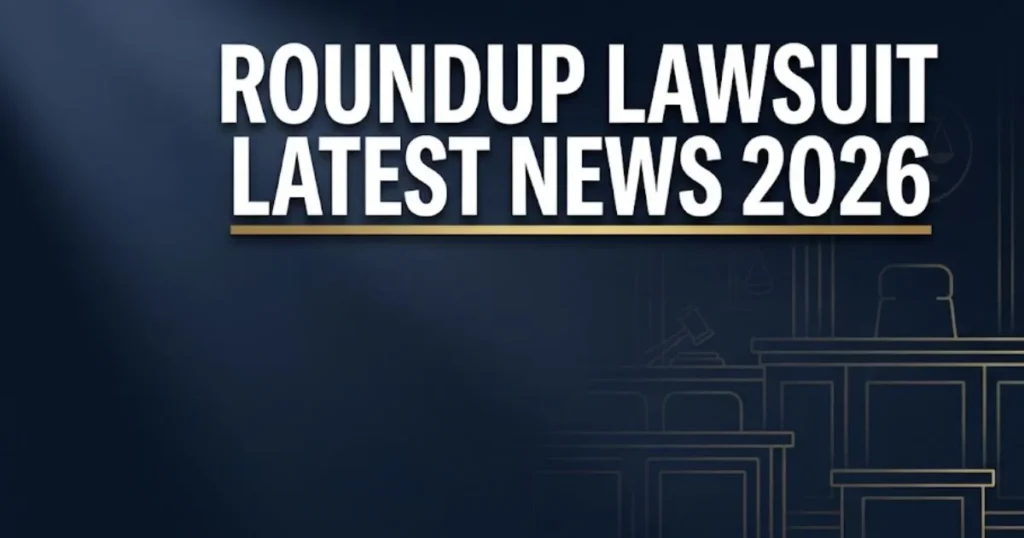
Roundup Lawsuit Latest News 2026
The Roundup lawsuit in 2026 remains one of the largest ongoing mass tort litigations in American legal history. Bayer continues to face active lawsuits in both federal and state courts across the country.
The biggest development heading into 2026 is the ongoing dispute over whether federal law preempts state failure-to-warn claims. The U.S. Supreme Court’s decision in this area is being watched closely by plaintiffs and defense attorneys alike.
Thousands of new claims are still being filed. Legal observers estimate that more than 160,000 claims remain unresolved as of early 2026.
Key 2026 Roundup Lawsuit Headlines at a Glance:
| Development | Status |
|---|---|
| Unresolved Claims | Estimated 160,000+ |
| Bayer Total Settlement Commitment | $11+ billion |
| Federal Preemption Issue | Under active legal review |
| New Filings | Still being accepted |
| MDL Status | MDL 2741 remains active |
State courts in California, Missouri, and St. Louis have been particularly active in scheduling new Roundup trials for 2026.
Bayer has stated it intends to resolve remaining claims through structured settlements rather than continued trials. Whether that strategy succeeds depends heavily on court rulings expected this year.
Roundup Lawsuit Settlement Amounts 2026
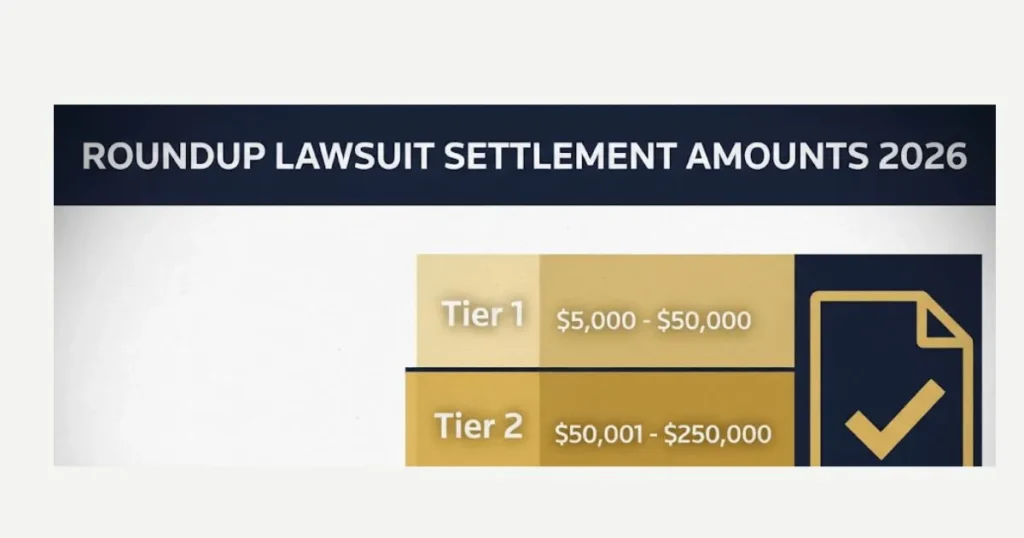
Roundup lawsuit settlement amounts in 2026 vary widely based on cancer type, exposure history, and case strength. Most individual settlements range from $5,000 to over $250,000, with higher-tier cases involving aggressive cancers and extensive exposure histories settling for far more.
The widely reported $11 billion total commitment from Bayer spread across multiple settlement programs gives you a sense of the scale. But that number gets divided across tens of thousands of claimants, so individual payouts are smaller.
A useful way to think about it: this is not a lottery. It’s a structured system where stronger evidence equals stronger compensation.
Estimated Settlement Tiers by Claim Strength:
| Claim Tier | Typical Factors | Estimated Range |
|---|---|---|
| Tier 1 (Strongest) | Aggressive NHL, long-term occupational exposure, documented medical history | $150,000 to $250,000+ |
| Tier 2 (Moderate) | NHL diagnosis, regular residential use, supporting records | $50,000 to $149,000 |
| Tier 3 (Standard) | Less aggressive cancer type, shorter exposure, limited documentation | $5,000 to $49,000 |
| Tier 4 (Minimum) | Borderline diagnosis, minimal exposure evidence | Under $5,000 |
These are estimates. Final amounts depend on individual case review by settlement administrators and attorneys.
Punitive damages, which drove some jury verdicts into the hundreds of millions before Bayer’s settlement programs, are generally not part of structured settlement payouts.
Who Qualifies for the Roundup Lawsuit
You may qualify for the Roundup lawsuit if you used Roundup or another glyphosate-based weed killer and later developed a qualifying cancer diagnosis. The core requirement is a documented connection between your exposure and your illness.
Eligibility is not automatic. You have to meet specific criteria reviewed by attorneys before a claim moves forward.
Basic Eligibility Requirements:
- Used Roundup or a glyphosate-based product
- Developed non-Hodgkin lymphoma or another qualifying blood cancer
- Cancer diagnosed after a period of regular product use
- Exposure occurred before the lawsuit filing window closed for your state
- Medical records and purchase or use evidence are available
Factors That Strengthen Your Claim:
- Occupational or repeated exposure over multiple years
- Cancer diagnosed within a reasonable latency window after exposure
- No other significant identified cancer risk factors
- Documented medical treatment and expenses
People who used Roundup just once or twice are unlikely to meet the exposure threshold required for most claims.
The strongest cases involve landscapers, groundskeepers, farm workers, and homeowners who applied Roundup regularly over several seasons.
Roundup Cancer Lawsuit and Non-Hodgkin Lymphoma
Non-Hodgkin lymphoma, often called NHL, is the cancer most directly linked to Roundup and glyphosate exposure in both scientific literature and courtroom arguments. It is the primary qualifying cancer in the vast majority of Roundup lawsuits.
NHL is a cancer of the lymphatic system. It includes dozens of subtypes, and not all of them carry the same weight in litigation.
The most commonly cited subtypes in successful Roundup claims include:
- Diffuse large B-cell lymphoma (DLBCL)
- Follicular lymphoma
- Mantle cell lymphoma
- Marginal zone lymphoma
- Chronic lymphocytic leukemia (CLL) in some cases
NHL Subtypes and Claim Strength:
| NHL Subtype | Frequency in Claims | Litigation Standing |
|---|---|---|
| Diffuse Large B-Cell Lymphoma | Most common | Very strong |
| Follicular Lymphoma | Common | Strong |
| Mantle Cell Lymphoma | Less common | Moderate to strong |
| Marginal Zone Lymphoma | Less common | Moderate |
| CLL/SLL | Occasionally included | Varies by jurisdiction |
If you were diagnosed with a form of NHL and used Roundup regularly, your situation fits the central factual pattern that juries have already found persuasive in multiple trials.
Other blood cancers have been raised in some cases, but NHL remains the anchor diagnosis driving this litigation.
Key Takeaway: The Roundup lawsuit is still active in 2026 with over 160,000 claims unresolved. Settlement amounts range widely, and non-Hodgkin lymphoma is the primary qualifying cancer diagnosis.
Bayer Roundup Lawsuit Status Update
Bayer’s current position in 2026 is that it wants to end the Roundup litigation through a global resolution rather than fight thousands of individual trials. That plan is not fully working yet.
After buying Monsanto in 2018 for $63 billion, Bayer inherited the Roundup liability problem. Since then, it has lost several high-profile jury trials and paid out massive verdicts.
Bayer’s public stance remains that glyphosate is safe when used as directed. The company relies on EPA assessments supporting that position. But U.S. juries have repeatedly disagreed.
Bayer Roundup Litigation Timeline:
| Year | Development |
|---|---|
| 2018 | Bayer acquires Monsanto, inherits Roundup liability |
| 2019 | First major jury verdict: $80 million awarded to plaintiff |
| 2020 | Bayer announces $10.9 billion settlement framework |
| 2021-2023 | Settlement payments begin; new claims continue filing |
| 2024 | Supreme Court agrees to review federal preemption question |
| 2025 | Additional state court trials proceed; Bayer expands settlement discussions |
| 2026 | Active negotiations, new filings ongoing, court rulings pending |
The preemption question is critical. If the Supreme Court rules that federal EPA approval shields Bayer from state failure-to-warn claims, thousands of lawsuits could be dismissed. Most legal analysts consider a full preemption ruling unlikely, but the outcome will shape the litigation significantly.
How Much Can I Get from the Roundup Lawsuit
The amount you can get from a Roundup lawsuit depends on several specific factors tied to your individual case. There is no single flat payment amount.
Think of it like insurance claims after a car accident. Two people in the same crash can receive very different payouts based on injury severity, documentation quality, and how their case is presented.
Factors That Determine Your Roundup Payout:
- Severity and aggressiveness of your cancer diagnosis
- Length and intensity of your Roundup exposure
- Age at diagnosis and life impact
- Medical expenses incurred
- Lost income if you missed work for treatment
- Quality of supporting documentation
General Payout Reference Ranges:
| Case Factor | Approximate Impact on Value |
|---|---|
| Aggressive NHL (DLBCL) | Higher end of range |
| Long-term occupational use | Significant value booster |
| Clear medical documentation | Required for full value |
| Younger plaintiff with career losses | Increases settlement value |
| Multiple comorbidities without cancer link | Can reduce value |
Some individual settlements have reached $1 million or more in cases involving aggressive cancers, young plaintiffs with long exposure histories, and strong documentation.
Most settlements fall in the $50,000 to $150,000 range for moderate claims. Lower-tier claims may settle for less.
Roundup Lawsuit Filing Deadline 2026
The filing deadline for a Roundup lawsuit varies by state and is one of the most time-sensitive issues in this litigation. Missing your state’s statute of limitations means losing your right to file entirely.
Most states set a 2-year window from the date of cancer diagnosis or the date you reasonably discovered the connection between Roundup and your illness. A few states allow 3 years.
Do not assume you have time. Statutes of limitations are strict cutoffs. Courts rarely grant exceptions.
Filing Deadline Quick Reference:
| State Group | Typical Statute of Limitations |
|---|---|
| California, New York | 2 years from discovery of injury |
| Missouri, Illinois | 2 years from diagnosis |
| Texas, Florida | 2 to 4 years depending on claim type |
| Other states | Ranges from 1 to 6 years |
If you were diagnosed in 2022 or earlier and have not filed, check your state’s specific deadline immediately.
Some claimants use the “discovery rule,” which starts the clock from when they learned Roundup may have caused their cancer, not when they were diagnosed. This can extend eligibility for some people.
An attorney can assess whether any tolling provisions apply to your situation.
Key Takeaway: Filing deadlines are state-specific and often run just 2 years from diagnosis. If you were diagnosed before 2024, your window may already be narrowing.
How to File a Roundup Lawsuit Claim
Filing a Roundup lawsuit claim starts with connecting with a mass tort attorney who handles glyphosate cases. This is not a solo process, and it does not require upfront payment in most cases.
Mass tort attorneys work on contingency. That means they get paid a percentage of your settlement only if you win. You pay nothing to start.
Step-by-Step Process for Filing:
- Gather your medical records confirming your cancer diagnosis
- Document your Roundup use: receipts, photos, witness statements, employment records if occupational
- Contact a mass tort law firm that handles Roundup claims
- Initial case review: attorney evaluates your eligibility at no charge
- Case filing: attorney files your claim in the appropriate court or MDL
- Discovery and negotiation: your records are reviewed, and settlement discussions begin
- Settlement or trial: most cases resolve without going to trial
What You Need to Gather:
- Pathology reports and diagnosis records
- Treatment records and bills
- Evidence of Roundup purchase or use (receipts, employer records, photos)
- Employment history if you used Roundup professionally
The process typically takes 12 to 36 months from filing to resolution, depending on case complexity and settlement program timing.
Glyphosate and Cancer: The Scientific Evidence
Glyphosate causes cancer in humans: that is the conclusion of the International Agency for Research on Cancer, a branch of the World Health Organization, which in 2015 classified glyphosate as “probably carcinogenic to humans” (Group 2A). That classification is the scientific foundation of the entire Roundup litigation.
The IARC finding does not mean everyone who touches glyphosate will get cancer. It means there is sufficient evidence to establish a probable causal link at significant exposure levels.
The EPA disagrees. The agency maintains that glyphosate is “not likely to be carcinogenic to humans” at doses typical of real-world exposure. That disagreement between IARC and the EPA is at the heart of Bayer’s legal defense.
Glyphosate Cancer Evidence: Key Points:
| Source | Position | Year |
|---|---|---|
| IARC / WHO | Probably carcinogenic (Group 2A) | 2015 |
| U.S. EPA | Not likely carcinogenic at typical doses | Multiple reviews |
| U.S. Juries | Found Monsanto/Bayer liable in multiple trials | 2019 to present |
| European ECHA | Not classifiable as carcinogen | 2017 |
| California OEHHA | Listed as known carcinogen under Prop 65 | 2017 |
Multiple peer-reviewed studies have found elevated rates of NHL among people with high occupational glyphosate exposure. Those studies have been cited in every major Roundup trial.
Bayer challenges those studies aggressively. But juries have sided with plaintiffs in many of the cases that went to trial.
Roundup Lawsuit Trial Verdicts and Outcomes
Roundup juries have consistently sided with plaintiffs in cases that went to trial, resulting in some of the largest product liability verdicts in U.S. history. These verdicts have put enormous pressure on Bayer to settle remaining claims.
The first major verdict came in August 2018, when a California jury awarded school groundskeeper Dewayne Johnson $289 million (later reduced to $78 million on appeal). That case became the template for the litigation.
Notable Roundup Trial Verdicts:
| Plaintiff | Year | Initial Verdict | Reduced Amount |
|---|---|---|---|
| Dewayne Johnson | 2018 | $289 million | $78 million |
| Edwin Hardeman | 2019 | $80 million | $25 million |
| Alva and Alberta Pilliod | 2019 | $2 billion | $86 million |
| Various Missouri plaintiffs | 2021-2023 | Multiple verdicts | Varied |
Bayer has appealed most large verdicts. Courts have typically reduced punitive damages while upholding compensatory awards.
The company’s win rate in trials improved somewhat in 2023 and 2024 as its legal strategy evolved. But plaintiff attorneys have continued securing verdicts in jurisdictions where Bayer’s preemption arguments have not been accepted.
Key Takeaway: Multiple juries have found Bayer liable, resulting in billions in verdicts. Bayer’s appeals have reduced but not eliminated plaintiff wins.
Bayer Settlement Strategy 2026
Bayer’s settlement strategy in 2026 centers on resolving the remaining mass of claims through structured programs rather than trial-by-trial litigation. The company wants finality. It does not want to keep losing jury trials with eight-figure verdicts.
In 2020, Bayer announced a roughly $10.9 billion settlement framework. That covered most of the then-pending claims. But tens of thousands of new claims filed after that framework were not included.
The current strategy involves three main tracks:
- Track 1: Resolution of claims filed before the 2020 settlement cutoff
- Track 2: Negotiated resolution of claims filed between 2020 and 2024
- Track 3: Ongoing litigation for claims where plaintiffs reject settlement offers
Bayer 2026 Settlement Strategy Breakdown:
| Track | Claim Type | Resolution Status |
|---|---|---|
| Track 1 | Pre-2020 claims | Largely resolved |
| Track 2 | 2020 to 2024 claims | Active negotiation |
| Track 3 | Post-2024 and rejected settlements | Trial docket |
Bayer has also lobbied Congress for legislation that would cap future Roundup liability. That effort has not succeeded as of early 2026.
The company’s stock price and investor relations remain sensitive to Roundup news. Large adverse verdicts trigger share price drops. That financial pressure keeps Bayer motivated to settle rather than litigate.
Roundup Lawsuit Statute of Limitations by State
The statute of limitations for a Roundup lawsuit is a hard legal deadline. Once it passes, you cannot file, period. The deadline varies by state and depends on when your clock started running.
Most states follow the “discovery rule,” which starts the clock when you knew or should have known your cancer might be linked to Roundup. That is different from your diagnosis date in some cases.
State-by-State Statute of Limitations Reference:
| State | Time Limit | Clock Starts |
|---|---|---|
| California | 2 years | Date of discovery |
| New York | 3 years | Date of injury or discovery |
| Texas | 2 years | Date of injury |
| Florida | 4 years | Date of discovery |
| Missouri | 5 years | Date of injury |
| Illinois | 2 years | Date of discovery |
| Pennsylvania | 2 years | Date of discovery |
| Ohio | 2 years | Date of discovery |
| Georgia | 2 years | Date of diagnosis |
These deadlines interact with MDL procedures in complex ways. Filing in federal MDL does not automatically pause your state statute of limitations.
If you are unsure whether your deadline has passed, get your situation reviewed. Some exceptions and tolling rules do apply in limited circumstances.
Roundup Lawsuit for Farmers and Professional Applicators
Farmers, agricultural workers, groundskeepers, golf course employees, and landscapers who used Roundup professionally typically have the strongest Roundup claims. Their exposure levels are significantly higher than residential users.
Occupational exposure cases are prioritized in mass tort litigation because the evidence of repeated, sustained contact is clearer and the causal link is stronger.
If you worked in any of these roles and used Roundup regularly, your case deserves serious attention:
- Commercial farmers applying Roundup to crops seasonally
- Landscaping and lawn care professionals
- Golf course maintenance crews
- Nursery and greenhouse workers
- Municipal parks and highway maintenance workers
- School and university groundskeepers
Occupational vs. Residential Claim Comparison:
| Factor | Occupational Claimant | Residential Claimant |
|---|---|---|
| Exposure frequency | Daily to weekly | Occasional to seasonal |
| Exposure duration | Years or decades | Variable |
| Claim strength | Typically higher | Typically lower |
| Documentation ease | Employment records help | Requires receipts or photos |
| Settlement potential | Higher tier likely | Depends on other factors |
Agricultural workers who mixed and applied Roundup concentrate, rather than using diluted spray, face the highest documented exposure levels. Their claims have consistently driven some of the largest verdicts.
Key Takeaway: Occupational users like farmers and landscapers face the highest Roundup exposure and typically have the strongest, highest-value claims in this litigation.
What Cancers Qualify for the Roundup Lawsuit
Non-Hodgkin lymphoma is the primary qualifying cancer for a Roundup lawsuit, but it is not the only one considered. The qualifying cancer list reflects the scientific literature on glyphosate exposure and blood cancer risk.
If you have been diagnosed with any of the following, your case may be eligible:
Qualifying Cancer Types:
| Cancer Type | Qualification Status |
|---|---|
| Non-Hodgkin Lymphoma (all subtypes) | Primary qualifying diagnosis |
| Diffuse Large B-Cell Lymphoma | Strong qualification |
| Follicular Lymphoma | Strong qualification |
| Mantle Cell Lymphoma | Qualifies |
| Marginal Zone Lymphoma | Qualifies |
| Chronic Lymphocytic Leukemia (CLL) | Qualifies in many cases |
| Small Lymphocytic Lymphoma (SLL) | Qualifies in many cases |
| Hairy Cell Leukemia | Considered in some cases |
| Multiple Myeloma | Under evaluation in some cases |
Cancers not linked to glyphosate exposure in the scientific literature, such as breast cancer, lung cancer, or prostate cancer, generally do not qualify.
The diagnosis must be confirmed by pathology report. Self-reported diagnoses without medical documentation are not sufficient to support a claim.
Bayer’s legal team will scrutinize your medical records to challenge the link between your specific cancer subtype and glyphosate exposure.
Roundup Lawsuit Expected Timeline and Next Steps
The Roundup lawsuit timeline in 2026 points toward continued settlement activity, with the possibility of significant legal rulings that could reshape the litigation. There is no single end date for this litigation.
Think of it less like a scheduled flight and more like traffic on a freeway: most cases are moving, but the pace varies by where your case sits in the queue.
Projected 2026 Roundup Lawsuit Timeline:
| Phase | Expected Timing |
|---|---|
| Ongoing settlement payouts (Track 1) | Continuing through 2026 |
| Track 2 settlement negotiations | Active now, resolutions expected mid to late 2026 |
| Supreme Court preemption ruling | Decision expected 2026 |
| New state court trials | Scheduled throughout 2026 |
| New claim filing window | Open now; deadlines approaching for many states |
| Full litigation resolution estimate | 2027 to 2029 based on current pace |
If the Supreme Court rules against federal preemption, the litigation will continue robustly. Plaintiff attorneys will file more claims and push for more trials.
If the Court rules for preemption, thousands of state court claims could be dismissed, and settlement values might drop significantly.
For anyone who has not yet filed, the window is not permanently closed. But it is getting narrower, and the direction of the Supreme Court decision adds urgency to acting sooner rather than later.
Roundup Lawsuit Frequently Asked Questions
What is the latest news on the Roundup lawsuit in 2026?
The Roundup lawsuit remains one of the most active mass torts in the U.S. in 2026.
Bayer continues to negotiate settlements for over 160,000 unresolved claims while state and federal courts schedule new trials.
A pending Supreme Court decision on federal preemption could significantly change the litigation’s direction this year.
How much money will I get from a Roundup lawsuit settlement?
Most Roundup settlements range from $5,000 to $250,000 depending on cancer type, exposure history, and documentation.
The strongest cases involving aggressive NHL diagnoses and long-term occupational exposure can settle for more.
There is no guaranteed amount; your individual case facts determine the final figure.
Who qualifies to file a Roundup cancer lawsuit?
You qualify if you used Roundup or a glyphosate-based product and later developed non-Hodgkin lymphoma or another qualifying blood cancer.
Your exposure must have been regular and documented, not just a one-time use.
You must also file within your state’s statute of limitations window from your diagnosis date.
What cancers are linked to Roundup weed killer?
Non-Hodgkin lymphoma is the primary cancer linked to Roundup and glyphosate exposure.
Subtypes including diffuse large B-cell lymphoma, follicular lymphoma, and mantle cell lymphoma are the most commonly claimed.
Chronic lymphocytic leukemia and hairy cell leukemia may also qualify depending on jurisdiction and case facts.
Is there still time to file a Roundup lawsuit in 2026?
Yes, new Roundup claims are still being accepted in 2026.
But filing deadlines vary by state and are typically 2 to 4 years from your cancer diagnosis or discovery of the link to Roundup.
If your diagnosis was in 2022 or earlier, your deadline may be approaching or already past depending on your state.
The Path Forward
The Roundup lawsuit story is not over. Bayer is still negotiating. Courts are still scheduling trials. And tens of thousands of claims are still waiting for resolution.
If you or someone you love used Roundup regularly and has a cancer diagnosis, 2026 may be one of the last years to get into this litigation before statutes of limitations close the door.
Start by pulling together your medical records and any documentation of your Roundup use. Then connect with a mass tort attorney who handles glyphosate claims. The consultation is free.
Time is the one factor you cannot recover once it runs out.







