

Railroad workers diagnosed with aplastic anemia after years of chemical exposure on the job are filing lawsuits in record numbers. The railroad lawsuit aplastic anemia wave is hitting hard in 2026, with FELA claims targeting major carriers like BNSF, CSX, and Norfolk Southern.
This guide covers everything you need to know. You will learn who qualifies, what settlements look like, how to file, and the deadlines you cannot miss.
Here is one fact that should stop you in your tracks. Some railroad aplastic anemia verdicts have exceeded $6 million for individual workers. And the number of new filings is growing every quarter.
If you worked around benzene, diesel exhaust, creosote, or industrial solvents on the railroad, this article was written for you.
Railroad Lawsuit Aplastic Anemia Overview
A railroad lawsuit for aplastic anemia is a legal claim filed by railroad employees who developed this serious blood disorder after being exposed to toxic chemicals on the job. These cases are filed under the Federal Employers Liability Act, commonly known as FELA.
Aplastic anemia happens when your bone marrow stops making enough new blood cells. It can be fatal. Railroad workers face a higher risk because they work around carcinogens like benzene, creosote, and diesel exhaust for years or even decades.
Unlike a standard workers compensation claim, FELA lawsuits require the worker to prove the railroad was negligent. That means showing the company knew about the chemical hazards and failed to protect you.
| Key Fact | Detail |
|---|---|
| Legal Basis | Federal Employers Liability Act (FELA) |
| Primary Chemical Link | Benzene |
| Condition | Aplastic anemia (bone marrow failure) |
| Who Can File | Current or former railroad employees |
| Claim Type | Individual negligence lawsuit, not class action |
These cases are almost always filed as individual lawsuits, not class actions. That matters because your payout depends on your specific exposure, diagnosis, and damages.
The railroad industry has known about benzene dangers since the mid-20th century. OSHA has regulated benzene exposure for decades. Yet many railroads failed to provide adequate protective equipment or monitoring.
Railroad Aplastic Anemia Lawsuit Update for 2026
As of 2026, railroad aplastic anemia lawsuits are actively moving through federal and state courts across the country. New filings have increased since 2024, and several major cases are headed toward trial or settlement negotiations.
Courts in Illinois, Texas, Pennsylvania, and West Virginia are handling the bulk of these cases. Multiple law firms have reported a surge in consultations from retired railroad workers who are just now learning they can file.

One significant development in 2025 was a series of pretrial rulings that made it easier for plaintiffs to introduce benzene exposure records from railroad yards. Judges in several jurisdictions ruled that internal railroad safety audits could be admitted as evidence of negligence.
- New filings are up an estimated 30% to 40% compared to 2023
- Several railroads have begun offering early settlement talks to avoid jury trials
- Expert witness testimony linking benzene to aplastic anemia has been upheld in multiple Daubert hearings
- Discovery in cases against BNSF and CSX has produced damning internal documents
The legal momentum is clearly on the side of workers in 2026. Railroads are not winning these cases easily, and juries tend to side with sick workers who can prove chemical exposure.
If you have been diagnosed and have not filed yet, this is the window. Statutes of limitations are running, and evidence gets harder to gather over time.
Railroad Aplastic Anemia Settlement Amounts
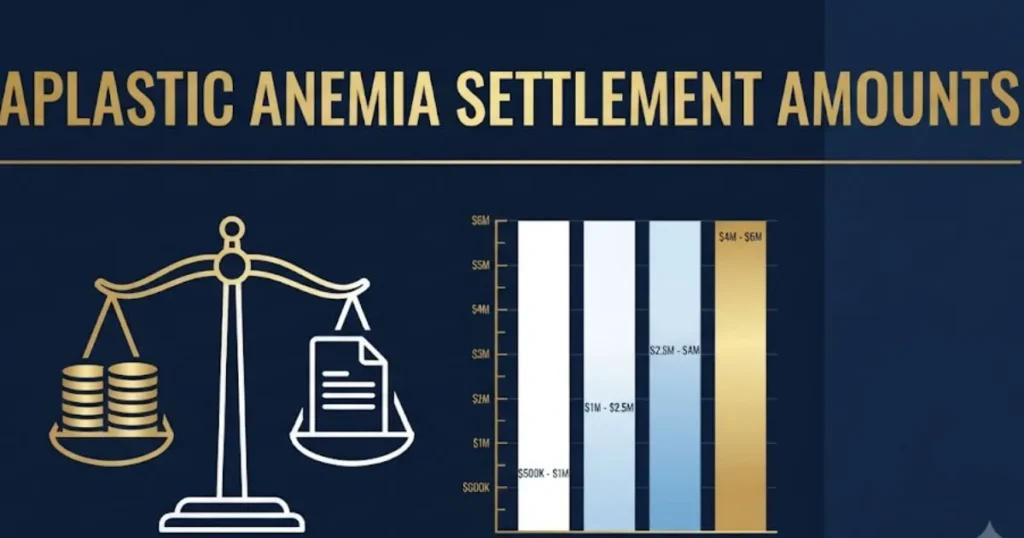
Railroad aplastic anemia settlements in 2026 typically range from $500,000 to over $6 million, depending on the severity of the diagnosis, the length of exposure, and the strength of evidence. There is no fixed amount because every case is different.
Think of it like selling a house. Two homes on the same street can sell for wildly different prices based on condition, upgrades, and timing. The same applies here.
Several factors push settlement values higher or lower.
| Factor | Effect on Settlement Value |
|---|---|
| Diagnosis Severity | Severe aplastic anemia with transfusion dependence: higher payout |
| Exposure Duration | 10+ years of documented benzene exposure: higher payout |
| Age at Diagnosis | Younger workers may receive more for lost future earnings |
| Medical Expenses | Bone marrow transplant costs can exceed $500,000 alone |
| Lost Wages | Lifetime earning capacity is calculated into damages |
| Railroad Company | Some carriers settle faster and higher than others |
| Death from Condition | Wrongful death cases often bring the highest awards |
Verdicts in cases that go to trial have sometimes reached $8 million to $12 million. But most cases settle before trial because railroads want to avoid the unpredictability of a jury.
Workers with strong medical records and clear employment histories tend to receive offers in the $1 million to $4 million range. Cases involving bone marrow transplants or death push those numbers higher.
Key Takeaway: Railroad aplastic anemia lawsuits are individual FELA claims, not class actions, and settlements in 2026 range from $500,000 to over $6 million based on exposure, diagnosis severity, and evidence strength.
Who Qualifies for a Railroad Aplastic Anemia Lawsuit
You may qualify for a railroad aplastic anemia lawsuit if you are a current or former railroad employee diagnosed with aplastic anemia and you were exposed to benzene or other toxic chemicals during your employment. The core requirement is a connection between your railroad job and your diagnosis.
Not every railroad worker qualifies. There are specific conditions that make a case viable.
You likely qualify if:
- You worked for a railroad company (Class I, regional, or short line)
- You were exposed to benzene, creosote, diesel exhaust, solvents, or herbicides on the job
- You received a confirmed diagnosis of aplastic anemia from a physician
- Your exposure and diagnosis have a plausible medical connection
- You are within the statute of limitations for filing
Job roles with the highest exposure risk include:
- Track maintenance workers (gandy dancers)
- Locomotive mechanics and shop workers
- Signal maintainers
- Car inspectors and repairers
- Yard workers and switchmen
- Tank car cleaners
Even if you retired years ago, you can still file. Many workers develop aplastic anemia 10 to 30 years after their exposure period ended. The disease has a long latency.
Family members of deceased workers may qualify to file a wrongful death claim under FELA. Surviving spouses and children typically have standing.
The Aplastic Anemia and Benzene Railroad Link
Benzene is the primary chemical linking railroad work to aplastic anemia. Decades of medical research confirm that prolonged benzene exposure damages bone marrow and can trigger aplastic anemia, leukemia, and other blood disorders.
The connection is not disputed in the medical community. The International Agency for Research on Cancer (IARC) classifies benzene as a Group 1 carcinogen. The American Petroleum Institute knew benzene was dangerous as early as the 1940s.
Railroad workers encounter benzene in multiple ways on the job.
| Source of Benzene Exposure | Where It Occurs |
|---|---|
| Diesel fuel and exhaust | Locomotive cabs, engine houses, rail yards |
| Solvents and degreasers | Maintenance shops, repair facilities |
| Creosote-treated railroad ties | Track work, tie replacement projects |
| Petroleum products | Fuel storage areas, tank car loading/unloading |
| Herbicides and pesticides | Right-of-way vegetation management |
Benzene enters the body through inhalation and skin contact. Once inside, it attacks the bone marrow where blood cells are produced. Over time, this damage can cause the marrow to shut down.
The result is aplastic anemia. Your body stops making enough red blood cells, white blood cells, and platelets. Without treatment, it can be fatal.
What makes these cases strong legally is that railroads knew about benzene dangers and often failed to provide respirators, ventilation, or exposure monitoring.
Benzene Exposure and Railroad Workers Lawsuits
Benzene exposure lawsuits filed by railroad workers have been successful for over two decades, and 2026 is seeing a new wave of claims as more workers receive diagnoses. These lawsuits argue that railroad companies acted negligently by failing to protect employees from a known carcinogen.
OSHA sets the permissible exposure limit (PEL) for benzene at 1 part per million (ppm) over an 8-hour workday. Studies of railroad yards and maintenance shops have found exposure levels far exceeding this limit, sometimes by a factor of 5 to 10.
Workers in enclosed engine houses and maintenance bays faced the worst exposures. Diesel exhaust alone contains measurable quantities of benzene. When you add solvent use and creosote handling, the exposure compounds.
Key facts about benzene exposure in railroad settings:
- Diesel exhaust contains benzene at concentrations of 0.1 to 1.5 ppm
- Solvent use in shops can create short-term spikes above 10 ppm
- Creosote contains benzene along with other polycyclic aromatic hydrocarbons
- Most railroads did not provide benzene-specific respirators until the late 1990s or later
- Air monitoring records from railroad properties are often incomplete or missing
The absence of monitoring records actually helps plaintiffs in many cases. Courts have ruled that a railroad’s failure to monitor exposure can be treated as evidence of negligence itself.
If you worked in a poorly ventilated shop or around diesel locomotives for years, your exposure was likely significant.
Key Takeaway: Benzene is a confirmed cause of aplastic anemia, and railroad workers were routinely exposed to it through diesel exhaust, solvents, and creosote without adequate protection for decades.
Railroad Companies Sued for Aplastic Anemia
The major railroad companies facing aplastic anemia lawsuits in 2026 include BNSF Railway, CSX Transportation, Norfolk Southern, Union Pacific, Canadian National, and Amtrak. Nearly every Class I railroad has been named in FELA aplastic anemia claims.
These companies employed hundreds of thousands of workers over the decades. Many of those workers handled benzene-containing products daily without proper safety equipment.
| Railroad Company | Headquarters | Active Aplastic Anemia Claims |
|---|---|---|
| BNSF Railway | Fort Worth, TX | Yes, significant volume |
| CSX Transportation | Jacksonville, FL | Yes, ongoing litigation |
| Norfolk Southern | Atlanta, GA | Yes, multiple jurisdictions |
| Union Pacific | Omaha, NE | Yes, active cases |
| Canadian National (CN) | Montreal, QC | Yes, U.S. operations included |
| Amtrak | Washington, D.C. | Yes, fewer but active |
| Kansas City Southern | Kansas City, MO | Yes, some pending |
Smaller regional and short-line railroads have also been sued. Any railroad employer covered by FELA can be held liable.
BNSF and CSX have faced the highest volume of claims. Internal documents from these companies have revealed that safety departments flagged benzene risks years before protective measures were implemented.
Some of these companies have chosen to settle cases quietly. Others fight hard in court. Your experience will depend on which railroad you worked for and how strong your evidence is.
FELA Aplastic Anemia Claims in 2026
FELA is the federal law that gives railroad workers the right to sue their employer for work-related injuries and illnesses, including aplastic anemia. It replaces traditional workers compensation for railroad employees and allows for much larger recoveries.
Under FELA (45 U.S.C. Section 51), a railroad worker does not need to prove the company was 100% at fault. You only need to show the railroad was even partially negligent and that this negligence contributed to your illness.
That is a lower bar than many people realize. If the railroad failed to provide safety gear, failed to monitor chemical exposure, or failed to warn you about benzene dangers, that counts as negligence.
What makes FELA different from workers comp:
- No caps on damages
- You can recover pain and suffering, not just medical costs
- Jury trials are available
- You only need to prove partial negligence
- Cases can be filed in federal or state court
- No employer immunity like in workers comp systems
FELA claims for aplastic anemia in 2026 are being filed in courts across the country. Some attorneys prefer to file in plaintiff-friendly jurisdictions like Madison County, Illinois, or Philadelphia.
One important detail: FELA claims are not administrative filings. You need to bring a lawsuit. That means hiring an attorney, filing a complaint, going through discovery, and potentially going to trial.
Railroad Aplastic Anemia Lawsuit Payout Breakdown
The typical railroad aplastic anemia lawsuit payout includes compensation for medical expenses, lost wages, pain and suffering, and loss of quality of life. The breakdown of what you can recover is broader than most people expect.
Here is how payouts are typically structured.
| Damage Category | What It Covers | Typical Range |
|---|---|---|
| Past Medical Expenses | Treatment, transfusions, hospitalizations to date | $100,000 to $1,000,000+ |
| Future Medical Expenses | Ongoing treatment, bone marrow transplant | $200,000 to $2,000,000+ |
| Lost Past Wages | Income lost since diagnosis | Varies by salary |
| Lost Future Earning Capacity | Projected income you can no longer earn | $300,000 to $2,000,000+ |
| Pain and Suffering | Physical pain, emotional distress | $200,000 to $3,000,000+ |
| Loss of Enjoyment of Life | Activities and experiences you can no longer have | Included in pain/suffering |
| Wrongful Death Damages | If the worker died from aplastic anemia | $1,000,000 to $10,000,000+ |
Attorney fees in FELA cases are typically 33% to 40% of the recovery, paid on a contingency basis. That means you pay nothing upfront.
Bone marrow transplants alone cost between $350,000 and $800,000. When you add lost wages for a worker earning $70,000 to $100,000 per year, the economic damages stack up fast.
Non-economic damages like pain and suffering are where juries often award the largest amounts. Living with aplastic anemia means constant fatigue, infection risk, regular transfusions, and the fear that your body is failing you.
Key Takeaway: FELA claims allow railroad workers to recover medical costs, lost wages, and pain and suffering without damage caps, and payouts for aplastic anemia cases frequently reach seven figures.
How to File a Railroad Aplastic Anemia Lawsuit
To file a railroad aplastic anemia lawsuit, you need to hire a FELA attorney, gather your medical and employment records, and file a formal complaint in federal or state court. The process has clear steps, and starting early is critical.
Here is a step-by-step breakdown.
Step 1: Contact a FELA attorney. Look for a lawyer with specific experience in railroad injury and illness cases. FELA is a specialized area of law. General personal injury attorneys often lack the knowledge needed.
Step 2: Gather your records. Your attorney will need your medical records confirming aplastic anemia, your employment history with the railroad, and any information about chemical exposures you experienced.
Step 3: Case evaluation. Your attorney reviews the evidence and determines if you have a viable claim. This includes identifying the specific chemicals you were exposed to and the safety failures by your employer.
Step 4: File the complaint. Your attorney drafts and files a lawsuit in the appropriate court. This can be a federal district court or a state court.
Step 5: Discovery phase. Both sides exchange documents, take depositions, and retain expert witnesses. This is where railroad internal safety records become critical.
Step 6: Settlement negotiation or trial. Most cases settle during or after discovery. If the railroad refuses a fair offer, your case goes to a jury trial.
| Step | Timeline |
|---|---|
| Attorney Consultation | Week 1 |
| Record Gathering | Weeks 2 to 8 |
| Complaint Filing | Month 2 to 3 |
| Discovery | Months 4 to 18 |
| Settlement or Trial | Months 12 to 36 |
You do not need to live near the court where your case is filed. FELA attorneys handle cases nationwide.
Evidence Needed for a Railroad Aplastic Anemia Case
The evidence you need for a railroad aplastic anemia case includes a confirmed medical diagnosis, employment records showing you worked for a railroad, and documentation of chemical exposure during your employment. Strong cases have all three elements.
Medical evidence is the foundation. Your attorney will need:
- Bone marrow biopsy results confirming aplastic anemia
- Complete blood count (CBC) records showing pancytopenia
- Hematologist reports linking your condition to chemical exposure
- Treatment records including transfusions, medications, or transplant documentation
Employment evidence shows you worked in a setting where exposure occurred:
- Railroad employment records and pay stubs
- Job descriptions and duty assignments
- Union records or seniority lists
- Coworker testimony about working conditions
- Photographs of your work environment
Exposure evidence ties it all together:
- OSHA inspection records for your work location
- Railroad safety audits and chemical inventories
- Material Safety Data Sheets (MSDS) for products you used
- Air monitoring data (if it exists)
- Expert toxicologist testimony about exposure levels
Here is a reality check. Many railroads did a poor job documenting chemical exposures. That does not kill your case. Courts recognize that the absence of records can itself be evidence of negligence.
Coworker declarations are powerful. If three former colleagues can describe the same unventilated shop and the same solvent use, that paints a vivid picture for a jury.
Signs of Aplastic Anemia from Railroad Work
The early signs of aplastic anemia from railroad work include unexplained fatigue, frequent infections, easy bruising, and prolonged bleeding from minor cuts. Many railroad workers mistake these symptoms for aging or normal wear and tear.
Aplastic anemia develops slowly in most cases. By the time symptoms become obvious, the bone marrow is already severely damaged.
Watch for these symptoms:
- Extreme fatigue that rest does not fix
- Shortness of breath during light activity
- Frequent or unusual infections
- Easy bruising or unexplained bruises
- Bleeding gums or nosebleeds
- Tiny red or purple spots on the skin (petechiae)
- Pale skin
- Rapid or irregular heartbeat
- Headaches and dizziness
| Symptom | What It Indicates |
|---|---|
| Fatigue | Low red blood cell count (anemia) |
| Frequent infections | Low white blood cell count (leukopenia) |
| Easy bruising/bleeding | Low platelet count (thrombocytopenia) |
| All three together | Pancytopenia: hallmark of aplastic anemia |
If you worked on the railroad and have any combination of these symptoms, ask your doctor for a complete blood count. It is a simple blood test.
Many workers are diagnosed after routine blood work reveals abnormal counts. Others are diagnosed only after a medical emergency like uncontrolled bleeding or a severe infection.
Early detection matters. Treatment is more effective when the disease is caught before the bone marrow is completely depleted. It also strengthens your legal case to have a documented diagnosis timeline.
Key Takeaway: Aplastic anemia symptoms like fatigue, bruising, and infections often mimic normal aging, so railroad workers with chemical exposure histories should request blood work and share their occupational history with their doctors.
Railroad Worker Chemical Exposure Claims
Railroad worker chemical exposure claims cover any illness caused by toxic substances encountered on the job, and aplastic anemia is one of the most serious. These claims fall under FELA and target the railroad’s failure to protect workers from known hazards.
Benzene gets the most attention, but it is not the only dangerous chemical railroad workers face.
Common toxic exposures on railroads:
- Benzene: Found in diesel fuel, solvents, and petroleum products
- Creosote: Used to treat wooden railroad ties; contains multiple carcinogens
- Diesel exhaust: Contains benzene, formaldehyde, and particulate matter
- Asbestos: Found in older locomotives, brake shoes, and insulation
- Herbicides: Sprayed along rights-of-way for vegetation control
- Silica dust: Generated during ballast work and track maintenance
- Welding fumes: Contain heavy metals including chromium and manganese
Many workers were exposed to several of these chemicals simultaneously. That combination effect, sometimes called a “chemical cocktail,” can increase the risk of blood disorders significantly.
What separates strong chemical exposure claims from weak ones is specificity. You need to identify which chemicals you worked with, where you were exposed, and how long the exposure lasted.
Railroad companies are required to maintain Material Safety Data Sheets for all hazardous substances on their properties. If they cannot produce those records, it suggests a failure to manage chemical hazards properly.
Railroad Lawsuit Statute of Limitations for Aplastic Anemia
The statute of limitations for a railroad aplastic anemia lawsuit under FELA is 3 years from the date you knew, or should have known, that your illness was caused by your railroad employment. Missing this deadline means you cannot file.
This is the single most important legal deadline in your case. It is absolute. Courts do not grant extensions because you were too sick or too busy.
The 3-year clock does not always start on the date you were diagnosed. Under the “discovery rule,” it starts when you learn, or reasonably should have learned, that your aplastic anemia is connected to your railroad work.
| Scenario | When the Clock Starts |
|---|---|
| Diagnosed in 2024, told it is linked to benzene exposure at your railroad job | 2024: the date you were told |
| Diagnosed in 2022, did not learn about the benzene connection until 2025 | 2025: the date you learned of the link |
| Worker died in 2025 from aplastic anemia | 2025: date of death for wrongful death claim |
Critical points about the statute of limitations:
- It is 3 years under FELA for injury/illness claims
- Wrongful death claims also have a 3-year window from the date of death
- The discovery rule can extend the start date in some cases
- Some railroads will argue the clock started earlier than you think
- Do not wait to see if symptoms get worse before consulting an attorney
If you were diagnosed with aplastic anemia more than 2 years ago and have not consulted a lawyer, you are at risk of missing your window. Get a case evaluation now.
How Long Does a Railroad Aplastic Anemia Lawsuit Take
A railroad aplastic anemia lawsuit typically takes 18 months to 4 years from filing to resolution. Cases that settle tend to resolve faster than cases that go to trial.
The timeline depends on several variables. How cooperative is the railroad during discovery? How complex is the medical evidence? Is the railroad offering a reasonable settlement, or are they forcing a trial?
| Phase | Typical Duration |
|---|---|
| Attorney consultation and case review | 1 to 4 weeks |
| Filing the complaint | 1 to 3 months |
| Discovery (documents, depositions, experts) | 6 to 18 months |
| Settlement negotiations | 2 to 6 months |
| Trial (if no settlement) | 1 to 3 weeks of trial |
| Post-trial motions and appeals | 6 to 18 months |
| Total if settled | 18 to 30 months |
| Total if tried | 2 to 4+ years |
Railroads often use delay tactics. They file motions, request extensions, and challenge expert witnesses. This is a strategy to wear plaintiffs down and pressure them into accepting lower settlements.
A good FELA attorney knows these tactics and pushes back. They keep the case moving and prepare for trial even while negotiating.
If you are seriously ill, your attorney may request an expedited trial schedule. Courts sometimes grant priority to plaintiffs with life-threatening conditions.
Key Takeaway: The FELA statute of limitations is 3 years from when you knew your aplastic anemia was connected to railroad work, and lawsuits typically take 18 months to 4 years to resolve.
Railroad Aplastic Anemia Wrongful Death Lawsuits
A railroad aplastic anemia wrongful death lawsuit can be filed by surviving family members when a railroad worker dies from aplastic anemia caused by on-the-job chemical exposure. These cases are filed under the FELA wrongful death provision and the Boiler Inspection Act in some circumstances.
Wrongful death claims carry some of the highest potential recoveries in railroad litigation.
Who can file a wrongful death FELA claim:
- Surviving spouse
- Children of the deceased worker
- Parents (if no spouse or children survive)
- The personal representative of the worker’s estate
The 3-year statute of limitations for wrongful death claims begins on the date of death, not the date of diagnosis. If a worker was diagnosed in 2020 but died in 2025, the family has until 2028 to file.
| Wrongful Death Damage Category | Description |
|---|---|
| Loss of financial support | What the worker would have earned and contributed |
| Loss of companionship | Emotional loss suffered by spouse and children |
| Funeral and burial expenses | Reasonable costs of final arrangements |
| Pre-death pain and suffering | Suffering endured by the worker before death |
| Medical expenses before death | Treatment costs incurred before the worker passed |
Wrongful death verdicts in railroad cases have ranged from $2 million to $12 million or more. The worker’s age, earning capacity, number of dependents, and the egregiousness of the railroad’s negligence all factor into the award.
If your loved one worked on the railroad and died from aplastic anemia or a related blood disorder, you have legal standing. Do not assume the case died with them.
Railroad Worker Blood Disease Lawsuits
Railroad worker blood disease lawsuits cover a range of conditions beyond aplastic anemia, including myelodysplastic syndrome (MDS), acute myeloid leukemia (AML), chronic lymphocytic leukemia (CLL), and non-Hodgkin lymphoma. All of these have documented links to benzene and other railroad chemicals.
If you have been diagnosed with any blood disease after working on the railroad, you may have a claim even if your specific diagnosis is not aplastic anemia.
Blood diseases linked to railroad chemical exposure:
- Aplastic anemia
- Myelodysplastic syndrome (MDS)
- Acute myeloid leukemia (AML)
- Acute lymphocytic leukemia (ALL)
- Chronic myeloid leukemia (CML)
- Non-Hodgkin lymphoma
- Multiple myeloma
- Thrombocytopenia
| Condition | Link to Benzene | FELA Claim Viable? |
|---|---|---|
| Aplastic Anemia | Strong, well-documented | Yes |
| MDS | Strong | Yes |
| AML | Strong, IARC-confirmed | Yes |
| Non-Hodgkin Lymphoma | Moderate to strong | Yes |
| Multiple Myeloma | Moderate | Yes, with supporting evidence |
MDS is particularly relevant because it is sometimes a precursor to aplastic anemia or progresses to AML. Workers diagnosed with MDS should pursue legal action even if their condition has not yet advanced.
The legal strategy for blood disease cases is essentially the same as for aplastic anemia. You prove exposure, connect it to the diagnosis, and show the railroad was negligent. The specific disease affects the damages calculation but not the underlying legal theory.
BNSF, CSX, and Norfolk Southern Aplastic Anemia Lawsuits
BNSF Railway, CSX Transportation, and Norfolk Southern are the three railroad companies facing the most aplastic anemia lawsuits in 2026. Their large workforces and extensive operations meant tens of thousands of workers were exposed to toxic chemicals over many decades.
Each company has its own litigation history and settlement patterns.
BNSF Railway:
BNSF, a subsidiary of Berkshire Hathaway, operates the largest freight railroad network in North America. Workers at BNSF maintenance shops in places like Topeka, Kansas, and Alliance, Nebraska, have reported heavy benzene and solvent exposure. BNSF has fought many cases aggressively but has also settled significant claims quietly.
CSX Transportation:
CSX operates primarily in the eastern United States. Multiple lawsuits have alleged that CSX maintenance facilities in West Virginia, Ohio, and Florida had inadequate ventilation and no benzene monitoring programs. Several CSX cases have produced settlements exceeding $2 million.
Norfolk Southern:
Norfolk Southern, which gained public attention after the 2023 East Palestine derailment, faces aplastic anemia claims from workers at facilities in Virginia, Georgia, and Pennsylvania. Internal safety documents subpoenaed in litigation have shown gaps in chemical exposure monitoring.
| Railroad | Regions Most Affected | Litigation Status in 2026 |
|---|---|---|
| BNSF Railway | Midwest, Western U.S. | Active, some settling |
| CSX Transportation | Eastern U.S. | Active, multiple jurisdictions |
| Norfolk Southern | Southeast, Mid-Atlantic | Active, growing case count |
| Union Pacific | Western U.S. | Active |
| Canadian National | Northern U.S. operations | Some pending cases |
Workers from any of these railroads who have been diagnosed with aplastic anemia should consult a FELA attorney regardless of when they retired.
Key Takeaway: BNSF, CSX, and Norfolk Southern face the highest volume of aplastic anemia lawsuits in 2026, with settlements in individual cases often exceeding $2 million.
Frequently Asked Questions
Can railroad workers sue for aplastic anemia caused by benzene exposure?
Yes, railroad workers can sue under the Federal Employers Liability Act (FELA) if they developed aplastic anemia due to benzene or other chemical exposure on the job.
The worker must show the railroad was negligent in failing to protect them from known hazards.
These cases are individual lawsuits, not class actions.
How much is a railroad aplastic anemia settlement worth in 2026?
Most railroad aplastic anemia settlements range from $500,000 to over $6 million.
The amount depends on your exposure history, diagnosis severity, medical costs, and lost earnings.
Cases involving bone marrow transplants or wrongful death tend to settle at the higher end.
What is the deadline to file a railroad aplastic anemia lawsuit?
The FELA statute of limitations is 3 years from the date you knew or should have known your aplastic anemia was caused by railroad work.
For wrongful death claims, the 3-year clock starts on the date of death.
Do not wait; once the deadline passes, your claim is barred forever.
What chemicals on railroads cause aplastic anemia?
Benzene is the primary chemical linked to aplastic anemia in railroad workers.
Other contributing chemicals include creosote, diesel exhaust, toluene, xylene, and industrial solvents.
Workers exposed to combinations of these chemicals face an even higher risk.
Can family members file a wrongful death railroad aplastic anemia lawsuit?
Yes, surviving spouses, children, and parents can file wrongful death claims under FELA.
The lawsuit must be filed within 3 years of the worker’s death.
These cases often result in the highest payouts in railroad aplastic anemia litigation.
What to Do Right Now
The railroad lawsuit aplastic anemia wave is not slowing down in 2026. Workers and families are winning real money. But deadlines are firm, and evidence gets harder to gather the longer you wait.
If you or someone you love worked on the railroad and has been diagnosed with aplastic anemia or any blood disorder, get a case evaluation today. Pull your employment records. Gather your medical files. Talk to former coworkers who can confirm your working conditions.
This is your claim. Your health. Your fight. The clock is already ticking.







