

The progressive leasing lawsuit is heating up in 2026, and thousands of consumers want answers. Multiple class action cases and regulatory actions allege that Progressive Leasing charged customers far more than disclosed for lease-to-own products.
If you signed a lease agreement through Progressive Leasing at a retail store, you could be part of an active case. Some consumers ended up paying double or triple the retail price of their items.
This article covers every major case, settlement update, payout estimate, eligibility requirement, and filing deadline tied to Progressive Leasing in 2026. One key fact to keep in mind: the FTC has already signaled interest in lease-to-own pricing practices across the industry.
You will find specific dollar amounts, timelines, and step-by-step instructions for filing a claim. Every section answers a real question that affected consumers are asking right now.
Progressive Leasing Lawsuit 2026
The progressive leasing lawsuit in 2026 involves multiple active legal actions targeting the company’s pricing practices and disclosure failures. These cases have picked up steam as more consumers discover how much they actually paid compared to the retail price of their items.
Several lawsuits filed in late 2024 and throughout 2025 are now moving through discovery and settlement phases. Courts in multiple states have allowed class certification to proceed. That means individual cases have grown into lawsuits representing thousands of consumers at once.
The core allegation across most cases is straightforward. Progressive Leasing did not clearly tell customers what the total cost of their lease would be. By the time someone finished all their payments, they often paid 200% to 300% of the item’s retail price.
| 2026 Case Detail | Status |
|---|---|
| Number of Active Lawsuits | At least 5 across multiple states |
| Primary Allegations | Hidden fees, deceptive pricing, excessive markups |
| Courts Involved | U.S. District Courts in MN, CA, UT, and others |
| Class Certification | Granted or pending in most cases |
| Expected Resolution Timeline | Mid to late 2026 for major settlements |
New filings in early 2026 have added claims under updated state consumer protection laws. Several states strengthened their unfair and deceptive practices statutes in 2025, giving plaintiffs stronger legal footing.
Progressive Leasing, a subsidiary of PROG Holdings Inc. (NYSE: PRG), has denied wrongdoing in all cases. The company argues its pricing is disclosed in lease agreements. But plaintiffs say those disclosures are buried in fine print that most consumers never read or understand.
Progressive Leasing Class Action Lawsuit
A progressive leasing class action lawsuit allows one or more consumers to represent a large group of people with similar claims. Several of these class actions are now active in federal and state courts across the country.
The largest class action was initially filed in the U.S. District Court for the District of Minnesota, where PROG Holdings is headquartered. This case alleges violations of state consumer protection statutes and the federal Truth in Lending Act.
Class action status matters because it changes the math for everyone. Instead of each person hiring a lawyer and filing individually, one legal team handles the case for the whole group. If you qualify, you are automatically included unless you opt out.
Here is what makes these class actions different from a typical lawsuit:
- No upfront cost to class members
- Attorneys work on contingency, meaning they only get paid if the case wins
- Settlement funds get divided among all qualifying members
- You do not need to appear in court
The class in the Minnesota case includes consumers who entered Progressive Leasing agreements between January 2018 and December 2024. Other state-level class actions may cover different time periods.
Think of a class action like a group bus ticket. You did not have to organize the trip, but you are along for the ride as long as you qualify. The legal team handles the driving.
Plaintiffs’ attorneys estimate that hundreds of thousands of consumers could be eligible across all active class actions combined.
Progressive Leasing Settlement
The progressive leasing settlement refers to the resolution of claims either through court-approved agreements or negotiated deals between the company and plaintiffs. As of early 2026, at least one major settlement is in the final approval stage.
A proposed settlement valued at approximately $15 million to $20 million was submitted for preliminary court approval in late 2025. The court has scheduled a fairness hearing for mid-2026 to determine whether the terms are reasonable for class members.
Settlement funds in cases like this typically cover three categories:
- Direct payments to consumers who overpaid
- Restitution credits applied to outstanding lease balances
- Injunctive relief requiring the company to change its business practices going forward
| Settlement Component | Estimated Value |
|---|---|
| Total Settlement Fund | $15M to $20M (proposed) |
| Individual Consumer Payments | $50 to $500 depending on overpayment |
| Practice Changes Required | Clearer pricing disclosures, fee caps |
| Attorney Fees (from fund) | Up to 33% of total settlement |
| Fairness Hearing | Scheduled mid-2026 |
The settlement does not mean Progressive Leasing admitted guilt. Companies often settle to avoid the uncertainty and expense of a trial. But the practical result is the same: money goes back to affected consumers.
If the court grants final approval, payments could begin arriving by late 2026 or early 2027. The exact timeline depends on how many claims get filed and whether any objections are raised during the fairness hearing.
Key Takeaway: Multiple progressive leasing lawsuits are active in 2026 with a proposed settlement of $15M to $20M, and class action status means you may already be included without doing anything yet.
Is Progressive Leasing Being Sued
Yes, Progressive Leasing is being sued in multiple courts across the United States as of 2026. The company faces class action lawsuits, individual consumer claims, and regulatory investigations from both federal and state authorities.
The lawsuits are not new. Legal complaints against Progressive Leasing began gaining traction around 2020 and 2021 when consumer advocacy groups started highlighting the gap between advertised prices and total lease costs. Since then, the number of cases has grown significantly.
Here is a quick look at the types of legal actions pending:
- Federal class action lawsuits alleging violations of consumer lending and disclosure laws
- State-level class actions under individual state UDAP (Unfair and Deceptive Acts and Practices) statutes
- FTC scrutiny of the lease-to-own industry’s pricing transparency
- State attorney general investigations in at least three states
- Individual arbitration claims filed by consumers who opted out of class actions
Progressive Leasing has fought back against many of these claims. The company has tried to force cases into individual arbitration using clauses buried in their lease agreements. Some courts have upheld those clauses. Others have struck them down, ruling that the arbitration terms were unconscionable.
The short answer: yes, they are being sued. And the legal pressure is not slowing down. If anything, 2026 is shaping up to be the most active year yet for Progressive Leasing litigation.
Progressive Leasing Overcharging Lawsuit
The progressive leasing overcharging lawsuit centers on claims that consumers paid far more than reasonable market value for leased merchandise. Plaintiffs argue that Progressive Leasing’s total cost structure amounts to price gouging disguised as a convenient payment plan.
Here is how the overcharging typically works. A consumer walks into a furniture store and picks out a couch priced at $800. They cannot get traditional financing, so the retailer offers Progressive Leasing. The customer signs a lease agreement with weekly or monthly payments.
By the end of the lease term, that $800 couch costs $1,800 to $2,400. The consumer paid more than double the sticker price. And many people did not realize that would happen when they signed.
| Item Retail Price | Total Lease Cost (Typical) | Overpayment Amount |
|---|---|---|
| $500 | $1,100 to $1,500 | $600 to $1,000 |
| $800 | $1,800 to $2,400 | $1,000 to $1,600 |
| $1,200 | $2,600 to $3,600 | $1,400 to $2,400 |
| $2,000 | $4,400 to $6,000 | $2,400 to $4,000 |
Plaintiffs claim the company did not make these total costs clear at the point of sale. Retail store employees, who earn commissions on lease sign-ups, often downplayed the total cost or focused only on the weekly payment amount.
The equivalent annual percentage rate on many Progressive Leasing agreements works out to 100% to 300% APR when calculated like a traditional loan. For comparison, a high-interest credit card charges around 25% to 30% APR. That is a staggering difference.
The overcharging lawsuits argue this pricing model violates state consumer protection laws and, in some cases, usury statutes that cap interest rates.
Progressive Leasing Hidden Fees Lawsuit
The progressive leasing hidden fees lawsuit alleges that the company charged consumers fees that were not clearly disclosed before signing the lease agreement. These fees added hundreds of dollars to the total cost without the customer’s informed consent.
Consumers report being surprised by several types of charges:
- Processing fees added to each payment
- Late payment penalties that were larger than expected
- Automatic renewal charges when a lease term ended but the customer had not completed the buyout
- Early buyout fees that were higher than the remaining lease balance
- Delivery or setup surcharges tacked onto the lease total
The hidden fees problem goes beyond just bad disclosure. Plaintiffs argue that Progressive Leasing designed its fee structure to be confusing on purpose. When a customer looked at the agreement, fees were listed in dense legal language that most people would skip over.
One plaintiff in a California case described finding $347 in fees on a $600 laptop lease that she never knew about until she reviewed her bank statements months later. Her total payments exceeded $1,400 for a mid-range computer.
Courts have taken these claims seriously. A judge in one case noted that “disclosure in fine print that a reasonable consumer would not read or understand does not constitute adequate disclosure under state law.”
The hidden fees cases are often combined with the overcharging claims. Together, they paint a picture of a company that profited by keeping customers in the dark about what they were really paying.
Key Takeaway: Progressive Leasing’s total costs can reach 200% to 300% of retail prices, and hidden fees are a central claim in multiple lawsuits active in 2026.
Progressive Leasing Payout Amount
The progressive leasing payout amount for individual consumers is estimated to range from $50 to $500 per claim, depending on how much the consumer overpaid during their lease agreement. Some high-value claims could exceed that range.
Payout calculations in these cases typically follow a formula. The settlement administrator looks at how much you paid in total, subtracts the fair retail value of the item, and calculates the overpayment. Your share of the settlement fund is proportional to your overpayment compared to everyone else in the class.
| Claim Type | Estimated Payout Range |
|---|---|
| Small purchase (under $500 retail) | $50 to $150 |
| Medium purchase ($500 to $1,000 retail) | $100 to $300 |
| Large purchase (over $1,000 retail) | $200 to $500+ |
| Multiple lease agreements | Higher combined payout possible |
Keep in mind that class action payouts are almost never full refunds. The settlement fund gets divided among everyone who files a valid claim. If 100,000 people file claims on a $20 million fund, the math works out differently than if only 30,000 file.
That is actually good news for people who take the time to file. In many class actions, a surprisingly low percentage of eligible consumers bother submitting a claim. That means the people who do file often receive more than initial estimates.
If you had multiple Progressive Leasing agreements, you can typically file a claim for each one. That increases your total payout.
Some plaintiffs who suffered particularly high overpayments may qualify as named class representatives. Those individuals sometimes receive $2,500 to $10,000 as incentive awards for their role in the litigation.
Who Qualifies for Progressive Leasing Lawsuit
Anyone who entered a lease-to-own agreement with Progressive Leasing and paid more than the disclosed or expected total cost may qualify for the lawsuit. The eligibility window covers agreements signed between approximately January 2018 and December 2024 in the largest pending case.
Specific eligibility criteria vary by lawsuit, but the general requirements look like this:
- You signed a Progressive Leasing agreement at a participating retail store
- You made payments on that agreement (even if you did not complete the full term)
- You paid more in total than the cash price of the merchandise
- You were a resident of a state covered by the class action at the time of the agreement
| Eligibility Factor | Requirement |
|---|---|
| Agreement Period | January 2018 to December 2024 (varies by case) |
| Payment History | Must have made at least some payments |
| Residency | Must be in a covered state (most states included) |
| Account Status | Active, completed, or defaulted accounts all qualify |
| Documentation Needed | Lease agreement, payment records, or bank statements |
You do not need to have completed all your payments to qualify. Even consumers who defaulted on their lease or returned the merchandise early may still be eligible if they overpaid during the time they held the lease.
People who used the 90-day buyout option and paid close to retail price may still qualify if they were charged processing or administrative fees above what was disclosed. However, their payout would likely be smaller.
If you no longer have your lease agreement, do not worry. The settlement administrator can often verify your account using Progressive Leasing’s internal records. Your name, phone number, or email address tied to the account may be enough to confirm eligibility.
How to File a Claim Against Progressive Leasing
Filing a claim against Progressive Leasing involves submitting a claim form to the court-appointed settlement administrator once a settlement receives final approval. The process is designed to be simple enough that you do not need a lawyer.
Here are the typical steps:
- Check if you received a notice. Settlement administrators mail or email notices to consumers identified in the company’s records. If you got one, follow the instructions in that notice.
- Visit the official settlement website. Each class action settlement has a dedicated website where you can find claim forms, deadlines, and instructions. The website name is usually included in any notice you receive.
- Complete the claim form. You will need to provide basic information: your name, address, the approximate dates of your lease agreement, and any documentation you have (receipts, bank statements, or the original agreement).
- Submit before the deadline. Claim forms must be submitted by the posted deadline. Late claims are almost always rejected.
- Wait for processing. The administrator reviews claims, verifies eligibility, and calculates individual payouts. This can take several months after the deadline.
| Filing Step | What You Need |
|---|---|
| Identity Verification | Full name, address, email, phone number |
| Lease Documentation | Agreement number, store name, approximate dates |
| Payment Proof | Bank statements or receipts (helpful but not always required) |
| Submission Method | Online form or mail-in paper form |
| Timeline After Filing | 3 to 6 months for payout after approval |
If you did not receive a notice but believe you qualify, you can still file. Contact the settlement administrator directly or check court records for the case to find the claim submission portal.
Key Takeaway: You likely qualify if you signed a Progressive Leasing agreement between 2018 and 2024 and overpaid, and filing a claim is a straightforward process that does not require a lawyer.
Progressive Leasing FTC Investigation
The progressive leasing FTC investigation refers to the Federal Trade Commission’s increased scrutiny of lease-to-own companies and their pricing transparency practices. While the FTC has not announced a formal enforcement action specifically naming Progressive Leasing as of early 2026, the agency has publicly signaled that the lease-to-own industry is on its radar.
In 2023 and 2024, the FTC issued warning letters to several lease-to-own providers regarding potential violations of the FTC Act’s prohibition on unfair or deceptive practices. The agency has been particularly concerned about three issues:
- Inadequate disclosure of total lease costs at the point of sale
- Marketing practices that make lease-to-own appear similar to traditional financing
- Automatic payment systems that make it difficult for consumers to cancel or pause agreements
The FTC’s interest matters because a federal investigation carries much heavier consequences than private lawsuits. If the FTC brings an enforcement action, it can seek nationwide injunctions, require the company to refund affected consumers, and impose civil penalties of up to $50,120 per violation under current penalty guidelines.
The Consumer Financial Protection Bureau (CFPB) has also examined whether lease-to-own agreements should be regulated more like traditional consumer loans. If the CFPB classifies these agreements as credit products, companies like Progressive Leasing would need to comply with the Truth in Lending Act’s strict disclosure requirements.
For consumers, an FTC or CFPB action could mean larger refunds and more sweeping changes to how Progressive Leasing operates. Federal regulators have more leverage than private attorneys to force industry-wide reform.
Progressive Leasing State Attorney General
Progressive Leasing has faced investigations and enforcement actions from state attorneys general in multiple states. These state-level actions often run parallel to class action lawsuits and can result in separate settlements or consent orders.
Attorneys general in states including Minnesota, California, New York, and Washington have examined Progressive Leasing’s business practices. State AGs have broad authority under their respective consumer protection statutes to investigate companies suspected of deceptive practices.
What makes state AG actions different from private lawsuits:
- The state sues on behalf of all affected residents, not just those who file individual claims
- Penalties can include both restitution to consumers and fines paid to the state
- Consent orders can require the company to change its practices going forward
- Compliance monitoring means the state watches the company for years afterward
| State | AG Action Status | Key Allegation |
|---|---|---|
| Minnesota | Active investigation | Deceptive pricing disclosures |
| California | Inquiry stage | Violations of state consumer protection law |
| New York | Investigation pending | Excessive effective interest rates |
| Washington | Under review | Misleading marketing at retail locations |
The Minnesota Attorney General’s office has been particularly active, given that PROG Holdings is headquartered in the state. Minnesota’s consumer protection statute allows for civil penalties of up to $25,000 per violation, which can add up quickly when thousands of consumers are affected.
State AG actions sometimes produce better results for consumers than class actions. The state has more resources, subpoena power, and political motivation to hold companies accountable. And unlike class action settlements where attorneys take a significant cut, state-secured restitution often goes directly to consumers.
Progressive Leasing Interest Rate Lawsuit
The progressive leasing interest rate lawsuit argues that the company’s lease agreements function as disguised high-interest loans that violate state usury laws. When you calculate the effective annual percentage rate of most Progressive Leasing agreements, the numbers are shocking.
A traditional lease is not technically a loan. That distinction has allowed Progressive Leasing to avoid regulation under lending laws in most states. But plaintiffs argue the substance of the transaction matters more than the label.
Here is the math. If you lease a $1,000 television and pay $2,500 over 12 months, the cost of borrowing that $1,000 is $1,500. That works out to an effective APR of approximately 150%. In many states, the legal cap on consumer loan interest rates is between 18% and 36% APR.
| Effective APR Comparison | Rate |
|---|---|
| Progressive Leasing (typical) | 100% to 300% APR equivalent |
| High-interest credit card | 25% to 30% APR |
| Personal loan (subprime borrower) | 20% to 36% APR |
| Payday loan (typical) | 300% to 500% APR |
| State usury cap (average) | 18% to 36% APR |
Progressive Leasing falls in a gray zone. Its rates are lower than payday loans but vastly higher than any regulated lending product. The company avoids lending regulations by calling its product a “lease” rather than a “loan.”
Plaintiffs say this is a legal fiction. When you are paying weekly installments for a product you will eventually own, that is functionally a credit transaction. Several courts have been receptive to this argument, though no appellate court has issued a definitive ruling yet.
If courts ultimately determine that Progressive Leasing agreements are credit products in disguise, the company could face liability for years of usury violations. That would significantly increase the value of existing lawsuits and could open the door to new claims.
Key Takeaway: Progressive Leasing’s effective APR often exceeds 100%, and courts are considering whether these lease agreements are actually disguised high-interest loans that violate state usury caps.
Progressive Leasing Lease to Own Scam
Many consumers describe the progressive leasing lease-to-own model as a scam, though whether it meets the legal definition of fraud depends on the specific facts of each case. The perception of being scammed comes from the massive gap between what people expected to pay and what they actually paid.
The word “scam” gets thrown around a lot online, and here is why. A consumer walks into Best Buy or Wayfair and picks out a mattress for $900. They cannot get approved for a store credit card. The sales associate mentions Progressive Leasing as an alternative.
The sales pitch focuses on the low weekly payment. “Just $25 a week.” That sounds manageable. But $25 a week for 12 months is $1,300. And the total lease cost with fees often reaches $2,000 to $2,700.
Nobody would agree to pay $2,700 for a $900 mattress if they understood the full picture upfront. That is the crux of the fraud claims.
Plaintiffs point to several patterns that support the “scam” characterization:
- Retail employees are incentivized to sign customers up for Progressive Leasing, creating a conflict of interest
- The 90-day buyout option is marketed prominently, but most consumers miss the window
- Total cost disclosures are buried in multi-page digital agreements
- The weekly payment format obscures the true monthly and annual cost
- Automatic bank withdrawals make it easy to lose track of total spending
Whether or not the legal system labels it a scam, the practical effect is the same for consumers. People paid far more than they expected. And the lawsuits are trying to get that money back.
Progressive Leasing Consumer Complaints
Consumer complaints about Progressive Leasing have surged in recent years, with thousands of reports filed with the Better Business Bureau, the FTC, and state consumer protection offices. These complaints form the backbone of the evidence used in class action lawsuits.
The most common complaint themes include:
- Sticker shock when consumers realize the total amount they paid
- Difficulty canceling lease agreements or stopping automatic payments
- Poor customer service when attempting to resolve billing disputes
- Unauthorized charges appearing on bank statements after the lease ended
- Aggressive collections for missed or late payments
The Better Business Bureau has received over 4,000 complaints against Progressive Leasing in recent years. The company has a mixed BBB rating, with many resolved complaints but a pattern of recurring issues.
| Complaint Category | Frequency (Approximate) |
|---|---|
| Total cost higher than expected | 35% of complaints |
| Difficulty canceling | 20% of complaints |
| Unauthorized or unexpected charges | 18% of complaints |
| Customer service issues | 15% of complaints |
| Collections and credit reporting | 12% of complaints |
State consumer protection offices in Minnesota, California, and Texas have received hundreds of individual complaints. These reports have been shared with the attorneys general in those states and have contributed to the opening of formal investigations.
If you have a complaint about Progressive Leasing, filing it with both the FTC and your state attorney general’s office creates a public record. Those records matter because regulators track complaint volumes. When a company generates enough complaints, it triggers closer examination.
Your complaint also helps establish a pattern of behavior that strengthens existing lawsuits. Even if your individual complaint does not lead to a personal refund, it contributes to the larger legal effort.
Progressive Leasing Settlement Deadline 2026
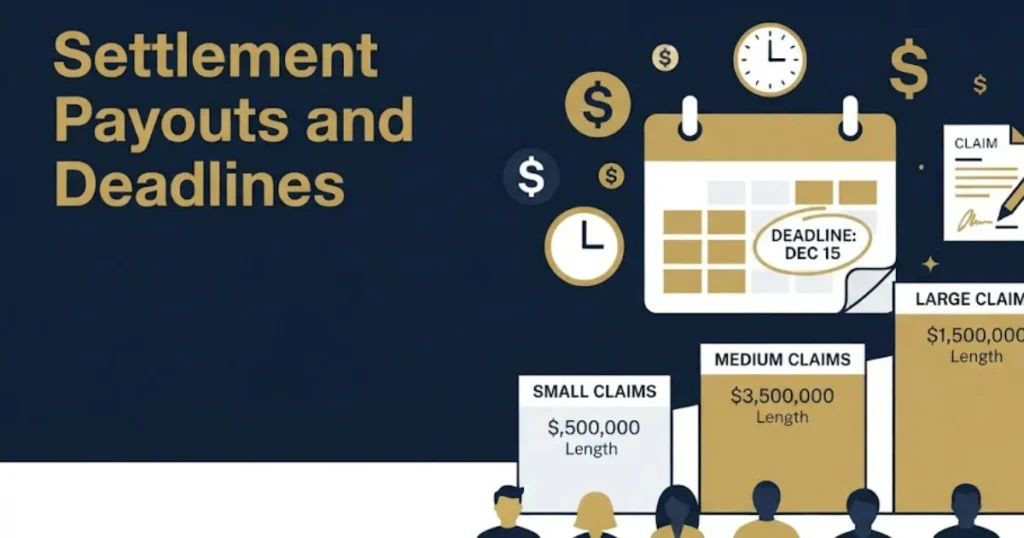
The progressive leasing settlement deadline in 2026 has not been officially set as of early 2026, but based on court schedules and the status of pending settlements, claim filing deadlines are expected to fall between mid-2026 and early 2027.
Here is the typical timeline for a class action settlement:
- Preliminary approval by the court (completed or pending for major cases)
- Notice period where class members receive mail or email notifications (60 to 90 days)
- Claim filing deadline (usually 90 to 120 days after notice begins)
- Objection deadline (30 to 60 days before the fairness hearing)
- Fairness hearing where the court considers final approval
- Final approval and payment processing (30 to 90 days after the hearing)
- Checks mailed or direct deposits sent to claimants
| Timeline Event | Expected Date |
|---|---|
| Preliminary Approval | Early 2026 |
| Notice to Class Members | Spring 2026 |
| Claim Filing Deadline | Summer to Fall 2026 |
| Fairness Hearing | Fall 2026 |
| Final Approval | Late 2026 |
| Payments Distributed | Late 2026 to Early 2027 |
Missing the claim deadline means losing your right to payment from the settlement fund. Courts are strict about deadlines. Even being one day late can disqualify an otherwise valid claim.
The best thing you can do right now is make sure your contact information is current. If you have moved since you signed your Progressive Leasing agreement, update your address with any settlement administrator that contacts you. Check your email regularly, including spam folders, for settlement notices.
If you used an email address that you no longer check, that creates a risk. Settlement administrators send notices to the email on file with the company. Consider reaching out proactively to the administrator if you have reason to believe you are a class member.
Key Takeaway: Settlement claim deadlines are expected between mid-2026 and early 2027, and missing the deadline means giving up your right to any payout, so stay alert for notices.
Frequently Asked Questions
How much money can I get from the Progressive Leasing lawsuit?
Most consumers can expect between $50 and $500 depending on how much they overpaid.
Higher overpayment amounts and multiple lease agreements could push payouts above that range.
Payments are expected to begin in late 2026 or early 2027 once final settlement approval is granted.
Is there a deadline to file a claim in the Progressive Leasing settlement?
The exact deadline has not been finalized, but it is expected to fall between summer and fall 2026.
You will receive a notice by mail or email with specific instructions and due dates.
Filing late, even by one day, typically results in automatic disqualification.
Does Progressive Leasing charge hidden fees on lease agreements?
Yes, according to multiple lawsuits, Progressive Leasing charged processing fees, late penalties, and other charges that were not clearly disclosed.
Some consumers reported finding hundreds of dollars in unexpected fees on their accounts.
These hidden fee allegations are a central claim in the class action cases.
Can I join the Progressive Leasing class action lawsuit in 2026?
If you signed a Progressive Leasing agreement between 2018 and 2024, you are likely already a member of the class.
You do not need to take any action to join; class members are included automatically unless they opt out.
Filing a claim form when the time comes is how you receive your payment.
Has the FTC taken action against Progressive Leasing?
The FTC has not announced a formal enforcement action against Progressive Leasing specifically as of early 2026.
However, the agency has issued warning letters to lease-to-own companies and is actively examining the industry’s pricing transparency.
A formal FTC action could result in nationwide refunds and penalties far exceeding private lawsuit settlements.
The Progressive Leasing lawsuit in 2026 represents a real opportunity for consumers who overpaid. If you used Progressive Leasing at any retail store between 2018 and 2024, check whether you are part of the class.
Watch your mail and email for settlement notices. When the claim form becomes available, fill it out and submit it before the deadline. That one step is the difference between getting money back and getting nothing.
Stay updated on this case. The biggest developments, including final approval and payout distribution, are expected in the second half of 2026.







