

The nirvana baby lawsuit is over. Spencer Elden, the man photographed as a naked infant for Nirvana’s iconic 1991 Nevermind album cover, lost his case for good when a federal judge dismissed it with prejudice.
Elden claimed the image amounted to child sexual exploitation. The court disagreed. His claims were filed too late under federal law, and the judge found no basis to let the case move forward.
This article gives you the full 2026 picture. You’ll learn why the case was dismissed, what legal arguments failed, whether Elden can still appeal, and what this ruling means for childhood photo consent law going forward.
One striking detail stands out. Elden reportedly recreated the album cover photo voluntarily as a teenager and young adult before later suing over it.
Nirvana Baby Lawsuit
The nirvana baby lawsuit refers to the federal case filed by Spencer Elden against the surviving members of Nirvana, the estate of Kurt Cobain, and others connected to the Nevermind album. Elden argued that being photographed naked as a four-month-old baby and having that image distributed on one of the best-selling albums of all time caused him lasting harm.
He filed suit in August 2021 in the U.S. District Court for the Central District of California. The case was brought under 18 U.S.C. 2255, a federal statute that allows victims of child sexual exploitation to seek civil damages.
The defendants included Dave Grohl, Krist Novoselic, Courtney Love (as executor of Kurt Cobain’s estate), photographer Kirk Weddle, and several record labels including Universal Music Group, DGC Records, and Geffen Records.
| Detail | Info |
|---|---|
| Plaintiff | Spencer Elden |
| Defendants | Nirvana members, Cobain estate, record labels, photographer |
| Court | U.S. District Court, Central District of California |
| Federal Statute | 18 U.S.C. 2255 |
| Filed | August 2021 |
| Outcome | Dismissed with prejudice |
The case attracted worldwide attention. Not because the legal theory was strong, but because the album is one of the most recognized in music history. Over 30 million copies have been sold globally.
Nirvana Baby Lawsuit 2026
As of 2026, the nirvana baby lawsuit is completely finished. There is no active case, no pending appeal, and no new filing on the docket.
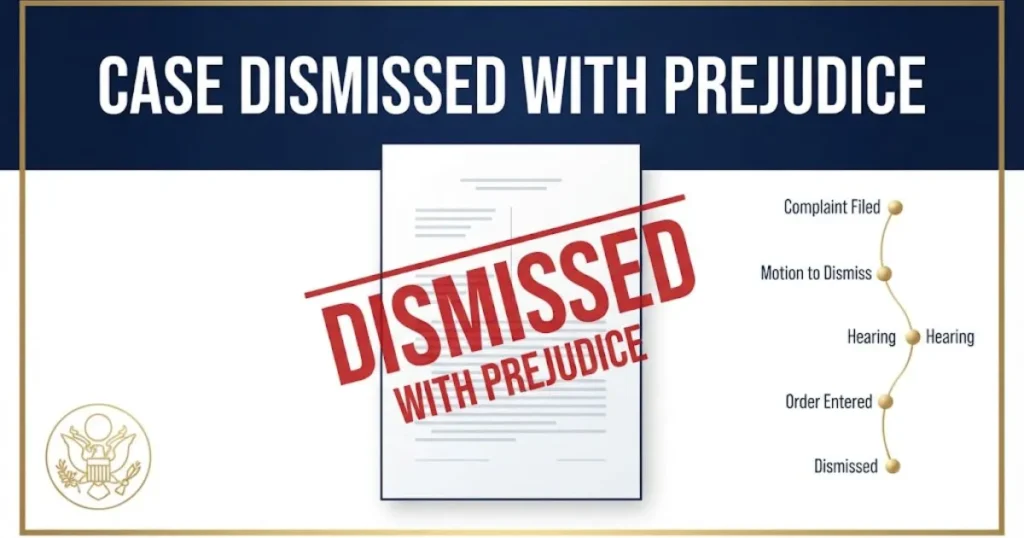
Judge Fernando M. Olguin dismissed the case with prejudice on September 4, 2023. That means the court barred Elden from ever refiling these same claims again. The dismissal was final.
Since then, Elden has not filed a new lawsuit or appealed to the Ninth Circuit Court of Appeals. The deadline to appeal has long passed.
- The case is closed on the federal court docket.
- No settlement was reached.
- No trial ever took place.
- No monetary payment was made to Elden.
For anyone searching for a 2026 update, the bottom line is simple. Nothing has changed since the September 2023 dismissal. The legal battle that dragged on for over two years ended without any victory for the plaintiff.
Some legal observers have noted that the case’s conclusion was predictable. The statute of limitations issue was always the biggest obstacle, and Elden’s legal team never found a way around it.
Nirvana Baby Lawsuit Dismissed
The nirvana baby lawsuit was dismissed with prejudice on September 4, 2023, by Judge Fernando M. Olguin. This was actually the second time the case was dismissed.
The first dismissal came in January 2022. Judge Olguin threw out the original complaint but gave Elden a chance to amend it. Elden’s attorneys filed an amended complaint, adding more detail and adjusting their legal theories.
It didn’t help. The judge found the same fundamental problems with the second version. The claims were time-barred, and the complaint failed to establish that the Nevermind cover met the legal definition of child sexual exploitation material.
Key facts about the dismissal:
- First dismissal: January 2022 (without prejudice, meaning Elden could refile)
- Second dismissal: September 2023 (with prejudice, meaning case is permanently closed)
- Reason: Statute of limitations expired; claims lacked legal merit
- Judge: Fernando M. Olguin, U.S. District Court, Central District of California
The phrase “with prejudice” is critical. In legal terms, it means the court has decided the case on its merits and the plaintiff cannot bring the same claims again. It’s the legal equivalent of slamming a door shut and throwing away the key.
Key Takeaway: The nirvana baby lawsuit was dismissed twice, and the second dismissal permanently bars Spencer Elden from ever refiling the same claims in federal court.
Spencer Elden Nirvana Lawsuit Update
The latest update on the Spencer Elden lawsuit is that there has been no new legal activity since the September 2023 dismissal. Elden has not filed an appeal, and no new claims have surfaced in any court.
After the case was dismissed with prejudice, Elden largely stepped out of the public spotlight. His attorney, Robert Y. Lewis, did not publicly announce any plans to pursue further legal action.
The window to appeal to the Ninth Circuit Court of Appeals was 30 days from the date of final judgment. That deadline expired in October 2023 without any notice of appeal being filed.
| Update Item | Status |
|---|---|
| Federal Case | Dismissed with prejudice (Sept. 2023) |
| Appeal Filed | No |
| Appeal Deadline | Expired October 2023 |
| New Lawsuit Filed | No |
| Settlement | None |
| 2026 Activity | None |
For anyone tracking this story, the Elden case is done. There is no legal mechanism for him to revive these specific claims. Any future legal action would need to involve entirely different legal theories, and even then, the statute of limitations would likely block it.
Who Is the Nirvana Baby
The “Nirvana baby” is Spencer Elden, born on February 7, 1991, in Los Angeles, California. He was just four months old when photographer Kirk Weddle shot the now-famous underwater photo used on Nirvana’s Nevermind album cover.
Elden’s father, Rick Elden, was a friend of Weddle. Rick agreed to let his baby son be photographed in a pool for $200. The resulting image showed baby Spencer swimming naked underwater, reaching toward a dollar bill on a fishhook.
The photo became one of the most iconic album covers in music history. Nevermind was released on September 24, 1991, and eventually sold over 30 million copies worldwide.
For much of his life, Spencer Elden seemed to embrace his connection to the album. He recreated the swimming pose for magazine photo shoots at ages 17 and 25. He even got a “Nevermind” tattoo on his chest.
- Born: February 7, 1991, Los Angeles
- Photographed at: 4 months old
- Photographer: Kirk Weddle
- Payment to family: $200
- Album release: September 24, 1991
- Album sales: 30+ million copies
His public attitude shifted dramatically in 2021 when he filed the lawsuit. Elden claimed the image had caused him lifelong emotional distress and constituted sexual exploitation. That shift from willing participant in recreations to plaintiff alleging exploitation became a central talking point in media coverage of the case.
Nirvana Nevermind Album Cover Controversy
The Nevermind album cover has been controversial since the album’s release in 1991. The image of a naked infant in a swimming pool, reaching for money on a fishhook, was designed to symbolize greed and the loss of innocence.
Art director Robert Fisher created the concept. Geffen Records reportedly considered adding a sticker to cover the baby’s genitals before release, but Kurt Cobain refused. Cobain famously said the only compromise he’d accept was a sticker reading “If you’re offended by this, you must be a closet pedophile.”
The cover sparked debates for decades. Some viewed it as brilliant artistic commentary on capitalism. Others questioned whether displaying a nude child on a commercial product crossed an ethical line, regardless of artistic intent.
Points of controversy:
- Displaying infant nudity on a mass-market commercial product
- Whether parental consent for a baby constitutes meaningful consent
- The image’s use generating billions in music industry revenue
- Spencer Elden receiving only $200 for what became an iconic image
- Whether the passage of 30 years changes the ethical calculation
The legal system ultimately treated the image as protected artistic expression rather than exploitative material. But the ethical debate hasn’t fully resolved, even if the legal one has.
Think of it like a family photo that ends up in a museum. The subject didn’t choose to be there, but the law treats the photographer’s and publisher’s rights as paramount unless the image crosses into illegal content.
Spencer Elden and the Nevermind Album Cover
Spencer Elden’s relationship with the Nevermind album cover was complicated long before the lawsuit. For years, he appeared to profit from and enjoy his association with the famous image.
At age 17, Elden posed for a recreation of the cover shot for a magazine feature. At 25, he did it again, this time wearing swim trunks. He gave interviews where he talked about the experience with apparent pride. He used the connection as a conversation starter and even as part of his personal brand.
Then something changed. By 2021, Elden’s public statements took a different tone. He described feeling exploited and said the image had been a source of deep emotional pain throughout his life.
| Year | Elden’s Public Stance |
|---|---|
| 1991 | Photographed as infant (no agency) |
| 2008 | Recreated cover at age 17 for magazine |
| 2016 | Recreated cover at age 25 |
| Pre-2021 | Gave positive interviews about the experience |
| 2021 | Filed lawsuit alleging exploitation and emotional harm |
The defendants’ legal team pointed to Elden’s history of voluntarily recreating and promoting his connection to the image. They argued this undermined his claim that the photo caused him harm. The court didn’t need to reach that argument directly because the statute of limitations issue resolved the case first.
But the contradiction between Elden’s earlier embrace and later rejection of the image became a defining narrative of the case in public discussion.
Key Takeaway: Spencer Elden spent years voluntarily recreating and promoting his connection to the Nevermind album cover before filing a lawsuit claiming the image caused him lifelong harm.
Nirvana Baby Lawsuit Child Exploitation Claims
Spencer Elden’s central legal claim was that the Nevermind album cover constituted child sexual exploitation material (sometimes referred to as child pornography in older legal language). He filed under 18 U.S.C. 2255, a federal law that allows victims of sexual exploitation to sue for damages.
To succeed under this statute, Elden needed to prove that the image met the legal definition of sexually explicit content involving a minor. The law requires the image to depict sexually explicit conduct, which includes the “lascivious exhibition of the anus, genitals, or pubic area.”
The court found that the Nevermind cover did not meet this standard. While the image shows a nude infant, it does not depict sexual conduct or a lascivious display. Context matters under the law, and the artistic and commercial context of the album cover weighed against Elden’s argument.
Elden’s specific claims included:
- The image constituted a “lascivious exhibition” of his genitals
- Defendants produced, possessed, and distributed child exploitation material
- He suffered emotional distress and economic harm
- The image was used for commercial profit without his meaningful consent
The court essentially said that not every image of a nude child is illegal. The legal standard requires more than nudity alone. It requires a sexual element that the Nevermind cover simply doesn’t contain.
This distinction is important. The law protects children from sexual exploitation, but it doesn’t treat all childhood nudity as criminal. Family photos, medical images, and artistic works are generally treated differently under the law.
Nirvana Baby Lawsuit Statute of Limitations
The statute of limitations was the main reason the nirvana baby lawsuit failed. Under 18 U.S.C. 2255, a plaintiff has 10 years after reaching the age of 18 to file a civil claim for child sexual exploitation. That means Elden had until he turned 28 to file.
Spencer Elden turned 28 on February 7, 2019. He didn’t file his lawsuit until August 2021, more than two years after the deadline had passed.
| Statute Detail | Relevant Date |
|---|---|
| Elden’s 18th Birthday | February 7, 2009 |
| 10-Year Filing Window Opens | February 7, 2009 |
| 10-Year Filing Deadline | February 7, 2019 |
| Actual Filing Date | August 2021 |
| Time Past Deadline | Approximately 2.5 years late |
Elden’s attorneys tried to argue around the statute of limitations using several theories. They claimed:
- The harm was ongoing because the album continued to be sold and distributed
- Elden only recently became aware of the full extent of his psychological injuries
- The “discovery rule” should toll (pause) the statute because Elden didn’t recognize the exploitation until later in life
Judge Olguin rejected all of these arguments. The court found that Elden was clearly aware of the image and its use for his entire adult life. He had participated in recreations and given interviews about it. There was no hidden harm to “discover.”
The statute of limitations issue made everything else in the case academic. Even if the image had met the legal definition of exploitative content, the claim was filed too late.
Nirvana Nevermind Baby Lawsuit Dismissed With Prejudice
When the court dismissed the case “with prejudice,” it meant the case is permanently closed and cannot be refiled. This is the strongest form of dismissal in the American legal system.
There are two types of dismissal. A dismissal “without prejudice” allows the plaintiff to fix problems and refile. A dismissal “with prejudice” means the court has determined the case has no viable path forward.
| Dismissal Type | What It Means |
|---|---|
| Without Prejudice | Case can be refiled after fixing issues |
| With Prejudice | Case is permanently dead; cannot be refiled |
Elden’s case was actually dismissed twice. The first time, in January 2022, it was dismissed without prejudice. Judge Olguin gave Elden’s legal team a chance to amend the complaint and try again.
They did refile with an amended complaint. But the second version still couldn’t overcome the statute of limitations problem. So on September 4, 2023, Judge Olguin dismissed the case with prejudice.
This second dismissal was widely expected by legal analysts. The fundamental timing problem with Elden’s claim was something no amount of legal creativity could fix. The statute of limitations is a hard deadline in most cases, and courts rarely make exceptions when the plaintiff clearly knew about the alleged harm for decades.
The “with prejudice” label is significant for another reason. It means that if Elden ever tried to file the same claims in a different court, the defendants could point to this ruling and have the new case thrown out immediately through a legal doctrine called “res judicata” (claim preclusion).
Key Takeaway: The “with prejudice” dismissal means Spencer Elden can never refile these same child exploitation claims against Nirvana or any of the other defendants in any court.
Nirvana Album Cover Lawsuit
The nirvana album cover lawsuit was unique in American legal history. No plaintiff had ever tried to use federal child exploitation statutes to challenge a mainstream, widely distributed, and critically acclaimed album cover decades after its release.
The case named a long list of defendants. Beyond the surviving band members and Cobain’s estate, Elden sued the photographer Kirk Weddle, the art director Robert Fisher, and multiple record label entities including Universal Music Group, DGC Records, and Geffen Records.
Full list of defendants:
- Dave Grohl
- Krist Novoselic
- Courtney Love (executor of Cobain estate)
- Kirk Weddle (photographer)
- Robert Fisher (art director)
- Universal Music Group
- DGC Records
- Geffen Records
- MCA Records
- Warner Bros. Records (predecessor entities)
Each defendant had to respond to the lawsuit individually. The defense was unified in arguing that the case was time-barred and that the image was not sexually exploitative.
The sheer number of defendants highlighted something about Elden’s legal strategy. By naming everyone from the photographer to the corporate parent company, his team was casting the widest possible net. But a wide net doesn’t help when the fish aren’t biting. The core legal theory had the same fatal flaw regardless of who was named as a defendant.
Nirvana Lawsuit Timeline
Here is the complete timeline of the nirvana baby lawsuit from start to finish. Every major event is listed in chronological order.
| Date | Event |
|---|---|
| September 24, 1991 | Nevermind album released with Spencer Elden on the cover |
| February 7, 2009 | Elden turns 18; 10-year statute of limitations clock starts |
| February 7, 2019 | 10-year statute of limitations expires |
| August 24, 2021 | Elden files lawsuit in U.S. District Court, Central District of California |
| September 2021 | Defendants file motions to dismiss |
| January 3, 2022 | Judge Olguin dismisses complaint without prejudice |
| January 2022 | Elden files amended complaint |
| 2022 to 2023 | Briefing on second round of motions to dismiss |
| September 4, 2023 | Judge Olguin dismisses amended complaint with prejudice |
| October 2023 | Appeal deadline expires with no appeal filed |
| 2024 to 2026 | No new legal activity; case remains closed |
The timeline tells a clear story. Elden waited too long. The gap between his statute of limitations deadline in 2019 and his actual filing in 2021 was the single fact that determined the outcome.
Even the amended complaint couldn’t change the math. No matter how many legal theories Elden’s attorneys tried, the calendar was against them.
Looking at the full timeline, you can see that the legal battle lasted roughly two years from filing to final dismissal. That’s actually fast for a federal case, which tells you something about how clear-cut the legal issues were.
Nirvana Baby Lawsuit Settlement
There was no settlement in the nirvana baby lawsuit. Spencer Elden received zero dollars from any defendant. The case was dismissed before it ever reached the discovery phase, let alone a trial or settlement negotiation.
Some people confuse a dismissal with a settlement. They’re very different things. A settlement means both sides agreed to resolve the case, usually with a payment. A dismissal means the court threw the case out.
| Outcome Type | What Happened |
|---|---|
| Settlement | Did not occur |
| Trial | Did not occur |
| Jury Verdict | Did not occur |
| Dismissal | Yes, with prejudice |
| Money Paid to Elden | $0 |
The only payment ever connected to this image was the original $200 that Elden’s father received from photographer Kirk Weddle in 1991 for the photo shoot. That’s it.
Some media reports over the years suggested that settlements might have been discussed behind closed doors. But no credible source has ever confirmed any settlement offer, and the court record shows no indication that negotiations took place.
The lack of a settlement is notable because in many high-profile cases, defendants prefer to pay a relatively small amount to make the case go away rather than deal with ongoing media attention. That Nirvana’s team chose to fight rather than settle suggests they were confident in their legal position from the start.
Key Takeaway: Spencer Elden never received any money from the nirvana baby lawsuit, not through a settlement, a verdict, or any other legal mechanism, and the only payment ever made was $200 to his father in 1991.
Can Spencer Elden Appeal the Nirvana Lawsuit
As of 2026, Spencer Elden cannot appeal the nirvana lawsuit. The deadline to file an appeal with the Ninth Circuit Court of Appeals expired in October 2023, approximately 30 days after the final dismissal.
Under federal rules, a party who loses in district court typically has 30 days to file a notice of appeal. Elden’s legal team did not file within that window.
Even if he had appealed, the chances of success were slim. Appellate courts review district court decisions for legal errors, and Judge Olguin’s ruling was grounded in straightforward application of the statute of limitations. There was no ambiguity in the timeline.
Remaining legal options for Elden (all extremely unlikely):
- File a completely new lawsuit with different legal theories (would likely face the same statute of limitations problem)
- Petition the U.S. Supreme Court for review (no basis, as no constitutional issue was raised)
- Seek legislative change to extend the statute of limitations retroactively (would require an act of Congress)
- File a state-level lawsuit with different claims (possible in theory, but extremely difficult given the federal ruling)
None of these options has any realistic chance of succeeding. The case is, for all practical purposes, permanently over.
Think of it like missing a flight. Once the plane has left the gate and the airline has closed the booking, no amount of arguing at the counter will get you on that specific plane. You’d need to find an entirely different flight, and in Elden’s case, there really isn’t one available.
Nirvana Baby Lawsuit Legal Precedent
The nirvana baby lawsuit set a notable legal precedent regarding the application of child exploitation statutes to artistic and commercial images. While the case was decided primarily on statute of limitations grounds, the court’s analysis of the image itself carries weight.
Judge Olguin’s ruling reinforced several important legal principles:
- Not all childhood nudity is sexual exploitation. The court distinguished between images that depict sexual conduct and those that simply show a nude child in a non-sexual context.
- Context matters. The artistic and commercial context of an image is relevant to determining whether it meets the legal definition of exploitative content.
- Statutes of limitations are firm. Federal courts will enforce filing deadlines strictly, even in cases involving alleged childhood exploitation.
- Voluntary engagement undermines claims. While not the primary basis for the ruling, Elden’s history of recreating and promoting his connection to the image was noted.
| Legal Principle | How It Was Applied |
|---|---|
| Nudity vs. exploitation | Nude baby photo in artistic context is not exploitation |
| Statute of limitations | 10-year window after turning 18 is a hard deadline |
| Discovery rule | Does not apply when plaintiff clearly knew about the image |
| Dismissed with prejudice | Permanently bars identical future claims |
This ruling could influence future cases where adults attempt to sue over childhood photos used in commercial or artistic contexts. It signals that courts will apply a high bar before treating non-sexual childhood images as exploitation material.
The precedent is limited, though. Because the case was primarily decided on timing rather than a deep analysis of the image, it doesn’t establish a broad rule about what kinds of childhood images are or aren’t exploitative.
Childhood Photo Consent Laws
Childhood photo consent laws are a patchwork of state and federal regulations that govern when and how images of minors can be used. The nirvana baby lawsuit brought renewed attention to gaps in these protections.
Under current federal law, parents can consent to the use of a child’s image in most circumstances. There is no federal “right to be forgotten” for individuals photographed as children, and no federal law requires ongoing consent as a child grows into adulthood.
Key aspects of current law:
- Parents can consent on behalf of minor children for photo usage
- No federal law requires that childhood photo consent be renewed when the child becomes an adult
- State laws vary widely on image rights, privacy, and exploitation standards
- California’s right of publicity law (Cal. Civ. Code 3344) protects commercial use of a person’s likeness, but Elden did not pursue this theory
- “Coogan’s Law” protects child performers’ earnings but doesn’t directly address image consent
| Legal Framework | Protection Level |
|---|---|
| Federal child exploitation statutes | High, but only for sexually explicit material |
| State privacy laws | Varies by state; generally moderate |
| Right of publicity laws | Available in some states for commercial image use |
| Coogan’s Law | Protects earnings, not image consent |
| EU “Right to Be Forgotten” | Does not apply in the United States |
Some legal scholars have argued that the Elden case reveals a gap in American law. A child can be photographed, and that image can generate millions of dollars in revenue, yet the child has very limited legal recourse as an adult if they feel harmed by the image’s use.
Several states have begun considering legislation that would give adults more control over childhood images used commercially. But as of 2026, no major new law has been enacted at the federal level specifically addressing this issue.
The conversation has expanded beyond music. Social media “sharenting” (parents sharing children’s photos online), child influencer content, and AI-generated images of minors are all raising similar consent questions. The Elden case may not have succeeded in court, but it pushed these issues further into public awareness.
Key Takeaway: Current U.S. law offers limited protection for adults who want to control childhood photos taken with parental consent, and the nirvana baby lawsuit highlighted these gaps without changing the legal framework.
Frequently Asked Questions
Was the Nirvana baby lawsuit dismissed?
Yes, the nirvana baby lawsuit was dismissed with prejudice on September 4, 2023.
Judge Fernando M. Olguin ruled that Spencer Elden’s claims were filed past the statute of limitations.
The dismissal is permanent, meaning the case cannot be refiled.
Who is the baby on the Nirvana Nevermind album cover?
The baby is Spencer Elden, born February 7, 1991, in Los Angeles.
He was four months old when photographer Kirk Weddle took the photo.
His father received $200 for allowing the photo shoot.
Can Spencer Elden still sue Nirvana in 2026?
No, Elden cannot refile the same claims because the case was dismissed with prejudice.
His deadline to appeal expired in October 2023 without any filing.
Any new lawsuit would require entirely different legal theories and would still face statute of limitations challenges.
Did Spencer Elden receive any settlement money from Nirvana?
No, Spencer Elden received zero dollars from the lawsuit.
No settlement was negotiated, no trial occurred, and no verdict was issued.
The only payment ever made was $200 to his father for the original 1991 photo shoot.
What legal precedent did the Nirvana baby lawsuit set?
The case reinforced that not all childhood nudity constitutes sexual exploitation under federal law.
It confirmed that the 10-year statute of limitations under 18 U.S.C. 2255 is strictly enforced.
The ruling may influence future cases involving childhood images used in artistic or commercial contexts.
The nirvana baby lawsuit is closed, and Spencer Elden has no clear path to revive it. The court’s ruling was definitive on both timing and substance.
If you’re interested in how this case affects broader childhood image rights, keep an eye on state-level legislation. Several states are actively debating new protections for minors whose images are used commercially.
This case changed the conversation even though it didn’t change the law. That conversation is still worth following.







