

The Johnson and Johnson PBM lawsuit accuses the pharmaceutical giant of conspiring with pharmacy benefit managers to keep Remicade prices artificially high while blocking cheaper biosimilar alternatives from reaching patients. If you’ve been paying inflated prices for biologic drugs, this case could directly affect your wallet.
As of 2026, this litigation has expanded significantly. Multiple lawsuits from health plans, employers, and individual patients are moving through federal courts. The allegations center on a “rebate wall” strategy that allegedly cost patients and insurers billions.
Here’s the staggering part: Remicade’s U.S. list price topped $26,000 per infusion in recent years. Biosimilar versions were available for roughly 30% to 40% less. Yet market adoption of those cheaper alternatives remained suspiciously low.
This article breaks down every angle of the case. You’ll learn who qualifies, what payouts might look like, how the rebate scheme allegedly worked, and what the FTC is doing about it in 2026.
Johnson and Johnson PBM Lawsuit Explained
The Johnson and Johnson PBM lawsuit is a series of legal actions claiming J&J used pharmacy benefit managers as middlemen to inflate drug prices and crush biosimilar competition. At its core, the case is about money, market control, and who ultimately pays the price.
Plaintiffs allege that J&J, through its subsidiary Janssen Biotech, offered massive rebates to PBMs like CVS Caremark, Express Scripts, and OptumRx. In exchange, these PBMs gave Remicade preferred status on their drug formularies. That meant patients and insurers kept buying the expensive brand-name drug instead of cheaper biosimilar options.
The lawsuits have been filed in multiple federal courts. Some cases target J&J directly. Others name both J&J and the PBMs as co-conspirators.
| Detail | Info |
|---|---|
| Defendant | Johnson & Johnson / Janssen Biotech |
| Co-defendants | CVS Caremark, Express Scripts, OptumRx |
| Primary Drug | Remicade (infliximab) |
| Core Allegation | Anti-competitive rebate schemes |
| Case Type | Antitrust, consumer protection, RICO |
The financial stakes are enormous. If plaintiffs prove their case, J&J could face treble damages, meaning the court triples the actual damages as punishment for antitrust violations.
J&J PBM Lawsuit 2026: Where Things Stand Now
The J&J PBM lawsuit has entered a critical phase in 2026, with several cases advancing past early motions and into discovery or trial preparation. Courts have denied multiple attempts by J&J to dismiss these claims outright.
During 2025, federal judges in Pennsylvania and New Jersey allowed key claims to proceed. That was a major win for plaintiffs. Courts agreed that the rebate wall theory was plausible enough to warrant full litigation.
By early 2026, class certification hearings are underway in at least two major cases. If classes are certified, millions of affected patients and health plans could be included automatically.
Discovery has been contentious. J&J has fought to keep internal rebate agreements and PBM communications confidential. Plaintiffs argue these documents are the smoking gun that proves the conspiracy.
- Cases surviving motions to dismiss in multiple jurisdictions
- Class certification hearings scheduled for mid-2026
- Discovery disputes over confidential rebate contracts ongoing
- FTC parallel investigation adding regulatory pressure
The momentum has clearly shifted toward plaintiffs this year. Every denied motion to dismiss strengthens the case.
Johnson and Johnson PBM Lawsuit Update 2026
The latest Johnson and Johnson PBM lawsuit update for 2026 shows accelerating legal activity on multiple fronts. Three significant developments have reshaped the litigation since January.
First, a federal judge in the Eastern District of Pennsylvania ruled in February 2026 that health plan plaintiffs could pursue RICO claims alongside their antitrust allegations. RICO, the Racketeer Influenced and Corrupt Organizations Act, allows for much steeper penalties and broader liability.
Second, new plaintiff groups have joined the litigation. Several state employee health plans and union health funds filed suits in early 2026, arguing that their members paid millions more than necessary for Remicade infusions.
Third, the FTC released an interim report on PBM practices in late 2025 that specifically mentioned rebate walls as a concern. That report is now being cited in court filings as supporting evidence.
| Timeline | Event |
|---|---|
| Late 2025 | FTC interim PBM report released |
| February 2026 | RICO claims allowed in Pennsylvania case |
| Q1 2026 | New state health plan plaintiffs file suits |
| Mid-2026 | Class certification hearings expected |
| Late 2026 | Discovery phase expected to conclude |
Expect more updates as class certification decisions roll in during the second half of 2026.
Key Takeaway: The J&J PBM lawsuit is gaining strength in 2026 as courts allow broader claims, new plaintiffs join, and the FTC adds regulatory pressure to the litigation.
J&J PBM Class Action Lawsuit Details
The J&J PBM class action lawsuit seeks to represent everyone who overpaid for Remicade due to alleged anti-competitive rebate agreements between J&J and pharmacy benefit managers. If certified, it could become one of the largest pharmaceutical antitrust class actions in years.
Class action status matters because it changes the scale of liability. Instead of J&J defending against individual cases one at a time, the company would face claims from millions of patients, employers, and health plans simultaneously.
Plaintiffs are seeking class certification for several categories:
- Direct purchasers: hospitals, clinics, and pharmacies that bought Remicade at inflated wholesale prices
- End payors: patients and health plans that paid higher copays, coinsurance, or premiums because of inflated Remicade costs
- Employer health plans: self-insured employers who covered Remicade for their employees
The class period could span from approximately 2015 to the present, covering the years when biosimilar alternatives were available but allegedly blocked from market access.
J&J is fighting class certification aggressively. The company argues that each plaintiff’s situation is too different to be lumped together. Plaintiffs counter that the rebate wall scheme affected everyone the same way: it kept prices high across the board.
Johnson and Johnson Pharmacy Benefit Manager Lawsuit
The Johnson and Johnson pharmacy benefit manager lawsuit zeroes in on how PBMs act as powerful middlemen in the prescription drug supply chain. PBMs control which drugs get covered by insurance and at what cost. That power, plaintiffs argue, was weaponized.
Here’s how a PBM normally works. Insurance companies hire PBMs to negotiate drug prices and create formularies. The PBM is supposed to get the best deal for patients and insurers. That’s the theory, anyway.
In practice, J&J allegedly turned this system upside down. Instead of PBMs negotiating lower prices, J&J offered them lucrative rebates to keep Remicade as the preferred drug. The PBMs pocketed those rebates. Patients kept paying premium prices.
Think of it like a grocery store that gets paid by a brand-name cereal company to hide the cheaper store-brand cereal on the bottom shelf. You can technically still buy it, but the system is designed to push you toward the expensive option.
The three largest PBMs control roughly 80% of the prescription drug market in the United States:
- CVS Caremark (affiliated with CVS Health and Aetna)
- Express Scripts (owned by Cigna/Evernorth)
- OptumRx (owned by UnitedHealth Group)
All three have been named in various J&J PBM complaints. Their role as alleged co-conspirators is central to the case.
J&J Remicade PBM Lawsuit Claims
The J&J Remicade PBM lawsuit claims that Johnson & Johnson protected Remicade’s market dominance by paying PBMs billions in rebates to block or disadvantage biosimilar competitors. Remicade is a blockbuster biologic drug used to treat autoimmune conditions.
Remicade (infliximab) treats conditions like rheumatoid arthritis, Crohn’s disease, ulcerative colitis, psoriatic arthritis, and ankylosing spondylitis. It generated over $5 billion annually in U.S. sales at its peak.
Biosimilar versions of Remicade have been FDA-approved since 2016. These include Inflectra, Renflexis, and Avsola. They are clinically equivalent to Remicade. Yet by 2023, Remicade still held a disproportionately large share of the infliximab market.
| Drug | Type | Approx. Cost Per Infusion | FDA Approved |
|---|---|---|---|
| Remicade | Brand biologic | $22,000 to $26,000 | 1998 |
| Inflectra | Biosimilar | $14,000 to $17,000 | 2016 |
| Renflexis | Biosimilar | $13,000 to $16,000 | 2017 |
| Avsola | Biosimilar | $12,000 to $15,000 | 2019 |
Plaintiffs argue that without the rebate wall, biosimilar adoption would have been much faster. Patients would have saved thousands per infusion. Health plans would have saved billions.
The gap between Remicade’s price and biosimilar prices is the financial engine driving this entire lawsuit.
Key Takeaway: J&J allegedly used rebate payments to PBMs to protect Remicade’s market share, blocking cheaper biosimilar alternatives that could have saved patients and health plans billions of dollars.
Remicade Price Inflation Lawsuit Allegations
The Remicade price inflation lawsuit alleges that J&J deliberately kept Remicade’s price far above what it should have been in a competitive market. Without anti-competitive rebate agreements, prices would have dropped significantly once biosimilars arrived.
Here’s the economic reality. When biosimilars enter a market, prices typically fall 30% to 80% within a few years. That’s what happened with biosimilar insulin and other biologic drugs. With Remicade, the price drop was far smaller and slower than expected.
Plaintiffs point to specific pricing behavior as evidence. J&J raised Remicade’s list price multiple times even after biosimilar competitors were available. That defies normal market dynamics. When you face new competition, you usually lower prices. J&J did the opposite.
The lawsuit claims this was strategic. By keeping the list price high, J&J could offer PBMs bigger rebates in dollar terms. A 30% rebate on a $26,000 drug is a lot more money than a 30% rebate on a $15,000 drug. The PBMs had a financial incentive to stick with the expensive option.
- Remicade’s list price increased roughly 60% between 2015 and 2023
- Biosimilar competitors were available starting in 2016
- Normal competitive markets would have driven prices down, not up
- The alleged rebate wall prevented market forces from working
Patients who needed infliximab therapy often had no practical choice. Their insurance formulary listed Remicade. Switching to a biosimilar would mean higher out-of-pocket costs or prior authorization hassles.
PBM Rebate Scheme and Johnson and Johnson
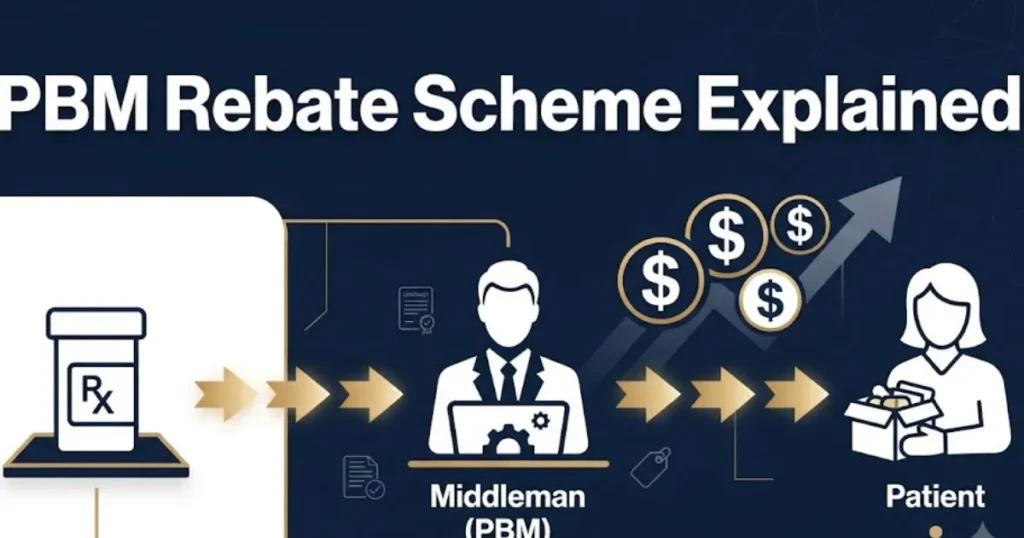
The PBM rebate scheme involving Johnson and Johnson is the mechanism at the heart of this litigation. Plaintiffs describe it as a pay-to-play arrangement where J&J bribed PBMs with rebates to maintain Remicade’s dominant market position.
Rebates in the pharmaceutical industry work differently than most people think. J&J didn’t simply offer a discount to patients. Instead, the company paid PBMs a percentage of Remicade’s list price as a “rebate” after the sale. The higher the list price, the bigger the rebate check.
These rebates weren’t passed through to patients in most cases. The PBM kept the money or shared it with the health plan. The patient still paid copays and coinsurance based on the full, inflated list price.
Here’s where it gets ugly. J&J allegedly structured these rebates with conditions. If a PBM gave favorable formulary placement to a biosimilar competitor, J&J would reduce or eliminate the rebate. That threat locked PBMs into preferring Remicade.
| Rebate Element | How It Allegedly Worked |
|---|---|
| Rebate Percentage | 30% to 50% of Remicade’s list price |
| Rebate Condition | PBM must keep Remicade as preferred drug |
| Penalty for Disloyalty | Loss of rebate if biosimilar gets preferred status |
| Who Benefits | PBMs and J&J, not patients |
| Who Pays | Patients, employers, and health plans |
This arrangement created a “rebate wall” that biosimilar manufacturers could not overcome. Even if their drug cost less, the total economics of the rebate deal made PBMs choose Remicade.
How PBMs Inflate Drug Prices
PBMs inflate drug prices by creating a system where higher list prices benefit everyone in the supply chain except the patient. The entire business model incentivizes keeping drug costs high.
A pharmacy benefit manager is supposed to be a neutral negotiator. They sit between drug manufacturers, insurance companies, and pharmacies. Their job is theoretically to get the best prices for patients and plans.
But PBMs earn money based on the spread between what they charge health plans and what they pay pharmacies. They earn rebates based on list prices. The higher the list price, the bigger their cut.
This creates a perverse incentive. PBMs don’t actually want drug prices to go down. Lower prices mean lower rebates. Lower rebates mean lower PBM profits.
In the context of the J&J lawsuit, this incentive structure allegedly drove PBMs to:
- Reject or limit coverage of cheaper biosimilars
- Require “step therapy” that forced patients to try Remicade first
- Impose prior authorization barriers on biosimilar prescriptions
- Place biosimilars on higher-cost formulary tiers
The result was a system where patients paid more, employers paid more, and health plans paid more. The only winners were J&J and the PBMs.
The FTC has called this arrangement “misaligned incentives” in its ongoing investigation of PBM practices. That language is now being used by plaintiffs in court filings.
Key Takeaway: PBMs profit from higher drug prices through rebate agreements, creating a system where they have no financial motivation to promote cheaper alternatives like biosimilars.
J&J Biosimilar Blocking Lawsuit
The J&J biosimilar blocking lawsuit accuses Johnson & Johnson of systematically preventing biosimilar versions of Remicade from gaining meaningful market share. This goes beyond normal competition into alleged anti-competitive behavior.
Biosimilars are the biologic drug equivalent of generic medications. They’re clinically comparable to the original brand-name drug. The FDA approved the first Remicade biosimilar, Inflectra (made by Pfizer), in 2016. Two more followed in 2017 and 2019.
Under normal market conditions, biosimilar entry should have quickly eroded Remicade’s market share. In Europe, that’s exactly what happened. Biosimilar infliximab captured over 80% of the market in countries like Norway and Denmark within a few years.
In the United States, the story was dramatically different. Remicade maintained roughly 60% to 70% of the U.S. infliximab market well into the 2020s. Plaintiffs say the rebate wall explains this gap.
| Market | Biosimilar Market Share | Notes |
|---|---|---|
| Norway | 80%+ | Rapid biosimilar adoption |
| Denmark | 80%+ | Government-supported switching |
| United Kingdom | 70%+ | NHS-driven biosimilar preference |
| United States | 30% to 40% | Allegedly suppressed by rebate walls |
J&J allegedly used several tactics beyond rebates. These included exclusive contracting provisions, bundled rebate offers across multiple drugs, and loyalty penalties that punished PBMs for adding biosimilars to their formularies.
Biosimilar manufacturers have also filed their own lawsuits. Pfizer sued J&J in 2017 over alleged anti-competitive conduct related to Inflectra. That case highlighted many of the same rebate wall allegations now central to the broader PBM litigation.
Johnson and Johnson Drug Pricing Lawsuit
The Johnson and Johnson drug pricing lawsuit extends beyond Remicade to challenge J&J’s broader pricing strategies for specialty drugs. While Remicade is the flagship case, plaintiffs argue the same anti-competitive playbook was used for other products.
J&J’s pricing practices have drawn scrutiny for years. Congressional hearings, FTC investigations, and state attorney general inquiries have all examined how the company sets and maintains drug prices.
The core accusation is straightforward. J&J allegedly exploited the complexity of the U.S. drug pricing system to charge Americans far more than patients in other countries pay for the same medications.
For Remicade specifically, the price difference between the U.S. and other developed nations is striking:
- United States: approximately $22,000 to $26,000 per infusion
- United Kingdom: approximately $3,500 to $4,500 per infusion
- Canada: approximately $4,000 to $6,000 per infusion
- Australia: approximately $3,000 to $5,000 per infusion
American patients have been paying roughly five to seven times what patients in comparable countries pay. Plaintiffs argue this disparity exists precisely because of the rebate wall and PBM arrangements that prevent competitive pricing.
The drug pricing lawsuit doesn’t just seek refunds. It challenges the entire structure of how J&J interacts with the drug distribution system. A plaintiff victory could force fundamental changes in how biologic drugs are priced and marketed in the United States.
Who Qualifies for the J&J PBM Lawsuit
Anyone who paid for Remicade or had their insurance cover Remicade when cheaper biosimilar alternatives were available may qualify for the J&J PBM lawsuit. This includes patients, employers, health plans, and unions.
Eligibility depends on your relationship to the drug. Different plaintiff classes have different criteria. Here’s how it breaks down:
| Plaintiff Category | Qualification Criteria |
|---|---|
| Individual patients | Paid copays, coinsurance, or out-of-pocket costs for Remicade after 2016 |
| Self-insured employers | Covered Remicade for employees through a self-funded health plan |
| Health insurance plans | Paid claims for Remicade that were inflated by anti-competitive pricing |
| Union health funds | Covered Remicade for union members when biosimilars were available |
| Government health plans | State or municipal employee plans that paid for Remicade |
The key date is 2016, when the first biosimilar (Inflectra) received FDA approval. If you paid for Remicade after that date, the argument is that you should have had access to a cheaper alternative.
You don’t need to prove you knew about biosimilars. The lawsuit argues that the rebate wall prevented you from even having a real choice. Your PBM or insurer kept you on Remicade because of the rebate arrangement.
Documentation that strengthens your claim includes prescription records, insurance explanation of benefits (EOB) statements, pharmacy receipts, and medical records showing Remicade infusions.
Key Takeaway: If you paid for Remicade after 2016 as a patient, employer, or health plan, you may qualify for the J&J PBM lawsuit regardless of whether you knew biosimilar alternatives existed.
How to File a J&J PBM Lawsuit Claim
Filing a J&J PBM lawsuit claim depends on whether you’re joining an existing class action or pursuing an individual case. For most people, the class action route is the simplest path.
If a class is certified, you may be automatically included as a class member. This means you don’t need to take any action right now. You’ll receive a notice explaining your rights, including the option to participate or opt out.
For those who want to actively pursue a claim, here’s the general process:
Step 1: Gather your records. Collect insurance statements, pharmacy receipts, and medical records showing Remicade infusions or prescriptions from 2016 onward.
Step 2: Document your costs. Calculate how much you paid in copays, coinsurance, deductibles, or premiums related to Remicade treatment.
Step 3: Contact a law firm handling PBM cases. Several firms are actively taking clients for this litigation. They typically work on contingency, meaning you pay nothing upfront.
Step 4: Submit your information. The law firm will evaluate your case and determine the best path forward.
| Filing Detail | Info |
|---|---|
| Filing Deadline | No firm deadline yet; class certification pending |
| Cost to File | Most firms work on contingency (no upfront fees) |
| Documents Needed | Insurance EOBs, pharmacy records, medical records |
| Relevant Time Period | 2016 to present |
Don’t wait until a deadline approaches. Early documentation and legal consultation give you the strongest position.
Johnson and Johnson PBM Settlement Prospects
A Johnson and Johnson PBM settlement has not been reached as of early 2026, but several indicators suggest settlement discussions could begin within the next 12 to 18 months. The growing strength of the litigation is putting pressure on J&J.
Settlement becomes more likely when defendants face increasing legal costs, unfavorable rulings, and public scrutiny. J&J is dealing with all three. Courts have allowed claims to proceed. The FTC is investigating. Media coverage is intensifying.
Historically, pharmaceutical antitrust settlements have been substantial. Here are comparable cases for context:
| Case | Settlement Amount | Year |
|---|---|---|
| Generic drug price-fixing (Teva) | $420 million | 2022 |
| Suboxone antitrust (Indivior) | $385 million | 2023 |
| EpiPen overcharging (Mylan) | $264 million | 2022 |
| Asacol antitrust (Allergan) | $200 million | 2021 |
Given Remicade’s annual U.S. revenue of over $5 billion at its peak, a J&J PBM settlement could potentially reach into the hundreds of millions or even billions of dollars.
J&J may prefer to settle rather than risk a jury trial. Antitrust cases carry treble damages, meaning any jury award gets tripled. That kind of exposure makes settlement negotiations very attractive for defendants.
No formal settlement talks have been announced publicly. But legal observers expect movement once class certification is resolved, likely in late 2026 or early 2027.
J&J PBM Lawsuit Payout Estimates
The J&J PBM lawsuit payout for individual claimants will depend on several factors, including the total settlement amount, number of class members, and individual losses. Early estimates suggest a wide range of potential payouts.
Payouts in pharmaceutical antitrust cases are typically distributed based on documented losses. The more you paid for Remicade, the more you could receive. This means health plans and employers will likely receive much larger payouts than individual patients.
For individual patients, early estimates based on comparable cases suggest:
| Claimant Category | Estimated Payout Range |
|---|---|
| Individual patients (moderate use) | $500 to $5,000 |
| Individual patients (heavy use) | $5,000 to $25,000 |
| Self-insured employers (small) | $50,000 to $500,000 |
| Self-insured employers (large) | $500,000 to $5 million+ |
| Health insurance plans | $1 million to $50 million+ |
These are rough projections based on similar antitrust settlements. Actual payouts could be higher or lower depending on the total settlement fund and number of claims.
Patients who received Remicade infusions regularly over several years stand to receive the most. Someone who had monthly infusions from 2016 to 2024 overpaid far more than someone who had a single infusion.
Keep your records. Documentation of Remicade treatments and costs is the single most important factor in maximizing your payout.
Key Takeaway: Individual patients could receive anywhere from $500 to $25,000 depending on treatment history, while health plans and employers may see payouts in the millions.
Johnson and Johnson Remicade Lawsuit Settlement Amount
The Johnson and Johnson Remicade lawsuit settlement amount is not yet determined because no settlement has been finalized. However, legal analysts are projecting a total settlement fund in the range of $500 million to $2 billion based on comparable cases and the scale of alleged overcharges.
That wide range reflects genuine uncertainty. The final number depends on several variables:
- How broadly the class is defined. A larger class means more claimants and potentially a larger total fund, but smaller individual payouts.
- Whether J&J settles before or after trial. Pre-trial settlements are usually smaller than post-verdict amounts.
- The strength of evidence uncovered in discovery. Damaging internal documents could push J&J toward a larger settlement.
- The treble damages risk. If J&J goes to trial and loses, damages get tripled under antitrust law.
For perspective, consider the total alleged overcharges. If biosimilars should have captured 60% of the market by 2020 (as they did in Europe), and the price difference was roughly $8,000 to $10,000 per infusion, the total overpayment across all U.S. patients and health plans could easily exceed $10 billion.
Even a fraction of that amount would make this one of the largest pharmaceutical antitrust settlements in U.S. history.
J&J has the financial resources to absorb a significant settlement. The company reported over $85 billion in revenue in its most recent fiscal year. A $1 billion settlement, while massive, would represent a manageable cost for a company of that size.
FTC PBM Investigation and Johnson and Johnson
The FTC PBM investigation is a federal regulatory probe into pharmacy benefit manager practices that directly supports the private lawsuits against Johnson and Johnson. The Federal Trade Commission has been investigating the three largest PBMs since 2022.
In July 2024, the FTC released an interim report that was scathing in its assessment of PBM practices. The report found that the three largest PBMs, CVS Caremark, Express Scripts, and OptumRx, engaged in practices that inflated drug costs and squeezed independent pharmacies.
The FTC specifically flagged rebate arrangements as problematic. The agency noted that rebates tied to formulary placement could function as anti-competitive barriers that prevent lower-cost drugs from reaching patients.
This is exactly what the J&J PBM lawsuit alleges. Plaintiffs’ attorneys have incorporated FTC findings into their court filings as supporting evidence.
Key FTC findings relevant to the J&J case:
- PBMs frequently fail to pass rebate savings to patients
- Rebate structures incentivize higher list prices
- PBMs have concentrated market power that manufacturers exploit
- Formulary decisions are driven by rebate revenue, not clinical value
In 2025 and 2026, the FTC has continued its investigation. There’s speculation that the agency could bring its own enforcement action against specific PBMs or drug manufacturers. An FTC enforcement action would significantly strengthen private plaintiffs’ cases.
Congressional action is also in play. Several PBM transparency bills have been introduced in 2025 and 2026. If passed, these laws could change the entire rebate system and provide additional legal ammunition for pending lawsuits.
PBM Lawsuits Against Pharmaceutical Companies
PBM lawsuits against pharmaceutical companies represent a growing wave of litigation challenging the cozy financial relationships between drug makers and pharmacy benefit managers. The J&J case is part of a much larger trend.
Beyond J&J, several other pharmaceutical companies face similar PBM-related lawsuits:
| Company | Drug | Allegation |
|---|---|---|
| Johnson & Johnson | Remicade | Rebate wall blocking biosimilars |
| AbbVie | Humira | Anti-competitive rebate contracts |
| Amgen | Enbrel | PBM arrangements limiting competition |
| Sanofi/Regeneron | Dupixent | Rebate-driven formulary manipulation |
The common thread in all these cases is the same: brand-name drug manufacturers allegedly use rebates to prevent cheaper alternatives from gaining market share. The PBM acts as the enforcement mechanism.
These cases are reshaping pharmaceutical antitrust law. Courts are increasingly recognizing that rebate walls can constitute anti-competitive behavior even if no individual agreement seems illegal on its surface. The pattern of behavior is what matters.
For consumers, this wave of litigation could transform how prescription drugs are priced in America. If plaintiffs succeed in multiple cases, the rebate-based pricing model could collapse. That would likely bring drug prices closer to what other countries pay.
The J&J PBM lawsuit is the highest-profile case in this category. Its outcome will set precedents that affect every other PBM-related case in the pipeline.
Key Takeaway: The J&J PBM lawsuit is part of a broader wave of litigation against pharmaceutical companies that could fundamentally change how drug prices work in the United States.
Frequently Asked Questions
What is the Johnson and Johnson PBM lawsuit about?
The Johnson and Johnson PBM lawsuit alleges that J&J paid pharmacy benefit managers huge rebates to keep Remicade as the preferred drug on formularies.
This arrangement allegedly blocked cheaper biosimilar alternatives from reaching patients.
The result was inflated drug prices that cost patients, employers, and health plans billions of dollars.
Who qualifies to file a claim in the J&J PBM lawsuit?
Anyone who paid for Remicade after 2016, when the first biosimilar alternative became available, may qualify.
This includes individual patients, self-insured employers, union health funds, and insurance plans.
You don’t need to prove you knew about cheaper alternatives to be eligible.
How much money could I get from the J&J PBM settlement?
Individual patients may receive between $500 and $25,000 depending on treatment duration and documented costs.
Employers and health plans could receive significantly larger payouts, potentially in the millions.
No settlement has been finalized yet, so these are estimates based on comparable cases.
Is there a deadline to join the Johnson and Johnson PBM lawsuit?
There is no firm filing deadline as of early 2026 because class certification is still pending.
If a class is certified, most affected individuals will be included automatically.
Gathering your Remicade treatment records and insurance documents now is the best way to prepare.
What is a pharmacy benefit manager and why does it matter in this case?
A pharmacy benefit manager is a company that negotiates drug prices and decides which medications your insurance covers.
The three largest PBMs, CVS Caremark, Express Scripts, and OptumRx, control about 80% of the U.S. prescription drug market.
In this case, PBMs allegedly accepted J&J rebates to block cheaper Remicade alternatives, costing patients more money.
The Johnson and Johnson PBM lawsuit could reshape how Americans pay for prescription drugs. If you received Remicade infusions after 2016, start gathering your medical records and insurance statements now.
This litigation is actively moving forward in 2026. Class certification decisions expected later this year could open the door for millions of claims.
Stay informed and prepare your documentation. The window to maximize your claim starts with being ready before deadlines arrive.







