

The Florida window and door lawsuit involves claims against Florida Window and Door Inc. from homeowners who say the company sold defective impact-resistant windows and doors. These products allegedly failed during hurricanes, allowed water intrusion, and did not meet the performance standards advertised.
If you bought impact windows or doors from this company and had problems, you might be able to recover money. Hundreds of Florida homeowners have reported seal failures, frame warping, and shattered glass during storms the products were supposed to withstand.
This guide covers everything about the lawsuit as of 2026. You will find out who qualifies, what the settlement looks like, how much you might get paid, and the deadline to file.
One thing that stands out: some homeowners report spending $15,000 to $50,000 on replacement windows and doors after the originals failed. That is a lot of money for products that were sold as hurricane-proof.
Florida Window and Door Lawsuit
The Florida window and door lawsuit is a collection of legal claims filed by homeowners against Florida Window and Door Inc. The core allegation is that the company manufactured and sold impact-resistant windows and doors that did not perform as promised.
Plaintiffs claim the products failed under conditions well within their advertised ratings. Some windows cracked or shattered during moderate storms. Others allowed water to pour into homes even without direct hurricane impact.
The legal theories behind these cases include product liability, breach of warranty, negligence, and violations of the Florida Deceptive and Unfair Trade Practices Act (FDUTPA). That last one is significant because it can allow for attorney fee recovery and additional damages.
| Case Detail | Information |
|---|---|
| Defendant | Florida Window and Door Inc. |
| Primary Claims | Product liability, breach of warranty, FDUTPA violations |
| Key Jurisdictions | Broward County, Palm Beach County, Miami-Dade County |
| Products at Issue | Impact-resistant windows and doors |
| Status as of 2026 | Active litigation with ongoing claims |
Most of these cases are being filed in South Florida circuit courts. That makes sense because the company’s customer base is concentrated in hurricane-prone coastal areas.
Think of it like buying a bulletproof vest and then finding out it can’t stop a BB gun. That’s the level of frustration homeowners describe when windows marketed as hurricane-rated fail in a tropical storm.
Florida Window and Door Lawsuit Update 2026
As of 2026, the Florida window and door lawsuit continues to grow as more homeowners discover defects. New claims are still being filed, and existing cases are moving through the discovery phase in multiple Florida courts.
Several key developments have shaped the case this year. Courts have allowed expert testimony regarding product testing failures. Independent lab results reportedly show that certain product lines did not meet the design pressure ratings stamped on their labels.
The discovery process has been contentious. Plaintiffs allege the company has been slow to produce internal testing records and quality control documents. Judges in at least two cases have issued orders compelling document production.
- New claims filed throughout early and mid 2026
- Expert witness depositions completed in several active cases
- Court orders issued for production of internal testing data
- No global settlement reached yet, but individual settlements have occurred
- Bellwether trial dates being discussed for late 2026 or early 2027
Some individual cases have already settled privately. The terms of those settlements are confidential, but they signal that the company recognizes exposure on at least some claims.
The pace of litigation picked up after Hurricane Milton in late 2024, which caused widespread window and door failures across Florida’s Gulf Coast. That storm gave many homeowners their first real-world test of products they had trusted for years.
Florida Window and Door Class Action
The Florida window and door class action refers to efforts by plaintiffs’ attorneys to certify a class of affected homeowners who all suffered similar defects. Class certification would allow hundreds or thousands of claims to be handled together.
As of 2026, class certification has not been formally granted in any single case. However, several law firms have filed motions seeking certification in Broward and Palm Beach counties.
For a class action to be certified, plaintiffs need to show four things:
- Numerosity: Enough affected people exist to make individual suits impractical
- Commonality: All class members share common legal or factual questions
- Typicality: The named plaintiffs’ claims are typical of the class
- Adequacy: The named plaintiffs can fairly represent the class
The defendant has pushed back hard against class certification. Their argument is that each installation is unique, each home has different exposure, and individual circumstances vary too much for class treatment.
| Class Action Factor | Plaintiffs’ Argument | Defendant’s Argument |
|---|---|---|
| Numerosity | Hundreds of complaints filed | Some complaints unrelated to defects |
| Commonality | Same product line, same alleged defect | Different installation conditions |
| Typicality | All experienced product failure | Failures caused by external factors |
| Adequacy | Named plaintiffs are representative | Named plaintiffs have unique issues |
Even without formal class certification, many cases are being coordinated informally. Attorneys are sharing discovery materials and expert reports, which speeds things up for everyone involved.
Key Takeaway: The Florida window and door lawsuit is active in 2026 with growing claims, expert testimony disputes, and class certification battles playing out across South Florida courts.
Who Qualifies for the Florida Window and Door Lawsuit
You likely qualify for the Florida window and door lawsuit if you purchased impact-resistant windows or doors from Florida Window and Door Inc. and experienced a product defect. The defect can range from water intrusion to complete structural failure.
Here are the general eligibility criteria based on current case filings:
- You bought impact-rated windows or doors manufactured by Florida Window and Door Inc.
- The products were installed in a residential property in Florida
- You experienced one or more defects: water leaks, seal failure, frame warping, glass cracking, or total failure during a storm
- The defects occurred during the product’s expected lifespan
- You have some form of documentation: purchase receipts, installation records, warranty paperwork, photos of damage, or repair invoices
You do not necessarily need to have experienced a hurricane for your claim to be valid. Many homeowners report failures during normal rain events or even without severe weather.
| Eligibility Factor | Qualifies | Does Not Qualify |
|---|---|---|
| Product Source | Bought from Florida Window and Door Inc. | Bought from a different manufacturer |
| Location | Florida residential property | Commercial property (different legal path) |
| Defect Type | Water intrusion, seal failure, structural failure | Normal wear after 20 plus years |
| Documentation | Receipts, photos, repair records | Zero documentation of purchase or damage |
| Timing | Within statute of limitations | Claim filed after limitations period expired |
Homeowners who already filed insurance claims for storm damage may still qualify. The lawsuit and an insurance claim are separate processes. However, any insurance payouts could affect the damages you can recover in the lawsuit.
If you are a landlord or property manager, you may also have standing if the defective products were installed in rental properties you own.
Florida Window and Door Lawsuit Settlement
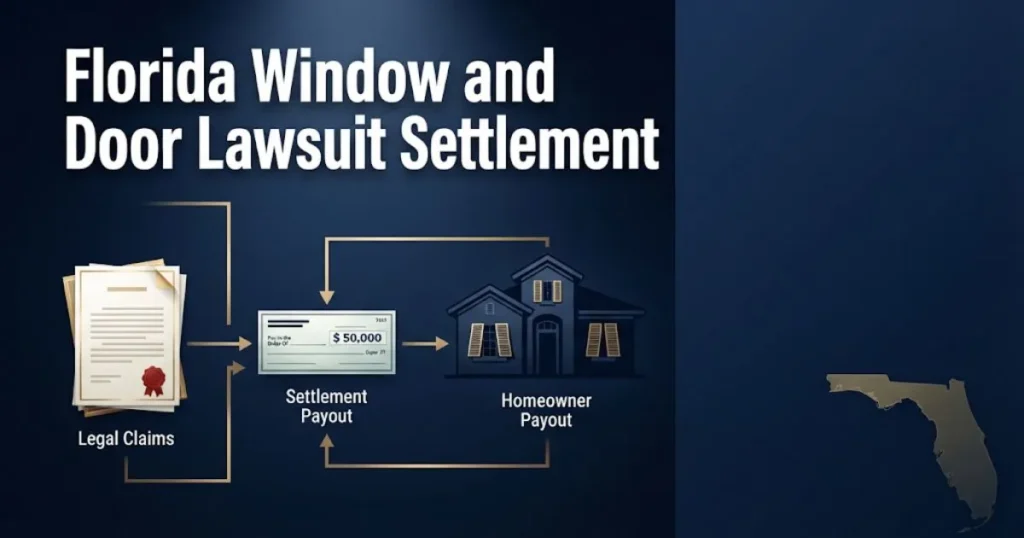
The Florida window and door lawsuit settlement is still developing in 2026. No global class action settlement has been announced. However, individual settlements have been reached in several cases, suggesting the company is willing to resolve claims under certain conditions.
Individual settlements have reportedly ranged from a few thousand dollars to six figures, depending on the extent of damage and the strength of evidence. Homeowners with documented property damage, mold remediation costs, and replacement window expenses tend to receive the highest settlements.
Settlement negotiations typically consider these factors:
- Cost of replacement windows and doors
- Property damage from water intrusion (drywall, flooring, mold)
- Loss of use of the home during repairs
- Diminished property value
- Out-of-pocket repair and remediation costs
- Emotional distress in some cases
A global settlement could come if class certification is granted. In that scenario, the company would negotiate with class counsel to create a settlement fund. Every qualified class member would receive a share based on a predetermined formula.
| Settlement Scenario | Estimated Range | Likelihood in 2026 |
|---|---|---|
| Individual settlement (minor defects) | $3,000 to $15,000 | Ongoing |
| Individual settlement (major damage) | $15,000 to $100,000 plus | Ongoing |
| Class action settlement (per claimant) | $2,000 to $25,000 | Pending certification |
| Global settlement fund | $10 million to $50 million plus | Uncertain |
These numbers are estimates based on similar product defect cases in Florida’s construction industry. Actual amounts depend on the facts of each claim.
Florida Window and Door Lawsuit Payout
The Florida window and door lawsuit payout depends on the type of claim you file and the damages you can prove. Homeowners with extensive documentation of their losses are positioned to receive the most.
In individual lawsuits, payouts are calculated based on actual economic damages. That means the real money you spent or lost because of the defective products. Think replacement costs, repair bills, temporary housing, and lost rental income.
Here is a breakdown of potential payout categories:
- Replacement cost of defective products: $5,000 to $40,000 depending on the number and size of windows and doors
- Water damage repair: $2,000 to $30,000 depending on severity
- Mold remediation: $3,000 to $20,000
- Temporary housing costs: $1,500 to $10,000
- Diminished home value: Varies widely
- Emotional distress: $1,000 to $10,000 in some jurisdictions
If the case goes to trial and the jury finds the company acted with gross negligence or fraud, punitive damages could be awarded. Those can be multiples of the compensatory damages.
In a class action payout scenario, each class member typically receives less than they would in an individual case. That is the tradeoff: you get less money per person, but the process is simpler and faster.
The sweet spot for most homeowners is an individual claim with strong documentation. If you have receipts, inspection reports, contractor quotes, and photos, your payout potential increases significantly.
Key Takeaway: Individual lawsuit payouts could range from $3,000 to over $100,000 based on documented damages, while class action payouts per person would likely be smaller but easier to obtain.
Florida Window and Door Class Action Settlement Amount
The Florida window and door class action settlement amount has not been finalized because class certification is still pending. But based on similar construction defect class actions in Florida, we can project what a settlement fund might look like.
In comparable cases involving defective building products, class action settlement funds have ranged from $10 million to $75 million. The per-claimant share depends on how many people file valid claims.
Here’s how the math typically works. Imagine a $30 million settlement fund with 2,000 qualified claimants. After attorneys’ fees (usually 25% to 33%) and administrative costs, the net fund might be around $19 million. Divided among 2,000 claimants, that is roughly $9,500 per person before any tiered adjustments.
| Settlement Fund Size | Estimated Claimants | Attorney Fees (30%) | Admin Costs | Net Per Claimant |
|---|---|---|---|---|
| $15 million | 1,500 | $4.5 million | $500,000 | ~$6,667 |
| $30 million | 2,000 | $9 million | $750,000 | ~$10,125 |
| $50 million | 3,000 | $15 million | $1 million | ~$11,333 |
Most class action settlements use a tiered payout structure. Claimants with more severe damage get placed in a higher tier. Someone whose entire window wall failed during a hurricane would receive more than someone who had a minor seal leak.
These tiers are usually defined during settlement negotiations and approved by the court. The judge overseeing the case has the final say on whether the settlement is fair and adequate.
How to File a Florida Window and Door Lawsuit Claim
Filing a Florida window and door lawsuit claim starts with gathering your evidence and contacting a qualified attorney who handles construction defect or product liability cases. You do not need to pay anything upfront because most attorneys take these cases on contingency.
Here is a step-by-step process:
Step 1: Collect your documents. Pull together everything related to your purchase and the defects. This includes:
- Purchase receipts or contracts
- Installation records
- Warranty paperwork
- Photos of damage (the more the better)
- Repair invoices and contractor estimates
- Insurance claim records if applicable
- Any correspondence with Florida Window and Door Inc.
Step 2: Contact a product liability attorney. Look for firms experienced in construction defect litigation in Florida. They will review your case at no charge.
Step 3: Attorney files the complaint. Your lawyer will draft and file a complaint in the appropriate Florida circuit court. This document lays out your claims and the damages you are seeking.
Step 4: Discovery begins. Both sides exchange evidence. This is where internal company documents, testing records, and expert reports come into play.
Step 5: Negotiate or go to trial. Most cases settle before trial. But if the company won’t offer fair compensation, your attorney can take it to a jury.
| Filing Step | What You Do | What Your Attorney Does |
|---|---|---|
| Step 1 | Gather documents and photos | Reviews materials for viability |
| Step 2 | Initial consultation | Evaluates legal claims |
| Step 3 | Sign retainer agreement | Files complaint in court |
| Step 4 | Provide testimony if needed | Conducts discovery |
| Step 5 | Accept or reject settlement | Negotiates or tries the case |
You can file an individual claim or join a class action if one is certified. Your attorney will advise which path gives you the best chance of maximum recovery.
Florida Window and Door Lawsuit Deadline
The Florida window and door lawsuit deadline depends on which legal theory your claim is based on. Florida has different statutes of limitations for different types of claims, and missing the deadline means losing your right to sue.
Here are the key deadlines:
- Product liability claims: 4 years from the date you discovered (or should have discovered) the defect under Florida Statute 95.11
- Breach of warranty claims: 4 years from the date of the breach, which is usually when the product fails
- FDUTPA claims (deceptive trade practices): 4 years from the date of the violation
- Negligence claims: 4 years from the date of injury or damage
- Construction defect claims: Subject to Florida’s 10-year statute of repose from the date of completion of the building or improvement
| Claim Type | Statute of Limitations | Key Starting Point |
|---|---|---|
| Product Liability | 4 years | Date defect discovered |
| Breach of Warranty | 4 years | Date of product failure |
| FDUTPA | 4 years | Date of deceptive act |
| Negligence | 4 years | Date of damage or injury |
| Construction Defect (Repose) | 10 years | Date of project completion |
The discovery rule is your friend here. If you didn’t know about the defect until a hurricane exposed it, your clock may not have started until that event. This is an area where a good attorney can make a real difference.
If your windows were installed in 2018 and failed during Hurricane Milton in 2024, your four-year clock likely started in 2024. That gives you until 2028 to file. But don’t wait. Evidence gets stale, witnesses forget, and records disappear.
Key Takeaway: Most Florida window and door lawsuit claims have a four-year filing deadline that starts when you discover the defect, but the ten-year statute of repose is the outer boundary for construction-related claims.
Florida Window and Door Defective Products
Florida Window and Door defective products include several lines of impact-resistant windows and doors that allegedly failed to meet advertised performance standards. The defects reportedly affect both the windows themselves and the door systems the company sold.
Common defects reported by homeowners include:
- Seal failure: The weathertight seal between glass panes breaks down, allowing moisture between the layers
- Frame warping: Aluminum or vinyl frames bend or warp, creating gaps
- Glass delamination: The laminated safety glass separates, compromising impact resistance
- Hardware malfunction: Locks, hinges, and operators fail prematurely
- Water intrusion at corners: Joints and corners allow water penetration during rain
- Design pressure rating failures: Products do not withstand the wind pressures they are rated for
The most serious allegations involve products installed in high-velocity hurricane zones (HVHZ), particularly in Miami-Dade and Broward counties. These areas have the strictest building codes in the country, and products installed there must meet Miami-Dade Notice of Acceptance (NOA) standards.
| Defect Type | Severity | Reported Frequency |
|---|---|---|
| Seal Failure | Moderate | Very Common |
| Frame Warping | Moderate to Severe | Common |
| Glass Delamination | Severe | Less Common |
| Hardware Malfunction | Low to Moderate | Common |
| Water Intrusion at Corners | Moderate to Severe | Very Common |
| Design Pressure Failure | Severe | Reported During Storms |
Some homeowners say their products began showing problems within two to three years of installation. That is well within the expected lifespan of impact windows, which should last 15 to 25 years with proper installation.
Florida Window and Door Water Intrusion Lawsuit
The Florida window and door water intrusion lawsuit is one of the most common claim types in this litigation. Water intrusion is when rain or storm water enters the home through or around windows and doors that are supposed to be weathertight.
Water intrusion causes cascading damage. It soaks drywall, ruins flooring, destroys personal property, and creates conditions for mold growth. Mold remediation alone can cost $5,000 to $20,000 or more depending on how far the moisture spreads.
Plaintiffs allege the water intrusion results from:
- Defective seals that deteriorate prematurely
- Improper drainage channels within the window frame
- Poor corner joint construction that allows water to pool and penetrate
- Inadequate testing of products before they went to market
The company has argued in some cases that water intrusion resulted from improper installation by third-party contractors rather than product defects. This is a common defense strategy in construction defect cases.
However, plaintiffs counter with evidence that the same problems appear across different installers and geographic areas. When dozens of different contractors install the same product and water intrusion occurs across the board, the product itself becomes the common denominator.
| Water Intrusion Claim | Details |
|---|---|
| Typical Damage Cost | $5,000 to $50,000 |
| Most Common Entry Points | Corner joints, bottom sills, frame-to-glass seals |
| Secondary Damage | Mold, drywall damage, flooring damage |
| Company’s Defense | Blames third-party installers |
| Plaintiffs’ Counter | Same defects across multiple installers |
Homeowners who noticed water stains, musty odors, or bubbling paint around their windows and doors should photograph the damage and contact a professional for a moisture inspection. That documentation is gold for your legal claim.
Florida Window and Door Hurricane Failure
Florida window and door hurricane failure refers to instances where the company’s impact-rated products broke, shattered, or allowed wind and rain penetration during hurricane events. This is the most alarming category of defect because impact windows exist specifically to protect homes during hurricanes.
After Hurricane Ian (2022) and Hurricane Milton (2024), a surge of complaints emerged from homeowners whose Florida Window and Door products failed. Reports include windows that blew inward, doors that buckled off their tracks, and laminated glass that shattered into fragments.
Impact windows are tested to withstand specific wind speeds and debris impacts. A product with a design pressure rating of +/- 50 should hold up in winds of approximately 150 mph. When these products fail at lower wind speeds, something went wrong during manufacturing, testing, or quality control.
- Windows reportedly failed at wind speeds 30 to 50 mph below their rated capacity
- Some products did not survive the “small missile” impact test equivalent conditions
- Frame failures occurred even in products that were only 3 to 5 years old
- Failures were concentrated in certain product lines rather than being random
The timing of failures matters. If your product failed during Hurricane Ian in 2022, your four-year clock to file a claim means you need to act before 2026. For Hurricane Milton failures in 2024, you have until roughly 2028.
| Hurricane Event | Year | Reported Failures | Filing Deadline (Approx.) |
|---|---|---|---|
| Hurricane Irma | 2017 | Moderate | May have passed for some claims |
| Hurricane Ian | 2022 | Significant | 2026 |
| Hurricane Milton | 2024 | Significant | 2028 |
Key Takeaway: Products that fail during hurricanes they were rated to withstand represent the strongest claims in this lawsuit, and homeowners affected by Hurricane Ian need to act quickly before the 2026 deadline window closes.
Florida Impact Window Lawsuit
The Florida impact window lawsuit is broader than just Florida Window and Door Inc. It encompasses claims against multiple manufacturers of impact-resistant windows sold in Florida. However, Florida Window and Door is among the companies most frequently named in these suits.
Impact windows are required by the Florida Building Code in certain wind zones. Homeowners in HVHZ areas, which include most of Miami-Dade and Broward counties, must install products that meet strict performance standards. These are not optional upgrades; they are legal requirements.
When impact windows fail to perform, the consequences go beyond property damage. Homeowners lose confidence in their home’s safety. Some have evacuated during storms they should have been able to ride out at home, simply because they no longer trusted their windows.
The legal landscape for impact window claims in Florida involves:
- State product liability law (strict liability and negligence)
- Florida Building Code compliance requirements
- Miami-Dade NOA testing standards for HVHZ products
- Magnuson-Moss Warranty Act for written warranty claims
- FDUTPA for deceptive marketing of product capabilities
| Legal Avenue | What It Covers | Potential Damages |
|---|---|---|
| Product Liability | Defective design or manufacture | Repair costs, property damage, personal injury |
| Building Code Violation | Non-compliance with Florida standards | Replacement costs, code compliance costs |
| Warranty Act | Breach of written warranty | Repair/replacement, consequential damages |
| FDUTPA | False advertising of performance | Actual damages, attorney fees |
One advantage Florida homeowners have is the state’s strong consumer protection laws. FDUTPA allows courts to award attorney fees to prevailing consumers, which makes it financially viable for attorneys to take smaller cases on contingency.
Florida Window and Door Product Recall
As of 2026, Florida Window and Door has not issued a formal product recall. The company has not voluntarily pulled any product lines from the market or notified customers of defects through official recall channels.
This is different from an automotive recall where the manufacturer proactively reaches out. In the building products industry, recalls are less common. Companies typically address problems through warranty service rather than formal recalls, especially when the defect affects installed products that cannot simply be returned.
The Consumer Product Safety Commission (CPSC) has not listed any recalls for Florida Window and Door products. However, the absence of a recall does not mean the products are safe or performing correctly. It simply means no government agency has forced a recall.
- No voluntary recall issued by the manufacturer
- No CPSC-mandated recall as of 2026
- Company reportedly handles complaints through warranty department
- Some homeowners report difficulty getting warranty service
| Recall Status | Details |
|---|---|
| Voluntary Recall | None issued |
| Government-Mandated Recall | None issued |
| CPSC Action | No listed recalls |
| Warranty Response | Mixed reports from consumers |
The lack of a recall is actually one of the arguments plaintiffs use in court. They claim the company knew about widespread defects and chose not to recall products or alert customers, which could support claims of negligence or even willful misconduct.
If you are wondering whether your specific product has been flagged, you can check the CPSC recall database by searching for the manufacturer name and product type.
Florida Window and Door Warranty Claims
Florida Window and Door warranty claims are a separate process from filing a lawsuit, but they are related. Most of the company’s products come with a manufacturer’s warranty that covers defects in materials and workmanship for a specified period.
Typical warranty coverage for impact windows and doors includes:
- Limited lifetime warranty on vinyl frames (varies by product line)
- 10-year warranty on insulated glass seal failure
- Limited warranty on hardware and moving parts (often 5 to 10 years)
- Pro-rated coverage that decreases over time for certain components
However, many homeowners report frustration with the warranty claim process. Common complaints include:
- Long wait times for inspections (3 to 6 months in some cases)
- Claims denied due to “improper installation” even when the homeowner used the company’s recommended installer
- Partial replacements that do not fully resolve the problem
- Warranty service that addresses symptoms but not the root cause
| Warranty Issue | What Homeowners Report |
|---|---|
| Response Time | 3 to 6 months for initial inspection |
| Denial Rate | High, often citing installation issues |
| Repair Quality | Mixed, sometimes does not resolve the problem |
| Documentation Required | Purchase receipt, photos, contractor records |
Filing a warranty claim does not prevent you from filing a lawsuit. In fact, documenting your warranty claim and the company’s response (or lack thereof) strengthens your legal case. If the company denied a valid warranty claim or dragged its feet, that is evidence a jury can consider.
Save every email, letter, and voicemail related to your warranty interactions. Record the names of company representatives you speak with and the dates of all communications. This paper trail matters.
Key Takeaway: Warranty claims and lawsuits are separate processes, but a denied or mishandled warranty claim can actually strengthen your case by showing the company failed to stand behind its products.
Florida Window and Door Complaint
Filing a Florida window and door complaint is something you should do even if you plan to pursue a lawsuit. Complaints create a public record and can be used as evidence in litigation.
There are several places to file a complaint:
- Florida Attorney General’s Office: Consumer Protection Division handles complaints about defective products and deceptive business practices
- Better Business Bureau (BBB): Creates a public record and gives the company a chance to respond
- Florida Department of Business and Professional Regulation (DBPR): If installation contractors were involved, they may be regulated by this agency
- Consumer Product Safety Commission (CPSC): For safety-related defects in consumer products
- Local building department: If you believe the product does not meet building code requirements
When filing your complaint, be specific. Include:
- Your full name and contact information
- The product model and date of purchase
- A detailed description of the defect
- Photos and videos of the damage
- Any correspondence with the company
- What resolution you are seeking
| Where to File | What They Handle | Expected Response Time |
|---|---|---|
| Florida Attorney General | Deceptive practices, consumer fraud | 30 to 90 days |
| BBB | Business conduct, product quality | 14 to 30 days |
| DBPR | Contractor licensing issues | 30 to 60 days |
| CPSC | Safety hazards | Varies |
| Local Building Dept. | Code compliance | 14 to 30 days |
Each complaint you file creates a breadcrumb trail. When enough complaints accumulate, regulators take notice. And when regulators take notice, the pressure on the company to resolve claims increases dramatically.
Your complaint might feel like shouting into the void. It is not. Every single one counts, especially when attorneys use complaint databases to demonstrate a pattern of defects across hundreds of installations.
Frequently Asked Questions
Is there a class action lawsuit against Florida Window and Door in 2026?
Yes, class action lawsuits have been filed against Florida Window and Door Inc. in several Florida courts.
Class certification is still pending as of 2026.
Individual lawsuits are also active and being settled in some cases.
How much money can I get from the Florida Window and Door lawsuit?
Individual payouts range from $3,000 to over $100,000 based on documented damages.
Class action payouts per claimant could range from $2,000 to $25,000 if a settlement fund is established.
Your actual amount depends on the severity of defects and the evidence you provide.
What is the deadline to file a Florida Window and Door lawsuit claim?
The general deadline is 4 years from the date you discovered the defect.
Florida’s statute of repose sets a hard outer limit of 10 years from project completion.
Homeowners affected by Hurricane Ian in 2022 should file before late 2026 to be safe.
Do I qualify for the Florida Window and Door lawsuit if my windows leaked?
Yes, water intrusion is one of the most common claims in this lawsuit.
You qualify if the leak resulted from a product defect rather than improper installation.
Document the damage with photos, repair invoices, and moisture inspection reports.
Has Florida Window and Door recalled any products?
No, the company has not issued any formal product recall as of 2026.
The CPSC has not mandated a recall either.
The absence of a recall does not mean the products are free of defects.
This is a lawsuit that could put real money back in homeowners’ pockets. If your impact windows or doors failed, leaked, or fell apart before they should have, you have legal options.
Gather your documents. File your complaints. Talk to an attorney who handles Florida construction defect cases.
The clock is ticking on filing deadlines, and the strongest claims are the ones backed by solid evidence collected early.







