

Key Takeaways
- Nearly 600 motorcyclists were killed on Texas roads in 2023, according to TxDOT.
- Texas riders 21 and older can ride without a helmet only if they have completed a safety course or carry qualifying health insurance.
- Not wearing a helmet does not bar a claim, but insurers may argue it made injuries worse.
- Lane splitting is not authorized under Texas law, which can affect fault.
- Texas uses a 51% bar: a rider found more than 50% at fault recovers nothing.
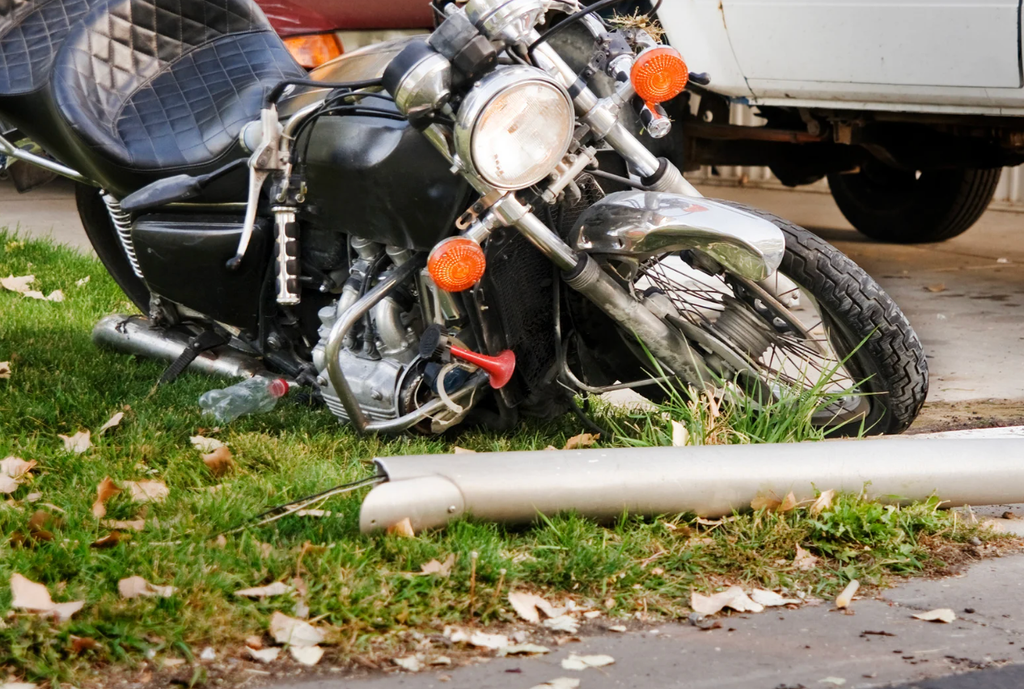
A motorcycle accident claim is a request for compensation after a crash in which a motorcyclist is injured or killed because of another party’s negligence. These claims follow the same basic rules as car crash claims in Texas, but several laws and patterns make them different in practice.
The seven points below cover the rules and facts that most often shape how much an injured rider can recover.
1. Motorcyclists Face Outsized Risk
Motorcycles make up a small share of vehicles but a large share of deaths. The Texas Department of Transportation reported that nearly 600 people riding motorcycles were killed in Texas crashes from the past 3 years, and more than 2,400 were seriously injured.
TxDOT runs a “Share the Road: Look Twice for Motorcycles” campaign because drivers often misjudge a motorcycle’s distance and speed.
2. Texas Has a Conditional Helmet Law
Under Chapter 661 of the Texas Transportation Code, riders and passengers under 21 must wear a helmet. Riders 21 and older may ride without one only if they:
- Completed an approved motorcycle operator training and safety course, or
- Carry health insurance that covers at least $10,000 in medical benefits for crash injuries
Police cannot stop a rider solely to check whether they qualify for the exemption.
3. No Helmet Does Not Bar a Claim
A rider who was not wearing a helmet can still bring a claim if another driver caused the crash. However, the defense may argue that the lack of a helmet made a head injury worse.
Important: This argument goes to the amount of damages, not to who caused the crash. It usually matters most in cases involving head or brain injuries and has little bearing on injuries like broken legs.
4. Left-Turn Crashes Are a Leading Pattern
One of the most common motorcycle crash patterns is a car turning left across a rider’s path. Texas law requires a driver turning left to yield to oncoming traffic that is close enough to be a hazard.
When a driver says “I never saw the motorcycle,” that statement often supports the rider’s claim. It suggests the driver failed to keep a proper lookout.
5. Lane Splitting Is Not Authorized in Texas
Lane splitting means riding between lanes of slow or stopped traffic. Texas has no law authorizing it, and drivers must stay within a single lane under the Transportation Code. A rider injured while lane splitting may be assigned part of the fault.
6. Comparative Fault Can Reduce or Erase Recovery
Texas applies proportionate responsibility. A rider’s damages are reduced by their percentage of fault. If the rider is found more than 50% at fault, they recover nothing.
Bias against riders can play a role here. Insurers sometimes assume a motorcyclist was speeding or weaving. Evidence like video, black box data from the other vehicle, and crash reconstruction can push back on those assumptions.
Example of Comparative Fault in a Motorcycle Claim
Suppose a jury finds $400,000 in damages after a driver turned left in front of a rider. It assigns 80% of the fault to the driver and 20% to the rider for speeding slightly. The rider recovers $320,000. If the jury had found the rider 51% at fault, the rider would recover nothing.
7. Out-of-State Defendants Can Move a Case to Federal Court
Some Texas motorcycle crashes involve commercial vehicles, interstate trucking companies, or drivers who live outside Texas. When the plaintiff and defendants are citizens of different states and the amount in controversy exceeds $75,000, a defendant may be able to remove a qualifying lawsuit from Texas state court to federal court under diversity jurisdiction.
That change can affect where the case is litigated and which procedural rules apply. Federal cases are governed by the Federal Rules of Civil Procedure and the local rules of the federal district handling the lawsuit.
This jurisdictional issue is particularly relevant in serious motorcycle cases involving an out-of-state commercial defendant. Sutliff & Stout co-founder Graham Sutliff is admitted to practice in the Northern, Southern, Eastern, and Western U.S. District Courts of Texas, in addition to Texas state courts. That federal-court admission provides a concrete connection between the firm’s litigation credentials and cases that may cross from state into federal jurisdiction.
For someone seeking a Houston motorcycle accident lawyer, federal-court capability can become relevant when a Houston-area motorcycle claim involves an out-of-state trucking company, corporate vehicle owner, or other defendant that has grounds to remove the lawsuit to federal court.
What Damages Can an Injured Rider Recover?
An injured motorcyclist may recover:
- Medical expenses, past and future
- Lost wages and lost earning capacity
- Pain and suffering
- Mental anguish
- Physical impairment and disfigurement
- Damage to the motorcycle and gear
Texas does not cap these damages in ordinary negligence cases.
Frequently Asked Questions
Do I Need Special Insurance to Ride a Motorcycle in Texas?
Texas requires the same minimum liability coverage for motorcycles as for cars: $30,000 per person, $60,000 per crash for injuries, and $25,000 for property damage.
Can I Get a Ticket for Not Wearing a Helmet in Texas?
If you are under 21, yes. If you are 21 or older and qualify for the exemption, no.
How Long Do I Have to File a Motorcycle Accident Lawsuit in Texas?
Two years from the date of the crash.
Texas Motorcycle Claims
Texas motorcycle claims follow standard negligence rules, but helmet laws, lane-splitting rules, and bias against riders make them harder to win cleanly. The strongest claims rely on objective evidence of how the crash happened. Where an out-of-state defendant is involved, the case may also move from state court to federal court, which changes how it is litigated.







