

A Disney World water slide lawsuit is a legal claim filed by visitors who suffered injuries on water rides at Disney’s parks due to alleged negligence or design flaws. Several cases are active or expected to move forward in 2026, and injured guests may be entitled to significant compensation.
This guide covers everything you need to know about these lawsuits right now. You’ll learn who qualifies, what settlements look like, how to file, and which rides have been involved.
Here’s a fact that surprises most people: Disney World attracts over 58 million visitors per year, yet the company self-reports ride injuries under Florida’s unique inspection exemption. That means oversight gaps exist that most guests never hear about.
If you or someone in your family got hurt on a Disney water slide, keep reading. Every section below answers a specific question.
Disney World Water Slide Lawsuit
A Disney World water slide lawsuit is a personal injury claim filed against Walt Disney Parks and Resorts by a guest injured on a water attraction. These lawsuits allege that Disney failed to maintain safe conditions, used defective ride designs, or did not warn visitors about known dangers.
Most of these cases are filed in Orange County Circuit Court in Florida. Disney World’s water parks, Typhoon Lagoon and Blizzard Beach, are the primary locations where incidents occur.
The lawsuits typically fall under premises liability or product liability law. Premises liability means Disney, as the property owner, owed visitors a duty to keep rides safe. Product liability means the ride itself had a design or manufacturing flaw.
| Key Detail | Information |
|---|---|
| Defendant | Walt Disney Parks and Resorts |
| Court | Orange County Circuit Court, FL |
| Legal Basis | Premises liability, product liability |
| Parks Involved | Typhoon Lagoon, Blizzard Beach |
| Common Allegation | Negligent maintenance or design defect |
Disney fights these cases aggressively. The company employs teams of defense attorneys and often pushes for confidential settlements to keep details out of public view.
That secrecy is part of what makes researching these cases so difficult. But court filings, news reports, and attorney statements reveal a pattern of injuries that guests deserve to know about.
Disney Water Slide Injury Lawsuit 2026
Disney water slide injury lawsuits in 2026 involve claims from guests who suffered physical harm on water attractions at Disney World’s two water parks. Several cases filed in 2024 and 2025 are expected to reach key milestones this year, including discovery deadlines and potential settlement negotiations.
Injuries reported in these lawsuits range from broken bones to spinal cord damage. Some plaintiffs have alleged traumatic brain injuries after being thrown from rafts or striking concrete structures on slides.
The 2026 cases are significant because Florida courts have been moving faster on personal injury dockets. Pandemic-era backlogs have largely cleared, which means cases filed in the last two years are now progressing toward trial or settlement.
- Broken bones from high-speed impacts on slides
- Spinal injuries from sudden drops or design flaws
- Concussions and TBIs from collisions with ride structures
- Lacerations from rough surfaces or broken components
- Near-drowning incidents from landing pool malfunctions
One thing that makes 2026 different: Florida’s tort reform law (HB 837), signed in March 2023, changed how negligence is calculated. Plaintiffs now face a modified comparative fault standard. If a guest is found more than 50% at fault, they recover nothing.
That legal shift makes building a strong case even more important for anyone considering a lawsuit this year.
Disney Parks Injury Lawsuit Update 2026
The latest update on Disney parks injury lawsuits in 2026 shows multiple active cases in various stages of litigation. No major class action has been certified for water slide injuries specifically, but individual lawsuits continue to be filed.
As of early 2026, at least three known water park injury cases are in active discovery. Discovery is the phase where both sides exchange evidence, take depositions, and gather expert reports.
Disney has also faced renewed scrutiny from safety advocates. Florida’s ride inspection exemption, which allows Disney and other major parks to self-inspect attractions, remains controversial.
| Case Phase | Expected Timeline (2026) |
|---|---|
| Filing | Ongoing throughout 2026 |
| Discovery | Q1 to Q3 2026 for cases filed in 2024 |
| Mediation | Q2 to Q4 2026 |
| Trial Dates | Late 2026 to early 2027 |
| Settlements | Could happen at any stage |
State legislators have periodically introduced bills to remove the self-inspection exemption. None have passed so far. But every high-profile injury case adds pressure to that debate.
For plaintiffs, the 2026 timeline means this: if you were injured in 2024 or earlier, your case could be approaching resolution. If you were injured more recently, filing sooner gives your attorney more time to build a strong claim.
Key Takeaway: Multiple Disney water slide injury lawsuits are active in 2026, with cases filed in 2024 now entering discovery and approaching potential settlement windows.
Disney World Waterslide Injury Settlement
A Disney World waterslide injury settlement is a financial agreement between Disney and an injured guest that resolves a lawsuit without going to trial. Disney has historically preferred settlements over trials because public trials generate negative press.
Most Disney injury settlements are confidential. The company includes nondisclosure agreements as a standard condition. That means exact dollar amounts from past cases rarely become public.
However, based on comparable theme park injury settlements in Florida and attorney statements, the range is significant. Minor injuries might settle in the low five figures. Serious injuries involving surgery, permanent disability, or long-term care have reportedly settled for six or even seven figures.
| Injury Severity | Estimated Settlement Range |
|---|---|
| Minor (bruises, sprains) | $10,000 to $50,000 |
| Moderate (fractures, lacerations) | $50,000 to $250,000 |
| Severe (spinal, TBI, surgery required) | $250,000 to $1,000,000+ |
| Catastrophic (permanent disability) | $1,000,000 to $5,000,000+ |
Think of it like car insurance claims but with a corporate defendant worth over $90 billion. Disney can afford to pay, but they’ll fight to pay as little as possible.
The settlement process usually starts with a demand letter from the plaintiff’s attorney. If Disney responds with a reasonable counter, negotiations begin. If not, the case heads toward trial.
Most settlements happen during or after mediation. A neutral mediator helps both sides find middle ground. In Florida, courts often require mediation before a trial date is set.
Disney Water Slide Lawsuit Settlement Amount
The exact settlement amount in a Disney water slide lawsuit depends on injury severity, medical costs, lost income, and the strength of evidence proving Disney’s fault. There is no single fixed payout because each case is unique.
That said, publicly known theme park injury settlements in Florida offer useful benchmarks. A 2016 case involving a water ride injury at a major Florida park settled for approximately $450,000. Other cases involving traumatic brain injuries at amusement parks have reached seven-figure settlements.
Several factors directly affect how much a plaintiff receives:
- Total medical bills (past and future treatment costs)
- Lost wages from time away from work
- Pain and suffering (Florida allows these damages in injury cases)
- Permanent impairment rating from a medical professional
- Disney’s degree of fault under Florida’s comparative negligence rules
- Strength of evidence (photos, witness statements, medical records)
One critical factor in 2026: Florida’s tort reform now caps certain noneconomic damages in negligence cases. This means pain and suffering awards may be lower than they were before 2023.
Still, a strong case with documented injuries, clear evidence of Disney’s negligence, and consistent medical treatment can command a substantial settlement.
Who Qualifies for Disney Water Slide Lawsuit
You may qualify for a Disney water slide lawsuit if you were physically injured on a water attraction at a Disney park and the injury resulted from Disney’s negligence, a design defect, or inadequate safety measures. Both adults and children who suffered injuries can pursue claims.
Qualification isn’t automatic. You need to show that Disney did something wrong or failed to do something they should have done. Simply getting hurt isn’t enough on its own.
Here are the main qualifying criteria:
- You were a paying guest or visitor at a Disney water park
- You suffered a documented physical injury on a water ride
- The injury required medical treatment (ER visit, doctor, hospital)
- The injury was caused by a ride malfunction, design flaw, or staff negligence
- You reported the incident to Disney or sought medical care within a reasonable time
- Your claim falls within Florida’s statute of limitations
| Qualification Factor | Requirement |
|---|---|
| Location | Disney World water park (Typhoon Lagoon or Blizzard Beach) |
| Injury Type | Physical injury requiring medical attention |
| Cause | Negligence, defect, or safety failure by Disney |
| Timeline | Within Florida’s statute of limitations |
| Documentation | Medical records, incident report, photos |
Parents can file on behalf of injured children. If a child was hurt, the parent or legal guardian typically serves as the plaintiff.
Guests visiting from other states or countries can still file in Florida courts. The incident happened on Florida soil, so Florida law applies.
Key Takeaway: You qualify if you suffered a real, documented injury on a Disney water slide caused by something Disney did wrong or failed to prevent, and you’re within the legal filing deadline.
Disney Water Slide Lawsuit Eligibility
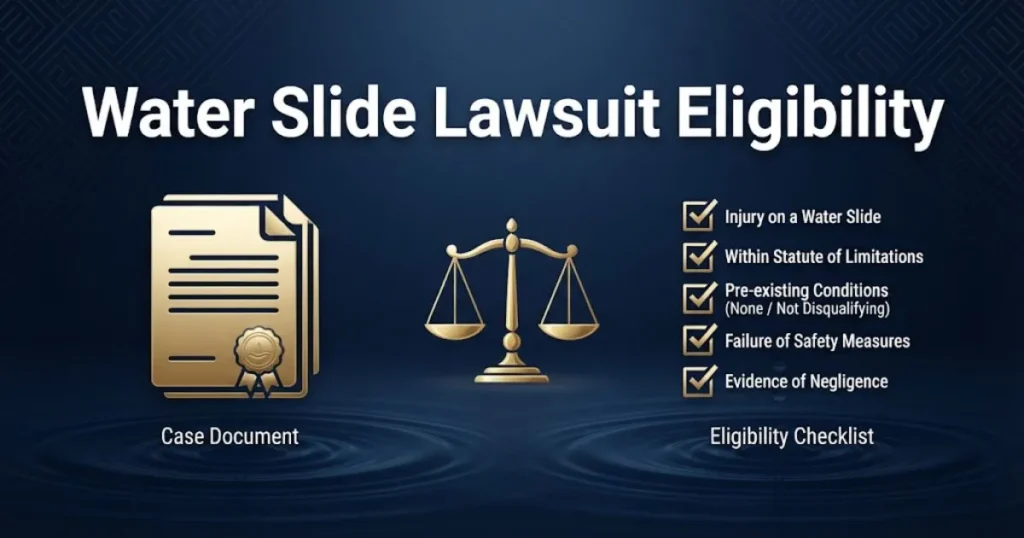
Disney water slide lawsuit eligibility requires meeting specific legal standards beyond just being injured. The two biggest eligibility factors are proving Disney’s fault and filing within the statute of limitations window.
Under Florida law, Disney owes every guest what’s called a “duty of care.” That means they must inspect rides, maintain equipment, train staff properly, and warn visitors about known hazards. When they fall short on any of those obligations, they can be held liable.
Eligibility becomes complicated if Disney argues that the guest was partially at fault. Florida’s comparative fault system means your compensation gets reduced by your percentage of blame. If you’re found more than 50% responsible, you get nothing.
Things that can hurt your eligibility:
- Ignoring posted safety warnings or height/weight restrictions
- Being intoxicated at the time of the incident
- Not following staff instructions on how to ride
- Failing to report the injury or seek medical care
- Waiting too long to file a legal claim
Things that strengthen your eligibility:
- Photos or videos of the incident or unsafe condition
- Witness contact information from other guests
- A formal incident report filed with Disney on the day of injury
- Consistent medical treatment starting immediately after the incident
- Documentation of ride malfunction or visible safety hazard
Even if you think Disney might argue you were partially at fault, it’s still worth getting your case evaluated. Partial fault doesn’t automatically disqualify you under Florida law.
How to File a Disney Water Slide Injury Claim
Filing a Disney water slide injury claim starts with gathering evidence and contacting a personal injury attorney who handles theme park cases. You do not file a class action claim form online. These are individual lawsuits filed through the Florida court system.
Here’s a step-by-step breakdown of the process:
Step 1: Get medical treatment. Your medical records become the foundation of your case. See a doctor immediately after the injury, even if symptoms seem minor at first.
Step 2: Document everything. Take photos of the ride, your injuries, and anything else relevant. Save your park tickets, receipts, and any communication with Disney staff.
Step 3: Request your incident report. If you reported the injury to Disney at the park, request a copy of the incident report. Disney is not always quick to provide these, but your attorney can compel production.
Step 4: Consult an attorney. Look for a lawyer experienced with theme park injury cases in Florida. Most work on contingency, meaning you pay nothing upfront.
Step 5: Your attorney files the lawsuit. The complaint is filed in Orange County Circuit Court. Disney is served with the lawsuit and has 20 days to respond.
| Filing Step | What Happens |
|---|---|
| Medical Treatment | Get documented care for your injuries |
| Evidence Collection | Photos, receipts, witness info, incident report |
| Attorney Consultation | Free case evaluation with a theme park injury lawyer |
| Complaint Filed | Lawsuit officially filed in Florida court |
| Disney Responds | Disney has 20 days to file a response |
| Discovery Begins | Both sides exchange evidence and take depositions |
The whole process from filing to resolution typically takes 12 to 24 months. Some cases resolve faster through early settlement. Others take longer if Disney fights aggressively.
Can You Sue Disney for Water Slide Injury
Yes, you can sue Disney for a water slide injury if you can demonstrate that Disney’s negligence or a ride defect caused your harm. Disney is not immune from lawsuits, and Florida law provides a clear legal path for injured guests.
A common myth is that Disney’s ticket disclaimers or posted warnings prevent lawsuits. That’s not accurate. While Disney includes assumption-of-risk language on tickets, Florida courts have consistently held that such language does not shield companies from liability for their own negligence.
Think of it this way: a restaurant can’t poison your food and then point to a sign that says “eat at your own risk.” Similarly, Disney can’t operate a defective water slide and hide behind ticket fine print.
There are a few legal theories you can sue under:
- Premises liability: Disney failed to maintain a safe environment
- Product liability: The ride had a design or manufacturing defect
- Negligent supervision: Lifeguards or ride operators failed in their duties
- Failure to warn: Disney knew about a hazard and didn’t alert guests
Disney will almost certainly raise defenses. They’ll argue the guest assumed the risk, failed to follow instructions, or was partially at fault. But raising a defense is not the same as winning.
Thousands of people have successfully sued theme parks in Florida. Disney is no exception.
Key Takeaway: You absolutely can sue Disney for a water slide injury, and ticket disclaimers do not prevent you from pursuing a valid negligence claim in Florida courts.
Disney Water Park Accident Lawsuit
A Disney water park accident lawsuit covers any injury incident at Typhoon Lagoon or Blizzard Beach, not just water slides. These cases include injuries from wave pools, lazy rivers, pool decks, stairways, and other areas within the water park grounds.
Slip-and-fall injuries on wet pool decks are among the most common claims. Disney’s water parks see massive foot traffic daily, and slippery surfaces create constant hazard potential.
Wave pool injuries are another frequent claim category. Guests have reported being thrown into walls, held underwater, or struck by other visitors in overcrowded wave pools. When staffing levels are inadequate or wave intensity is too high, Disney bears responsibility.
Types of water park accidents that lead to lawsuits:
- Slip and fall on wet surfaces or stairs
- Wave pool submersion or collision injuries
- Lazy river entrapment or impact injuries
- Water slide ejection or high-speed impact
- Chemical exposure from improperly treated water
- Drowning or near-drowning due to inadequate lifeguard coverage
| Accident Type | Common Injuries | Legal Basis |
|---|---|---|
| Slip and fall | Broken wrist, hip fracture, concussion | Premises liability |
| Wave pool | Near-drowning, rib fracture | Negligent supervision |
| Slide ejection | Spinal injury, TBI | Design defect |
| Chemical exposure | Skin burns, eye damage | Negligent maintenance |
| Lazy river entrapment | Lacerations, bruising | Design defect |
Disney’s own incident logs, which are occasionally obtained through litigation, reveal a steady stream of injuries each year. The company’s internal risk management team tracks these incidents, but that data rarely becomes public.
Disney Typhoon Lagoon Lawsuit
Disney Typhoon Lagoon lawsuits involve injury claims specific to this water park, which features a massive wave pool, multiple water slides, and a lazy river called Castaway Creek. Typhoon Lagoon has been the site of several notable injury incidents over the years.
The wave pool at Typhoon Lagoon produces waves up to six feet high. It’s one of the largest wave pools in North America. That size and power create real injury risk, especially for children, elderly visitors, and non-swimmers.
Lawsuits related to Typhoon Lagoon have alleged:
- Inadequate lifeguard staffing during peak hours
- Excessive wave intensity without proper guest warnings
- Slippery deck surfaces around the wave pool
- Ride malfunctions on slides like Crush ‘n’ Gusher and Humunga Kowabunga
- Failure to enforce height and weight restrictions
Typhoon Lagoon closed for refurbishment in 2021 and reopened in stages. Some plaintiffs have argued that ride modifications during refurbishment introduced new safety issues.
Humunga Kowabunga, a steep speed slide that sends riders down a nearly vertical drop in near darkness, has been a particular focus of safety concerns. The ride generates speeds that can cause riders to lose contact with the slide surface. When that happens, the landing can cause spinal compression or worse.
| Typhoon Lagoon Attraction | Reported Risk |
|---|---|
| Wave Pool | Submersion, collision injuries |
| Humunga Kowabunga | Spinal compression, high-speed impact |
| Crush ‘n’ Gusher | Raft ejection, joint injuries |
| Castaway Creek | Entrapment near grates or walls |
| Miss Adventure Falls | Impact injuries from raft collisions |
Any guest injured at Typhoon Lagoon should document the incident immediately. Take photos, get witness names, and report the injury to park staff before leaving.
Disney Blizzard Beach Injury Lawsuit
Disney Blizzard Beach injury lawsuits focus on incidents at Disney’s ski-resort-themed water park, home to Summit Plummet, one of the tallest and fastest free-fall water slides in the world. Summit Plummet drops riders 120 feet at speeds near 60 miles per hour.
At that speed, even minor design flaws or surface imperfections become dangerous. Riders have reported skin abrasions, back injuries, and one reported case of a dislocated shoulder from the sudden deceleration at the bottom of Summit Plummet.
Blizzard Beach has other attractions that have generated injury reports:
- Teamboat Springs: A family raft ride where guests have been thrown from rafts during turns
- Toboggan Racers: A mat slide where riders have reported wrist and ankle injuries
- Downhill Double Dipper: A racing slide with enclosed tubes that can cause claustrophobia-related panic and resulting injuries
- Tike’s Peak: A children’s area where slip-and-fall injuries on wet surfaces occur
| Blizzard Beach Attraction | Speed/Height | Primary Injury Risk |
|---|---|---|
| Summit Plummet | 60 mph / 120 ft drop | Spinal injury, skin abrasion |
| Teamboat Springs | Moderate speed | Raft ejection, impact injury |
| Toboggan Racers | Variable | Wrist/ankle fracture |
| Downhill Double Dipper | 25 mph | Panic-related injury, bruising |
Blizzard Beach temporarily closed in early 2022 and went through renovations. When parks reopen after renovations, the first weeks often carry elevated risk because staff are adjusting to modified ride configurations.
If you were injured at Blizzard Beach, your lawsuit would follow the same process as any Disney water park claim. The key is documenting the specific ride, the conditions at the time, and your injuries immediately after the incident.
Key Takeaway: Both Typhoon Lagoon and Blizzard Beach have specific attractions with documented injury risks, and lawsuits involving these parks follow Florida premises liability and product liability law.
Disney Water Slide Design Defect
A Disney water slide design defect claim alleges that the ride itself was inherently unsafe due to its engineering, construction, or layout. This is different from a negligence claim, which focuses on Disney’s failure to maintain or operate the ride safely.
Design defect cases are powerful because they don’t require proving that Disney knew about a specific problem. Instead, the plaintiff argues that the ride was unreasonably dangerous as designed, period.
Common design defect allegations in water slide cases include:
- Excessive speed that causes riders to become airborne
- Inadequate banking on curves that leads to ejection
- Rough or abrasive surfaces that cause skin injuries
- Poorly designed landing pools that are too shallow
- Insufficient padding or barriers at ride exits
- Flawed water flow systems that create suction hazards
To win a design defect claim, plaintiffs typically hire biomechanical engineers and ride safety experts. These experts analyze the slide’s design against industry standards set by organizations like ASTM International.
| Design Element | Standard Requirement | Common Defect |
|---|---|---|
| Slide speed | Controlled within ASTM limits | Exceeds safe speed parameters |
| Curve banking | Adequate to keep rider in flume | Insufficient banking causing ejection |
| Surface material | Smooth, non-abrasive | Rough spots causing skin burns |
| Landing pool depth | Minimum depth for safe deceleration | Too shallow for ride speed |
| Restraint systems | Appropriate for ride type | Missing or inadequate restraints |
Florida law allows strict liability for design defects. That means if the design is proven defective, Disney can be held liable even if they didn’t know about the flaw. This is a significant legal advantage for plaintiffs.
Disney World Water Slide Accident Reports
Disney World water slide accident reports are documented records of injuries that occur on water attractions. Disney is required to report serious injuries to the Florida Department of Agriculture and Consumer Services, but there’s a significant loophole.
Under Florida law, major theme parks with more than 1,000 employees can self-inspect their rides instead of submitting to state inspections. Disney, Universal, and SeaWorld all qualify for this exemption. That means Disney essentially polices itself when it comes to ride safety.
The data that does become public paints a concerning picture. Disney’s self-reported injury data, submitted quarterly, typically lists between 20 and 40 injuries per reporting period across all parks. Water park injuries represent a portion of that total.
What qualifies as a reportable injury:
- Any injury requiring hospitalization beyond basic first aid
- Any injury requiring surgery
- Any incident involving loss of consciousness
- Death or permanent impairment
| Reporting Category | Disney’s Obligation |
|---|---|
| Minor injuries (bruises, scrapes) | No state reporting required |
| Moderate injuries (fractures, concussions) | Must report if hospitalization occurs |
| Severe injuries (TBI, spinal) | Must report within specified timeframe |
| Fatalities | Immediate reporting required |
Critics argue that the self-inspection system allows Disney to underreport incidents. Without independent state inspectors visiting the parks regularly, there’s limited oversight of ride safety compliance.
For lawsuit purposes, your own medical records and the incident report you file with Disney on the day of injury are more valuable than any state-level data. Don’t rely on Disney’s self-reporting. Build your own evidence file.
Disney Theme Park Negligence Lawsuit
A Disney theme park negligence lawsuit requires proving four legal elements: duty, breach, causation, and damages. Disney owes every guest a duty of reasonable care. When they breach that duty and someone gets hurt as a result, that’s negligence.
Let’s break down each element in plain terms:
Duty: Disney must keep its parks reasonably safe. This includes maintaining rides, training staff, and warning guests about known risks.
Breach: Disney failed to meet that standard. Maybe a ride wasn’t inspected. Maybe a lifeguard wasn’t paying attention. Maybe a known hazard wasn’t fixed.
Causation: Disney’s breach directly caused your injury. If you got hurt for a completely unrelated reason, there’s no causation.
Damages: You suffered actual harm. Medical bills, lost wages, pain, and suffering.
| Negligence Element | What You Must Prove | Example |
|---|---|---|
| Duty | Disney owed you a duty of care | You were a paying park guest |
| Breach | Disney failed to meet that duty | Broken ride component not repaired |
| Causation | The breach caused your injury | Broken component caused you to fall |
| Damages | You suffered real losses | $25,000 in medical bills |
Florida’s comparative negligence rules come into play here. If a jury finds you were 30% at fault, your award gets reduced by 30%. But you still recover 70%.
Since 2023, Florida’s tort reform law means that if you’re found more than 50% at fault, you get zero. This makes evidence gathering critical.
Disney will likely argue contributory negligence. They’ll say you should have read the warnings, followed instructions, or simply not gone on the ride. That’s why documentation and witness statements are so valuable.
Key Takeaway: A negligence claim against Disney requires proving four elements, and Florida’s 2023 tort reform makes it essential to build a strong evidence file showing Disney was primarily at fault.
Disney Water Ride Injury Compensation
Disney water ride injury compensation covers economic damages, noneconomic damages, and in rare cases, punitive damages. The total amount varies widely based on injury severity and the strength of evidence.
Economic damages are the measurable financial losses:
- Medical expenses (ER, surgery, rehabilitation, future care)
- Lost wages (time missed from work)
- Lost earning capacity (if the injury affects your ability to work long-term)
- Out-of-pocket costs (travel to medical appointments, assistive devices)
Noneconomic damages cover the harder-to-quantify harms:
- Pain and suffering
- Emotional distress
- Loss of enjoyment of life
- Scarring or disfigurement
| Compensation Category | What It Covers | Typical Range |
|---|---|---|
| Medical bills | Past and future treatment | $5,000 to $500,000+ |
| Lost wages | Income missed during recovery | $2,000 to $100,000+ |
| Pain and suffering | Physical and emotional harm | $10,000 to $500,000+ |
| Permanent disability | Lifelong impact on daily living | $100,000 to $2,000,000+ |
| Punitive damages | Punishment for gross negligence | Rare; varies widely |
Punitive damages are only awarded when Disney’s conduct was especially reckless or intentional. These are uncommon in water slide cases but not impossible if evidence shows Disney knew about a dangerous defect and ignored it.
One important note: Florida’s tort reform placed caps on certain noneconomic damages. Your attorney will factor these caps into any settlement demand or trial strategy.
Insurance also plays a role. Disney carries massive liability insurance policies. Settlements are typically paid through insurance rather than directly from Disney’s corporate accounts.
Disney World Ride Injury Statute of Limitations
The statute of limitations for a Disney World ride injury lawsuit in Florida is generally four years from the date of injury for negligence claims and two years for wrongful death claims. Missing this deadline means your case gets dismissed permanently.
Florida Statute 95.11 governs these deadlines. The clock starts ticking on the date of the injury, not the date you decide to hire a lawyer.
| Claim Type | Statute of Limitations | Deadline Source |
|---|---|---|
| Personal injury (negligence) | 4 years | Florida Statute 95.11(3)(a) |
| Product liability | 4 years | Florida Statute 95.11(3)(a) |
| Wrongful death | 2 years | Florida Statute 95.11(4)(d) |
| Minor child injury | Tolled until age 18, then 4 years | Florida Statute 95.051 |
There’s an important exception for children. If a minor was injured, the statute of limitations is “tolled,” or paused, until the child turns 18. After that, they have four years to file. So a child injured at age 10 could file until age 22.
Don’t wait until the last minute, though. Evidence degrades over time. Witnesses forget details. Medical records become harder to obtain. Disney’s own records may be purged after a few years.
For anyone injured in 2022 or later, you likely still have time to file in 2026. But this is a deadline you cannot afford to miss. Filing even one day late means your case is dead.
Disney Water Slide Lawsuit Attorney
A Disney water slide lawsuit attorney is a personal injury lawyer with experience handling theme park injury cases in Florida. Not every personal injury lawyer is right for this type of case. Disney’s legal team is among the most well-funded and aggressive in the country.
When choosing an attorney, look for these specific qualifications:
- Experience with theme park cases (Disney, Universal, SeaWorld)
- Track record of settlements or verdicts in premises liability
- Resources to hire expert witnesses (engineers, doctors, safety experts)
- Willingness to go to trial (Disney respects attorneys who won’t fold)
- Contingency fee arrangement (no upfront costs to you)
Most theme park injury attorneys work on a contingency basis. That means they take a percentage of your settlement or verdict, typically between 33% and 40%. If you don’t win, you don’t pay.
| Attorney Factor | What to Look For |
|---|---|
| Experience | Past theme park injury cases |
| Resources | Ability to fund expert witnesses |
| Fee structure | Contingency (no upfront cost) |
| Trial willingness | Not afraid to take Disney to court |
| Location | Licensed in Florida |
Here’s a comparison that puts it in perspective: going up against Disney without an experienced attorney is like showing up to a professional boxing match without training. Disney’s legal defense is that polished and that well-resourced.
The right attorney will handle evidence gathering, expert retention, filing deadlines, and negotiations. Your job is to focus on your recovery. Their job is to build the strongest possible case.
Key Takeaway: Choosing the right attorney is one of the most important decisions you’ll make in a Disney water slide lawsuit. Look for Florida-licensed lawyers with specific theme park litigation experience and a contingency fee arrangement.
Frequently Asked Questions
How much money can I get from a Disney World water slide lawsuit?
Most Disney water slide settlements range from $10,000 for minor injuries to over $1,000,000 for severe or catastrophic injuries.
The exact amount depends on your medical bills, lost income, pain and suffering, and the evidence proving Disney’s fault.
Settlements in these cases are almost always confidential, so public data is limited.
What is the deadline to file a Disney water slide injury lawsuit in Florida?
Florida’s statute of limitations gives you four years from the date of injury for personal injury claims.
Wrongful death claims must be filed within two years.
If a minor was injured, the deadline is tolled until the child turns 18, then four years from that date.
Does Disney make you sign a waiver that prevents lawsuits?
Disney includes assumption-of-risk language on park tickets, but this does not prevent you from suing for negligence.
Florida courts have ruled that companies cannot waive liability for their own negligent or reckless conduct.
Ticket disclaimers may affect certain claims but do not create blanket immunity for Disney.
What types of injuries qualify for a Disney water park lawsuit?
Any injury that required medical treatment and was caused by Disney’s negligence or a ride defect can qualify.
Common qualifying injuries include broken bones, spinal injuries, concussions, lacerations, and near-drowning incidents.
The injury must be documented through medical records to support a claim.
Has Disney ever settled a water slide injury case?
Yes, Disney has settled multiple water park injury cases, though most settlements include confidentiality agreements.
Comparable theme park settlements in Florida have ranged from tens of thousands to several million dollars.
Disney generally prefers private settlements to avoid public trial exposure.
Your rights matter, and the filing clock is ticking. If you were injured on a Disney World water slide, gather your medical records, incident reports, and any photos from the day of the injury.
Talk to a personal injury attorney who handles theme park cases in Florida. The initial consultation is typically free.
Every day you wait, evidence gets harder to collect. Take action now while your case is strongest.







