

The learning experience lawsuit continues to grow in 2026 as more parents come forward with claims of negligence, injury, and safety failures at TLE daycare centers across the country. This franchise childcare chain operates over 400 locations, and legal actions now span multiple states.
If your child attended a TLE center and something went wrong, you might have a valid claim. This article covers every angle: what the lawsuits allege, who qualifies, how much money parents are recovering, and what steps you need to take.
One fact that surprises most people is that TLE’s franchise structure creates a legal maze. You might end up suing the local owner, the corporate parent, or both. That distinction changes everything about your case.
Here is what you need to know heading into the second half of 2026.
The Learning Experience Lawsuit 2026
The learning experience lawsuit in 2026 involves a growing number of legal claims filed by parents against TLE daycare franchise locations and the corporate entity. These cases center on alleged negligence, child injuries, inadequate supervision, and safety standard violations at TLE centers nationwide.
Several new cases were filed in early 2026 across Florida, Texas, New Jersey, and California. The claims follow a pattern: a child gets hurt, parents discover supervision was lacking, and records show the center had prior complaints or staffing issues.
TLE operates as a franchise system. That means each location is independently owned, but the corporate office sets policies, training standards, and safety protocols. This dual structure is at the heart of many 2026 lawsuits.
| 2026 Lawsuit Snapshot | Details |
|---|---|
| Number of Known Active Cases | 30+ across multiple states |
| Primary Allegations | Negligence, inadequate supervision, injury |
| States With Most Filings | Florida, Texas, New Jersey, California |
| Corporate Defendant | The Learning Experience Academy, Inc. |
| Franchise Defendants | Individual franchise owners and operators |
What makes 2026 different from prior years is the volume. More parents are filing, and attorneys specializing in childcare negligence are actively seeking cases involving TLE locations.
State regulators have tightened childcare oversight rules in several states during 2025 and early 2026. Those tighter rules give plaintiffs more ammunition because any documented violation of new standards strengthens a negligence claim.
The Learning Experience Lawsuit Update
The latest update on The Learning Experience lawsuit shows that litigation is picking up speed in 2026, with several cases entering the discovery phase and at least two reaching preliminary settlement discussions.
In the first quarter of 2026, a Florida case involving a toddler who suffered a broken arm at a TLE location moved past summary judgment. The court ruled that enough evidence existed to suggest the franchise failed to maintain proper adult-to-child ratios during the incident.
A separate case in New Jersey involving allegations of emotional abuse by a staff member is now in mediation. Both sides agreed to attempt resolution before a trial date is set.
Key developments to track in 2026:
- Florida (Palm Beach County): Negligence case moving to trial, estimated hearing in Q3 2026
- New Jersey (Bergen County): Abuse allegation case in mediation as of April 2026
- Texas (Harris County): Staffing violation case filed in February 2026, currently in discovery
- California (Orange County): Premises liability claim filed in January 2026 after playground equipment failure
No large-scale class action has been certified yet. But attorneys in multiple states are exploring whether common patterns of corporate negligence could support class certification.
Parents with pending cases should know that discovery is the phase where the most damaging information comes out. Internal emails, training records, and incident reports from TLE corporate and franchise owners become part of the evidence.
The Learning Experience Settlement
The Learning Experience settlement outcomes so far have ranged from small confidential agreements to six-figure payouts, depending on the severity of the child’s injury and the strength of the evidence.
Most TLE settlements happen quietly. The franchise system and its insurance carriers prefer to resolve cases before trial to avoid public attention. That is why you rarely see big headlines about TLE payouts.
Confidentiality clauses are standard in these settlements. Parents who accept money typically agree not to discuss the amount or the details. But based on court filings and attorney disclosures, a general picture has emerged.
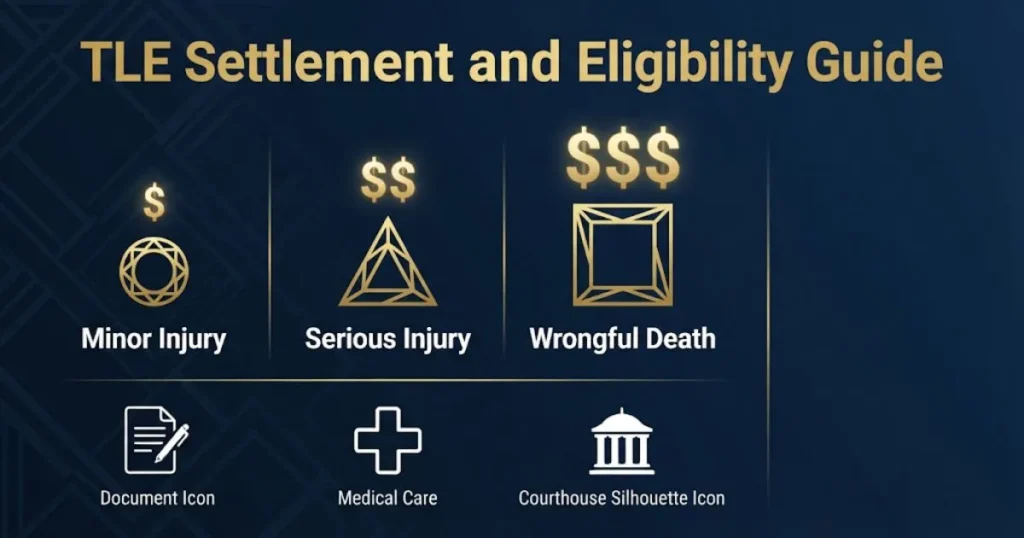
| Settlement Category | Estimated Range |
|---|---|
| Minor injuries (bruises, small cuts) | $10,000 to $50,000 |
| Moderate injuries (fractures, concussions) | $50,000 to $250,000 |
| Serious injuries (hospitalization required) | $250,000 to $750,000 |
| Abuse-related claims | $100,000 to $1,000,000+ |
| Wrongful death | $500,000 to $5,000,000+ |
These numbers reflect settlements from childcare negligence cases nationally, including but not limited to TLE-specific cases. Each case is different.
What drives settlement value up is documentation. Parents who took photos of injuries, saved incident reports from the daycare, and obtained medical records immediately tend to recover more. Cases with evidence of prior complaints against the same location also settle higher.
Key Takeaway: The learning experience lawsuit activity in 2026 is increasing across multiple states, with settlement values ranging from $10,000 for minor injuries to well over $1 million for serious abuse or wrongful death claims.
The Learning Experience Payout Amounts
The Learning Experience payout amounts depend on the type of claim, the severity of harm, and whether the case involves a single franchise location or corporate TLE policies. There is no single fixed number.
Think of it like car insurance claims. A fender bender pays less than a totaled vehicle. Similarly, a scrape from inadequate playground supervision pays far less than a traumatic brain injury from a fall that should have been prevented.
Several factors directly affect how much money a parent can recover:
- Severity of injury: Medical bills, surgeries, and long-term care increase the payout
- Emotional and psychological harm: Documented trauma, therapy needs, and behavioral changes add value
- Evidence of negligence: Staffing violations, prior complaints, and ignored safety issues strengthen the case
- Punitive damages potential: If the franchise or corporate entity knew about risks and did nothing, courts may award punitive damages
- State laws: Some states cap damages in personal injury cases; others do not
Based on comparable childcare negligence cases resolved in 2024 and 2025:
| Claim Type | Average Payout Range |
|---|---|
| Slip and fall injuries | $15,000 to $75,000 |
| Bite injuries from other children (supervision failure) | $10,000 to $40,000 |
| Broken bones | $50,000 to $200,000 |
| Head injuries and concussions | $75,000 to $500,000 |
| Sexual or physical abuse | $250,000 to $2,000,000+ |
Parents often ask whether insurance covers these payouts. The answer is usually yes, at least partially. TLE franchise owners carry general liability and professional liability insurance. But insurance policies have limits, and severe cases may exceed those limits.
The Learning Experience Lawsuit Eligibility
Eligibility for The Learning Experience lawsuit depends on whether your child was enrolled at a TLE center, whether an incident occurred, and whether you can show the center or its staff caused or contributed to harm.
You do not need to prove that TLE corporate was directly responsible. In many cases, suing the franchise owner is enough. But if you can connect the harm to corporate policies, training failures, or system-wide negligence, both the franchise and the parent company may be liable.
Basic eligibility checklist:
- Your child was enrolled at or attended a TLE location
- An injury, illness, abuse, or safety incident occurred at the facility
- You have some form of documentation (medical records, incident reports, photos, witness statements)
- The incident happened within your state’s statute of limitations (typically 2 to 6 years depending on the state, often longer for claims involving minors)
| Eligibility Factor | What You Need |
|---|---|
| Enrollment proof | Registration records, payment receipts, or emails |
| Incident documentation | Daycare incident report, police report, or medical records |
| Injury evidence | Photos, doctor’s notes, hospital records |
| Timeline | Within your state’s statute of limitations |
| Causation | Evidence linking the injury to daycare negligence |
One thing many parents overlook is that statutes of limitations for injuries to minors are often extended. In many states, the clock does not start until the child turns 18. That means even incidents from years ago might still be actionable.
If you are unsure whether your situation qualifies, gathering your documents is the best first step.
The Learning Experience Daycare Lawsuit
The Learning Experience daycare lawsuit is a broad term covering all legal actions filed against TLE daycare centers, from individual negligence claims to multi-plaintiff actions alleging systemic safety failures.
TLE is not a small operation. Founded in 2002 by Richard Weissman, the company has grown to over 400 franchise locations across more than 30 states. It markets itself as a premium childcare and early education brand, charging families between $1,200 and $2,500 per month depending on the location and age of the child.
That premium price tag sets a high bar. Parents who pay top dollar for daycare expect top-level safety and supervision. When that expectation falls short and a child gets hurt, the gap between the marketing promise and the reality fuels lawsuits.
Common categories of TLE daycare lawsuits include:
- Premises liability: Unsafe equipment, broken fixtures, unsanitary conditions
- Supervision failure: Children left unattended, improper ratios, lack of oversight during outdoor play
- Employee misconduct: Verbal abuse, physical aggression, or inappropriate behavior by staff
- Food safety issues: Allergic reactions due to improper food handling or ignoring allergy documentation
- Transportation incidents: Injuries during van or bus transportation to and from the center
Each of these categories has its own legal framework. But the common thread is always the same: TLE promised a safe environment, and something went wrong.
Key Takeaway: If your child was enrolled at any TLE location and suffered harm due to negligence, abuse, or safety failures, you likely meet the basic eligibility requirements for a claim, and the statute of limitations for minors may give you more time than you think.
The Learning Experience Negligence Claims
The Learning Experience negligence claims are the most common type of lawsuit against TLE. Negligence means the daycare owed your child a duty of care, breached that duty, and the breach caused harm.
In legal terms, childcare providers have one of the highest duties of care imaginable. Courts treat daycare centers almost like hospitals when it comes to the responsibility they owe to the children in their custody. That is a big deal.
To win a negligence claim, a parent must prove four elements:
- Duty: TLE had a legal obligation to keep your child safe
- Breach: TLE or its staff failed to meet that obligation
- Causation: The failure directly caused or contributed to your child’s injury
- Damages: Your child suffered actual harm (physical, emotional, or financial)
Here is where negligence cases get interesting. You do not need to prove TLE intended to harm your child. You only need to prove they failed to do what a reasonable daycare would have done.
| Negligence Element | Example in TLE Context |
|---|---|
| Duty | Staff required to maintain 1:4 ratio for toddlers |
| Breach | Only 1 staff member present for 12 toddlers |
| Causation | Child fell from changing table while unattended |
| Damages | Broken collarbone, $15,000 in medical bills, emotional distress |
The strength of a negligence claim often comes down to records. Internal staffing logs, security camera footage, and state inspection reports can all prove that TLE fell below the standard of care.
Parents should request copies of all incident reports from the daycare. Under most state laws, you have a right to any documentation related to your child.
The Learning Experience Injury Claims
The Learning Experience injury claims cover physical harm suffered by children while in the care of a TLE center. These range from minor scrapes to broken bones, head injuries, and burns.
Children get hurt. That is a reality of childhood. But there is a clear line between a normal playground tumble and an injury that happened because staff were not watching, equipment was broken, or the environment was unsafe.
The most frequently reported injuries in TLE-related claims include:
- Falls from playground equipment or furniture
- Head injuries from unsupervised rough play
- Broken bones from being dropped or falling off changing tables
- Bite injuries from other children (supervision failure)
- Burns from hot food or liquids
- Choking incidents due to improper food preparation or small objects
Medical documentation is the foundation of any injury claim. If your child was hurt at a TLE center, getting them to a doctor immediately and keeping every record is critical.
| Injury Type | Common Cause at Daycare | Typical Claim Value |
|---|---|---|
| Bruises and scrapes | Falls, rough play | $5,000 to $15,000 |
| Bite wounds | Other children, lack of supervision | $10,000 to $40,000 |
| Fractures | Falls from furniture or equipment | $50,000 to $200,000 |
| Concussions | Head strikes, falls | $75,000 to $500,000 |
| Burns | Hot liquids, food | $25,000 to $150,000 |
One pattern attorneys have noticed is that TLE centers sometimes minimize injuries in their internal incident reports. A “bump” in the daycare’s report turns out to be a concussion at the ER. If there is a discrepancy between what the daycare documented and what the doctor found, that inconsistency becomes powerful evidence.
The Learning Experience Abuse Allegations
The Learning Experience abuse allegations are among the most serious claims filed against TLE centers. These involve physical abuse, verbal abuse, or sexual abuse by staff members.
No parent wants to imagine this scenario. But the reality is that abuse allegations have surfaced at multiple TLE locations across different states. When they do, the legal consequences are severe.
Types of abuse alleged in TLE cases:
- Physical abuse: Hitting, shaking, grabbing, rough handling by staff
- Verbal and emotional abuse: Screaming at children, isolation as punishment, threats
- Sexual abuse: Inappropriate touching or exposure by a staff member
- Neglect as abuse: Leaving children in soiled diapers for hours, withholding food, ignoring cries
When abuse is alleged, the case typically involves both criminal and civil proceedings. The staff member may face criminal charges. The parent can separately file a civil lawsuit against the franchise owner and TLE corporate for negligent hiring, negligent supervision, and failure to conduct proper background checks.
| Abuse Claim Component | What It Covers |
|---|---|
| Negligent Hiring | Failure to run background checks or verify references |
| Negligent Supervision | Failure to monitor staff interactions with children |
| Negligent Retention | Keeping a staff member after prior complaints |
| Respondeat Superior | Employer liability for employee actions during work |
Background check failures are a recurring theme. Several TLE lawsuits have alleged that franchise owners hired staff without completing required state background checks or ignored red flags in an applicant’s history.
If your child disclosed abuse or you noticed behavioral changes after attending a TLE center, documenting everything is essential. Notes on what your child said, when they said it, and any physical signs you observed can all become evidence.
Key Takeaway: Negligence, injury, and abuse claims against The Learning Experience all follow established legal frameworks, and parents with documentation of incidents, medical records, and staffing failures have the strongest cases.
The Learning Experience Safety Violations
The Learning Experience safety violations refer to documented instances where TLE centers failed to meet state childcare safety standards, building codes, or health regulations.
Every state has its own set of childcare licensing requirements. These cover everything from the number of adults per child to the type of cleaning products stored in classrooms. When a TLE center violates these standards and a child gets hurt, the violation itself becomes evidence of negligence.
Common safety violations found in TLE-related complaints and state inspection reports:
- Exceeding maximum child-to-staff ratios
- Failing to secure medications or cleaning chemicals
- Broken or recalled playground equipment still in use
- Blocked emergency exits or missing fire extinguishers
- Inadequate fencing around outdoor play areas
- Missing or expired first aid supplies
- Failure to post allergy lists in food preparation areas
State licensing agencies conduct inspections, and these reports are often public record. Parents can request inspection histories for their child’s TLE location through the state’s Department of Children and Families (or equivalent agency).
| Safety Violation Category | Why It Matters in a Lawsuit |
|---|---|
| Staffing ratio violations | Proves children were inadequately supervised |
| Equipment failures | Shows premises were not maintained safely |
| Chemical storage violations | Demonstrates risk of poisoning or exposure |
| Emergency preparedness gaps | Indicates facility was unprepared for crises |
A safety violation does not automatically guarantee a successful lawsuit. But it dramatically shifts the burden. Once a plaintiff shows a documented violation, the daycare has to explain why the violation did not contribute to the harm. That is a tough argument to win.
The Learning Experience Franchise Liability
The Learning Experience franchise liability is one of the most complex parts of these lawsuits. Because TLE operates as a franchise, the question of who is legally responsible depends on the level of corporate control over day-to-day operations.
Here is the simplest way to understand it. Imagine you buy a fast food franchise. You own the restaurant, but the parent company tells you what to serve, how to cook it, and what uniforms to wear. If a customer gets sick from your food, are you responsible? Is the corporate brand responsible? Or both?
The same question applies to TLE. Each center is owned by an independent franchisee. But TLE corporate provides the curriculum, the branding, the operational manual, the training programs, and the safety protocols.
Who parents can potentially sue:
- The franchise owner: Directly operates the center and employs the staff
- TLE corporate (The Learning Experience Academy, Inc.): Sets policies, approves franchisees, provides training
- Individual staff members: In cases of direct misconduct
- The property owner: If a premises defect caused the injury
| Defendant | When They Are Liable |
|---|---|
| Franchise owner | Almost always; they directly control the facility |
| TLE corporate | When corporate policies, training, or oversight failures contributed to harm |
| Staff member | When they personally committed negligence or abuse |
| Property landlord | When a building defect (not daycare operations) caused the injury |
Courts look at how much control TLE corporate exercises over its franchise locations. If corporate dictates staffing levels, mandates specific safety procedures, or has the power to shut down a location for non-compliance, plaintiffs argue that corporate shares liability.
TLE’s Franchise Disclosure Document (FDD) is a key piece of evidence in these cases. It outlines exactly what corporate controls and what the franchisee controls.
The Learning Experience Class Action
The Learning Experience class action status in 2026 remains in the exploratory phase. No federal court has certified a class action against TLE as of mid-2026, but attorneys are actively building cases that could support class certification.
A class action requires a group of plaintiffs with similar claims caused by common conduct from the defendant. For TLE, that would mean showing that corporate-level decisions or policies caused harm across multiple locations to multiple children.
What would a TLE class action look like?
- A group of parents from multiple TLE locations
- Common allegations: corporate failed to enforce safety standards, conduct background checks, or maintain proper staffing
- Shared damages: injuries, emotional harm, or financial losses
The challenge with daycare class actions is that each child’s injury is unique. A broken arm at one location and an emotional abuse claim at another are very different. Courts sometimes reject class certification when the individual facts vary too much.
| Class Action Requirement | TLE Status (2026) |
|---|---|
| Numerosity (enough plaintiffs) | Growing; 30+ known cases |
| Commonality (shared legal issues) | Under review; corporate policy arguments emerging |
| Typicality (representative claims) | Not yet established |
| Adequacy (strong lead plaintiffs) | Attorneys are identifying candidates |
Even without a certified class action, parents can still file individual lawsuits. And in some ways, individual cases can be more profitable for plaintiffs because settlements are tailored to the specific harm rather than divided among hundreds or thousands of class members.
Multi-district litigation (MDL) is another possibility. If enough cases pile up in federal court, a judge could consolidate them for pretrial proceedings without requiring full class action certification.
Key Takeaway: TLE’s franchise structure means parents may be able to sue both the local franchise owner and TLE corporate, and while no class action has been certified yet, the legal groundwork for one is being laid in 2026.
The Learning Experience Staffing Issues Lawsuit
The Learning Experience staffing issues lawsuit category focuses on claims that TLE centers operated with too few staff members, underqualified employees, or exhausted workers who could not safely supervise children.
Staffing is the backbone of daycare safety. Every state sets minimum adult-to-child ratios, and these ratios exist for a reason. When a center cuts corners on staffing to save money, children are at higher risk of injury.
Typical state-mandated ratios:
| Age Group | Required Ratio (varies by state) |
|---|---|
| Infants (0 to 12 months) | 1 adult per 3 to 4 children |
| Toddlers (12 to 24 months) | 1 adult per 4 to 6 children |
| Two-year-olds | 1 adult per 5 to 8 children |
| Preschool (3 to 5 years) | 1 adult per 8 to 12 children |
Multiple TLE-related complaints allege that centers regularly exceeded these ratios, especially during morning drop-off and afternoon pickup periods when staffing is thinnest.
The staffing problem is not just about numbers. It is about qualifications. Several cases allege that TLE franchise owners hired staff without the required early childhood education credentials or CPR/first aid certifications.
High turnover is another issue. The childcare industry nationally suffers from low wages and burnout. TLE centers are not immune. When experienced staff leave and are replaced by new hires with minimal training, the risk of incidents goes up.
In one Texas case filed in February 2026, a parent alleged that the center had only two staff members supervising 22 toddlers during outdoor playtime when her child fell from a slide and fractured his wrist. State regulations required at least four adults for that group size.
The Learning Experience Licensing Violations
The Learning Experience licensing violations occur when a TLE center fails to comply with state childcare licensing requirements. These violations are documented by state agencies and become public records that strengthen lawsuits.
Every TLE location must hold a valid childcare license issued by the state where it operates. That license comes with conditions: specific ratios, facility requirements, health and safety standards, and employee qualifications.
When a center violates these conditions, the state can issue warnings, fines, or even revoke the license. For a lawsuit, a documented licensing violation is like a gift. It is official government proof that the center was not following the rules.
Types of licensing violations reported at TLE locations:
- Operating without a current license or during a suspension
- Failing to report incidents (injuries, allegations of abuse) to state agencies
- Not maintaining required employee-to-child ratios
- Lacking required documentation (immunization records, emergency contacts)
- Serving food without proper allergy protocols
- Failing to conduct or complete background checks on all staff
| Violation Type | Legal Impact on Lawsuit |
|---|---|
| Ratio violation during incident | Strong evidence of negligence |
| Background check failure | Supports negligent hiring claim |
| Unreported incident | Shows cover-up or pattern of concealment |
| Expired license | Questions the legal authority to operate |
Parents can search their state’s childcare licensing database to check the inspection and violation history of any TLE center. In most states, this information is available online through the Department of Children and Families, Department of Human Services, or equivalent agency.
If you find violations at your child’s TLE location, save copies. These records can be submitted as evidence in your claim.
The Learning Experience Wrongful Death Lawsuit
The Learning Experience wrongful death lawsuit is the most devastating type of claim filed against TLE. These cases arise when a child dies due to alleged negligence at a TLE center.
Wrongful death lawsuits involving children are among the most emotionally intense cases in the legal system. They carry some of the highest potential damages because courts recognize the profound loss families endure.
Wrongful death claims against daycares typically involve:
- Choking on food or small objects due to inadequate supervision
- Drowning during water play or field trips
- Suffocation from unsafe sleep practices (especially infants)
- Allergic reactions when staff ignored documented allergies
- Vehicular incidents during transport
- Medical emergencies where staff failed to respond appropriately
| Wrongful Death Claim Element | What Must Be Proven |
|---|---|
| Duty of care | TLE was responsible for the child’s safety |
| Breach | TLE failed to act as a reasonable daycare would |
| Causation | The failure directly led to the child’s death |
| Damages | Funeral costs, emotional suffering, loss of companionship |
Safe sleep violations are particularly relevant for infant programs. The American Academy of Pediatrics recommends specific sleep practices for infants, and most state licensing standards incorporate these rules. When a daycare places an infant to sleep on their stomach or in an unsafe crib and the child dies, the negligence case is straightforward.
Wrongful death settlements in childcare cases nationally range from $500,000 to over $5 million. The exact amount depends on the circumstances, the evidence, the state’s damage laws, and whether punitive damages apply.
These cases often attract significant media attention, which puts pressure on TLE corporate and its franchisees to settle rather than face a public trial.
Key Takeaway: Staffing failures, licensing violations, and wrongful death are the most serious categories of claims against TLE, and each one carries significant legal weight because they involve documented regulatory standards that the daycare is required by law to follow.
How to File a Claim Against The Learning Experience
Filing a claim against The Learning Experience starts with documenting the incident, gathering evidence, and contacting an attorney who handles childcare negligence or personal injury cases involving minors.
You do not file a claim directly with TLE corporate. This is not like filing an insurance claim or submitting a complaint to customer service. A legal claim means initiating a formal legal process, usually by filing a lawsuit in your state’s civil court system.
Step-by-step process:
- Document everything immediately. Take photos of injuries. Save the daycare’s incident report. Write down what happened, when, and who was involved.
- Get medical attention. Even if the injury seems minor, a doctor’s visit creates an official medical record.
- Request records from TLE. Ask for your child’s enrollment file, all incident reports, and any communication related to the event.
- File a complaint with your state licensing agency. This creates an official record and may trigger a state investigation.
- Contact an attorney. Look for a lawyer who specializes in childcare negligence, personal injury involving minors, or premises liability.
- Preserve evidence. Do not delete texts, emails, or photos. Do not sign anything from the daycare or their insurance company without legal advice.
| Step | Action | Why It Matters |
|---|---|---|
| 1 | Document the incident | Creates a contemporaneous record |
| 2 | Medical visit | Establishes injury and causation |
| 3 | Request daycare records | May reveal prior incidents or violations |
| 4 | State complaint | Triggers investigation, creates public record |
| 5 | Hire an attorney | Protects your rights and handles legal strategy |
| 6 | Preserve evidence | Prevents loss of critical proof |
Most attorneys who handle these cases work on a contingency fee basis. That means you pay nothing upfront. The attorney takes a percentage of any settlement or verdict, typically between 25% and 40%.
Time is a factor. While statutes of limitations for minors are often extended, evidence deteriorates over time. Security camera footage gets recorded over. Witnesses forget details. Staff members leave and become hard to locate.
The Learning Experience Complaints
The Learning Experience complaints filed by parents cover a wide range of concerns, from minor service issues to serious safety and negligence allegations.
Not every complaint leads to a lawsuit. But complaints create a paper trail that can become critical evidence if a lawsuit is filed later. If ten parents complained about a staffing shortage at the same location before your child got hurt, that pattern proves the franchise knew about the problem and did nothing.
Where parents file complaints about TLE:
- State childcare licensing agency: The most impactful complaint you can file. Triggers potential inspection and investigation.
- Better Business Bureau (BBB): Creates a public record of the complaint.
- State Attorney General’s Consumer Protection Division: For fraud, deceptive practices, or refund disputes.
- Local health department: For hygiene, food safety, or environmental concerns.
- Online review platforms: Google Reviews, Yelp, and social media (be factual, not defamatory).
| Complaint Channel | What It Achieves |
|---|---|
| State licensing agency | May result in inspection, fines, or license action |
| BBB | Public record; company may respond to resolve |
| Attorney General | Investigation into deceptive practices |
| Health department | Inspection of sanitary conditions |
| Online reviews | Public awareness; may prompt corporate response |
When filing a complaint, be specific. Include dates, names (if known), descriptions of what happened, and any supporting documents. Vague complaints like “the daycare is bad” do not lead anywhere.
If you have already filed complaints and later decide to pursue legal action, provide copies of all complaints to your attorney. They demonstrate that you raised concerns in real time, which strengthens your credibility and shows the daycare had notice of the problem.
One trend in 2026 is that state agencies are responding to complaints faster. Several states have increased their childcare enforcement budgets, leading to quicker inspections and more aggressive action against centers with repeated violations.
Key Takeaway: Filing a claim against TLE requires documenting your evidence, contacting a specialized attorney, and taking formal steps through both the legal system and state regulatory agencies, while previous complaints by you or other parents can become powerful evidence in your case.
Frequently Asked Questions
Can I sue The Learning Experience if my child was injured at daycare?
Yes, you can sue if your child was injured due to negligence or unsafe conditions at a TLE center.
You would file a personal injury lawsuit against the franchise owner and potentially TLE corporate.
Most attorneys handle these cases on contingency, so you pay nothing unless you win.
How much money can I get from The Learning Experience lawsuit?
Payouts range from $10,000 for minor injuries to over $1 million for serious abuse or wrongful death cases.
The amount depends on the severity of injury, strength of evidence, and your state’s damage laws.
Most settlements include compensation for medical bills, pain and suffering, and emotional distress.
Is there a class action lawsuit against The Learning Experience in 2026?
No class action has been officially certified against TLE as of mid-2026.
Attorneys are building cases that could support class certification based on corporate-level negligence patterns.
Individual lawsuits remain the primary legal path for parents right now.
What is the deadline to file a claim against The Learning Experience?
Deadlines vary by state, but most personal injury statutes of limitations are 2 to 6 years.
For claims involving minors, many states extend the deadline until the child reaches age 18.
Acting sooner is better because evidence can be lost or destroyed over time.
Does The Learning Experience corporate or the franchise owner pay the settlement?
It depends on who is found liable. In most cases, the franchise owner’s insurance pays first.
If corporate-level negligence is proven, TLE’s parent company may share financial responsibility.
Many settlements involve contributions from both the franchise owner and corporate entity.
This is a situation where waiting can cost you. If your child was harmed at a TLE center, start gathering your documents now. Save incident reports, medical records, photos, and any communications with the daycare.
Check your state’s childcare licensing database for violations at your child’s location. That information is free and public.
The cases filed in 2026 show that parents are holding TLE accountable. Your next step is making sure you have the evidence to do the same.







