

The Mielle shampoo lawsuit is one of the biggest hair care product liability cases heading into 2026. Consumers across the United States claim that Mielle Organics Rosemary Mint products caused severe hair loss, scalp damage, and breakage.
This case has grown rapidly since the first complaints surfaced. Hundreds of consumers have reported similar problems. The timing lines up with Procter and Gamble’s 2023 acquisition of the brand.
In this article, you will learn exactly what the lawsuit alleges. You will find out who qualifies, what payouts might look like, how to join, and where the case stands right now.
One detail stands out above the rest. Many plaintiffs say the products worked fine before the P&G deal closed, then suddenly started causing harm.
Mielle Shampoo Lawsuit 2026: What You Need to Know
The Mielle shampoo lawsuit in 2026 involves multiple legal claims against Mielle Organics and its parent company Procter and Gamble. Consumers allege that Rosemary Mint hair products are defective and cause serious hair and scalp damage.
The case has evolved from scattered individual complaints into organized class action proceedings. Several law firms are actively investigating and representing affected consumers.
What makes 2026 a turning point is the volume of evidence now available. Social media posts, dermatologist reports, and FDA complaint records have created a paper trail that did not exist a year ago.
Think of it like a slow leak in a pipe. Individual drips do not seem like much. But once you see the water damage across hundreds of homes, the pattern becomes impossible to ignore.
| Detail | Info |
|---|---|
| Case Type | Product liability, class action |
| Defendants | Mielle Organics, Procter and Gamble |
| Key Products | Rosemary Mint Shampoo, Rosemary Mint Oil |
| Primary Claims | Hair loss, scalp damage, failure to warn |
| Case Status as of 2026 | Active investigation, filings ongoing |
Courts are expected to consolidate some of these claims in 2026. That consolidation could speed up the timeline significantly.
Understanding the Mielle Organics Lawsuit
The Mielle Organics lawsuit centers on allegations that the company sold hair care products it knew, or should have known, were causing harm to consumers. The legal claims include product liability, negligence, and breach of warranty.
Mielle Organics was founded by Monique Rodriguez in 2014. The brand built a loyal following in the natural hair community, especially among Black women. Its Rosemary Mint line became a bestseller across major retailers.
In January 2023, Procter and Gamble acquired Mielle Organics. That acquisition is central to the lawsuit. Plaintiffs argue that product formulations changed after P&G took over, and those changes led to harmful side effects.
The legal theory is straightforward. If you sell a product labeled as “strengthening” and it causes the opposite result, that is a defective product claim. Add in allegations that the company ignored consumer complaints, and you get a failure to warn claim on top of it.
- Product liability for alleged defective formulation
- Negligence in quality control and testing
- Failure to warn consumers about known risks
- Breach of implied warranty of fitness
- Deceptive marketing and labeling practices
Multiple law firms across different states have taken on clients. The geographic spread of complaints stretches from California to New York.
The Mielle Rosemary Mint Shampoo Lawsuit Explained
The Mielle Rosemary Mint shampoo lawsuit specifically targets the brand’s most popular product line. Plaintiffs say the Rosemary Mint Strengthening Shampoo caused excessive hair shedding, bald patches, and painful scalp reactions.
Rosemary mint oil products were marketed as solutions for hair growth and scalp health. That marketing promise is part of the legal problem. When a product claims to strengthen hair but allegedly destroys it, consumers feel betrayed.
The shampoo itself contains rosemary oil, peppermint oil, and biotin among other ingredients. None of those ingredients are inherently dangerous on their own. The lawsuit argues that the specific formulation, concentration levels, or manufacturing process introduced a defect.
Some plaintiffs report that they used the older version of the shampoo for months without issues. After the product packaging or formula appeared to change, their problems began.
| Product | Alleged Issue |
|---|---|
| Rosemary Mint Strengthening Shampoo | Hair loss, scalp burning |
| Rosemary Mint Scalp and Hair Oil | Excessive shedding, irritation |
| Rosemary Mint Light Conditioner | Breakage, dryness |
| Rosemary Mint Strengthening Edge Gel | Hairline thinning |
The Rosemary Mint line remains on store shelves. No recall has been issued as of early 2026.
Key Takeaway: The Mielle lawsuit targets multiple Rosemary Mint products, with allegations that a post-acquisition formula change caused widespread hair damage to consumers who previously trusted the brand.
Mielle Shampoo Class Action: How the Case Works
A Mielle shampoo class action allows a group of consumers to sue together as one unit instead of filing individual lawsuits. This structure gives everyday buyers power they would not have suing a billion-dollar corporation alone.
In a class action, one or more named plaintiffs represent the entire group. Everyone who meets the class definition is automatically included unless they opt out. You do not need to hire your own lawyer to be part of it.
The process typically works in stages. First, a complaint is filed. Then the court decides whether to “certify” the class. Certification is the green light that says yes, this group of people has enough in common to proceed together.
- Filing: Attorneys file the initial complaint
- Discovery: Both sides exchange evidence and documents
- Class Certification: Court decides if the case qualifies as a class action
- Negotiation or Trial: Settlement talks or courtroom proceedings
- Distribution: If money is awarded, it goes to class members
For the Mielle case, class certification is a major milestone to watch in 2026. If the court certifies the class, it signals that the judge believes there are enough common facts and legal questions to move forward.
The alternative to class action is mass tort. In mass tort, each person’s case stays individual but the cases are coordinated. Some Mielle claims may end up going this route depending on the severity of individual injuries.
Mielle Hair Loss Lawsuit: Claims and Allegations
The Mielle hair loss lawsuit alleges that consumers suffered significant, sometimes permanent, hair loss after using Mielle Organics products as directed. Some plaintiffs describe losing clumps of hair within weeks of use.
Hair loss is the most common complaint in these cases. But it is not the only one. Plaintiffs have reported a range of symptoms that go beyond normal shedding.
The allegations paint a picture of a product that went from beloved to harmful. Many users say they trusted Mielle because of its reputation in the natural hair community. That trust makes the alleged betrayal feel personal.
Reported Injuries Include:
- Severe hair thinning and bald spots
- Scalp burns and chemical-like irritation
- Excessive hair shedding far beyond normal levels
- Hairline recession
- Scalp lesions and open sores
- Hair texture changes and brittleness
The legal claims rely on proving a connection between product use and these injuries. Plaintiffs typically provide before and after photos, dermatologist evaluations, purchase receipts, and personal testimony.
One key question in any product liability case is whether the product was “unreasonably dangerous.” The plaintiffs argue yes. They say Mielle’s products posed risks that consumers could not have anticipated based on the product’s labeling and marketing.
Mielle Shampoo Lawsuit Settlement: Current Status
As of early 2026, no final settlement has been reached in the Mielle shampoo lawsuit. The case remains in active litigation with multiple legal proceedings underway in different jurisdictions.
Settlement talks in product liability cases like this one rarely happen quickly. Companies the size of Procter and Gamble have deep legal teams and typically push cases through extensive discovery before considering settlement offers.
That said, there are signs the case is moving. The volume of plaintiffs continues to grow. Media coverage has intensified. And consumer advocacy groups are putting public pressure on both Mielle and P&G to respond.
| Settlement Stage | Status in 2026 |
|---|---|
| Complaint Filed | Yes |
| Discovery Phase | Ongoing |
| Class Certification | Pending |
| Settlement Negotiations | Not yet public |
| Trial Date | Not yet scheduled |
| Payout Distribution | Not yet applicable |
For context, similar hair care product lawsuits have taken 2 to 4 years from initial filing to settlement. The WEN hair care class action, a comparable case, resulted in a $26 million settlement after several years of litigation.
If a settlement is reached, it would likely create a claims process. Consumers who qualify would submit proof of purchase and documentation of harm in exchange for compensation.
Key Takeaway: No settlement has been finalized yet, but the case is progressing through standard litigation stages, and similar hair product lawsuits have historically settled in the tens of millions of dollars.
Mielle Lawsuit Payout: What to Expect
Mielle lawsuit payouts have not been determined yet because the case has not reached a settlement or verdict. However, looking at comparable cases gives a reasonable range of what affected consumers might receive.
The WEN by Chaz Dean hair care settlement is the closest comparison. That case settled for $26 million in 2017. Individual claimants received amounts ranging from about $25 to over $20,000 depending on the severity of their injuries and quality of documentation.
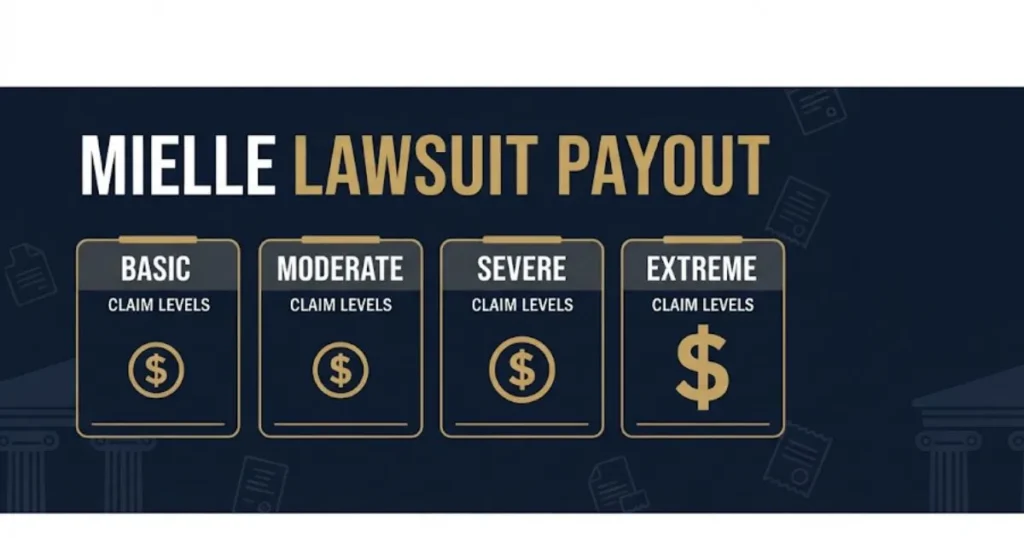
Hair product liability payouts generally break down into tiers. People with minor complaints and no medical documentation get the least. Those with dermatologist-confirmed hair loss and strong proof of purchase get the most.
| Claim Tier | Estimated Range | Requirements |
|---|---|---|
| Basic (no medical proof) | $25 to $100 | Purchase receipt only |
| Moderate (documented symptoms) | $100 to $1,500 | Photos, doctor visit notes |
| Severe (medical treatment needed) | $1,500 to $10,000 | Dermatologist records, ongoing care |
| Extreme (permanent damage) | $10,000 to $25,000+ | Specialist diagnosis, lasting injury |
These are estimates based on past cases, not guarantees. The actual Mielle payout structure will depend on the total settlement amount, the number of claimants, and the claims process rules.
Keep every receipt, photo, and medical record you have. Documentation is the difference between getting $25 and getting $5,000 in these types of cases.
Mielle Shampoo Lawsuit: How Much Will I Get?
How much you get from the Mielle shampoo lawsuit depends entirely on your specific situation. There is no flat amount everyone receives in cases like this.
Three factors determine your payout in a product liability class action. First, how much harm you experienced. Second, how well you can prove it. Third, how many other people file claims against the same settlement fund.
Think of the settlement fund like a pie. The more people who file claims, the smaller each slice gets. But people with severe, well-documented injuries get bigger slices than those with basic claims.
What Increases Your Payout:
- Medical records showing hair loss or scalp damage
- Before and after photographs
- Receipts proving purchase of Mielle products
- Dermatologist or doctor diagnosis
- Evidence of ongoing treatment costs
- Proof you used the product as directed
What Decreases Your Payout:
- No purchase proof
- No medical documentation
- Mild symptoms with no professional evaluation
- Late filing after the claims deadline
Based on similar settlements, most claimants with moderate documentation could expect somewhere between $100 and $1,500. People with severe, lasting damage who pursued medical treatment could receive significantly more.
Mielle Shampoo Lawsuit Eligibility: Who Qualifies?
You likely qualify for the Mielle shampoo lawsuit if you purchased any Mielle Organics Rosemary Mint product and experienced hair loss, scalp irritation, or related damage after using it. The eligibility window covers purchases made primarily from 2022 through 2025.
Eligibility in class action lawsuits is defined by the “class definition.” This is a legal description of who is included. For the Mielle case, the class is expected to include anyone in the United States who bought the affected products during the relevant time period and suffered harm.
You do not need to have purchased the product directly from Mielle’s website. Purchases from Target, Walmart, Amazon, CVS, Walgreens, or any other retailer count.
| Eligibility Factor | Requirement |
|---|---|
| Purchase Location | Any U.S. retailer |
| Product Line | Rosemary Mint products primarily |
| Time Period | Approximately 2022 to 2025 |
| Injury Required | Hair loss, scalp damage, or related harm |
| Documentation Needed | Receipts preferred but not always required |
| Residency | United States |
Some class actions allow you to file a claim even without a receipt. Your bank or credit card statements showing a purchase at a retailer that sells Mielle products can serve as alternative proof.
If you experienced harm but did not see a doctor, you may still qualify for a lower tier payout. Having medical records simply strengthens your claim.
Key Takeaway: Most U.S. consumers who bought Mielle Rosemary Mint products between 2022 and 2025 and experienced adverse effects are likely eligible to participate in the lawsuit, even without perfect documentation.
How to Join the Mielle Shampoo Lawsuit
Joining the Mielle shampoo lawsuit is a simple process that does not require you to pay anything upfront. Most attorneys handling these cases work on contingency, meaning they only get paid if you win.
Here is the step-by-step process for getting involved:
Step 1: Gather your evidence. Pull together purchase receipts, bank statements, photos of hair damage, and any medical records related to your symptoms.
Step 2: Contact a law firm that is actively handling Mielle claims. Several firms have open case evaluation forms. You provide your information and they review whether your situation qualifies.
Step 3: Complete an intake form. The law firm will ask about which products you used, when you bought them, what symptoms you experienced, and what documentation you have.
Step 4: Sign a retainer agreement. This is a contract that makes the law firm your legal representative. Read it carefully. You should owe nothing unless the case results in a payout.
Step 5: Wait for case updates. Your attorney will keep you informed about deadlines, settlement offers, and next steps.
- There is no cost to join
- You do not need to appear in court
- Your attorney handles everything
- You keep all your documentation organized in case they request it later
If a class is certified and you fall within the class definition, you may be automatically included. In that case, you would receive a notice with instructions on how to file a claim or opt out.
Mielle Shampoo Hair Loss Complaints: The Full Picture
Mielle shampoo hair loss complaints have flooded social media, consumer review sites, and FDA reporting databases since late 2023. The sheer volume of complaints is part of what turned individual frustration into a legal case.
On platforms like TikTok and Instagram, videos showing dramatic hair loss after using Mielle products have accumulated millions of views. Some creators documented their entire experience, from first use to visible bald patches, creating a real-time record.
The complaints share a consistent pattern. Users describe normal or positive results initially, followed by sudden and severe shedding. Many note that the problems started after they bought what appeared to be a reformulated version of the product.
Common Complaint Themes:
- Hair falling out in clumps during washing
- Scalp tingling or burning sensation within minutes of application
- Noticeable thinning within 2 to 4 weeks of use
- Hairline recession that had never occurred before
- Texture changes from smooth to dry and brittle
- Bald spots requiring medical treatment
FDA adverse event reports confirm that consumers have formally reported problems with Mielle products. These reports are public record, though the FDA does not disclose exact numbers by brand for cosmetic products as readily as it does for drugs.
The pattern of complaints is significant because consistency across hundreds of unrelated consumers suggests a common cause rather than isolated reactions.
Mielle Shampoo Side Effects Reported by Users
The most commonly reported Mielle shampoo side effects are hair loss, scalp irritation, and hair breakage. These side effects range from mild and temporary to severe and potentially permanent.
Not everyone who uses Mielle products experiences problems. That is worth acknowledging. But the number of people reporting negative reactions is unusually high for a mainstream hair care brand.
Side effects appear to vary based on how frequently the product was used, how long it was left on the scalp, and possibly which batch of the product the consumer received.
| Side Effect | Frequency Reported | Severity Range |
|---|---|---|
| Hair shedding and loss | Very common | Moderate to severe |
| Scalp irritation and redness | Common | Mild to moderate |
| Hair breakage | Common | Moderate |
| Scalp burning sensation | Moderately common | Moderate to severe |
| Bald patches | Less common | Severe |
| Scalp lesions or sores | Rare | Severe |
| Permanent hair loss | Rare | Severe |
Some consumers reported that side effects appeared quickly, within the first or second use. Others say problems developed gradually over weeks of regular use.
Dermatologists who have examined affected consumers describe symptoms consistent with contact dermatitis and chemical irritation. In more serious cases, they report scarring alopecia, which means permanent damage to hair follicles.
Key Takeaway: Reported side effects range from temporary shedding to permanent hair loss, with the most severe cases involving scalp lesions and scarring alopecia that require ongoing medical care.
Is Mielle Shampoo Safe to Use in 2026?
Whether Mielle shampoo is safe to use in 2026 depends on who you ask. The company maintains that its products are safe and meet all regulatory standards. Plaintiffs and their attorneys strongly disagree.
No government agency has issued a safety warning or recall for any Mielle product. The FDA does not pre-approve cosmetic products the way it does drugs. Cosmetics go to market without FDA testing or approval. That means a product can sit on shelves even while lawsuits pile up.
This is different from food or pharmaceutical products. If a drug caused this many adverse reports, the FDA would likely intervene. Cosmetics operate under much looser oversight.
Factors to Consider:
- No recall has been issued
- No FDA safety warning exists for Mielle products
- The lawsuit alleges harm but has not been proven in court
- Consumer complaints are numerous and consistent
- The company has not publicly acknowledged formula changes
- You can check FDA adverse event databases yourself
If you are currently using Mielle products without any issues, the lawsuit does not necessarily mean you must stop. But if you have noticed any unusual shedding, irritation, or scalp sensitivity, it would be wise to discontinue use and document your symptoms.
The gap in cosmetic regulation is part of the larger story here. Products like shampoo are not held to the same safety testing standards as medicines. That regulatory gap is what allows potential problems to reach millions of consumers before anyone sounds an alarm.
Mielle Organics Ingredients Controversy
The Mielle Organics ingredients controversy centers on whether the product formulation changed after Procter and Gamble acquired the brand in January 2023. Consumers allege that the post-acquisition products look the same on the shelf but perform differently on their hair.
Mielle Organics built its brand on being a natural, Black-owned hair care company. The brand’s ingredient lists featured rosemary oil, peppermint oil, biotin, and castor oil. These are generally considered safe and beneficial for hair health.
The controversy is not about any single ingredient being toxic. It is about whether ingredient concentrations, sourcing, or manufacturing processes changed without consumers being informed. Large corporations acquiring smaller brands and modifying formulations while keeping the same branding is not uncommon. It has happened with other beauty and food brands.
Key Ingredient Questions:
- Did rosemary oil concentration levels change?
- Were synthetic alternatives substituted for natural ingredients?
- Did manufacturing switch to different facilities with different processes?
- Were preservative systems altered in ways that affect product safety?
- Did P&G’s cost-cutting measures affect ingredient quality?
Neither Mielle nor P&G has publicly confirmed or denied any formula changes. The companies have stated that product quality and safety remain top priorities.
The ingredient controversy matters legally because if the formula changed and the label did not reflect those changes, that could constitute deceptive trade practices under consumer protection laws in multiple states.
Mielle Shampoo Recall 2026: Is There One?
There is no Mielle shampoo recall in 2026. As of this writing, neither Mielle Organics nor Procter and Gamble has issued a voluntary recall, and no government agency has mandated one.
A product recall happens in one of two ways. Either the company voluntarily pulls the product from shelves, or a regulatory agency like the FDA or CPSC orders a recall because the product poses a safety risk. Neither has occurred with Mielle products.
This confuses a lot of people. They see a lawsuit and assume a recall must exist. But lawsuits and recalls are separate things. You can have one without the other. A company can face massive legal liability while its products remain widely available for purchase.
| Recall Status | Detail |
|---|---|
| Voluntary Recall | Not issued |
| FDA Mandated Recall | Not issued |
| CPSC Action | None |
| Products Still Sold | Yes, at major retailers |
| Consumer Advisory | None from any agency |
The absence of a recall does not mean the products are safe. It means no official body has taken that step yet. Given how cosmetics are regulated in the U.S., a recall would be unusual even with significant consumer complaints.
If you want to check for recalls yourself, the FDA and CPSC maintain searchable databases. You can look up any consumer product to see if it has been flagged.
Key Takeaway: Despite the ongoing lawsuit and hundreds of consumer complaints, no Mielle shampoo recall exists in 2026, largely because cosmetic products face minimal regulatory oversight compared to drugs and food.
Mielle Lawsuit Update 2026: Latest Developments
The most important Mielle lawsuit update for 2026 is that the case continues to gain momentum. More plaintiffs are joining, legal teams are expanding, and the discovery phase is producing internal documents from both Mielle and P&G.
Here is a timeline of key developments:
| Date | Development |
|---|---|
| January 2023 | P&G acquires Mielle Organics |
| Late 2023 | Consumer complaints begin surging on social media |
| Early 2024 | First lawsuits filed in federal and state courts |
| Mid 2024 | Multiple law firms open investigations |
| Late 2024 | FDA adverse event reports increase |
| Early 2025 | Class action complaints consolidated |
| 2025 to 2026 | Discovery phase, depositions, and expert reports |
| 2026 (projected) | Class certification hearings expected |
The discovery phase is where cases like this get interesting. Attorneys can subpoena internal emails, product testing data, quality control records, and ingredient sourcing documents. If there is a smoking gun, that is where it gets found.
Expert witnesses are being retained on both sides. Plaintiffs are expected to present dermatologists, toxicologists, and cosmetic chemists who can testify about whether the products are defective.
P&G has significant legal resources and will likely mount an aggressive defense. Their legal team has handled major product liability cases before, including lawsuits related to other consumer products in their portfolio.
The next major milestone to watch is class certification. If a judge certifies the class, it dramatically changes the dynamics. Settlement pressure increases because the company faces the possibility of a jury trial with hundreds or thousands of plaintiffs.
Stay informed by checking court records and legal news sources regularly. The case could move quickly once certification is decided.
Frequently Asked Questions
Has a class action lawsuit been filed against Mielle Organics?
Yes, class action lawsuits have been filed against Mielle Organics and Procter and Gamble.
The cases allege that Rosemary Mint products cause hair loss and scalp damage.
Multiple law firms across the U.S. are actively representing affected consumers.
How much money can I get from the Mielle shampoo lawsuit?
Individual payouts could range from $25 to over $10,000 depending on your injuries and documentation.
People with medical records and purchase receipts typically receive the most.
No settlement amount has been finalized as of early 2026.
What products are included in the Mielle lawsuit?
The lawsuit primarily targets the Rosemary Mint product line, including the shampoo, hair oil, conditioner, and edge gel.
Other Mielle Organics products may be added as the case develops.
The Rosemary Mint Strengthening Shampoo is the product most frequently named in complaints.
Is there a deadline to join the Mielle shampoo class action?
No firm deadline has been set because the class has not been officially certified yet.
Once certification happens, a deadline for opting in or out will be established.
Acting sooner gives your legal team more time to build your case.
Has Mielle Organics recalled any products in 2026?
No, Mielle Organics has not recalled any products as of 2026.
The products remain available at major retailers nationwide.
No government agency has issued a recall order or safety warning for Mielle products.
The Mielle shampoo lawsuit is shaping up to be a significant consumer protection case in 2026. If you used Mielle Rosemary Mint products and experienced hair loss or scalp damage, your experience matters.
Start gathering your evidence now. Save receipts, take photos, and get a medical evaluation if you have not already.
The case is moving forward. Your window to participate is open. Do not wait until deadlines are announced to start preparing your claim.







