

An Arizona mesothelioma lawsuit gives diagnosed victims and their families a legal path to real financial compensation in 2026. Arizona has a long history of asbestos exposure tied to mining, military bases, power plants, and construction across the state.
This article breaks down everything you need to know about filing a mesothelioma lawsuit in Arizona this year. You’ll learn who qualifies, how much money people actually receive, what the filing deadlines are, and how the entire process works from start to finish.
Here’s one number worth remembering. Mesothelioma verdicts and settlements across the country have averaged between $1 million and $2.4 million per case in recent years. Arizona cases fall right in that range.
Whether you were exposed at a jobsite, a military installation, or through a family member’s work clothes, there may be money available to you right now.
Arizona Mesothelioma Lawsuit Overview for 2026
An Arizona mesothelioma lawsuit is a legal claim filed by someone diagnosed with mesothelioma due to asbestos exposure that occurred in the state. These lawsuits hold asbestos manufacturers, employers, and property owners accountable for failing to protect workers and residents from a known carcinogen.
Arizona ranks among the states with significant asbestos exposure history. Mining operations, military facilities, and industrial plants throughout the state used asbestos products for decades. Many people exposed in the 1950s through 1980s are only now receiving their diagnoses.
In 2026, these cases remain active and viable. Arizona courts continue to hear mesothelioma claims, and dozens of asbestos bankruptcy trust funds still accept new applications.
| Detail | Info |
|---|---|
| Case Type | Personal injury or wrongful death |
| Primary Court | Maricopa County or Pima County Superior Court |
| Average National Settlement | $1 million to $2.4 million |
| Trust Fund Claims | Available from 60+ active trusts |
| Lawyer Fee Structure | Contingency (no upfront cost) |
The state’s legal system uses a “discovery rule” for mesothelioma. That means your filing clock starts when you receive your diagnosis, not when exposure happened. This is a big deal for people who were exposed 30 or 40 years ago.
Arizona also follows a pure comparative fault system. Even if you share some responsibility, you can still recover damages. Your award gets reduced by your percentage of fault, but it doesn’t get eliminated.
How Mesothelioma Lawsuits Work in Arizona
Mesothelioma lawsuits in Arizona follow the same basic structure as other personal injury claims, but they involve specialized asbestos litigation procedures. The process starts with identifying where and how you were exposed to asbestos.
Your attorney will investigate your work history, military service, and residential history to pinpoint every company that manufactured, sold, or installed asbestos products you came into contact with. This matters because most mesothelioma cases name multiple defendants.
Once the responsible parties are identified, your lawyer files the complaint in Arizona Superior Court. From there, the case enters a discovery phase where both sides exchange evidence.
- Your legal team gathers medical records, employment files, and product identification evidence
- Defendants respond with their own documentation and may challenge your claims
- Depositions are taken from you, witnesses, and company representatives
- Most cases settle before trial, but some proceed to a jury verdict
Arizona treats asbestos cases as “toxic tort” litigation. Some judges assign these cases to special dockets designed to move them faster. Speed matters because mesothelioma patients often face aggressive timelines with their health.
The entire system is built around the idea that companies knew asbestos was dangerous and hid that information for profit. That’s the core theory behind every one of these lawsuits.
How to File a Mesothelioma Lawsuit in Arizona
Filing a mesothelioma lawsuit in Arizona begins with getting a confirmed diagnosis from a qualified physician and then contacting an experienced asbestos litigation attorney. You do not pay anything upfront because these lawyers work on contingency.
Here’s the step-by-step process:
- Step 1: Get your mesothelioma diagnosis documented with pathology reports and imaging
- Step 2: Consult with a mesothelioma attorney who handles Arizona cases
- Step 3: Your lawyer investigates your exposure history and identifies defendants
- Step 4: The complaint is filed in the appropriate Arizona court
- Step 5: Defendants are served and given time to respond
- Step 6: Discovery begins, including depositions and evidence exchange
- Step 7: Settlement negotiations happen, or the case goes to trial
Your attorney handles most of the heavy lifting. You’ll need to provide your work history, military records (if applicable), and medical documentation. But you won’t need to become a legal expert yourself.
Filing usually happens in Maricopa County Superior Court or Pima County Superior Court, depending on where you live or where the exposure occurred. Some cases may be filed in federal court if the defendants are in multiple states.
In 2026, the filing process itself hasn’t changed dramatically. What has changed is the growing database of exposure evidence that attorneys can access. Decades of prior cases have created detailed records of which products contained asbestos and which companies made them.
Key Takeaway: You can file a mesothelioma lawsuit in Arizona with no upfront costs, and the process starts with a diagnosis and a call to an experienced asbestos attorney.
Who Qualifies for a Mesothelioma Lawsuit in Arizona
Anyone diagnosed with mesothelioma who was exposed to asbestos in Arizona may qualify to file a lawsuit. This includes workers, military veterans, family members exposed through secondhand contact, and even residents who lived near contaminated sites.
Qualification comes down to two factors: a confirmed mesothelioma diagnosis and a provable connection to asbestos exposure.
| Qualifying Group | How They Were Exposed |
|---|---|
| Construction workers | Asbestos insulation, drywall, flooring, roofing |
| Miners | Asbestos and vermiculite mining operations |
| Military veterans | Ships, barracks, aircraft, base facilities |
| Power plant workers | Boilers, turbines, pipe insulation |
| Railroad workers | Brake shoes, engine insulation, boxcar materials |
| Family members | Fibers carried home on clothing and skin |
| Nearby residents | Environmental exposure from mines or plants |
You don’t need to remember the exact product that exposed you. Your attorney works with industrial hygienists and product databases to trace the exposure chain. Many people were exposed to asbestos from multiple sources over many years.
Family members have rights too. If you developed mesothelioma because a spouse or parent brought asbestos fibers home on their work clothes, you have a valid claim. This is called “secondary exposure” or “take-home exposure.”
Even if the company that exposed you has gone bankrupt, you likely still qualify. Most major asbestos companies set up trust funds specifically to pay future claims. Those trusts are still paying out in 2026.
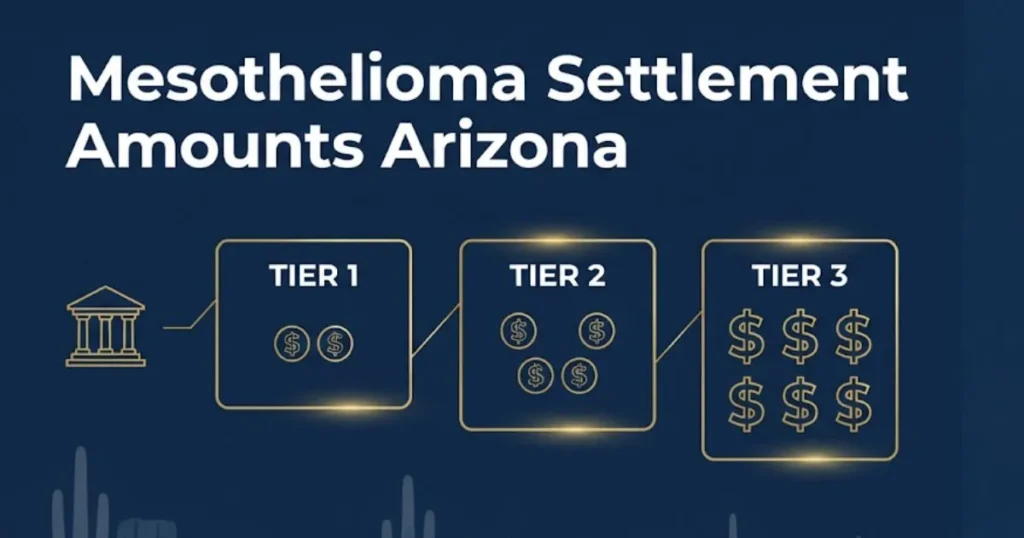
Arizona Mesothelioma Settlement Amounts in 2026
Arizona mesothelioma settlement amounts in 2026 typically range from $1 million to $2.4 million, though some cases settle for more or less depending on the specific circumstances. The actual number depends on your age, diagnosis stage, exposure history, and number of responsible defendants.
Settlement amounts are not one-size-fits-all. A 55-year-old diagnosed with late-stage pleural mesothelioma who worked at a power plant for 20 years will likely receive more than someone with limited exposure history.
| Factor | Impact on Settlement Amount |
|---|---|
| Stage of diagnosis | Later stages typically yield higher awards |
| Number of defendants | More defendants often means more money |
| Length of exposure | Longer exposure strengthens the case |
| Lost income and earning capacity | Higher earners may receive more |
| Medical expenses | Documented costs increase the total |
| Pain and suffering | Significant portion of most awards |
| Age at diagnosis | Younger victims may receive larger amounts |
Some Arizona settlements have exceeded $5 million in cases with clear evidence of corporate negligence. Trust fund payments add to the total and can range from $10,000 to $400,000 per trust, depending on the fund.
It’s common for one person to file claims with multiple trust funds. A single claimant might receive payments from five, ten, or even fifteen different trusts. These payments come on top of any lawsuit settlement.
The bottom line: most Arizona mesothelioma victims in 2026 can expect total compensation in the seven-figure range when combining lawsuit settlements and trust fund payouts.
Mesothelioma Compensation Options in Arizona
Mesothelioma compensation in Arizona comes from four main sources: lawsuit settlements, jury verdicts, asbestos trust fund payments, and VA benefits for veterans. Most victims pursue more than one of these at the same time.
Here are the four primary paths:
- Lawsuit settlements: Negotiated agreements with defendants before or during trial
- Jury verdicts: Awards decided by a jury after a full trial
- Trust fund claims: Filed against bankrupt companies’ asbestos trusts
- VA benefits: Disability compensation and healthcare for exposed veterans
Each source operates independently. Filing a trust fund claim does not prevent you from suing a different company in court. And receiving VA benefits doesn’t reduce your settlement amount.
| Compensation Type | Typical Range | Timeline |
|---|---|---|
| Lawsuit settlement | $1M to $2.4M | 12 to 18 months |
| Jury verdict | $2M to $10M+ | 18 to 36 months |
| Trust fund payment | $10K to $400K per trust | 3 to 12 months |
| VA disability benefits | $3,700+/month (100% rating) | Varies |
The strategy that gets people the most money is filing on all available fronts. An experienced mesothelioma attorney knows how to run lawsuit litigation and trust fund claims simultaneously without one interfering with the other.
Some compensation is taxable, and some isn’t. Physical injury settlements are generally tax-free under federal law. Punitive damages and interest usually are taxable. Your attorney and a tax professional can sort this out.
Key Takeaway: Arizona mesothelioma victims should pursue compensation from multiple sources at once because each path is independent and the combined total is almost always higher than relying on a single claim.
Arizona Statute of Limitations for Mesothelioma
The Arizona statute of limitations for mesothelioma lawsuits is two years from the date of diagnosis for personal injury claims and two years from the date of death for wrongful death claims. Missing this deadline almost always kills your case.
Arizona applies the “discovery rule” to mesothelioma cases. Your two-year clock starts ticking on the day you learn you have mesothelioma, not on the day you were exposed. Since mesothelioma has a latency period of 20 to 50 years, this rule is critical.
| Claim Type | Deadline | Clock Starts |
|---|---|---|
| Personal injury | 2 years | Date of mesothelioma diagnosis |
| Wrongful death | 2 years | Date of victim’s death |
If you were diagnosed in January 2024, your deadline to file a personal injury lawsuit in Arizona is January 2026. There are very few exceptions to this rule.
One thing that trips people up: the statute of limitations for a wrongful death claim is separate from the personal injury deadline. Even if the victim’s personal injury deadline has passed, surviving family members may still file a wrongful death claim within two years of the death.
Filing trust fund claims is different. Most asbestos trust funds have their own deadlines, and many are more flexible than court filing deadlines. But you should still file as soon as possible because trust fund payment percentages can decrease over time as more claims come in.
In 2026, the best strategy is to contact an attorney immediately after diagnosis. Waiting even a few months can complicate your case and reduce your options.
Arizona Asbestos Exposure Sites
Arizona has dozens of documented asbestos exposure sites spread across the state, from mining operations in rural areas to military bases and industrial plants in Phoenix and Tucson. These locations are the reason so many Arizonans have developed mesothelioma.
The most significant exposure sites include:
- Phelps Dodge copper smelter in Douglas and Morenci
- Salt River Project power plants near Phoenix
- Arizona Public Service (APS) power stations statewide
- Luke Air Force Base in Glendale
- Davis-Monthan Air Force Base in Tucson
- Fort Huachuca in Sierra Vista
- Navajo Generating Station near Page
- Globe and Miami mining district in Gila County
- Tucson Gas and Electric facilities
- Various shipyard and railroad maintenance facilities
Mining was especially dangerous in Arizona. The state had active asbestos mines, and vermiculite from the infamous W.R. Grace operation in Libby, Montana was shipped to processing facilities across Arizona for decades.
Construction workers across Phoenix, Tucson, Mesa, and Scottsdale were exposed through building materials like insulation, ceiling tiles, floor tiles, pipe wrap, and joint compound. Schools, hospitals, government buildings, and residential homes all contained asbestos materials through the 1980s.
Power plant workers faced some of the heaviest exposure. Boiler rooms, turbine areas, and pipe systems in Arizona power plants were loaded with asbestos insulation. Workers who maintained this equipment breathed in fibers every shift for years.
Arizona Asbestos Trust Fund Claims
Arizona asbestos trust fund claims are filed against special funds set up by bankrupt asbestos companies to compensate victims. Over 60 active trust funds hold more than $30 billion in remaining assets as of 2026.
These trusts exist because many asbestos manufacturers went bankrupt from the sheer volume of lawsuits against them. As part of their bankruptcy proceedings, courts required them to establish trust funds to pay current and future victims.
| Trust Fund | Estimated Assets | Payment Percentage (2025/2026) |
|---|---|---|
| Johns-Manville Trust | $2.5 billion+ | Approximately 5-10% |
| Owens Corning/Fibreboard | $3.4 billion+ | Varies by claim |
| USG Corporation Trust | $4 billion+ | Approximately 25% |
| W.R. Grace Trust | $4 billion+ | Approximately 40-50% |
| Combustion Engineering | $1.4 billion+ | Varies |
Payment percentages are the portion of your approved claim value that the trust actually pays. These percentages change over time. When a trust first opens, it may pay 100%. As more claims come in, the percentage drops to preserve money for future claimants.
Filing a trust fund claim is different from filing a lawsuit. You submit proof of diagnosis, exposure history, and evidence linking you to products made by the bankrupt company. The trust reviews your claim and issues payment.
You can file with every trust fund where you have qualifying exposure. Many mesothelioma victims qualify for five or more trusts. An experienced attorney knows which trusts apply to your case and handles all the paperwork.
Trust fund claims usually pay faster than lawsuits. Many trusts process claims and issue payment within 3 to 12 months of submission.
Key Takeaway: Asbestos trust funds still hold billions of dollars in 2026, and most Arizona mesothelioma victims qualify to file claims with multiple trusts for additional compensation beyond their lawsuit.
Arizona Mesothelioma Wrongful Death Lawsuit
An Arizona mesothelioma wrongful death lawsuit allows surviving family members to seek compensation after a loved one dies from mesothelioma. The claim is filed by the deceased person’s spouse, children, parents, or the personal representative of their estate.
Arizona law (A.R.S. 12-611 and 12-612) defines who can bring a wrongful death action. The hierarchy matters:
- Spouse and/or children have first priority
- Parents or legal guardian can file if there is no spouse or children
- Personal representative of the estate can file on behalf of all beneficiaries
The filing deadline is two years from the date of death. This is a firm deadline. Courts rarely grant extensions.
| Wrongful Death Detail | Info |
|---|---|
| Who can file | Spouse, children, parents, estate representative |
| Filing deadline | 2 years from date of death |
| Compensation includes | Medical bills, funeral costs, lost income, loss of companionship |
| Average range | $1M to $4M+ |
| Trust fund claims | Can be filed separately and simultaneously |
Wrongful death damages in Arizona cover both economic and non-economic losses. Economic damages include the victim’s medical bills, funeral expenses, and the income they would have earned. Non-economic damages cover loss of companionship, emotional suffering, and the overall impact on the family.
One important detail: if the deceased person had already filed a personal injury lawsuit before dying, that case can continue as a “survival action.” The wrongful death claim is a separate, additional case. Families can pursue both.
In 2026, wrongful death mesothelioma cases in Arizona continue to result in significant settlements and verdicts. The emotional impact testimony from surviving family members often drives higher compensation, especially in jury trials.
Mesothelioma Lawsuit Timeline in Arizona
A mesothelioma lawsuit in Arizona typically takes 12 to 18 months from filing to settlement, though cases that go to trial can take 24 to 36 months or longer. Courts often expedite these cases because of the aggressive nature of the disease.
Here’s a general timeline breakdown:
| Phase | Typical Duration |
|---|---|
| Initial consultation and investigation | 1 to 4 weeks |
| Filing the complaint | 1 to 2 weeks |
| Defendant response period | 30 to 60 days |
| Discovery and depositions | 4 to 8 months |
| Settlement negotiations | 2 to 4 months |
| Trial (if no settlement) | 1 to 3 weeks of trial, after 12 to 18 months of preparation |
| Trust fund claims (separate track) | 3 to 12 months |
Many Arizona judges recognize the urgency of mesothelioma cases. They’ll grant motions to expedite discovery and set earlier trial dates. This is sometimes called a “preference motion” based on the plaintiff’s medical condition.
Settlement negotiations often begin during or right after the discovery phase. Defendants in asbestos cases know the evidence against them is strong. They’ve seen decades of unfavorable verdicts. That’s why roughly 95% of mesothelioma cases settle before reaching trial.
If your case does go to trial, expect it to last one to three weeks. Arizona juries have historically been sympathetic to mesothelioma plaintiffs, particularly when evidence shows that companies hid the dangers of asbestos from workers.
The trust fund track runs parallel to the lawsuit. You don’t have to wait for your lawsuit to finish before collecting trust fund payments. Smart attorneys pursue both at the same time to get you money as quickly as possible.
Arizona Mesothelioma Lawsuit for Veterans
Arizona mesothelioma lawsuits for veterans focus on military asbestos exposure at bases, shipyards, and in equipment used across all branches of service. Arizona is home to several military installations where asbestos exposure was widespread.
Key Arizona military facilities with documented asbestos use:
- Luke Air Force Base in Glendale (aircraft maintenance, barracks, hangars)
- Davis-Monthan Air Force Base in Tucson (aircraft boneyard, maintenance facilities)
- Fort Huachuca in Sierra Vista (older buildings, communications equipment)
- Marine Corps Air Station Yuma (aircraft repair facilities)
- Williams Air Force Base (now Williams Gateway, closed 1993)
- Navajo Army Depot near Flagstaff (ammunition storage, older structures)
Veterans were exposed to asbestos in insulation, brake pads, gaskets, boiler rooms, engine rooms, and sleeping quarters. The Navy had the heaviest exposure due to shipboard asbestos use, but all branches were affected.
Filing a lawsuit does not affect your VA benefits. These are completely separate systems. A veteran can receive VA disability compensation, file a mesothelioma lawsuit against asbestos manufacturers, and submit trust fund claims all at the same time.
| Veteran Benefit Path | What It Provides |
|---|---|
| VA disability compensation | Monthly payments up to $3,700+ |
| VA healthcare | Free mesothelioma treatment at VA medical centers |
| Mesothelioma lawsuit | Settlement or verdict against manufacturers |
| Trust fund claims | Payments from bankrupt company trusts |
| Dependency and Indemnity Compensation (DIC) | Monthly payments to surviving spouses |
In 2026, veterans make up a significant percentage of mesothelioma claimants nationwide. Arizona’s large veteran population and its concentration of military bases mean the state sees a steady flow of veteran mesothelioma cases each year.
Key Takeaway: Arizona veterans exposed to asbestos during military service can file lawsuits, trust fund claims, and VA benefit applications simultaneously without any one reducing the others.
Mesothelioma Trial vs Settlement in Arizona
Most Arizona mesothelioma cases settle out of court, with approximately 95% reaching settlement before trial. The choice between settling and going to trial depends on the strength of your evidence, your health, and how much the defendants are offering.
Here’s how the two options compare:
| Factor | Settlement | Trial |
|---|---|---|
| Average payout | $1M to $2.4M | $2M to $10M+ |
| Timeline | 12 to 18 months | 24 to 36 months |
| Certainty of outcome | Guaranteed amount | Uncertain (could be higher or lower) |
| Privacy | Usually private | Public record |
| Stress level | Lower | Higher |
| Appeal risk | None | Defendants can appeal verdict |
Settlements are faster, guaranteed, and private. You know exactly what you’re getting, and you get it sooner. For many mesothelioma patients, the speed of a settlement is the deciding factor because their health may not allow them to wait for a trial.
Trials carry more risk but offer the potential for much larger awards. Arizona juries have returned multi-million dollar verdicts in mesothelioma cases. Punitive damages, which punish companies for hiding asbestos dangers, can push trial awards well above settlement offers.
Your attorney will advise you based on the specifics of your case. If the defendants are offering a fair amount and your health is declining, a settlement often makes sense. If the evidence is overwhelming and the defendants are lowballing you, trial may be worth the wait.
Some cases settle on the courthouse steps, literally. Defendants sometimes increase their offer right before trial begins because they fear what a jury might do.
Asbestos Lawsuit Filing Process in Arizona
The asbestos lawsuit filing process in Arizona starts with documenting your diagnosis and ends with either a settlement check or a jury verdict. Each step has specific requirements under Arizona civil procedure rules.
Step-by-step filing process:
- Obtain and organize all medical records confirming your mesothelioma diagnosis
- Compile your complete employment and residential history
- Identify products and companies that exposed you to asbestos
- Your attorney drafts and files the complaint in the appropriate Arizona court
- Each defendant is formally served with the lawsuit
- Defendants have 20 to 30 days to file their answer
- Discovery begins, including written questions, document requests, and depositions
- Expert witnesses are designated (medical experts and industrial hygienists)
- Settlement conferences may be ordered by the court
- If no settlement is reached, the case goes to trial
In Arizona, mesothelioma lawsuits are typically filed in the county where the exposure occurred or where the plaintiff currently lives. Maricopa County (Phoenix area) and Pima County (Tucson area) handle the majority of these cases.
Arizona courts follow the Arizona Rules of Civil Procedure. Asbestos cases have some special procedural requirements, including detailed exposure allegations in the complaint and specific medical documentation thresholds.
Your deposition is one of the most important parts of the case. During your deposition, you’ll answer questions about your work history, what products you used, and how you were exposed. These sessions are recorded and can be used at trial if your health declines before the trial date.
Many attorneys recommend conducting the plaintiff’s deposition early in the process, especially given the health challenges that mesothelioma patients face.
Arizona Mesothelioma Lawyer Fees
Arizona mesothelioma lawyers work on a contingency fee basis, meaning you pay nothing upfront and the attorney only gets paid if you win compensation. Standard contingency fees for mesothelioma cases range from 25% to 40% of the total recovery.
| Fee Detail | Typical Range |
|---|---|
| Contingency fee percentage | 25% to 40% |
| Upfront cost to you | $0 |
| Case expenses | Covered by the firm, deducted from settlement |
| Fee if you lose | $0 (you owe nothing) |
| Trust fund claim fees | Usually lower percentage, sometimes 15% to 20% |
The percentage can vary based on whether the case settles early, settles late, or goes to trial. Some firms charge 33% if the case settles before a lawsuit is filed, 33% to 37% if it settles during litigation, and 40% if it goes to trial.
Case expenses are separate from the contingency fee. These cover things like filing fees, expert witness costs, medical record retrieval, travel, and deposition transcripts. Most firms advance these costs and deduct them from your settlement.
You should ask every potential attorney about their fee structure before signing anything. Get it in writing. Understand what percentage they take, how expenses are handled, and whether the fee percentage changes at different stages of the case.
One thing to compare: some firms charge a lower contingency rate on trust fund claims because they require less litigation work. Ask if your attorney has a separate, lower rate for trust fund recoveries.
In 2026, the market for mesothelioma legal representation remains competitive. That competition benefits you as the client because firms are motivated to offer fair fee structures to earn your case.
Key Takeaway: You never pay a mesothelioma attorney out of pocket in Arizona; they work on contingency and only earn a fee if they recover money for you.
Mesothelioma Diagnosis and Legal Rights in Arizona
A mesothelioma diagnosis in Arizona immediately activates several legal rights, including the right to file a personal injury lawsuit, pursue trust fund claims, and seek workers’ compensation benefits if the exposure was job-related.
The diagnosis itself is the trigger for your legal clock. Under Arizona’s discovery rule, your two-year statute of limitations starts on the date your doctor confirms you have mesothelioma. Not when symptoms started. Not when you suspect something is wrong. The date of the confirmed diagnosis.
Here’s what a diagnosis unlocks legally:
- Personal injury lawsuit against asbestos product manufacturers and employers
- Trust fund claims against bankrupt asbestos companies
- Workers’ compensation claim if exposure was occupational
- VA benefits if exposure was during military service
- Wrongful death rights for your family if the disease is fatal
Getting your diagnosis documented properly matters for your legal case. You’ll need pathology reports, imaging studies (CT scans, PET scans), and a written diagnosis from a pulmonologist or oncologist. Your attorney will request these records on your behalf.
Some people delay contacting an attorney after diagnosis because they’re focused on treatment. That’s understandable, but the legal process can run alongside your medical care. You don’t have to choose one or the other.
In 2026, telemedicine consultations and electronic medical records have made it easier than ever to gather the documentation needed for a mesothelioma lawsuit. Your legal team can coordinate with your medical providers remotely in most cases.
Arizona Mesothelioma Verdict History
Arizona courts have produced notable mesothelioma verdicts over the years, with some juries awarding multi-million dollar judgments against asbestos companies. These verdicts set benchmarks that influence settlement negotiations in current cases.
Notable mesothelioma verdicts with Arizona connections:
| Year | Approximate Verdict | Defendant(s) | Key Detail |
|---|---|---|---|
| 2018 | $11.5 million | Multiple defendants | Occupational exposure case in Maricopa County |
| 2019 | $13 million | Industrial product manufacturer | Power plant worker with prolonged exposure |
| 2021 | $7.5 million | Brake product manufacturer | Mechanic exposed to asbestos brake shoes |
| 2023 | $29 million | Multiple defendants | Significant punitive damages included |
These numbers represent what juries believed the victims and families deserved. Actual collected amounts sometimes differ from jury awards due to appeals, post-trial negotiations, or defendant insolvency.
Verdict history matters because it tells defendants what they’re facing if they don’t settle. When defense lawyers look at Arizona’s track record and see juries awarding $7 million, $11 million, or $29 million, they’re more motivated to negotiate a fair settlement.
Punitive damages have been a factor in several Arizona asbestos verdicts. These are extra damages designed to punish companies that intentionally concealed the risks of asbestos from their workers and customers. Arizona law allows punitive damages when there is clear evidence of outrageous conduct.
In 2026, the trend continues. Arizona juries have shown no signs of reducing their awards in mesothelioma cases. If anything, growing public awareness of corporate asbestos cover-ups has made juries more willing to hold these companies accountable.
The verdict history also reflects the strength of Arizona plaintiff attorneys who specialize in asbestos litigation. These lawyers know how to present complex medical and industrial evidence in ways that resonate with everyday people sitting on a jury.
Key Takeaway: Arizona juries have consistently awarded multi-million dollar verdicts in mesothelioma cases, and this track record pressures defendants into offering fair settlements to avoid trial.
Frequently Asked Questions
How much is a mesothelioma lawsuit worth in Arizona in 2026?
Most Arizona mesothelioma lawsuits settle between $1 million and $2.4 million.
Trust fund payments add $10,000 to $400,000 per trust on top of that.
Total compensation depends on your exposure history, diagnosis stage, and number of defendants.
How long do I have to file a mesothelioma lawsuit in Arizona?
Arizona gives you two years from your diagnosis date to file a personal injury claim.
Wrongful death claims must be filed within two years of the victim’s death.
Missing these deadlines will almost certainly prevent you from recovering compensation.
Can family members file a mesothelioma lawsuit in Arizona?
Yes, family members can file a wrongful death lawsuit within two years of the victim’s death.
Spouses, children, and parents have priority filing rights under Arizona law.
Family members exposed through secondhand asbestos contact can file their own personal injury claim if diagnosed.
What Arizona locations had the most asbestos exposure?
Power plants, copper smelters, and military bases had the highest exposure levels.
Luke Air Force Base, Davis-Monthan Air Force Base, and Phelps Dodge facilities are among the most documented sites.
Construction workers, miners, and railroad employees across Phoenix and Tucson were heavily exposed.
Do I have to go to trial for an Arizona mesothelioma lawsuit?
No, roughly 95% of mesothelioma cases settle before trial.
Settlements are faster and guaranteed, while trials take longer but can produce larger awards.
Your attorney will recommend the best path based on your health and the strength of your case.
Your right to file an Arizona mesothelioma lawsuit in 2026 depends on acting before the statute of limitations runs out. The money is there. Trust funds are paying. Courts are hearing cases. Arizona juries continue to hold asbestos companies accountable.
If you or a family member has been diagnosed, the single most important step is starting the process now. Gather your medical records, review your exposure history, and connect with an attorney who handles these cases every day.
The companies that profited from asbestos set aside billions to pay for the harm they caused. That money is waiting for qualified claimants to come forward and claim it.







