

A Florida mesothelioma lawsuit can put real money in the hands of people harmed by asbestos. Settlements in the state have ranged from $1 million to over $30 million, depending on the case details.
Florida has one of the highest rates of mesothelioma deaths in the country. Decades of shipbuilding, construction, and power plant work left thousands of workers exposed.
If you or a loved one has been diagnosed, 2026 brings specific deadlines and opportunities you need to know about. This guide breaks down settlement amounts, eligibility rules, filing steps, trust fund claims, and court verdicts.
One fact that surprises most people: Florida’s statute of limitations starts from the date of diagnosis, not the date of exposure. That single detail changes everything about your timeline.
Florida Mesothelioma Lawsuit Overview for 2026
A Florida mesothelioma lawsuit is a legal claim filed by someone diagnosed with mesothelioma due to asbestos exposure that occurred in the state. These cases fall under personal injury or wrongful death law.
Florida has consistently ranked among the top five states for asbestos-related deaths. The state’s history of heavy industry, military bases, and construction created widespread exposure risks for decades.
In 2026, these cases continue to move through Florida’s circuit court system. Most are filed as individual tort claims, not class actions. That means each person’s case is evaluated on its own facts.
The liable parties in these lawsuits are usually former asbestos product manufacturers, employers, or property owners. Companies like Johns Manville, Owens Corning, and W.R. Grace appear frequently in Florida case dockets.
| Quick Facts | Details |
|---|---|
| Case Type | Personal injury or wrongful death |
| Court System | Florida Circuit Courts |
| Common Defendants | Asbestos manufacturers, employers, property owners |
| State Ranking | Top 5 for mesothelioma deaths nationally |
| 2026 Status | Active filings and settlements ongoing |
What makes Florida different from many states is the “discovery rule.” This legal principle says your clock for filing starts when you learn about your diagnosis. Not when you breathed in the fibers 30 or 40 years ago.
Florida courts have been receptive to mesothelioma claims. Judges in counties like Hillsborough, Miami-Dade, and Duval handle a significant volume of these cases each year.
Average Mesothelioma Settlement in Florida for 2026
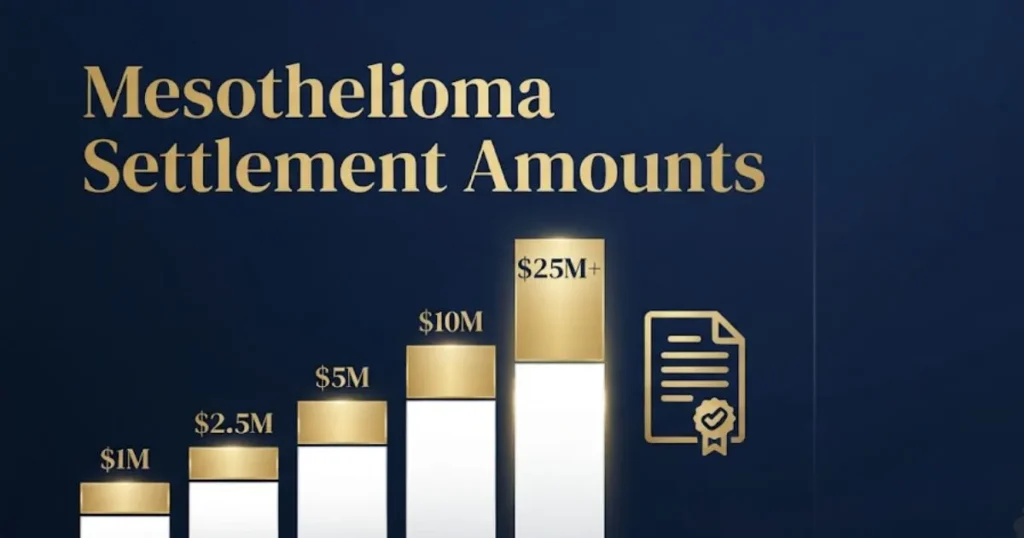
The average mesothelioma settlement in Florida for 2026 is projected to fall between $1 million and $1.4 million for personal injury cases. Wrongful death cases and trial verdicts can reach much higher.
These figures come from historical settlement data and recent case outcomes in Florida courts. Keep in mind that every case is different, and the actual number depends on several factors.
Your age, work history, exposure duration, and medical expenses all play a role. A 65-year-old retired shipyard worker with 20 years of exposure will likely settle for more than someone with brief, indirect exposure.
| Settlement Factor | Impact on Amount |
|---|---|
| Duration of exposure | Longer exposure typically means higher payout |
| Number of defendants | More defendants can increase total recovery |
| Medical costs | Higher treatment costs raise the claim value |
| Lost wages | Significant income loss boosts the settlement |
| Pain and suffering | Severe symptoms increase non-economic damages |
| Age at diagnosis | Younger victims often receive larger awards |
Some Florida settlements in recent years have exceeded $10 million. In 2024, a Hillsborough County case resulted in a $12 million verdict for a former construction worker.
Trial verdicts tend to be higher than settlements. But trials also carry risk. About 95% of mesothelioma cases settle before a jury ever hears them.
Florida Mesothelioma Settlement Amounts by Case Type
Florida mesothelioma settlement amounts vary significantly by case type. Personal injury claims, wrongful death claims, and trust fund payouts each have different ranges.
Personal injury cases filed by living patients tend to settle between $1 million and $2.4 million. These claims move faster because courts prioritize cases where the plaintiff has a terminal illness.
Wrongful death cases filed by surviving family members average between $1 million and $5 million. These cases take longer but can result in substantial compensation for families.
| Case Type | Typical Settlement Range | Notes |
|---|---|---|
| Personal injury (living plaintiff) | $1M to $2.4M | Prioritized by courts, faster resolution |
| Wrongful death | $1M to $5M | Filed by spouse, children, or estate |
| Trust fund claim | $10,000 to $400,000 | Paid from bankrupt company trust funds |
| VA benefits claim | $3,000 to $3,800/month | For veterans with service-related exposure |
| Trial verdict | $2.4M to $30M+ | Higher risk but higher potential reward |
Trust fund claims deserve special attention. More than 60 asbestos companies have gone bankrupt and set up trust funds. These pay out based on the severity of your disease. Mesothelioma claimants receive the highest trust fund payments.
You can file trust fund claims and a lawsuit at the same time. They are separate processes. One does not cancel out the other.
Key Takeaway: Settlement amounts in Florida depend on case type, exposure history, and whether you go to trial, with personal injury claims averaging $1 million to $2.4 million and trust fund payouts adding extra compensation on top.
Who Qualifies for a Mesothelioma Lawsuit in Florida
Anyone diagnosed with mesothelioma who was exposed to asbestos in Florida may qualify to file a lawsuit. Family members of deceased victims can also file on behalf of the estate.
The key requirement is proving a connection between your diagnosis and specific asbestos exposure. You don’t need to pinpoint the exact day it happened. You need to show where and how it likely occurred.
Workers in these industries have the strongest claims:
- Construction workers exposed to asbestos insulation, roofing, or drywall
- Shipyard workers at Tampa, Jacksonville, or Pensacola facilities
- Power plant employees at Florida Power and Light sites
- Military veterans stationed at Florida bases
- Manufacturing workers handling asbestos-containing products
- Mechanics exposed to asbestos brake pads and gaskets
- Firefighters who encountered burning asbestos materials
Even secondhand exposure counts. If a worker brought asbestos fibers home on their clothing and a spouse or child developed mesothelioma, that family member can file a claim.
You do not need to have worked directly with asbestos products yourself. Living near an asbestos-contaminated site or building can also be grounds for a case.
Florida does not require you to be a current resident to file. If your exposure happened in the state, you can file in Florida courts regardless of where you live now.
How to File a Mesothelioma Lawsuit in Florida
Filing a mesothelioma lawsuit in Florida starts with getting your medical records and connecting with an attorney who handles asbestos cases. The process has clear steps, and most of it happens without you setting foot in a courtroom.
Step 1: Gather your medical records. Get your official mesothelioma diagnosis, treatment history, and pathology reports. This documentation forms the backbone of your case.
Step 2: Document your exposure history. Write down everywhere you worked in Florida, the years you were there, and what products or materials you handled. Old coworkers can serve as witnesses.
Step 3: Hire a mesothelioma attorney. Look for a firm with specific asbestos litigation experience. Most work on contingency, which means no upfront fees.
Step 4: Your attorney files the complaint. The lawsuit is filed in the appropriate Florida circuit court. The complaint names the companies responsible for your exposure.
Step 5: Discovery phase begins. Both sides exchange evidence. Your attorney deposes witnesses and builds the case.
Step 6: Settlement negotiations or trial. Most cases settle during this phase. If not, your case goes before a jury.
| Filing Step | What Happens | Typical Duration |
|---|---|---|
| Medical records review | Attorney reviews diagnosis and treatment | 1 to 2 weeks |
| Exposure investigation | Work history and witness identification | 2 to 4 weeks |
| Complaint filing | Lawsuit filed in Florida circuit court | 1 to 2 weeks |
| Discovery | Evidence exchange and depositions | 3 to 12 months |
| Settlement or trial | Negotiation or jury trial | 1 to 6 months |
The most important thing is speed. Florida courts fast-track mesothelioma cases because of the serious nature of the disease. Your attorney will request expedited scheduling.
Florida Mesothelioma Statute of Limitations
Florida’s statute of limitations for mesothelioma lawsuits is four years from the date of diagnosis for personal injury claims. Wrongful death claims must be filed within two years of the victim’s death.
This is where Florida’s discovery rule becomes critical. The clock does not start when you were exposed to asbestos. It starts when a doctor tells you that you have mesothelioma. That’s a major advantage for plaintiffs.
| Claim Type | Deadline | Clock Starts |
|---|---|---|
| Personal injury | 4 years | Date of mesothelioma diagnosis |
| Wrongful death | 2 years | Date of victim’s death |
These deadlines are strict. Miss them by even one day, and the court will almost certainly dismiss your case. No exceptions. No extensions.
Here’s why this matters for 2026 specifically. If you received a diagnosis in 2022 or later, your personal injury filing window is still open. If a family member passed away in 2024 or later, the wrongful death window is still open.
The four-year window is more generous than many states. New York and California only give two or three years for personal injury asbestos claims. Florida’s longer deadline gives you more time, but waiting still hurts your case.
Evidence deteriorates over time. Witnesses move or pass away. Companies destroy old records. Filing sooner means a stronger case.
Key Takeaway: Florida gives you four years from diagnosis to file a personal injury mesothelioma claim and two years for wrongful death, but filing early strengthens your case and preserves critical evidence.
Florida Mesothelioma Compensation Types
Florida mesothelioma compensation comes in several forms, and most victims qualify for more than one. The main categories are lawsuit settlements, trial verdicts, trust fund payments, veterans’ benefits, and workers’ compensation.
Think of it like streams feeding a river. Each source of compensation flows independently, and you can collect from multiple streams at once.
Lawsuit settlements are the largest single source. These come from negotiating directly with the companies that made or sold asbestos products.
Trial verdicts happen when a settlement can’t be reached. Juries in Florida have awarded mesothelioma victims anywhere from $2.4 million to over $30 million.
Trust fund payments come from bankrupt asbestos companies that were ordered to set aside money for victims. Over $30 billion sits in these funds nationwide.
Veterans’ benefits are available to anyone who served in the military and was exposed to asbestos during service. Monthly disability payments range from $3,000 to $3,800.
Workers’ compensation may apply if your exposure happened on the job. This provides medical bill coverage and partial wage replacement.
| Compensation Type | Typical Range | Source |
|---|---|---|
| Lawsuit settlement | $1M to $5M | Defendant companies |
| Trial verdict | $2.4M to $30M+ | Jury award |
| Trust fund | $10,000 to $400,000 | Bankrupt company trusts |
| VA disability | $3,000 to $3,800/month | Department of Veterans Affairs |
| Workers’ comp | Varies | Florida workers’ comp system |
Your attorney should pursue every available avenue. Leaving money on the table helps no one.
Florida Asbestos Trust Fund Claims
Florida asbestos trust fund claims are filed separately from lawsuits and provide compensation from bankrupt companies that manufactured asbestos products. Over 60 trust funds exist, holding more than $30 billion combined.
These trusts were created through bankruptcy proceedings. When companies like Johns Manville, W.R. Grace, and USG Corporation went bankrupt from asbestos liabilities, courts required them to set up funds for future victims.
Each trust has its own filing requirements and payment schedules. Mesothelioma claims receive the highest priority level, called “Category 1” in most trusts.
| Trust Fund | Current Payment Percentage | Mesothelioma Value |
|---|---|---|
| Johns Manville | Approximately 5% | Varies by claim |
| USG Corporation | Approximately 25% | $175,000 base |
| Owens Corning/Fibreboard | Approximately 20% | $200,000 base |
| W.R. Grace | Approximately 40% | $110,000 base |
| Certainteed | Approximately 20% | $65,000 base |
Payment percentages change periodically. These percentages represent the fraction of the full claim value that the trust currently pays out. They adjust based on how much money remains in each fund.
You can file claims with multiple trusts simultaneously. If you were exposed to products from five different companies, you file five separate claims. Each one pays independently.
The filing process requires proof of diagnosis, evidence of exposure to that specific company’s products, and supporting documentation. An experienced attorney handles this paperwork.
Most trust fund claims are resolved within 3 to 12 months through expedited review.
Florida Wrongful Death Mesothelioma Lawsuit
A Florida wrongful death mesothelioma lawsuit allows surviving family members to seek compensation after a loved one dies from asbestos-related mesothelioma. Florida law permits spouses, children, parents, and estate representatives to file these claims.
Florida’s wrongful death statute, found in Chapter 768 of the Florida Statutes, specifically governs these cases. The law provides for both the estate’s losses and each survivor’s individual losses.
Damages recoverable in a wrongful death claim include:
- Medical expenses incurred before death
- Funeral and burial costs
- Lost income the victim would have earned
- Loss of companionship and emotional support
- Pain and suffering the victim experienced before death (through a survival action)
- Lost parental guidance for minor children
The survival action component is important. This allows the estate to recover damages for the suffering the victim endured between diagnosis and death. It’s filed alongside the wrongful death claim.
| Wrongful Death Detail | Information |
|---|---|
| Who can file | Spouse, children, parents, estate personal representative |
| Filing deadline | 2 years from date of death |
| Recoverable damages | Medical bills, lost wages, pain, companionship, funeral costs |
| Average settlement | $1M to $5M |
| Survival action | Yes, available under Florida law |
One distinction in Florida: the personal representative of the estate must be the one who formally files the lawsuit. Family members are the beneficiaries, but the legal filing comes from the estate representative, often appointed through probate court.
Key Takeaway: Florida wrongful death mesothelioma claims must be filed within two years of the victim’s death, and both the estate’s losses and individual family members’ losses are recoverable under state law.
Florida Mesothelioma Lawsuit Timeline
A Florida mesothelioma lawsuit typically takes between 12 and 18 months from filing to resolution. Some cases settle in as few as 6 months, while cases that go to trial can take 2 years or longer.
Florida courts recognize the urgency of mesothelioma cases. Judges routinely grant motions to expedite proceedings because the disease is aggressive and life expectancy after diagnosis is often limited.
| Timeline Phase | Duration | What Happens |
|---|---|---|
| Initial consultation and case review | 1 to 4 weeks | Attorney evaluates your claim |
| Filing the complaint | 1 to 2 weeks | Lawsuit officially filed in court |
| Discovery | 3 to 9 months | Evidence exchange, depositions taken |
| Mediation / settlement talks | 1 to 3 months | Both sides negotiate |
| Trial (if needed) | 2 to 6 weeks | Jury hears the case |
| Post-trial / appeal | 3 to 12 months | Defendant may appeal verdict |
The discovery phase is where most of the time goes. Attorneys gather employment records, product identification evidence, medical records, and witness statements. Depositions of the plaintiff often happen during this period.
Many defendants prefer to settle during or shortly after discovery. Once the evidence is laid out, the financial risk of going to trial becomes clear to them.
If your health is declining, your attorney can request a “preference trial setting.” This moves your case to the front of the court calendar.
Trust fund claims run on a parallel track. Your attorney can file those while the lawsuit is still in discovery, getting you money sooner.
How Long Does a Florida Mesothelioma Lawsuit Take
Most Florida mesothelioma lawsuits resolve in 12 to 18 months. The exact duration depends on the number of defendants, the complexity of your exposure history, and whether the case settles or goes to trial.
Think of it like building a house. A simple ranch home goes up faster than a custom mansion. A case with one clear defendant and solid documentation moves faster than one involving six companies and exposure at multiple job sites over 30 years.
Factors that speed up your case:
- Clear medical diagnosis with pathology confirmation
- Well-documented work history showing asbestos exposure
- Living witnesses who can corroborate your exposure
- Expedited court scheduling granted by the judge
- Defendant willingness to negotiate
Factors that slow it down:
- Multiple defendants requiring separate negotiations
- Disputed exposure evidence or unclear work history
- Defendant bankruptcy requiring trust fund claims instead
- Trial proceedings with appeals
| Case Scenario | Estimated Duration |
|---|---|
| Single defendant, strong evidence, settlement | 6 to 9 months |
| Multiple defendants, settlement | 12 to 18 months |
| Trial with single defendant | 18 to 24 months |
| Trial with multiple defendants and appeal | 24 to 36 months |
The good news is that you don’t wait for the entire case to finish before seeing money. Trust fund claims can pay out within 3 to 6 months. Partial settlements with some defendants can come through while litigation continues against others.
Florida Asbestos Exposure Sites
Florida asbestos exposure sites include shipyards, power plants, military bases, schools, and commercial buildings across the state. The heaviest exposure occurred between the 1940s and 1980s.
Florida’s warm climate didn’t protect anyone from asbestos. The material was used in insulation, roofing, flooring, pipe coverings, and fireproofing throughout the state’s construction boom.
| Location Type | Examples | Peak Exposure Period |
|---|---|---|
| Naval shipyards | Tampa Shipyards, Mayport Naval Station | 1940s to 1970s |
| Military bases | Jacksonville NAS, Pensacola NAS, Homestead AFB | 1940s to 1980s |
| Power plants | Florida Power and Light facilities, Turkey Point | 1950s to 1980s |
| Industrial sites | Phosphate processing plants in Polk County | 1950s to 1970s |
| Commercial buildings | Hotels, hospitals, and schools statewide | 1950s to 1980s |
| Residential | Older homes with asbestos siding, tiles, insulation | 1940s to 1980s |
Some of the most dangerous exposure happened at Tampa Shipyards. Workers there built and repaired ships using asbestos insulation in boiler rooms, engine rooms, and throughout pipe systems.
Polk County’s phosphate industry is another major hotspot. Mining and processing operations used asbestos-containing equipment and insulation.
Schools built before 1980 in Florida frequently contained asbestos. Teachers, janitors, and maintenance workers faced ongoing exposure for decades.
Key Takeaway: Asbestos exposure in Florida occurred across dozens of industries and hundreds of sites, with shipyards, military bases, and power plants posing the highest risk between the 1940s and 1980s.
Florida Navy Shipyard Asbestos Exposure
Florida navy shipyard asbestos exposure affected tens of thousands of military and civilian workers at facilities across the state. The U.S. Navy used asbestos extensively in ship construction from the 1930s through the 1970s.
Every major naval vessel built or repaired during this period contained asbestos in hundreds of components. Pipe insulation, gaskets, valves, boiler covers, floor tiles, and electrical wiring all contained the material.
Key Florida naval facilities where exposure occurred:
- Jacksonville Naval Air Station in Duval County
- Pensacola Naval Air Station in Escambia County
- Mayport Naval Station in Duval County
- Key West Naval Air Station in Monroe County
- Tampa Shipyards (civilian facility that performed Navy contracts)
- Port Everglades in Broward County
| Facility | Location | Estimated Workers Exposed |
|---|---|---|
| Jacksonville NAS | Jacksonville | Tens of thousands |
| Pensacola NAS | Pensacola | Thousands |
| Mayport Naval Station | Atlantic Beach | Thousands |
| Tampa Shipyards | Tampa | Thousands |
Veterans who served at these facilities between 1940 and 1980 face the highest risk. Boiler technicians, pipefitters, electricians, and engine room workers had the most direct contact with asbestos materials.
The VA recognizes mesothelioma as a service-connected disability for veterans exposed to asbestos during their military service. This opens the door to both VA benefits and civil lawsuits against the asbestos product manufacturers. The government itself isn’t typically sued; the claims target the private companies that supplied asbestos materials to the Navy.
Florida Mesothelioma Court Verdicts
Florida mesothelioma court verdicts have produced some of the largest asbestos-related awards in the country. Juries in the state have shown willingness to hold manufacturers accountable with substantial compensatory and punitive damages.
Notable verdicts from Florida courts include multimillion-dollar awards that set precedents for future cases. Here are some examples from recent years:
| Year | County | Verdict Amount | Case Details |
|---|---|---|---|
| 2023 | Hillsborough | $12M | Construction worker exposed to asbestos insulation |
| 2022 | Miami-Dade | $8.5M | Mechanic exposed to asbestos brake products |
| 2021 | Broward | $18.6M | Shipyard worker, multiple defendant manufacturers |
| 2019 | Duval | $13.2M | Power plant worker, punitive damages included |
These verdicts reflect both compensatory damages (medical costs, lost wages, pain) and punitive damages (punishment for the defendant’s reckless behavior). Punitive damages are available in Florida when the plaintiff proves the defendant knew about asbestos dangers and did nothing.
Florida allows punitive damages in asbestos cases under certain conditions. The plaintiff must show clear and convincing evidence that the defendant acted with intentional misconduct or gross negligence.
Verdicts serve another purpose beyond the individual case. Large jury awards put pressure on defendants to settle future cases rather than risk similar outcomes at trial.
Not every case goes to trial. But having strong verdict history in Florida courts gives plaintiffs real bargaining power during settlement negotiations.
Florida Mesothelioma Lawsuit Denied: Common Reasons
Florida mesothelioma lawsuits get denied when claimants miss filing deadlines, lack sufficient evidence of asbestos exposure, or fail to connect their diagnosis to a specific defendant’s products. Understanding these pitfalls can save your case.
The most common reasons for denial:
- Missed statute of limitations. Filing after the four-year (personal injury) or two-year (wrongful death) deadline kills the case immediately.
- Insufficient exposure evidence. You must prove you were exposed to a specific company’s asbestos products. “I worked in construction” isn’t enough without details.
- No confirmed diagnosis. Self-reported symptoms won’t work. You need pathology reports confirming mesothelioma.
- Wrong defendant. Suing a company that didn’t manufacture or distribute the asbestos products you encountered leads to dismissal.
- Incomplete documentation. Missing medical records, work histories, or witness information weakens the case beyond repair.
| Denial Reason | How to Prevent It |
|---|---|
| Missed deadline | File as soon as possible after diagnosis |
| Weak exposure proof | Document every job site and product you remember |
| No pathology report | Get a tissue biopsy and confirmed diagnosis |
| Wrong defendants | Work with an attorney who investigates product identification |
| Missing records | Request employment and medical records early |
Some denials can be appealed or refiled with stronger evidence. An experienced attorney can sometimes identify products through industry databases even when the claimant’s memory is incomplete.
The best defense against denial is preparation. Start documenting your exposure history immediately after diagnosis. Write down job sites, dates, coworkers’ names, and any products you remember handling.
Key Takeaway: Most Florida mesothelioma lawsuit denials stem from missed deadlines or weak evidence of exposure; documenting your work history and getting a pathology-confirmed diagnosis are the two most important steps to protect your claim.
Choosing a Florida Mesothelioma Lawyer
The right Florida mesothelioma lawyer should have specific experience with asbestos cases, a track record of settlements and verdicts in the state, and the resources to take on large corporations. Not every personal injury attorney fits this description.
Mesothelioma litigation is a specialty. The science, the product identification process, and the procedural rules are different from a car accident case or a slip-and-fall. You want someone who does this work every day.
Questions to ask any attorney you’re considering:
- How many mesothelioma cases have you handled in Florida?
- What is your average settlement amount for mesothelioma clients?
- Do you handle trust fund claims in addition to lawsuits?
- Will you personally manage my case, or will a junior associate handle it?
- What are your fees, and are they on a contingency basis?
| What to Look For | Why It Matters |
|---|---|
| Asbestos-specific experience | General PI lawyers miss product identification details |
| Florida court experience | Knowing local judges and procedures speeds up your case |
| Contingency fee structure | No upfront cost; attorney gets paid from your settlement |
| National firm resources | Larger firms have bigger databases for identifying exposure |
| Trial willingness | Defendants settle for more when they know your lawyer will go to trial |
Contingency fees are standard in mesothelioma cases. The attorney takes a percentage of your recovery, typically between 25% and 40%. You pay nothing if you don’t win.
Geography matters less than experience. Many national firms handle Florida mesothelioma cases and will come to you. They file in Florida courts and handle everything remotely if needed.
One more thing to consider: timing. A good attorney will move fast because they understand the urgency of a mesothelioma diagnosis. If a firm is slow to respond or vague about next steps during your initial call, that tells you something.
Frequently Asked Questions
How much is a mesothelioma lawsuit worth in Florida in 2026?
Most Florida mesothelioma settlements range from $1 million to $2.4 million for personal injury cases.
Trial verdicts can reach $10 million to $30 million or more.
Trust fund payments add an additional $10,000 to $400,000 per fund.
What is the deadline to file a mesothelioma lawsuit in Florida?
Florida allows four years from the date of diagnosis for personal injury claims.
Wrongful death claims must be filed within two years of the victim’s death.
Missing these deadlines means losing the right to file permanently.
Can family members file a mesothelioma lawsuit in Florida after a death?
Yes, surviving spouses, children, and parents can file a wrongful death claim.
The personal representative of the estate must formally file the lawsuit.
The two-year filing deadline starts on the date of death.
How long does a mesothelioma lawsuit take in Florida?
Most cases settle within 12 to 18 months from the date of filing.
Cases that go to trial can take 18 to 36 months.
Trust fund claims often pay out within 3 to 12 months on a separate track.
Do I need to go to court for a Florida mesothelioma lawsuit?
Most mesothelioma cases settle without a trial, so you likely won’t appear in court.
Your deposition (recorded testimony) may be taken at your home or attorney’s office.
If the case goes to trial, your attorney handles the courtroom work.
If you’ve been diagnosed with mesothelioma in Florida, the path forward starts with documenting your exposure and understanding your deadlines. Every month you wait is a month of evidence potentially lost.
The money is there. Trust funds hold billions. Defendants settle these cases regularly. The question is whether you take the steps to claim what you’re owed.
Check your eligibility, gather your records, and talk to an attorney who handles these cases daily. The 2026 filing window is open, but it won’t stay open forever.







