

The Mielle hair loss lawsuit is one of the most talked about product liability cases heading into 2026. Thousands of consumers say Mielle Organics products caused severe hair loss, scalp burns, and permanent damage.
If you used Mielle products and lost hair, you’re not alone. Complaints have piled up across social media, with the FDA, and now in courtrooms.
This article breaks down every piece of the case. You’ll learn which products are named, what chemicals may be responsible, who qualifies to file a claim, and how much money claimants might receive.
One stat stands out: the FDA’s adverse event database logged hundreds of complaints tied to Mielle products in just a few years. That kind of volume gets attention fast.
Mielle Hair Loss Lawsuit: What You Need to Know
The Mielle hair loss lawsuit refers to legal actions filed by consumers who say Mielle Organics hair care products caused significant hair loss, scalp irritation, and lasting damage. These are not minor complaints. People report clumps of hair falling out after using popular Mielle products.
The lawsuits center on allegations that Mielle Organics sold products containing potentially harmful ingredients without proper warnings. The brand, once celebrated in the natural hair community, now faces growing legal pressure.
Multiple law firms across the United States are investigating or actively pursuing claims. The cases target both Mielle Organics and its parent company, Procter & Gamble, which acquired the brand in 2023.
| Detail | Info |
|---|---|
| Lawsuit Type | Product liability, potential class action |
| Defendant | Mielle Organics, Procter & Gamble |
| Key Allegations | Hair loss, scalp damage, failure to warn |
| Products Named | Multiple Mielle hair care lines |
| Status as of 2026 | Active investigations and filings |
The scale of these complaints makes this case hard to ignore. When a product marketed as “natural” and “strengthening” does the opposite, the legal fallout is real.
Mielle Lawsuit Over Hair Loss: The Full Story
The Mielle lawsuit over hair loss started gaining momentum in 2022 and 2023 when consumers flooded social media with before-and-after photos showing dramatic hair loss. What began as scattered complaints became a pattern too big to dismiss.
Consumers said they trusted the brand because it positioned itself as a clean, natural alternative. Many buyers were Black women seeking gentle products for textured hair. The betrayal felt personal.
By mid-2023, law firms began accepting cases. Complaints to the FDA climbed. The controversy only intensified after Procter & Gamble completed its acquisition of Mielle Organics, raising questions about whether the corporate giant knew about product safety issues before the purchase.
This story follows a familiar playbook in product liability law. A brand builds trust. Consumers report harm. The company stays quiet. Then the lawsuits arrive.
Think of it like the DevaCurl situation from a few years back. Beloved brand. Loyal following. Then wave after wave of hair loss reports. The Mielle situation feels strikingly similar, but with even more consumers affected.
- Complaints surfaced in 2022 on social media platforms
- Law firms opened investigations in 2023
- FDA adverse event reports continued climbing through 2024 and 2025
- Litigation is active heading into 2026
Is There a Lawsuit Against Mielle Right Now?
Yes, there are active legal actions against Mielle Organics as of 2026. Multiple law firms have filed or are preparing product liability claims on behalf of consumers who experienced hair loss and scalp damage.
The legal landscape includes individual lawsuits and the groundwork for potential class action certification. Some firms have already gathered thousands of intake forms from affected consumers.
While no single consolidated class action has been certified at the time of this writing, the volume of cases points toward that possibility. Courts often consolidate similar product liability claims when enough people report the same injuries from the same products.
If you’ve been wondering whether this is a real lawsuit or just internet chatter, the answer is clear. Real attorneys are filing real cases in real courts.
Key Takeaway: The Mielle hair loss lawsuit is active in 2026 with multiple legal filings, thousands of consumer complaints, and growing pressure on Mielle Organics and Procter & Gamble to address product safety failures.
Mielle Organics Lawsuit 2026: Current Status
The Mielle Organics lawsuit in 2026 is in an active litigation phase with cases moving through federal and state courts. No global settlement has been announced yet, but negotiations could begin if courts consolidate claims.
Several key developments have shaped the case this year:
- Additional consumers have come forward with injury documentation
- Discovery phases in early-filed cases are producing internal company documents
- Some law firms report that Mielle’s legal team has been aggressive in pushing for dismissals
- Courts have so far rejected most dismissal attempts
| Timeline Event | Status |
|---|---|
| Initial complaints (2022-2023) | Complete |
| Law firm investigations (2023-2024) | Complete |
| Individual lawsuits filed (2024-2025) | Active |
| Class action certification attempts (2025-2026) | Pending |
| Settlement negotiations | Not yet started |
| Potential payouts | Projected late 2026 or 2027 |
The case is still evolving. New filings and court decisions could shift the timeline in either direction.
For consumers watching this case, the best thing to do right now is make sure your claim is filed. Waiting too long could mean missing deadlines.
Mielle Class Action Lawsuit Status in 2026
The Mielle class action lawsuit has not yet received formal class certification as of early 2026. However, the volume and similarity of complaints make certification a strong possibility in the coming months.
For a class action to be certified, courts need to see that enough people suffered similar injuries from the same product under the same circumstances. The Mielle case checks most of those boxes.
Here is how class action certification typically works:
- Numerosity: Are enough people affected? With thousands of complaints, yes.
- Commonality: Do claims share common legal questions? The same products and same alleged ingredient issues suggest they do.
- Typicality: Are the named plaintiffs’ claims typical of the whole class? Reports of hair loss and scalp damage are consistent across complainants.
- Adequacy: Can the named plaintiffs and their lawyers fairly represent the class? Multiple experienced product liability firms are involved.
If certification happens, it would mean one lawsuit represents all qualified claimants. That speeds up the process considerably.
Without certification, each case proceeds individually. That’s slower but can sometimes result in larger individual payouts.
Which Mielle Products Are Causing Hair Loss?
The Mielle products most frequently named in hair loss complaints include the Rosemary Mint Strengthening Oil, the Rosemary Mint Scalp and Hair Strengthening Oil, and several shampoos and conditioners from the Rosemary Mint line.
Consumer complaints have also mentioned:
- Mielle Pomegranate & Honey Leave-In Conditioner
- Mielle Babassu Oil & Mint Deep Conditioner
- Mielle Mongongo Oil Thermal & Heat Protectant Spray
- Mielle Rosemary Mint Strengthening Shampoo
The Rosemary Mint products appear in the highest concentration of complaints. These were among Mielle’s best sellers, which means the pool of affected consumers is massive.
| Product | Complaint Frequency |
|---|---|
| Rosemary Mint Strengthening Oil | Very High |
| Rosemary Mint Scalp & Hair Oil | Very High |
| Rosemary Mint Shampoo | High |
| Pomegranate & Honey Leave-In | Moderate |
| Babassu Oil Deep Conditioner | Moderate |
| Mongongo Oil Heat Protectant | Lower |
Not every Mielle product is named. But the Rosemary Mint collection is at the center of this storm. If you used any product from that line and experienced problems, your complaint matters.
Key Takeaway: The Rosemary Mint product line is the primary target of the Mielle hair loss lawsuit, with thousands of complaints tied to that collection alone.
Mielle Rosemary Oil Lawsuit: Key Details
The Mielle Rosemary Oil lawsuit focuses specifically on the brand’s top-selling Rosemary Mint Strengthening Oil. This product went viral on social media platforms, especially TikTok, which drove millions of purchases in a short window.
That viral popularity is a double-edged sword for the case. Millions of people bought the product based on influencer recommendations and social media hype. When reports of hair loss started rolling in, the affected population was enormous.
Allegations in the rosemary oil lawsuit include:
- The product contains ingredients not adequately disclosed to consumers
- Marketing claims of “strengthening” hair were misleading
- The product allegedly caused the opposite effect: weakening and destroying hair
- Mielle failed to conduct adequate safety testing before mass distribution
Some plaintiffs say they experienced hair loss within days of first use. Others report gradual thinning over weeks. Both patterns suggest a product-level problem rather than isolated allergic reactions.
The rosemary oil became one of the most popular hair care products in America practically overnight. The idea that it may have harmed thousands of people is why this lawsuit carries so much weight.
Mielle Rosemary Mint Oil Side Effects Behind the Lawsuit
The side effects reported by consumers using Mielle Rosemary Mint Oil range from mild scalp irritation to severe, permanent hair loss. These aren’t vanity complaints. Hair loss affects self-esteem, mental health, and daily life.
Reported side effects include:
- Excessive hair shedding starting within days of use
- Scalp burning or tingling during and after application
- Bald patches developing over weeks of continued use
- Scalp redness and inflammation resembling chemical burns
- Hair texture changes including brittleness and breakage
- Permanent thinning in some cases even after discontinuing use
Some ingredient safety experts have raised questions about DMDM hydantoin, a preservative found in certain Mielle formulations. DMDM hydantoin is a formaldehyde-releasing chemical. Formaldehyde exposure is linked to scalp irritation and hair loss in cosmetic products.
| Side Effect | Severity | Reported Frequency |
|---|---|---|
| Hair shedding | Moderate to Severe | Very Common |
| Scalp burning | Moderate | Common |
| Bald patches | Severe | Common |
| Scalp redness | Mild to Moderate | Common |
| Permanent thinning | Severe | Less Common |
| Texture changes | Moderate | Common |
The presence of formaldehyde-releasing preservatives in a product marketed as “natural” is a core issue in this lawsuit. Consumers expected plant-based, gentle ingredients. What they may have gotten instead was a chemical that can destroy hair follicles.
Mielle Organics Hair Damage Claims Exposed
Mielle Organics hair damage claims go beyond simple hair loss. Plaintiffs describe a range of injuries that disrupted their lives and, in some cases, required medical treatment from dermatologists and trichologists.
The claims fall into several categories:
- Physical harm: Hair loss, scalp burns, bald spots, follicle damage
- Emotional distress: Anxiety, depression, loss of confidence tied to sudden hair loss
- Financial losses: Cost of medical treatment, replacement hair products, wigs, and hair restoration procedures
- Fraud allegations: Claims that Mielle misrepresented its products as safe and natural when they contained potentially harmful synthetic chemicals
Several plaintiffs report spending thousands of dollars on dermatologist visits and hair restoration treatments after using Mielle products. One common thread in the claims is that consumers specifically chose Mielle because of its “natural” branding.
Think of it this way. If you buy a product that promises to strengthen your hair and it makes your hair fall out instead, that’s not just disappointing. It’s potentially fraudulent. That gap between what was promised and what happened is the legal foundation of these damage claims.
The emotional toll is something courts are starting to take more seriously in product liability cases. Losing your hair, especially when you trusted a brand to protect it, causes real psychological harm.
Key Takeaway: Mielle Organics hair damage claims include physical injuries, emotional distress, financial losses, and fraud allegations, giving plaintiffs multiple legal avenues to pursue compensation.
Mielle Scalp Damage Lawsuit: Injuries Reported
The Mielle scalp damage lawsuit highlights injuries beyond hair loss that affect the scalp itself. Many consumers report chemical-burn-like reactions that left lasting marks and scarring on their scalps.
Specific scalp injuries documented in legal filings and consumer complaints include:
- Chemical burns on the scalp surface
- Open sores and lesions
- Chronic scalp inflammation
- Scarring alopecia (permanent hair loss due to scarring of follicles)
- Flaking and peeling resembling severe dermatitis
Scarring alopecia is the most serious injury reported. When hair follicles are scarred, they cannot regrow hair. That makes the damage permanent. No amount of treatment can reverse scarring alopecia once it sets in.
| Injury Type | Reversible? | Treatment Required |
|---|---|---|
| Mild scalp irritation | Yes | OTC treatments |
| Chemical burns | Sometimes | Dermatologist care |
| Chronic inflammation | Sometimes | Prescription medication |
| Scarring alopecia | No | Hair transplant or permanent |
| Open sores/lesions | Yes | Medical treatment |
Dermatologists who have treated affected consumers say the injury patterns are consistent with exposure to harsh chemicals, not typical allergic reactions. That distinction matters in court because it points to a product defect rather than individual sensitivity.
If your scalp was physically damaged by a Mielle product, documenting those injuries with photos and medical records is critical for any legal claim.
Who Qualifies for the Mielle Lawsuit?
You may qualify for the Mielle lawsuit if you purchased and used a Mielle Organics product and experienced hair loss, scalp damage, or related injuries. The qualification criteria are broader than most people expect.
General eligibility requirements:
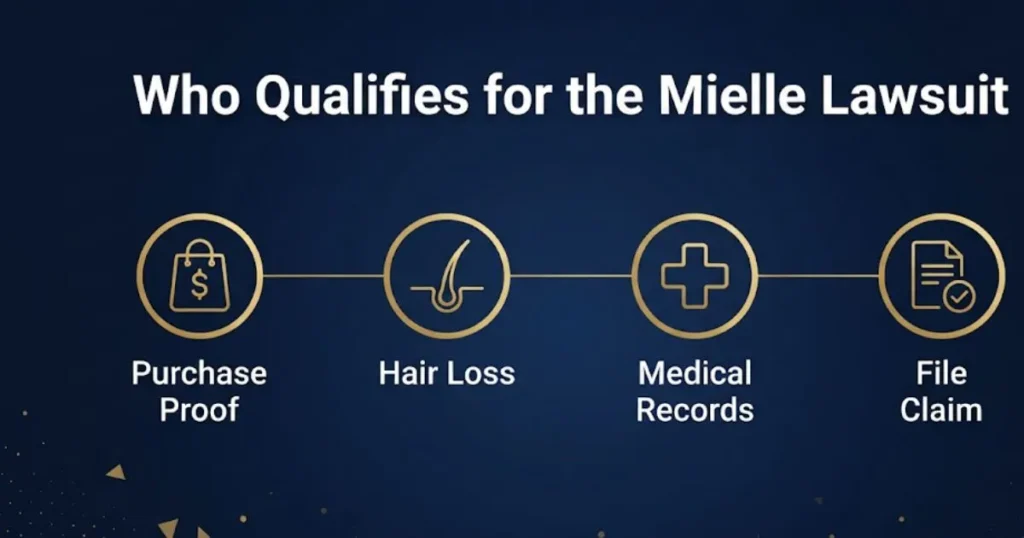
- You bought a Mielle Organics product (especially from the Rosemary Mint line)
- You used the product as directed on the label
- You experienced hair loss, scalp irritation, bald patches, or scalp burns after use
- You can provide some form of proof: receipts, photos, medical records, or even bank/credit card statements showing the purchase
You do not need to have suffered permanent damage to qualify. Even temporary but significant hair loss or scalp injury may be enough for a valid claim.
| Qualification Factor | What You Need |
|---|---|
| Product purchase | Receipt, bank statement, or online order record |
| Product use | Self-reported; used as directed |
| Injury evidence | Photos, medical records, or written account |
| Timeline | Injury occurred after product use |
| Location | United States |
Here is something most competitors won’t tell you: even if you threw away the product and lost the receipt, you might still qualify. Digital purchase records from retailers, email confirmations, and loyalty program data can serve as proof.
The bar for initial qualification is not as high as people fear. Law firms handling these cases are used to working with imperfect records.
How to File a Mielle Hair Loss Claim
Filing a Mielle hair loss claim involves a few straightforward steps, and you do not need to pay anything upfront. Most attorneys handling these cases work on contingency, meaning they only get paid if you win.
Step-by-step filing process:
- Gather your evidence. Collect any receipts, product photos, medical records, and before-and-after photos of your hair or scalp.
- Document your timeline. Write down when you purchased the product, when you started using it, and when symptoms appeared.
- Contact a product liability law firm. Look for firms specifically handling Mielle Organics cases. Many offer free case evaluations.
- Complete an intake form. The law firm will ask about your product use, injuries, and supporting evidence.
- Sign a retainer agreement. This formalizes the attorney-client relationship. Contingency means no out-of-pocket cost to you.
- Let your attorney handle the rest. They file the claim, manage deadlines, and negotiate on your behalf.
The process is simpler than most people imagine. It’s a lot like filing an insurance claim, except a lawyer handles the heavy lifting for you.
What to have ready:
- Product name and where you bought it
- Purchase date (approximate is fine)
- Photos of hair loss or scalp damage
- Any medical bills related to treatment
- A brief written account of what happened
Acting sooner is better than waiting. Statutes of limitations apply, and evidence gets harder to gather as time passes.
Key Takeaway: Filing a Mielle hair loss claim is free upfront, requires basic evidence like purchase records and injury photos, and most law firms handling these cases work on contingency.
Mielle Hair Loss Settlement: What to Expect
A Mielle hair loss settlement has not been finalized as of 2026, but legal experts expect settlement discussions to begin once enough cases are consolidated or a class is certified. Settlements in similar hair care product liability cases provide a useful reference.
Looking at comparable cases gives us a rough picture:
| Comparable Case | Settlement Amount | Per-Claimant Range |
|---|---|---|
| DevaCurl Hair Loss Lawsuit | $5.2 million (proposed) | $25 to $300 |
| TRESemme DMDM Hydantoin Suits | Undisclosed individual settlements | $500 to $25,000+ |
| OGX/Johnson & Johnson Hair Claims | Still pending | Projected $100 to $5,000 |
| WEN Hair Care Class Action | $26 million | $25 to $20,000 |
The WEN Hair Care settlement is particularly relevant. That case involved similar allegations: a popular hair product causing hair loss and scalp damage. The $26 million fund distributed payouts based on severity of injury and strength of documentation.
Based on these precedents, Mielle claimants with mild to moderate hair loss might expect $50 to $500. Those with severe or permanent damage, supported by medical documentation, could see $5,000 to $25,000 or more in individual cases.
These are estimates, not guarantees. Actual amounts depend on the total settlement fund, the number of claimants, and individual injury severity.
The stronger your evidence, the higher your potential payout. Medical records and dermatologist reports carry the most weight.
Mielle Lawsuit Payout Amounts: Estimated Ranges
Mielle lawsuit payout amounts will vary significantly based on the type of injury, quality of documentation, and whether the case settles as a class action or through individual litigation.
Here is a projected payout breakdown based on injury tiers:
| Injury Tier | Description | Estimated Payout Range |
|---|---|---|
| Tier 1: Mild | Temporary hair shedding, minor irritation | $25 to $200 |
| Tier 2: Moderate | Noticeable hair loss, scalp redness, required OTC treatment | $200 to $2,000 |
| Tier 3: Significant | Substantial hair loss, bald patches, dermatologist visits | $2,000 to $10,000 |
| Tier 4: Severe | Permanent hair loss, scarring alopecia, ongoing medical treatment | $10,000 to $50,000+ |
Individual lawsuits that proceed outside of a class action typically result in larger payouts. Class action settlements spread the total fund across all qualified claimants, which dilutes individual amounts.
If your case involves permanent damage and strong medical evidence, your attorney might recommend pursuing an individual claim rather than joining a class action. That decision depends on the specifics of your situation.
Factors that increase your payout:
- Medical records from a dermatologist or trichologist
- Before-and-after photos with dates
- Receipts showing purchase of the specific product named in the lawsuit
- Documentation of emotional distress or psychological treatment
- Records of money spent on hair restoration or wigs
The bottom line: the more you can prove, the more you stand to receive.
Mielle Hair Loss Lawsuit Deadline in 2026
The Mielle hair loss lawsuit deadline depends on your state’s statute of limitations for product liability and personal injury claims. Most states allow two to three years from the date of injury to file a claim.
| State | Statute of Limitations for Product Liability |
|---|---|
| California | 2 years |
| New York | 3 years |
| Texas | 2 years |
| Florida | 2 years (recently changed from 4) |
| Illinois | 2 years |
| Georgia | 2 years |
| Pennsylvania | 2 years |
If you first noticed hair loss or scalp damage in 2024, your window to file could close as early as 2026 in states with two-year limits. That makes acting quickly essential.
Some legal theories, like the “discovery rule,” may extend deadlines. The discovery rule says the clock starts when you realized (or should have realized) that the product caused your injury, not when you first used it.
But relying on extensions is risky. Courts interpret these rules differently, and you don’t want to lose your right to compensation because you waited too long.
If you are reading this in 2026 and you experienced Mielle-related hair damage in 2023 or 2024, your deadline may be approaching or may have already passed in some states. Check with a product liability attorney immediately.
Key Takeaway: Statutes of limitations for the Mielle hair loss lawsuit vary by state, and consumers who experienced damage in 2023 or 2024 face filing deadlines that could expire in 2026.
Procter and Gamble Mielle Lawsuit: Corporate Liability
The Procter and Gamble Mielle lawsuit angle adds a powerful dimension to the case. P&G acquired Mielle Organics in January 2023, making the consumer goods giant potentially liable for products sold under its ownership.
Why does P&G’s involvement matter? Three reasons:
- Deeper pockets. P&G is a Fortune 500 company with revenues exceeding $80 billion annually. If the lawsuit results in a large settlement, P&G has the financial capacity to pay it.
- Due diligence questions. Did P&G investigate consumer complaints about Mielle products before completing the acquisition? If internal documents show they knew about safety concerns, that strengthens plaintiffs’ cases.
- Post-acquisition responsibility. Products sold after January 2023 were sold under P&G’s corporate umbrella. Any failure to address known safety issues after the acquisition falls on P&G.
| Corporate Detail | Info |
|---|---|
| Parent Company | Procter & Gamble |
| Acquisition Date | January 2023 |
| P&G Annual Revenue | Over $80 billion |
| Legal Implication | Potential liability for post-acquisition product sales |
| Pre-Acquisition Complaints | Under investigation |
There’s a pattern in corporate law that applies here. When a large company buys a smaller brand, it inherits the brand’s liabilities. P&G can’t simply claim ignorance of problems that existed before the purchase.
For consumers, P&G’s involvement is actually good news. It means the defendants in this lawsuit have the resources to fund a meaningful settlement rather than pleading financial hardship.
Mielle Hair Products Lawsuit Update for 2026
The latest Mielle hair products lawsuit update for 2026 shows the case gaining momentum on multiple fronts. Here is a snapshot of where things stand:
What has happened recently:
- Several individual lawsuits have survived motions to dismiss, meaning courts found the claims strong enough to proceed
- At least two law firms have reported collecting over 5,000 intake forms from affected consumers
- Expert witnesses, including cosmetic chemists and dermatologists, have been retained by plaintiff attorneys
- Discovery is ongoing in the earliest-filed cases, with plaintiffs seeking internal Mielle and P&G documents about ingredient safety and consumer complaint handling
What to watch for in the rest of 2026:
- Possible class action certification ruling
- Results from the discovery phase that could reveal what Mielle and P&G knew about product risks
- Potential bellwether trials (test cases that signal how future cases might go)
- Early settlement discussions if the evidence strongly favors plaintiffs
| 2026 Development | Expected Timeline |
|---|---|
| Class certification decision | Mid to late 2026 |
| Discovery completion | Ongoing through 2026 |
| Bellwether trial selection | Late 2026 |
| Settlement talks | Late 2026 to early 2027 |
| First payouts (if settlement reached) | 2027 at earliest |
The trajectory of this case looks similar to other major hair product lawsuits that eventually resulted in settlements. The volume of complaints, the consistency of injuries, and the presence of a deep-pocketed corporate defendant all point toward resolution rather than prolonged litigation.
Stay informed. This case is moving, and new developments could change timelines quickly.
Key Takeaway: The Mielle hair products lawsuit is actively progressing through courts in 2026, with class certification and potential settlement discussions expected before year’s end.
Frequently Asked Questions
How much money can I get from the Mielle hair loss lawsuit?
Most claimants with mild hair loss may receive $25 to $500 in a class action settlement.
Consumers with severe or permanent damage and strong medical documentation could receive $5,000 to $50,000 or more through individual claims.
Payouts depend on injury severity, evidence quality, and whether the case settles as a class action or individually.
What Mielle products are included in the lawsuit?
The Rosemary Mint Strengthening Oil and Rosemary Mint Scalp and Hair Oil are the most frequently cited products.
Other products from the Rosemary Mint line, Pomegranate and Honey line, and Babassu Oil line have also been named.
The full list may expand as more consumers file complaints.
Is the Mielle class action lawsuit still open in 2026?
Yes, the Mielle lawsuit is active and accepting new claimants in 2026.
No class has been formally certified yet, but the case is progressing through courts.
Filing sooner rather than later protects your claim against statute of limitations deadlines.
Can I file a Mielle hair loss claim without a lawyer?
You can technically file on your own, but it is not recommended for product liability cases.
Most attorneys handle Mielle cases on contingency, meaning you pay nothing unless you win.
A lawyer strengthens your claim, handles paperwork, and negotiates better settlement amounts.
Does the Mielle lawsuit include Procter and Gamble?
Yes, Procter & Gamble is named in legal actions because it acquired Mielle Organics in January 2023.
P&G may be liable for products sold under its ownership and for any failure to address pre-existing safety complaints.
P&G’s involvement means the defendant has substantial financial resources to fund a settlement.
The Mielle hair loss lawsuit in 2026 is real, active, and growing. If you used Mielle products and suffered hair loss or scalp damage, this is your window to act.
Gather your evidence. Reach out to a product liability attorney. File your claim before state deadlines close.
Your hair mattered. Your claim matters too.







