

The Watts Guerra law firm Zantac lawsuit is one of the most watched mass tort cases heading into 2026. Thousands of people who took Zantac and later developed cancer are still seeking answers and compensation.
Here is what you need to know right now. The federal MDL was largely dismissed in late 2022, but state court lawsuits are very much alive. Watts Guerra LLP continues to pursue claims in multiple jurisdictions.
This guide covers every angle of the case. You will learn who qualifies, how much money people might receive, the latest 2026 updates, and exactly how to file. One fact that surprises most people: over 70,000 Zantac lawsuits were originally filed before the federal setback.
The fight is far from over. State courts are picking up where federal courts left off.
Watts Guerra Law Firm Zantac Lawsuit Overview
Watts Guerra LLP is a Texas-based mass tort firm actively representing Zantac cancer plaintiffs across the country. The firm has been involved in ranitidine litigation since the earliest days of the NDMA contamination scandal.
Based in San Antonio, Watts Guerra built its reputation on large-scale product liability cases. The firm handles pharmaceutical lawsuits, environmental contamination claims, and defective product cases. Zantac litigation fits squarely in their wheelhouse.
The firm operates on a contingency fee basis. That means clients pay nothing upfront. Watts Guerra only collects a fee if the case results in a settlement or verdict.
Their approach to the Zantac lawsuit focuses on state court filings. After the federal MDL faced a major setback in 2022, Watts Guerra shifted resources to jurisdictions where the science behind NDMA and cancer could get a fresh hearing.
| Detail | Info |
|---|---|
| Firm Name | Watts Guerra LLP |
| Headquarters | San Antonio, Texas |
| Fee Structure | Contingency (no upfront cost) |
| Case Type | Zantac/ranitidine cancer claims |
| Primary Strategy | State court filings post-MDL |
This firm is not a newcomer to big pharmaceutical cases. They have the infrastructure and legal teams needed to handle thousands of individual claims simultaneously.
Zantac Lawsuit Update for 2026
The biggest Zantac lawsuit development for 2026 involves active state court proceedings in several key jurisdictions. Cases are moving forward in California, Illinois, Delaware, and Pennsylvania.
After Judge Robin L. Rosenberg dismissed the federal MDL (No. 2924) in late 2022, many people assumed the Zantac litigation was dead. That assumption was wrong. Plaintiffs’ attorneys, including those at Watts Guerra, pivoted to state courts where different evidentiary standards apply.
In 2025, several state courts allowed plaintiff experts to testify about the NDMA cancer link. These rulings opened the door for trials in 2026.
California courts have been especially active. A state court judge there ruled that plaintiffs’ scientific evidence was admissible, rejecting the same arguments that sank the federal cases.
Illinois and Delaware are also seeing new filings and scheduling activity. Trial dates in these states could produce the first Zantac verdicts in 2026.
- California state courts allowed expert testimony on NDMA
- Illinois has active dockets with Zantac claims
- Delaware and Pennsylvania cases are progressing
- New filings continue to be accepted in multiple states
The 2026 landscape looks very different from 2023 or 2024. Movement is real, and results could come soon.
Is the Zantac Lawsuit Still Active in 2026
Yes, the Zantac lawsuit is still active in 2026. While the federal MDL was largely shut down, state court lawsuits remain alive and are gaining momentum.
Think of it like a football game where one referee throws a flag, but the play continues under different rules on a different field. The federal dismissal did not erase the science. It only meant that one particular judge found the expert testimony insufficient under federal Daubert standards.
State courts often use more flexible evidentiary rules. In several states, judges have already ruled that plaintiffs can present their evidence to a jury. That is a huge distinction.
As of early 2026, thousands of individual Zantac claims remain pending. New lawsuits are still being filed. Firms like Watts Guerra are actively accepting new clients.
| Question | Answer |
|---|---|
| Is the federal MDL still active? | No, it was dismissed in 2022 |
| Are state court cases active? | Yes, in multiple states |
| Can I still file a new claim? | Yes, in qualifying states |
| Are trials expected in 2026? | Yes, several are scheduled |
Anyone who heard the Zantac lawsuit was “over” got bad information. The state court pathway is very much open.
Key Takeaway: Watts Guerra is actively pursuing Zantac cancer claims in state courts across the country, and 2026 could bring the first trial verdicts or settlement discussions.
Watts Guerra Zantac Settlement Amounts
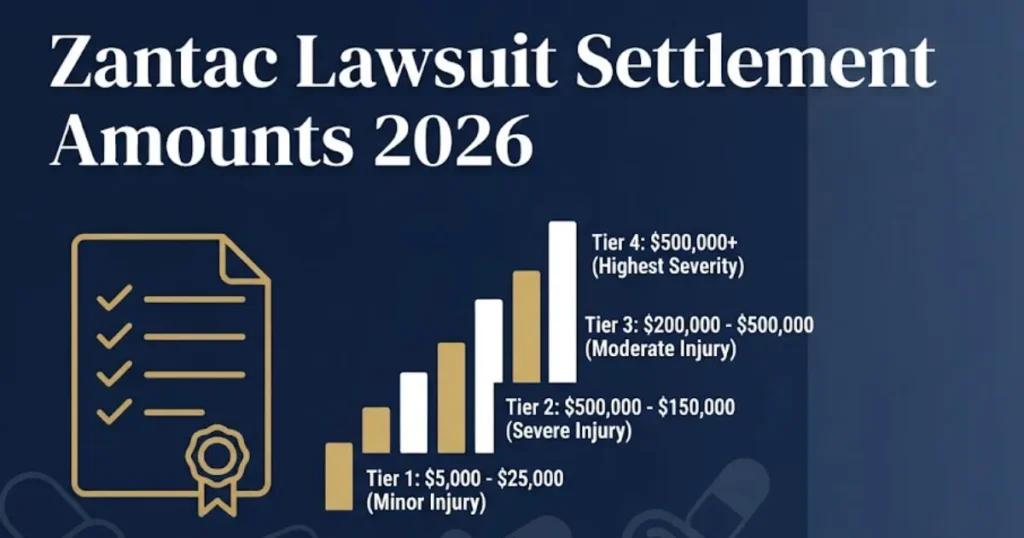
No global Zantac settlement has been reached as of early 2026. Individual settlement amounts remain speculative because no mass settlement fund exists yet.
That said, legal analysts and attorneys involved in the litigation have offered estimated ranges. These projections are based on similar pharmaceutical mass tort cases and the severity of individual injuries.
For cases involving serious cancers like bladder cancer, stomach cancer, or liver cancer, projected individual settlements could range from $100,000 to $500,000 or more. Cases with documented long-term Zantac use and a clear cancer diagnosis tend to fall on the higher end.
Less severe claims or those with weaker proof of causation might settle in the $25,000 to $100,000 range.
| Injury Severity | Estimated Settlement Range |
|---|---|
| Severe cancer (bladder, stomach, liver) | $150,000 to $500,000+ |
| Moderate cancer claims | $50,000 to $150,000 |
| Lower-tier claims (weaker causation) | $25,000 to $75,000 |
These numbers are not guarantees. They are informed estimates based on historical mass tort outcomes. Watts Guerra has not publicly disclosed specific settlement figures for individual Zantac clients because the cases have not resolved yet.
The firm’s track record in other mass tort cases suggests they pursue maximum value for each claim rather than settling quickly for less.
Zantac Lawsuit Payout Per Person
The Zantac lawsuit payout per person will depend on several individual factors. No two cases will produce the same result.
Courts and settlement administrators typically look at three main variables when calculating individual payouts:
- Duration of Zantac use: People who took it daily for years have stronger claims
- Type of cancer diagnosed: Certain cancers have a stronger documented link to NDMA exposure
- Medical evidence: Medical records showing a cancer diagnosis and Zantac purchase history are critical
In comparable pharmaceutical lawsuits, individual payouts have ranged widely. The Vioxx settlement, for example, paid out between $5,000 and over $1.5 million depending on injury severity. Zantac payouts could follow a similar tiered structure.
| Factor | Impact on Payout |
|---|---|
| Daily use for 1+ years | Higher payout |
| Bladder or stomach cancer | Higher payout |
| Strong medical records | Higher payout |
| Occasional use | Lower payout |
| Cancer with multiple risk factors | Lower payout |
Watts Guerra evaluates each case individually. The firm’s intake process typically involves reviewing medical records, pharmacy records, and the client’s full Zantac usage history before estimating case value.
Nobody can tell you an exact dollar amount right now. But the stronger your documentation, the better your position.
Who Qualifies for the Zantac Lawsuit
You may qualify for the Zantac lawsuit if you took Zantac or generic ranitidine and were later diagnosed with cancer. The key requirement is a documented connection between your use of the drug and a qualifying cancer diagnosis.
Qualifying generally requires three things:
- You took Zantac (brand or generic ranitidine) for a sustained period
- You received a cancer diagnosis after taking the drug
- Your cancer type is one that has been scientifically linked to NDMA exposure
Both prescription and over-the-counter Zantac users may qualify. Generic ranitidine counts too. It does not matter which brand you purchased.
There is no minimum age requirement, though most claimants are adults who took the drug for chronic heartburn or GERD. Family members may also file on behalf of a deceased loved one who took Zantac and died from cancer.
| Eligibility Factor | Requirement |
|---|---|
| Drug Used | Zantac or generic ranitidine |
| Usage Type | Prescription or OTC |
| Diagnosis | Qualifying cancer type |
| Duration of Use | Regular use (typically 3+ months) |
| Filing Status | Individual or on behalf of deceased |
If you are unsure whether you qualify, most mass tort firms including Watts Guerra offer free case evaluations.
Key Takeaway: You may qualify for the Zantac lawsuit if you used ranitidine regularly and were diagnosed with a cancer type linked to NDMA, and Watts Guerra offers free evaluations to help determine eligibility.
Zantac Cancer Lawsuit Eligibility Requirements
Zantac cancer lawsuit eligibility requires proof of ranitidine use and a cancer diagnosis that matches the types associated with NDMA exposure. Meeting both criteria is the baseline for any claim.
The eligibility bar in state court cases can differ from what was required in the federal MDL. State courts may accept broader types of evidence, including testimony from treating physicians and toxicology experts.
Here are the core requirements most firms, including Watts Guerra, look for:
- Proof of purchase or prescription: Pharmacy records, insurance claims, or even personal receipts
- Medical records: Showing a cancer diagnosis with dates
- Timeline consistency: Cancer diagnosis occurring after a period of regular Zantac use
- Cancer type: Must be on the list of NDMA-associated cancers
Some firms also consider whether the claimant had other cancer risk factors like smoking or family history. These factors do not automatically disqualify you, but they can affect case strength.
People often ask whether occasional Zantac use counts. Most attorneys prefer cases involving regular use over at least three months, though some accept shorter durations depending on the cancer type and other evidence.
The bottom line is straightforward. If you took ranitidine and got cancer, you should at least have your case reviewed.
How to File a Zantac Lawsuit in 2026
Filing a Zantac lawsuit in 2026 starts with contacting a mass tort law firm like Watts Guerra for a free case review. The process is simpler than most people expect.
Here is how it typically works:
Step 1: Initial consultation. You provide basic information about your Zantac use and cancer diagnosis. This usually happens over the phone or through an online form.
Step 2: Record gathering. The law firm collects your medical records, pharmacy records, and any other documentation supporting your claim. Many firms handle this legwork for you.
Step 3: Case filing. Your attorney files the lawsuit in the appropriate state court. The jurisdiction depends on where you live, where you purchased Zantac, or where the manufacturer is based.
Step 4: Litigation. Your case enters the court system. Discovery, depositions, and potential trial preparation begin.
| Filing Step | What Happens | Your Role |
|---|---|---|
| Consultation | Firm evaluates your case | Share medical and usage history |
| Records Collection | Firm gathers documentation | Provide access to medical records |
| Case Filing | Lawsuit filed in state court | Review and sign legal documents |
| Litigation | Case moves through court | Stay in contact with your attorney |
You do not need to go to court in person for most of this process. Modern mass tort litigation handles most steps remotely.
The biggest mistake people make is waiting too long. Statutes of limitations apply, and deadlines vary by state.
The Zantac Ranitidine Cancer Link Explained
The Zantac ranitidine cancer link centers on a chemical called NDMA, which is classified as a probable human carcinogen. When ranitidine breaks down, especially at higher temperatures, it can produce dangerous levels of NDMA.
NDMA stands for N-Nitrosodimethylamine. It is the same chemical found in contaminated drinking water and certain industrial processes. The human body should not ingest it in significant quantities.
In 2019, an independent pharmacy called Valisure discovered that Zantac tablets released extremely high levels of NDMA. Their testing found NDMA levels that exceeded the FDA’s acceptable daily intake limit by thousands of times.
The FDA investigated and ultimately requested that all ranitidine products be pulled from the market in April 2020. That was a significant step. The agency does not issue market withdrawals casually.
- NDMA is classified as a probable human carcinogen
- Ranitidine can produce NDMA when stored at room temperature
- Valisure’s testing showed NDMA levels far exceeding safe limits
- The FDA pulled all ranitidine from U.S. shelves in April 2020
The science is not in dispute at the chemical level. Ranitidine does generate NDMA. The legal debate is about whether that NDMA exposure caused specific cancers in specific people.
Key Takeaway: Ranitidine chemically degrades into NDMA, a probable carcinogen, which led the FDA to pull all Zantac products from the market in 2020 and sparked the mass tort litigation.
Zantac NDMA Contamination Lawsuit Details
The Zantac NDMA contamination lawsuit alleges that manufacturers knew or should have known that their product could produce a cancer-causing chemical. Plaintiffs claim companies like Sanofi, GSK, Boehringer Ingelheim, and Pfizer failed to warn consumers.
The core legal theory is product liability. Plaintiffs argue the drug was defectively designed because ranitidine’s molecular structure is inherently unstable. Under normal storage conditions, the molecule sheds a chemical group that forms NDMA.
This is not a case about contamination from an external source. The chemical contamination comes from the drug itself. That distinction matters legally because it means every single Zantac tablet was potentially affected, not just certain batches.
| Legal Element | Detail |
|---|---|
| Legal Theory | Product liability, failure to warn |
| Chemical at Issue | NDMA (N-Nitrosodimethylamine) |
| Defendants | Sanofi, GSK, Boehringer Ingelheim, Pfizer, generic manufacturers |
| Contamination Source | Internal molecular degradation of ranitidine |
| FDA Action | Market withdrawal, April 2020 |
Internal company documents suggest that some manufacturers were aware of NDMA risks years before the public recall. Plaintiffs’ attorneys have pointed to research and internal testing that flagged stability concerns.
The lawsuit also targets generic ranitidine manufacturers like Apotex and Dr. Reddy’s Laboratories. If you took a store-brand version of Zantac, you may still have a claim.
Types of Cancer Linked to Zantac
The types of cancer most commonly linked to Zantac use include bladder cancer, stomach cancer, liver cancer, and several other malignancies associated with NDMA exposure. Not every cancer qualifies.
Scientific literature on NDMA has identified specific organ systems that are most vulnerable to damage from this chemical. Courts have focused on cancers with the strongest epidemiological connection to NDMA.
Here is the current list of cancers that most Zantac attorneys, including Watts Guerra, accept for case evaluation:
- Bladder cancer
- Stomach (gastric) cancer
- Liver cancer (hepatocellular carcinoma)
- Pancreatic cancer
- Esophageal cancer
- Kidney cancer
- Colorectal cancer
- Breast cancer (in some jurisdictions)
- Prostate cancer (in some jurisdictions)
- Small intestine cancer
| Cancer Type | Strength of NDMA Link |
|---|---|
| Bladder cancer | Strong |
| Stomach cancer | Strong |
| Liver cancer | Strong |
| Pancreatic cancer | Moderate |
| Esophageal cancer | Moderate |
| Kidney cancer | Moderate |
| Colorectal cancer | Moderate |
| Breast cancer | Developing |
Bladder cancer cases tend to be the strongest from a scientific standpoint. Multiple animal studies and human epidemiological analyses show elevated bladder cancer risk from NDMA ingestion.
If your cancer type is not on this list, it does not automatically mean you have no case. Consult with a firm that can evaluate your specific medical history.
Watts Guerra Zantac Case Results So Far
Watts Guerra has not publicly announced any individual Zantac verdicts or settlements as of early 2026. The reason is simple: no Zantac case has gone to a full trial verdict yet in any court.
This is common in mass tort litigation. Cases take years to develop, and the first trials are just now being scheduled. The fact that no verdicts exist yet does not reflect poorly on Watts Guerra or any other firm. It reflects the pace of the litigation.
What we do know about Watts Guerra’s involvement:
- The firm represents thousands of individual Zantac claimants
- They were active participants in the federal MDL before its dismissal
- They transitioned cases to state courts after 2022
- They continue to accept new Zantac cases in 2026
Watts Guerra’s track record in other mass tort cases provides some context. The firm has secured significant results in cases involving defective products, environmental contamination, and other pharmaceutical lawsuits. Their experience in large-scale litigation is well documented.
The first Zantac trial verdicts, whenever they arrive, will set the tone for settlement negotiations. Firms like Watts Guerra are positioning their strongest cases for early trials to establish favorable precedents.
Key Takeaway: No Zantac trial verdicts or settlements have been announced yet, but Watts Guerra is positioning cases for potential 2026 trials in state courts that could trigger broader settlement discussions.
Zantac State Court Lawsuits After the MDL Dismissal
Zantac state court lawsuits became the primary pathway for cancer claimants after Judge Robin L. Rosenberg dismissed the federal MDL in December 2022. State courts operate under different rules, and several have already allowed the case to proceed.
The federal MDL dismissal was based on Daubert standards, which govern expert testimony in federal courts. Judge Rosenberg found that plaintiffs’ expert witnesses did not meet the reliability threshold required under federal rules.
But here is the thing most people miss. State courts in many jurisdictions use different standards for admitting scientific evidence. Some states follow the Frye standard, which is generally considered more lenient. Others have their own variations.
This difference has been a lifeline for Zantac plaintiffs. In California, for example, a state court judge ruled in 2024 that plaintiffs’ NDMA experts could testify. That single ruling reopened the door for thousands of cases.
| Jurisdiction | Status in 2026 | Evidence Standard |
|---|---|---|
| California | Active, trials approaching | Frye-like (Kelly standard) |
| Illinois | Active, cases progressing | Frye standard |
| Delaware | Active, filings accepted | Modified Daubert |
| Pennsylvania | Active, scheduling underway | Frye standard |
| Federal (MDL) | Dismissed in 2022 | Daubert standard |
Watts Guerra has focused its Zantac efforts on these state court venues. The strategy is smart. Rather than fighting the same battle on unfavorable terrain, the firm is choosing jurisdictions where the rules give plaintiffs a fairer shot.
If your federal case was dismissed, you may be able to refile in state court. Talk to your attorney about this option.
Zantac Lawsuit Timeline for 2026
The Zantac lawsuit timeline for 2026 includes several key milestones that could shape the entire litigation. This year could be a turning point.
Here is what is expected:
| Time Frame | Expected Event |
|---|---|
| Q1 2026 | Continued state court discovery and depositions |
| Q2 2026 | Possible bellwether trial selections in California |
| Q3 2026 | Potential first state court trial dates |
| Q4 2026 | Settlement negotiations may begin if early trials produce results |
The timeline is fluid. Court schedules shift. But the direction of travel is clear. State courts are moving cases toward trial faster than many expected.
Key dates to watch include California trial scheduling hearings and any rulings on pretrial motions in Illinois. If a jury returns a plaintiff verdict in any state, the pressure on manufacturers to settle will increase dramatically.
Settlement talks often accelerate after the first trial. Defendants get a preview of what juries think about their product, and the financial calculus changes. A single large verdict can move the needle on thousands of pending cases.
Watts Guerra and other plaintiff firms have been building toward this moment for years. The groundwork is laid. Discovery is largely complete. Expert witnesses are prepared.
The question is no longer whether trials will happen. It is when and where the first one will go.
Zantac Lawsuit Statute of Limitations in 2026
The Zantac lawsuit statute of limitations varies by state, but most jurisdictions set a deadline of two to three years from the date of cancer diagnosis or from the date the plaintiff discovered the connection between Zantac and their cancer. Missing this deadline can permanently bar your claim.
This is one of the most overlooked aspects of Zantac litigation. People assume they have unlimited time. They do not.
| State | Statute of Limitations (Personal Injury) |
|---|---|
| Texas | 2 years |
| California | 2 years |
| Florida | 4 years (recently changed) |
| New York | 3 years |
| Illinois | 2 years |
| Pennsylvania | 2 years |
Many states apply a “discovery rule” to the statute of limitations. This means the clock starts ticking not from when you took Zantac, but from when you learned (or should have learned) that Zantac may have caused your cancer.
Given that the FDA’s market withdrawal happened in April 2020 and widespread media coverage followed, courts may argue that the public was on notice by 2020 or 2021. That could mean some deadlines have already passed or are approaching fast.
If you were diagnosed with cancer after taking Zantac, filing sooner rather than later protects your rights. Waiting adds risk without any benefit.
Key Takeaway: Statutes of limitations on Zantac claims vary by state, and some deadlines may be approaching or already passed; filing promptly in 2026 is essential to preserve your legal rights.
Watts Guerra Law Firm Reviews for Zantac Cases
Watts Guerra generally receives positive reviews from clients involved in mass tort cases, including pharmaceutical litigation similar to the Zantac lawsuit. The firm’s communication and no-upfront-fee structure are commonly praised.
Clients frequently mention these strengths in reviews:
- No cost to start: The contingency fee model means zero out-of-pocket expenses
- Regular updates: Clients report being kept informed about case progress
- Large firm resources: Watts Guerra has the staff and funding to handle complex multi-state litigation
- Experienced attorneys: The firm’s partners have decades of mass tort experience
Some reviews mention the inherent frustration of mass tort timelines. Cases like this take years. That is not unique to Watts Guerra. Every firm handling Zantac cases faces the same timeline reality.
The firm has been recognized in legal industry publications for its mass tort work. They are members of relevant plaintiff attorney networks and have participated in leadership roles in prior multidistrict litigations.
| Review Category | Common Feedback |
|---|---|
| Fee Structure | Positive (contingency, no upfront cost) |
| Communication | Generally positive |
| Case Timeline | Frustration with pace (industry-wide issue) |
| Legal Expertise | Highly rated |
| Client Support | Responsive intake and support staff |
When evaluating any law firm for a Zantac case, look at their track record in mass torts, their involvement in the Zantac litigation specifically, and how they communicate with clients.
Watts Guerra checks those boxes for most claimants.
Frequently Asked Questions
Can I still file a Zantac lawsuit with Watts Guerra in 2026?
Yes, Watts Guerra is still accepting new Zantac cancer cases in 2026.
State court filings remain open in multiple jurisdictions.
Contact the firm directly for a free case evaluation to confirm your eligibility.
How much money can I get from a Zantac lawsuit?
Estimated payouts range from $25,000 to over $500,000 depending on cancer type and usage history.
No official settlement amounts have been set because no verdicts or global settlements exist yet.
Severe cancer cases with strong documentation are projected to receive the highest payouts.
What types of cancer qualify for the Zantac lawsuit?
Bladder cancer, stomach cancer, liver cancer, and pancreatic cancer have the strongest links to NDMA.
Other qualifying cancers include esophageal, kidney, colorectal, and in some cases breast and prostate cancer.
Your eligibility depends on medical records showing a diagnosis after regular Zantac use.
Did the Zantac MDL dismissal end all Zantac lawsuits?
No, the MDL dismissal only ended federal court cases under that specific proceeding.
State court lawsuits continue in California, Illinois, Delaware, Pennsylvania, and other states.
Many plaintiffs whose federal cases were dismissed have refiled in state courts with different evidentiary rules.
Does Watts Guerra charge upfront fees for Zantac cases?
No, Watts Guerra works on a contingency fee basis.
You pay nothing unless the firm wins your case or secures a settlement.
The firm covers litigation costs during the case and recoups them from the final award.
What You Should Do Now
The Watts Guerra law firm Zantac lawsuit is heading into a pivotal year. State court trials could produce the first verdicts. Settlement talks could follow.
If you took Zantac and were diagnosed with cancer, time matters. Statutes of limitations are ticking in every state. Getting your case evaluated now costs nothing and protects your right to compensation.
Stay informed. Gather your medical records. Take action before deadlines close the window.







