A Montana family’s fight against ICE just turned into a full blown class action, and it could reshape how federal agents handle immigration arrests nationwide. The Hernandez immigration lawsuit started with one father’s detention and has already pulled in dozens of other families.
This is not your typical “settlement check” lawsuit. There’s no payout table here, and that surprises a lot of readers.
Here’s what you’ll learn: who’s involved, what’s actually being alleged, whether anyone gets money, and what the realistic timeline looks like heading into 2026 and beyond.
One stat that stops people cold: within three weeks of filing, roughly 41 plaintiffs had already joined the class.
Related: Immigration Lawsuit January 2026: What You Need to Know
Hernandez Immigration Lawsuit 2026
The Hernandez immigration lawsuit is a federal class action filed in Montana alleging that ICE and CBP agents detained people without warrants, probable cause, or proper risk assessments. It’s one of the most closely watched immigration cases of the year precisely because it challenges the arrest process itself, not just individual deportation orders.
The case centers on Jesus Verde Hernandez, a father detained in 2026 whose situation triggered a much wider legal fight.
His attorneys argue his arrest wasn’t an isolated incident. Upper Seven alleges that Hernandez was arrested without probable cause or a warrant and was detained unlawfully, and attorneys allege that federal officers did not conduct a required flight risk assessment or evaluate whether Hernandez posed a danger to his community before detaining him.
Quick Facts:
- Filed in the U.S. District Court for the District of Montana
- Initial complaint filed August 2, 2026
- Expanded class action complaint filed September 25, 2026
- Seeks declaratory, injunctive, and vacatur relief, not a cash fund
This matters because if the court agrees with Hernandez, it could force changes in how ICE and CBP process every arrest in that district going forward.
Hernandez and Sons Lawsuit
“Hernandez and Sons” is the nickname attached to this case because the lawsuit grew out of one family’s detention ordeal and quickly expanded into dozens of similar family situations. The man at the center of it, Jesus Verde Hernandez, lives in Worden, a small farming community in Yellowstone County, with his partner and three children, who are U.S. citizens.
His children watched federal agents take their father without, according to the complaint, following basic legal procedure. That’s the emotional core driving public attention to this story.
Here’s who else is named as a plaintiff alongside Hernandez:
| Plaintiff | Status |
|---|---|
| Jesus Verde Hernandez | Lead plaintiff, released individually by court order |
| Jose Alfredo Martinez Alaniz | Named class plaintiff |
| Lizet Holguin Vega | Named class plaintiff |
| Fredy Arnulfo Diaz Coreas | Named class plaintiff |
The listed plaintiffs include Jesus Verde Hernandez, Jose Alfredo Martinez Alaniz, Lizet Holguin Vega and Fredy Arnulfo Diaz Coreas.
The “sons” part of the nickname reflects the broader pattern. Multiple families in this class describe children left behind when a parent was detained without warning.
Who Qualifies for Hernandez Immigration Lawsuit
You may qualify for the Hernandez class action if you were detained by ICE or CBP on civil immigration charges without an individual flight risk or danger assessment. The class is defined broadly, not limited to one town or one arrest date.
Class members include individuals who, like Hernandez, are or have been detained by the federal government on civil immigration charges, and who allege they are or were wrongfully detained.
That’s a wide net. It covers people currently in custody and people who were previously held and later released.
Eligibility generally includes:
- Detention occurred in 2026 within the relevant jurisdiction
- No individualized flight risk or danger evaluation was conducted
- Arrest happened without a judicial warrant
- Detention continued despite no criminal conviction driving the hold
Government attorneys pushed back hard on this definition. Tanner alleged that the petitioners have not satisfied certain criteria necessary to define their class, saying there is no evidence that the circumstances of Mr. Hernandez’s arrest are indicative, typical or common of the other class members.
That argument is exactly what will decide whether this stays a class action or splits into individual cases.
Hernandez v DHS Class Action
Hernandez v. Department of Homeland Security is the formal case name, and it targets the agencies directly responsible for detaining immigrants, not just individual officers. The named defendants include DHS, ICE, CBP, and the Department of Justice.
Defendants include the Department of Homeland Security, ICE, Customs and Border Protection, and the Department of Justice, along with several named agency officials.
That’s a notably aggressive filing strategy. Suing the agencies themselves, not just line officers, is designed to force policy level change rather than a one off apology.
Case number 4:2026cv00301 was filed September 25, 2026 as a class action complaint for declaratory, injunctive, and vacatur relief.
Vacatur relief is the legal term for asking a court to formally cancel or undo an agency action, in this case, the detentions themselves. It’s a stronger ask than just requesting damages.
ICE Unlawful Detention Lawsuit
An ICE unlawful detention lawsuit argues that federal agents held someone without legal justification, violating due process rights guaranteed by the Constitution. This Hernandez case fits squarely into that category.
The core claim isn’t that these people have strong immigration cases. It’s that the arrest and detention process itself skipped required steps.
Specifically, the complaint alleges:
- No individualized flight risk evaluation before detention
- No assessment of whether the person posed a danger to the community
- Arrests made without a judicial warrant
- A pattern suggesting this wasn’t accidental, but routine
Haladay argued that the record reveals a pattern of individuals being arrested and detained without individual assessments of flight risk.
That word “pattern” is doing a lot of legal work. If the court agrees a pattern exists, it strengthens the case for class wide relief instead of one off fixes.
Key Takeaway: This lawsuit is not about whether Hernandez and the other plaintiffs have valid immigration status. It is about whether the government followed its own legal procedures before detaining them.
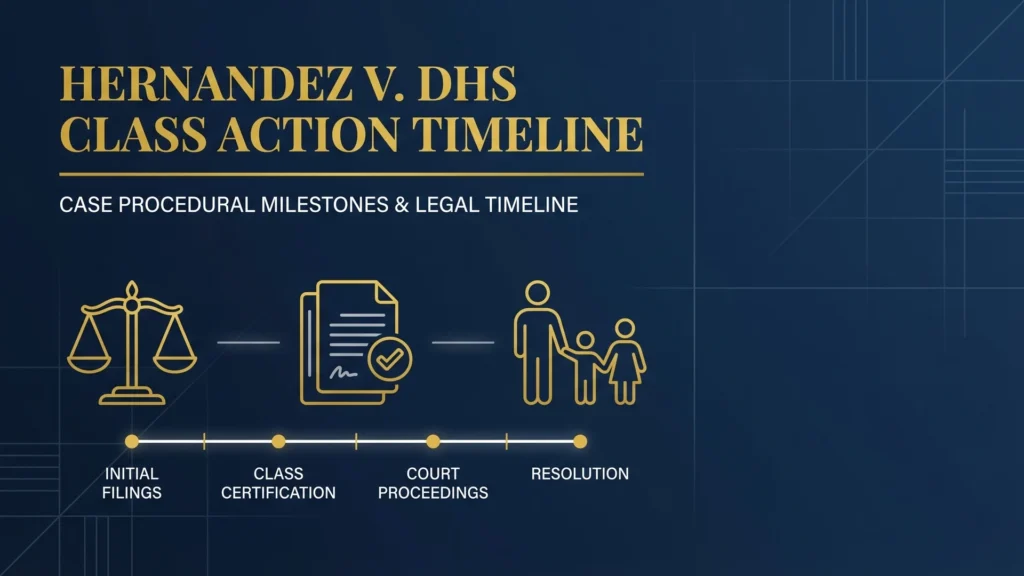
Hernandez Immigration Lawsuit Timeline
The Hernandez immigration lawsuit timeline runs from an initial filing in early August 2026 through an expanded class complaint in September and ongoing hearings into the fall. Here’s the breakdown.
| Date | Event |
|---|---|
| August 2, 2026 | Initial lawsuit filed by Upper Seven Law |
| August 5, 2026 | Jonny Hernandez Antunez detained in Billings |
| August 7, 2026 | Judge Morris orders Hernandez’s individual release |
| August 21, 2026 | Roughly 41 plaintiffs had joined the class |
| September 25, 2026 | Expanded class action complaint filed, case 4:2026cv00301 |
| Ongoing | Class certification arguments heard before Judge Morris |
As of Aug. 21, approximately 41 plaintiffs had joined the class, according to Upper Seven.
That’s a fast growth rate for a class action in just three weeks. It suggests this isn’t an isolated complaint but a reflection of a wider enforcement pattern in the region.
Hernandez Lawsuit Settlement
There is currently no cash settlement fund in the Hernandez lawsuit because this is a civil rights and habeas case, not a consumer class action. That’s the single biggest misconception people have when they search for this case.
Lawyers representing the class allege that the petitioners’ continued detention violates their constitutional rights and have asked Morris to grant their immediate release or, alternatively, order bond hearings. That’s the actual remedy being sought right now, not a check in the mail.
That said, money isn’t entirely off the table long term. Here’s why:
- Plaintiffs could later file separate Federal Tort Claims Act claims for damages
- A comparable 2026 case saw more than 300 South Korean workers detained during a massive immigration raid in Georgia begin taking legal action against the U.S. government seeking compensation
- Those workers filed administrative claims against several federal agencies, including ICE, which could eventually lead to a federal lawsuit seeking compensation for alleged unlawful detention, emotional distress and other damages
So compensation is possible down the road, just not through this particular filing.
How to Join Hernandez Class Action
You cannot formally enroll online the way you would with a product liability class action; eligibility is determined through the court and your own immigration attorney. This is a habeas corpus and civil rights matter, so the process looks different from a typical consumer lawsuit.
Steps that actually apply here:
- Contact Upper Seven Law or an immigration civil rights attorney directly
- Provide documentation of your detention date, location, and agency involved
- Note whether you were given a flight risk or danger assessment
- Keep copies of any detainer notices or paperwork signed under pressure
While most members of the class are unnamed, court documents include details regarding at least three people who allege they’ve been wrongfully detained, describing poor conditions in detention and alleging that federal immigration agents pressured them to sign documents.
That detail about signing documents under pressure matters. If you were asked to sign something without understanding it, document that experience as soon as possible.
Immigration Detainee Rights Lawsuit
Detainees have a constitutional right to due process before and during civil immigration detention, including some form of individualized risk assessment. This case argues the government skipped that step entirely.
Detail accounts from the class make this concrete. One class member said a CBP agent put him in his car and told him that he wanted him to run so that he could use his gun on him.
That kind of allegation, if proven, goes well beyond a paperwork technicality. It points to serious constitutional violations during the arrest itself.
Rights commonly at issue in these cases include:
- Right to an individualized bond hearing
- Right against detention based solely on appearance or location
- Right to access legal counsel during processing
- Right to be free from coercion when signing documents
Hernandez v Sessions Bond Hearing
Hernandez v. Sessions is the 2016 precedent case that first required ICE officers and immigration judges to consider a detainee’s financial ability to pay bond. It’s the legal foundation the current case builds on.
Hernandez v. Sessions is a class action lawsuit filed in April 2016, and the Hernandez decision is the first court case to impose due process requirements in the immigration context, requiring ICE officers and immigration judges to consider a person’s financial ability to post bond and suitability for non-monetary alternative conditions of supervision when considering the conditions of release.
Why does a 2016 California case matter to a 2026 Montana lawsuit? Because it set the legal standard that today’s plaintiffs are arguing the government ignored.
Think of it like a building code violation. Hernandez v. Sessions set the code; this new case argues the government built right past it anyway.
ICE Workplace Raid Lawsuit 2026
ICE workplace raid lawsuits in 2026 have expanded well beyond Montana, with large scale enforcement actions at job sites triggering similar legal challenges nationwide. The pattern echoes the family detention claims in the Hernandez case.
The clearest example happened in Georgia. More than 300 South Korean workers detained during a massive immigration raid in Georgia have begun taking legal action against the U.S. government, alleging unlawful detention and emotional harm, with the case potentially becoming a federal lawsuit.
That raid shows how quickly a single enforcement operation can generate mass litigation. Workers detained together, often without individual review, tend to produce exactly the kind of “pattern” evidence plaintiffs need for class certification.
| Case | Location | Scale |
|---|---|---|
| Hernandez v. DHS | Montana | 41+ plaintiffs |
| Georgia raid claims | Georgia | 300+ workers |
| Tennessee meatpacking case | Tennessee | ~100 workers detained |
Key Takeaway: Large, coordinated immigration raids keep producing class action style lawsuits because detaining many people at once makes it easier to prove a pattern rather than a one off mistake.
Upper Seven Law Immigration Lawsuit
Upper Seven Law is the Helena, Montana based firm that filed and continues to lead the Hernandez immigration lawsuit. It’s a smaller civil rights firm taking on one of the more aggressive immigration challenges of the year.
The lawsuit was filed by Helena-based Upper Seven Law on Aug. 2, following the arrest of Jesus Verde Hernandez. Since then, the firm has added dozens of additional plaintiffs to the case.
What makes this notable is the scope of relief requested. The firm isn’t just asking for individual releases; it’s asking the court to examine agency wide practices across the district.
Attorney Haladay has been the lead voice arguing the pattern theory in court, while government attorney Tanner has pushed back on class certification. That back and forth will likely define the next phase of this case.
Montana Immigration Class Action
The Montana immigration class action is unusual because Montana isn’t typically known as a hotspot for large scale immigration enforcement litigation. That makes this case stand out nationally.
A federal district court judge heard arguments in a class action lawsuit in which petitioners held in federal detention on civil immigration charges allege they have been unlawfully detained. That hearing is a key procedural checkpoint before any ruling on class certification.
Chief Judge Brian Morris is overseeing the case. His early ruling freeing Hernandez individually signals he’s taking the underlying allegations seriously, even if class certification remains contested.
A related Montana case adds weight to the pattern argument. A related story referenced a judge ordering the release of a Billings father and his 9-year-old daughter from immigration custody in Havre, reinforcing that this isn’t an isolated incident in the state.
ICE Detention Without Warrant Lawsuit
A lawsuit alleging detention without a warrant argues that federal agents lacked the legal authorization required before taking someone into custody. This is one of the central claims in the Hernandez case.
Upper Seven alleges that Hernandez was arrested without probable cause or a warrant and was detained unlawfully. That’s a direct constitutional claim, not a procedural technicality.
Another named plaintiff adds a similarly troubling account. Jonny Hernandez Antunez, a 26-year-old who lives in Butte, was arrested and detained by CBP agents on Aug. 5 in Billings, according to court documents.
Two separate arrests, two separate towns, same alleged pattern: detention first, legal justification an afterthought. That repetition is exactly what plaintiffs’ attorneys need to prove.
What Happens Next Hernandez Lawsuit
The next major step is the court’s ruling on class certification, which will determine whether this stays one unified case or splits apart. That decision affects every current and future plaintiff.
If Judge Morris certifies the class, it opens the door for broader injunctive relief across the district. If he denies certification, plaintiffs will likely need to pursue individual habeas petitions instead.
Expect these developments through late 2026:
- A formal ruling on class certification
- Possible expansion of plaintiffs beyond the current roughly 41 members
- Continued individual release orders for detainees with strong claims
- Potential appeal regardless of which side loses the certification fight
Realistically, cases like this move in months, not weeks. Anyone affected should stay in contact with their attorney rather than waiting for a public announcement.
Frequently Asked Questions
What is the Hernandez immigration lawsuit about?
It is a federal class action alleging ICE and CBP detained people without warrants or proper risk assessments.
The case was filed in Montana by Upper Seven Law on behalf of Jesus Verde Hernandez and dozens of others.
It seeks release, bond hearings, and policy changes, not a cash settlement.
Who qualifies as a class member in the Hernandez case?
Anyone detained on civil immigration charges in 2026 without an individualized flight risk or danger assessment may qualify.
The class currently includes roughly 41 plaintiffs and is still growing.
Final eligibility depends on the court’s class certification ruling.
Will the Hernandez lawsuit result in a cash settlement?
No, this case seeks release from detention and injunctive relief, not monetary damages.
Separate compensation claims, like the Federal Tort Claims Act route used in other raids, would require a different filing.
Watch for updates if plaintiffs pursue damages claims later.
How long will the Hernandez immigration lawsuit take?
Expect the class certification decision sometime in late 2026, with appeals possible afterward.
Individual release orders can happen faster than the overall class ruling.
Full resolution of similar immigration class actions often takes a year or more.
What should I do if I think I qualify for this lawsuit?
Contact Upper Seven Law or an immigration civil rights attorney immediately.
Gather documentation of your arrest date, location, and any paperwork you were asked to sign.
Do not wait for a public settlement announcement, since this case works through court orders, not claim forms.
Closing
The Hernandez immigration lawsuit is still unfolding, and the class certification decision will shape everything that follows.
If you or a family member were detained under similar circumstances, talk to an immigration civil rights attorney now.
Stay close to this one. Court rulings here could change detention procedures well beyond Montana.
================================================================