The investigation immigration lawsuit making headlines this week centers on a secret government operation called “Investigation 18.” The ACLU just sued the Justice Department and DHS over it, and the case could affect anyone who has ever criticized ICE online.
This isn’t a product recall or a data breach case. It’s a civil rights fight over whether the federal government can use grand jury subpoenas to unmask anonymous critics.
Here’s the surprising part: investigators have already sent at least 35 subpoenas tied to this single operation, and attorneys believe the real number is much higher.
In this guide, you’ll learn who’s involved, what the lawsuit claims, whether you could be a class member, and what happens at the January hearing.
Related: Bradley Inc Immigration Lawsuit 2026: Full Case Guide
Investigation Immigration Lawsuit: What Is Happening in 2026
The investigation immigration lawsuit refers to a new federal class action filed by the ACLU challenging a secretive government effort to identify anonymous ICE critics online. The case was filed quietly, then made public just days ago, and it’s already being called a landmark test of free speech rights under the current administration.
The suit was filed in the United States District Court for the District of Columbia on Monday, Nov. 16, as a class action meaning plaintiffs seek to vindicate their own interests as well as others whose identity information has been or will be requested by grand jury subpoenas as part of Investigation 18. The case stayed sealed for over a week before becoming public.
After the court ordered the case unsealed on Wednesday, Plaintiffs filed public versions of the complaint and other documents. That’s why this story suddenly exploded across every major outlet this week.
Quick facts:
- Filed: November 16, 2026
- Unsealed: Late November 2026
- Court: U.S. District Court, District of Columbia
- Filed by: The ACLU on behalf of four anonymous plaintiffs
Investigation 18 ACLU Lawsuit Explained
Investigation 18 is the internal code name federal prosecutors gave to a campaign targeting anonymous social media critics of ICE. According to the ACLU, federal prosecutors in U.S. Attorney Jeanine Pirro’s Washington office have been using the label “Investigation 18” to describe their efforts to identify online critics of ICE and obtain their personal data.
The scale is what makes this case notable. While the plaintiffs’ initial filings point to 35 subpoenas related to Investigation 18, they suggest the true number is likely far higher.
The legal theory is straightforward but serious. The lawsuit alleges the subpoenas were issued as part of an abusive investigation that probes users who anonymously post content on social media that is critical of the Trump administration’s immigration enforcement tactics.
Quick Facts Box:
| Detail | Info |
|---|---|
| Operation Name | Investigation 18 |
| Known Subpoenas | At least 35 |
| Platforms Targeted | Meta, Bluesky, X |
| Lead Office | U.S. Attorney’s Office, Washington D.C. |
ACLU Lawsuit Against ICE Subpoenas
The ACLU is leading this fight on behalf of four anonymous individuals who say their constitutional rights were violated. The plaintiffs are represented by the ACLU, the ACLU of DC, and the ACLU of Northern California.
Protecting the plaintiffs’ identities was a priority from day one. The four plaintiffs are filing suit pseudonymously to protect their anonymity. That’s a deliberate strategy, since the whole case is about the government trying to unmask anonymous speakers.
The ACLU isn’t holding back on how it describes the government’s conduct. “The investigation,” the ACLU says, “is a bad-faith fishing expedition initiated to gather intrusive intelligence and facilitate retaliation against dissenters.”
Organizations involved:
- ACLU national office
- ACLU of the District of Columbia
- ACLU of Northern California
- Four pseudonymous plaintiffs (social media users)
Key Takeaway: A single ACLU-led class action, filed under seal on November 16 and made public days later, now threatens to expose the full scope of a secret DOJ and DHS campaign against anonymous ICE critics.
DHS DOJ Immigration Investigation Lawsuit
This lawsuit names specific federal officials, not just agencies, as defendants. Pirro, Attorney General Todd Blanche and DHS Secretary Markwayne Mullin are named as defendants in the ACLU’s lawsuit.
Naming individual officials matters legally because it puts personal accountability on the record, not just agency policy. The government has stayed quiet publicly. Spokespeople for DHS and U.S. Attorney Jeanine Pirro’s office in Washington didn’t immediately respond to requests for comment.
Defendants Table:
| Official | Role |
|---|---|
| Jeanine Pirro | U.S. Attorney, Washington D.C. |
| Todd Blanche | U.S. Attorney General |
| Markwayne Mullin | DHS Secretary |
| Department of Justice | Agency defendant |
| Department of Homeland Security | Agency defendant |
Both DOJ and DHS are accused of coordinating the subpoena campaign together, which is part of why plaintiffs argue this goes beyond normal law enforcement work.
Grand Jury Subpoena Immigration Investigation
A grand jury subpoena in this context is a secretive legal tool prosecutors used to force tech companies to hand over user identity information without public scrutiny. That secrecy is exactly what plaintiffs say made the campaign possible for so long.
The government didn’t start here. It escalated. The civil rights organization says the Trump administration has shifted to using grand jury subpoenas, a more secretive process, after encountering pushback to the administrative subpoenas from users and tech companies.
That shift is central to the lawsuit’s argument that officials were trying to avoid accountability.
Why grand jury subpoenas matter:
- They carry an automatic secrecy requirement
- Tech companies often cannot notify the targeted user
- They are typically reserved for criminal investigations, not political speech
- Plaintiffs argue this process was never meant to unmask critics
The central legal question is whether prosecutors have used the process to investigate conduct that may constitute an offence or to identify people because of their political views, and those possibilities carry different legal implications. That distinction is what the court will have to untangle.
Unmasking Subpoena Social Media ICE Critics
An unmasking subpoena is a legal demand sent to a social media company asking it to reveal the real identity behind an anonymous or pseudonymous account. In this case, three major platforms received them.
The secretive “unmasking” subpoenas for these four users were sent to Bluesky, X (formerly known as Twitter), and Meta. That covers nearly every mainstream platform where political speech happens today.
This wasn’t a one-time request either. DHS has sent hundreds of administrative subpoenas to tech companies in the past year to seek information about online ICE critics, the ACLU says.
Bold stat: Investigators have sent hundreds of subpoenas in the past year alone, according to the ACLU’s filings.
Key Takeaway: Federal officials moved from hundreds of administrative subpoenas to secretive grand jury subpoenas specifically because the earlier method drew public pushback, according to the ACLU’s complaint.
First Amendment ICE Criticism Lawsuit
This case rests on two constitutional claims: free speech and unreasonable search. The suit argues that Investigation 18 violates the First and Fourth Amendments because it was initiated in a bad faith effort to gather intelligence on dissenters and to retaliate against people for protected political speech.
The ACLU’s attorney has been direct about the stakes. “The government is weaponizing the grand jury process to retaliate against people for expressing their political views online,” ACLU attorney Laura Moraff said in a statement.
What the plaintiffs are asking the court to do:
- Block further subpoenas tied to Investigation 18
- Declare the investigation itself unconstitutional
- Prevent retaliation against identified critics
- Require disclosure of the investigation’s true scope
This matters for every social media user, not just the four plaintiffs. If prosecutors can use grand jury secrecy to chase down anonymous political speech, that precedent extends far beyond immigration policy.
Who Qualifies for the Investigation 18 Class Action
Class membership in this case is defined narrowly around the subpoena targets, not the general public. Plaintiffs seek to vindicate their own interests as well as others whose identity information has been or will be requested by grand jury subpoenas as part of Investigation 18.
That means you could potentially be a class member if a platform received a subpoena about your account specifically tied to Investigation 18, not just because you posted something critical of ICE.
Eligibility Snapshot:
| Criteria | Qualifies? |
|---|---|
| Your account received an Investigation 18 subpoena | Likely yes |
| You posted ICE criticism but got no subpoena notice | Unclear, monitor case |
| You are a U.S. Attorney’s Office employee | No |
| You work for DHS or DOJ | No |
The ACLU lawsuit’s plaintiffs include a Bluesky user who wrote about an ICE-related shooting in New York and another plaintiff who is a college student whose posts on X included an expletive directed at DHS, ICE and Trump. Those two examples give a sense of the kind of posts that triggered subpoenas.
How to Join the Immigration Class Action Lawsuit
Right now, there’s no public sign-up form because the class hasn’t been certified by the court yet. The case is still in its earliest stage, with a hearing scheduled before any formal class process begins.
If you believe a platform disclosed your account information to federal investigators, your first move should be checking with the platform itself. Companies sometimes notify users after secrecy orders expire.
Steps to take if you think you’re affected:
- Check for any notice from Meta, Bluesky, or X about a subpoena
- Save copies of any government data request notifications
- Watch for official ACLU updates on class certification
- Avoid deleting old posts, since that could complicate your case later
The grand jury subpoenas were sent to tech companies as part of a campaign to target users who criticize the U.S. government online. Until class certification happens, the ACLU’s legal team is the primary point of contact for anyone who believes they were swept into this investigation.
Key Takeaway: No formal sign-up process exists yet, since the court has not certified the class, but affected users should preserve records and watch for ACLU case updates.
ICE Social Media Surveillance Lawsuit
This case sits inside a bigger pattern of the government monitoring online criticism of immigration enforcement. The lawsuit frames Investigation 18 as one piece of a much larger surveillance effort.
Investigation 18’s pattern of seeking to unmask anonymous critics fits into the administration’s broader pattern of retaliation against people criticizing and protesting the federal government’s immigration enforcement practices. That framing is why civil liberties groups beyond the ACLU are watching this case closely.
The volume of requests is what worries legal observers most. The plaintiffs argue that the sheer volume of subpoenas, with hundreds sent in the past year alone, suggests an organized effort to compile personal information on individuals who criticize federal immigration policy, thereby chilling lawful political discourse.
That “chilling effect” argument is a recognized legal standard courts use when weighing free speech claims against government investigations.
Immigration Lawsuit Timeline 2026
Here’s how the case moved from a sealed filing to a national news story in under two weeks.
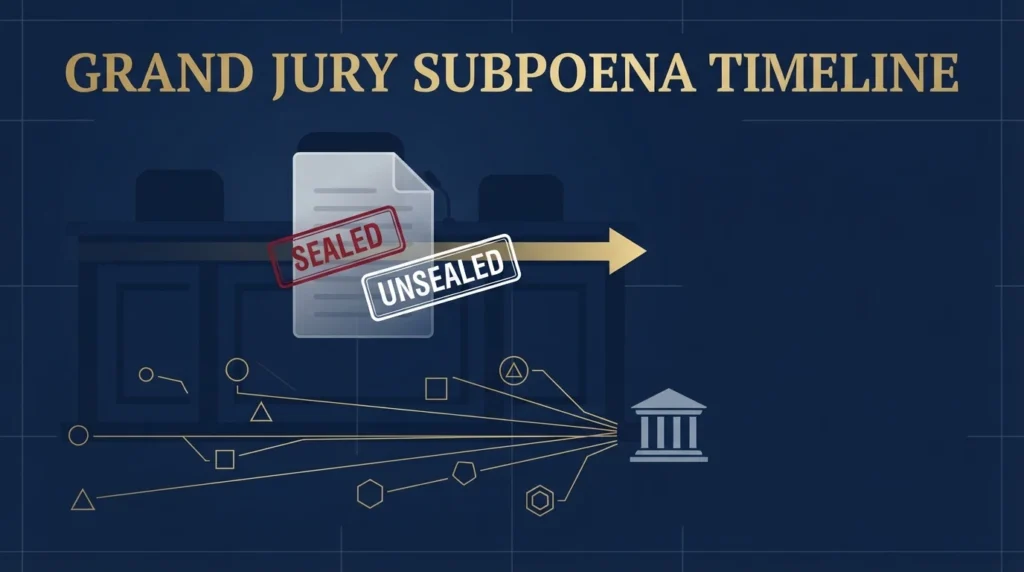
| Date | Event |
|---|---|
| November 16, 2026 | Class action filed under seal in D.C. federal court |
| Week of November 24, 2026 | Chief Judge James Boasberg ordered the case unsealed |
| November 27, 2026 | The ACLU filed its federal class action publicly in Washington |
| January 6, 2027 | Hearing scheduled for arguments on the preliminary injunction request |
This fast timeline is unusual for federal civil rights cases, which often sit in procedural limbo for months before a judge sets any hearing date at all.
Federal Court ICE Subpoena Hearing Date
The next major event in this case is a preliminary injunction hearing in early January. Boasberg scheduled a Jan. 6 hearing for arguments on the ACLU’s request for a preliminary injunction against the government.
A preliminary injunction, if granted, would immediately stop the government from issuing any further Investigation 18 subpoenas while the full case plays out. That’s the plaintiffs’ most urgent request.
Quick Facts Box:
- Hearing Date: January 6, 2027
- Presiding Judge: Chief Judge James Boasberg
- Request at Hearing: Preliminary injunction
- Court: U.S. District Court for the District of Columbia
Key Takeaway: With a preliminary injunction hearing set for January 6, the court could pause the entire Investigation 18 subpoena campaign before the case even reaches its next major stage.
What Happens Next in the Investigation Immigration Lawsuit
The next real decision point is whether Judge Boasberg grants the preliminary injunction in January. If he does, the government has to stop issuing new subpoenas under Investigation 18 immediately.
If he denies it, the case continues toward discovery, where the ACLU would get to demand records showing the true scope of the investigation. The ACLU says its lawsuit in Washington is the “first systemic civil challenge, and the first case that will be litigated in public view, to the Trump administration’s abuse of grand jury unmasking subpoenas.”
Possible paths forward:
- Judge grants injunction, subpoenas pause immediately
- Judge denies injunction, case moves to discovery
- Government appeals any adverse ruling
- Class certification motion filed after initial rulings
- Settlement talks open if government wants to avoid full discovery
Given how high-profile this case has already become, expect national media coverage to intensify around the January hearing date.
Immigration Lawsuit Settlement or Payout 2026
Right now, this specific lawsuit is not a payout case. It’s an injunction case, meaning plaintiffs want a court order stopping conduct, not a check in the mail.
That said, immigration-related class actions have produced real money before. More than 18,500 people are entitled to compensation from a settlement covering detainers issued from October 2010 to June 2014. Under terms of that settlement, each class member was eligible to receive from $250 up to $25,000, based on how long they were held and other circumstances.
Historical ICE-Related Payouts:
| Case | Settlement Amount | Per-Person Range |
|---|---|---|
| LA County detainer settlement | $14 million | $250 to $25,000 |
| Motel 6 ICE data sharing case | $7.6 million | Varies by claim |
| Knoxville workplace ICE raid | $1.175 million | Portion to 6 plaintiffs |
That Knoxville settlement required the United States to pay $475,000 to the six individual plaintiffs to resolve their FTCA claims, including excessive force and unlawful arrest.
If Investigation 18 eventually produces evidence of retaliation or harm, a separate damages claim could follow later. For now, treat this as a rights case, not a money case.
ICE Investigation Lawsuit 2026 Outlook
Investigation 18 isn’t happening in isolation. It’s landing in the middle of one of the busiest years for immigration litigation in recent memory.
Other active 2026 cases involve detention conditions, housing aid, and green card processing, each testing different limits of federal immigration authority. The GEO Group detainee labor case, for example, is moving toward resolution around the same time this subpoena case is heating up.
Why this matters for the bigger picture:
- Multiple federal judges are now actively scrutinizing ICE and DHS conduct simultaneously
- Civil rights groups are coordinating across several parallel lawsuits
- Congress members have sent formal letters demanding investigations into related conduct
- Tech companies are increasingly caught in the middle as data custodians
Key Takeaway: Investigation 18 is one piece of a much larger wave of 2026 immigration litigation challenging how aggressively federal agencies can pursue enforcement and retaliation tactics.
Immigration Civil Rights Lawsuit 2026
Beyond Investigation 18, several other 2026 cases focus squarely on civil rights violations tied to immigration enforcement. One recent example challenges unlawful re-detention practices entirely separate from the subpoena case.
Four individuals filed a class action lawsuit challenging the unlawful re-detention of immigrant community members following the Department of Homeland Security’s abrupt and unexplained reversal of longstanding federal immigration policy. That case, filed in Georgia federal court, shares the same basic theme as Investigation 18: agencies changing long-standing rules without warning.
DHS is frequently using arbitrary immigration detention as a tool of intimidation, undermining due process and tearing families apart, attorneys in that case argued.
Common threads across these 2026 civil rights cases:
- Allegations of retaliation against people exercising legal rights
- Abrupt policy reversals without public notice
- Federal agencies named directly as defendants
- Coordination between ACLU chapters across multiple states
These parallel cases suggest courts nationwide are being asked to draw clearer lines around what federal immigration enforcement can and cannot do in 2026.
Frequently Asked Questions
What is the investigation immigration lawsuit about in 2026?
It’s a federal class action accusing the DOJ and DHS of secretly using grand jury subpoenas to unmask anonymous ICE critics on social media.
The ACLU filed the case on November 16, 2026, in Washington D.C.
It asks the court to block the practice entirely.
What is Investigation 18 and why is ICE involved?
Investigation 18 is the internal code name federal prosecutors used for the campaign targeting anonymous ICE critics.
At least 35 subpoenas have been tied to it so far.
ICE investigators were the intended recipients of the identifying information collected.
Who qualifies to join the ACLU immigration investigation lawsuit?
You may qualify if a platform received an Investigation 18 subpoena specifically about your account.
Simply criticizing ICE online does not automatically make you a class member.
Class certification has not happened yet, so eligibility rules could change.
Is there a settlement or payout from this investigation immigration lawsuit?
No, this case currently seeks a court injunction, not money damages.
Other past ICE-related lawsuits have paid out between $250 and $25,000 per person.
A separate damages claim could emerge later if retaliation is proven.
When is the next court hearing in the investigation immigration lawsuit?
The next hearing is scheduled for January 6, 2027.
Chief Judge James Boasberg will hear arguments on the preliminary injunction request.
A ruling could immediately pause further Investigation 18 subpoenas.
Final Word
This investigation immigration lawsuit is still in its early innings, but the stakes are already huge for anyone who posts about immigration policy online. The January 6 hearing could reshape how the government is allowed to chase anonymous critics.
Check back for updates as class certification and the injunction ruling develop.
If you believe your account was targeted, preserve your records now and watch the ACLU’s official case updates closely.