The viral social media lawsuit is the biggest legal battle of 2026. Four major tech companies face billions in potential damages. Parents and teens sit at the center of it all.
Meta, TikTok, Snap, and YouTube are the primary targets. They allegedly built addictive features that harmed young users. The lawsuits claim these companies knew the risks.
This article breaks down everything you need to know. You will learn about payouts, deadlines, and eligibility rules. Over 40 states have already joined the legal fight.
More than 1,000 school districts have filed claims too. Filing deadlines are approaching fast in several key cases. Don’t wait until it is too late to act.
Related: Trending Social Media Lawsuit 2026: Settlements and Filing
Viral Social Media Lawsuit 2026
The viral social media lawsuit in 2026 is a massive wave of legal action against Big Tech. It combines thousands of individual cases into one coordinated effort.
The federal cases are consolidated under MDL 3047. Judge Yvonne Gonzalez Rogers oversees them in California. She was assigned the role in late 2023.
State attorneys general have filed parallel lawsuits too. At least 42 states have active cases against Meta alone. These state cases run on separate tracks.
Think of it like a traffic pileup on a highway. One crash triggers dozens more. That is what happened with social media litigation.
| Detail | Info |
|---|---|
| Total Active Cases | Over 3,000 |
| Federal Court | Northern District of California |
| Lead Judge | Yvonne Gonzalez Rogers |
| Primary Defendants | Meta, TikTok, Snap, YouTube |
| States Involved | 42 or more |
The scale of this litigation is historic. It rivals the tobacco lawsuits of the 1990s. Billions of dollars are on the line.
What Is the Social Media Lawsuit About
This lawsuit claims social media platforms intentionally harmed children and teens. The core allegation is that these companies prioritized profit over safety.
Plaintiffs argue the platforms used manipulative design choices. Features like infinite scroll and autoplay kept kids hooked. The companies allegedly knew these features caused harm.
Internal documents leaked in recent years support these claims. Meta’s own research showed Instagram worsened body image issues. The company reportedly chose not to act on those findings.
The legal theory rests on product liability and negligence. Plaintiffs say the platforms are defective products. They argue the companies failed to warn users about known dangers.
Key Allegations:
- Deliberate use of addictive design patterns
- Failure to verify user ages properly
- Amplification of harmful content to minors
- Concealment of internal safety research
- Violation of state consumer protection laws
This is not just about screen time. It is about documented psychological harm to developing brains.
Social Media Addiction Lawsuit
The social media addiction lawsuit focuses on how platforms exploit brain chemistry. These apps trigger dopamine releases similar to slot machines.
Researchers have compared social media notifications to gambling cues. Each ping creates a small reward response in the brain. Teen brains are especially vulnerable to this loop.
The lawsuits argue the companies designed these loops on purpose. Engineers optimized for “time on device” above all else. Internal emails reportedly confirm this priority.
| Feature | Addiction Mechanism |
|---|---|
| Infinite Scroll | Removes natural stopping points |
| Push Notifications | Creates urgency and FOMO |
| Likes and Streaks | Triggers dopamine reward cycles |
| Autoplay Video | Eliminates decision fatigue |
| Algorithmic Feeds | Serves increasingly extreme content |
Parents report their children spending 8 to 12 hours daily on these apps. Some teens describe feeling physically ill when separated from their phones. That is the hallmark of behavioral addiction.
Key Takeaway: The viral social media lawsuit combines federal and state cases targeting Meta, TikTok, Snap, and YouTube for allegedly designing addictive features that harmed children’s mental health.
Social Media Mental Health Lawsuit
The social media mental health lawsuit zeroes in on specific psychological injuries. Depression, anxiety, and eating disorders top the list of claimed harms.
The U.S. Surgeon General issued a stark warning about this crisis. Youth mental health declined sharply after 2012. That is the same year smartphone use became widespread among teens.
Plaintiffs must show a direct link between app use and their injuries. Medical records and therapy histories serve as key evidence. Expert testimony from psychologists strengthens these claims.
Girls between 11 and 15 appear to be the most affected group. Studies show Instagram use correlates with increased body dissatisfaction. The effect is stronger for younger users.
Common Mental Health Claims:
- Clinical depression linked to cyberbullying
- Severe anxiety from social comparison
- Eating disorders triggered by filtered images
- Self-harm behaviors amplified by algorithmic content
- Sleep deprivation from compulsive nighttime use
The mental health angle is the strongest part of the case. The evidence is growing stronger every month.
Meta Lawsuit Settlement 2026
The Meta lawsuit settlement in 2026 is the most closely watched part of this litigation. Meta faces the largest exposure of any defendant.
Meta already paid $1.4 billion to Texas in a 2024 settlement. That case focused on biometric data privacy violations. It set a precedent for massive payouts.
The current mental health cases could dwarf that number. Analysts estimate Meta’s total exposure exceeds $50 billion. That includes federal and state claims combined.
| Settlement Track | Status in 2026 |
|---|---|
| Federal MDL | Bellwether trials underway |
| State AG Cases | Several states in mediation |
| School District Claims | Early discovery phase |
| Individual Claims | Being evaluated for class certification |
Meta has denied all wrongdoing in public statements. The company says it has invested heavily in teen safety tools. Critics argue those tools came too late.
A global settlement framework could emerge by late 2026. That would be the fastest path to payouts for claimants. Negotiations are reportedly active behind closed doors.
TikTok Lawsuit Children
The TikTok lawsuit for children centers on the app’s aggressive content algorithm. TikTok’s “For You” page serves content based on watch time. It learns what keeps a child scrolling within minutes.
Plaintiffs claim TikTok pushes dangerous content to minors. Videos promoting self-harm and extreme dieting have gone viral on the platform. The algorithm amplifies this content to vulnerable users.
TikTok’s ownership structure complicates the litigation. The company is owned by ByteDance, a Chinese firm. Jurisdictional questions have slowed some of the legal proceedings.
TikTok Specific Allegations:
- Algorithm promotes harmful content to minors
- Inadequate age verification at sign-up
- Data collection from users under 13
- Failure to honor parental deletion requests
- Dangerous viral challenges that caused physical injuries
Several families have filed wrongful death claims against TikTok. These cases involve teens who died after attempting viral challenges. The stakes in these cases are extraordinarily high.
Key Takeaway: Meta faces the largest financial exposure in the litigation, while TikTok’s unique algorithm and ownership structure create distinct legal challenges for plaintiffs.
Instagram Lawsuit for Parents
The Instagram lawsuit for parents is the most emotionally charged part of the case. Internal Meta documents revealed that the company knew Instagram hurt teen girls.
A 2021 Wall Street Journal report exposed Meta’s own research. The study found 32% of teen girls felt worse about their bodies after using Instagram. Meta executives reportedly discussed the findings internally.
Parents filing these claims describe heartbreaking changes in their children. Many report their teens developed eating disorders after joining the platform. Others describe sudden onset depression and social withdrawal.
| Harm Category | Reported Impact |
|---|---|
| Body Image | 32% of teen girls felt worse |
| Depression | Significant increase in symptoms |
| Anxiety | Social comparison drives panic |
| Sleep Loss | Nighttime scrolling disrupts rest |
| Self-Harm | Algorithm surfaces triggering content |
To file an Instagram claim, parents need medical documentation. Therapy records and school performance reports help build the case. Screenshots of harmful content also serve as evidence.
Snapchat Lawsuit Teens
The Snapchat lawsuit for teens focuses on the app’s unique disappearing message feature. Plaintiffs argue this feature enables cyberbullying and predatory behavior.
Snapchat’s Snap Map feature also draws heavy criticism. It broadcasts a user’s real-time location to friends. Parents say this feature put their children in physical danger.
Snap Inc. has faced scrutiny over its “streaks” feature too. Streaks reward users for sending daily messages. Teens report extreme anxiety about breaking their streaks.
Snapchat Specific Claims:
- Disappearing messages hide evidence of bullying
- Snap Map exposes minors to real-world dangers
- Streaks create compulsive daily usage patterns
- Inadequate reporting tools for abusive content
- Failure to remove known predatory accounts
Snap’s market share among teens has declined in recent years. But the harm from earlier years of heavy use remains. Many current claimants were active Snapchat users between 2018 and 2023.
YouTube Lawsuit Kids
The YouTube lawsuit for kids targets the platform’s autoplay and recommendation systems. YouTube’s algorithm reportedly serves increasingly extreme content to young viewers.
YouTube Kids was supposed to be a safer alternative. Parents trusted it as a curated space for children. But investigations revealed inappropriate content slipping through the filters.
Plaintiffs argue YouTube violated the Children’s Online Privacy Protection Act. The platform allegedly collected data from users under 13 without parental consent. YouTube paid a $170 million FTC fine for COPPA violations in 2019.
| YouTube Feature | Claimed Harm |
|---|---|
| Autoplay | Removes natural stopping cues |
| Recommended Videos | Escalates to extreme content |
| YouTube Shorts | Mimics addictive short-form format |
| YouTube Kids | Inadequate content filtering |
| Data Collection | Violates COPPA requirements |
The autoplay feature is the biggest target in these claims. It keeps children watching for hours without any active choice. Parents describe it as a digital babysitter gone wrong.
Key Takeaway: Each platform faces unique allegations, from Instagram’s body image harm to Snapchat’s location dangers to YouTube’s autoplay addiction, but all share the core claim of prioritizing engagement over child safety.
Who Qualifies for Social Media Lawsuit
You may qualify for the social media lawsuit if your child suffered mental health harm from platform use. The key requirement is a documented connection between app use and injury.
Most cases require the user to have been under 18 at the time of harm. The harmful use typically must have occurred between 2015 and 2025. Exact date ranges vary by jurisdiction.
Parents can file on behalf of their minor children. Young adults who were harmed as minors can also file. You do not need to be a U.S. citizen to qualify.
Basic Qualification Checklist:
- User was under 18 during the period of harm
- Active account on at least one major platform
- Documented mental health diagnosis or treatment
- Medical records linking harm to social media use
- Harm occurred within the applicable statute of limitations
You do not need to have been hospitalized to qualify. Outpatient therapy records are often sufficient. The threshold is lower than many people assume.
Social Media Lawsuit Eligibility
Social media lawsuit eligibility depends on several specific factors. Courts look at the type of harm, the duration of use, and the age of the user.
The strongest cases involve diagnosed mental health conditions. Depression, anxiety, eating disorders, and self-harm behaviors carry the most weight. Medical documentation is the single most important piece of evidence.
Duration of platform use matters too. Courts are more likely to accept claims from heavy users. Daily use over multiple years builds a stronger causal link.
| Factor | Strong Claim | Weak Claim |
|---|---|---|
| Age at First Use | Under 13 | Over 16 |
| Daily Usage | 4+ hours | Under 1 hour |
| Medical Diagnosis | Documented condition | Self-reported symptoms |
| Duration of Harm | Multiple years | A few months |
| Platform Count | Multiple apps | Single app, brief use |
School records can also support your eligibility claim. A sudden drop in grades often correlates with increased social media use. Teachers and counselors may provide supporting statements.
How Much Can I Get from Social Media Lawsuit
Claimants in the social media lawsuit can expect between $1,000 and $100,000 or more. The exact amount depends on the severity of the documented harm.
Tier one claims involve mild to moderate mental health impacts. These include anxiety and mild depression with outpatient treatment. Payouts for tier one typically range from $1,000 to $10,000.
Tier two claims involve serious psychological injuries. These include diagnosed eating disorders, severe depression, or hospitalization. Payouts for tier two can reach $10,000 to $50,000.
Tier three claims involve catastrophic harm. These include suicide attempts, permanent disability, or wrongful death. Payouts for tier three may exceed $100,000 per claimant.
| Harm Tier | Severity | Estimated Payout |
|---|---|---|
| Tier 1 | Mild to Moderate | $1,000 to $10,000 |
| Tier 2 | Serious | $10,000 to $50,000 |
| Tier 3 | Catastrophic | $50,000 to $100,000+ |
| Wrongful Death | Fatal | $250,000 to $1M+ |
These figures are estimates based on current settlement negotiations. Final amounts will depend on the total settlement fund and number of claimants. Early filers may receive higher shares.
Social Media Lawsuit Payout
The social media lawsuit payout structure will likely follow a tiered settlement model. This is standard for large multidistrict litigation cases.
A settlement administrator will review each claim individually. They will assign a point value based on harm severity and duration. More points mean a larger share of the settlement fund.
Payout Factors That Increase Your Share:
- Multiple platform accounts with heavy usage
- Early age of first exposure (under 13)
- Inpatient psychiatric treatment history
- Documented suicide attempts or self-harm
- Multiple diagnosed mental health conditions
Payouts will not arrive as a single lump sum for most claimants. The settlement fund will be distributed in phases over several years. The first payments could begin as early as late 2026.
Key Takeaway: Payouts range from $1,000 for mild cases to over $100,000 for catastrophic harm, with the final amount depending on documented injury severity and duration of platform use.
How to File Social Media Lawsuit
Filing a social media lawsuit claim involves a straightforward process. You will need to gather documentation and submit your claim before the deadline.
The first step is collecting your evidence. Download your social media data from each platform. Most apps allow you to request a full data archive in settings.
Next, gather all relevant medical records. Therapy notes, psychiatric evaluations, and hospital records are essential. School records showing behavioral changes also help.
Step by Step Filing Guide:
- Request data archives from each social media platform
- Collect medical and therapy records documenting harm
- Gather school records showing behavioral or academic decline
- Take screenshots of harmful content your child encountered
- Submit your claim through the official settlement portal
- Respond promptly to any requests for additional documentation
You do not need to hire a private attorney for the federal MDL claims. The court has appointed lead counsel to represent all claimants. However, some families choose to retain their own lawyers for state cases.
Social Media Lawsuit Deadline 2026
The social media lawsuit deadline in 2026 varies depending on which track your claim falls under. Missing the deadline means losing your right to compensation.
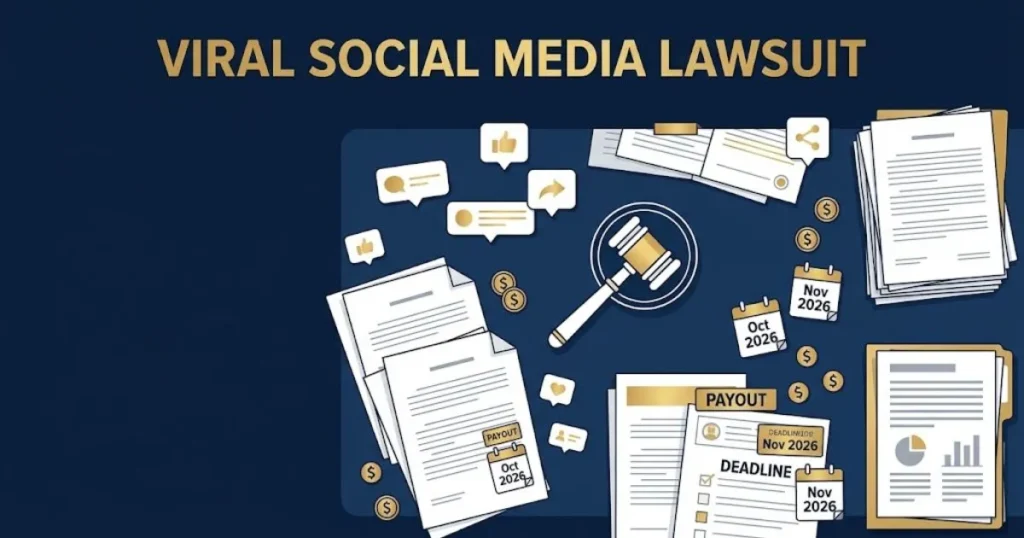
Federal MDL claims have a rolling deadline tied to the settlement approval date. Once a settlement is finalized, claimants typically get 90 to 180 days to file. That window could open as early as mid-2026.
State attorney general cases have their own timelines. Some states have already set filing deadlines for individual claims. These deadlines range from June 2026 to December 2026.
| Claim Track | Filing Deadline |
|---|---|
| Federal MDL | 90 to 180 days after settlement approval |
| State AG Cases | June to December 2026 (varies by state) |
| School District Claims | Varies by district |
| Individual Lawsuits | Statute of limitations (2 to 4 years) |
The statute of limitations is the hardest deadline to track. It starts from the date you discovered the harm. In most states, the clock pauses until a minor turns 18.
Do not assume you have plenty of time. Courts have denied late claims in similar cases. Filing early is always the safer choice.
Social Media Lawsuit Update
The latest social media lawsuit update in 2026 shows rapid progress toward resolution. Bellwether trials in the federal MDL are now underway.
The first bellwether trial began in early 2026 in California. It involves a teenage girl who claims Instagram caused her eating disorder. The outcome will set the tone for thousands of similar cases.
Meta and Snap have reportedly entered settlement discussions. TikTok and YouTube have been more resistant so far. Legal analysts expect at least one major settlement by year’s end.
2026 Timeline of Key Events:
- January 2026: First bellwether trial begins in federal court
- March 2026: Meta files motion to limit damages testimony
- May 2026: Jury selection begins for second bellwether case
- July 2026: State AG coalition announces mediation framework
- September 2026: Expected ruling on class certification motion
- November 2026: Potential global settlement announcement
Congress is also considering new legislation that could strengthen these cases. The proposed Kids Online Safety Act would impose stricter duties on platforms. If passed, it could accelerate settlement negotiations significantly.
Key Takeaway: Bellwether trials are actively underway in 2026, and at least one major settlement between plaintiffs and social media companies is expected before the end of the year.
Frequently Asked Questions
How much will I get from the social media lawsuit?
Most claimants can expect between $1,000 and $50,000 depending on harm severity.
Catastrophic cases involving hospitalization or wrongful death may exceed $100,000.
Final amounts depend on the total settlement fund and the number of approved claims.
Who qualifies for the viral social media lawsuit in 2026?
You qualify if your child suffered documented mental health harm from social media use.
The user must have been under 18 during the period of harmful exposure.
Medical records linking the harm to platform use are the most important requirement.
What is the deadline to file a social media lawsuit claim?
Federal MDL claims must be filed within 90 to 180 days of settlement approval.
State deadlines vary but most fall between June and December 2026.
File as early as possible to avoid missing your window for compensation.
Can I file a lawsuit against social media for my child?
Yes, parents can file claims on behalf of their minor children.
You will need medical documentation showing your child’s mental health injuries.
The court has appointed lead counsel to handle most federal claims at no upfront cost.
How long will the social media lawsuit take to settle?
Most experts predict initial settlement payments will begin in late 2026.
Full distribution of the settlement fund could take two to four years.
Bellwether trial results this year will heavily influence the final timeline.
The viral social media lawsuit represents a turning point for Big Tech accountability. If your family has been affected, now is the time to act. Gather your records, check your eligibility, and file your claim before the deadlines pass. The window for compensation will not stay open forever.