Latest update (November 24, 2026): We could not verify any single consolidated recession lawsuit against banks, retailers, employers and mortgage servicers, and no recession settlement fund, claim form or filing deadline exists. The real recession-era claims are separate cases, such as the WARN Act class action filed on May 12, 2026 over Spirit Airlines’ May 2 shutdown.
What’s next: Watch the individual dockets, such as the Spirit and Sonder WARN Act cases, and any official notice from a court-appointed administrator. We’ll update this page if new details emerge.
Last updated: November 2026
Is there a surprising recession lawsuit?
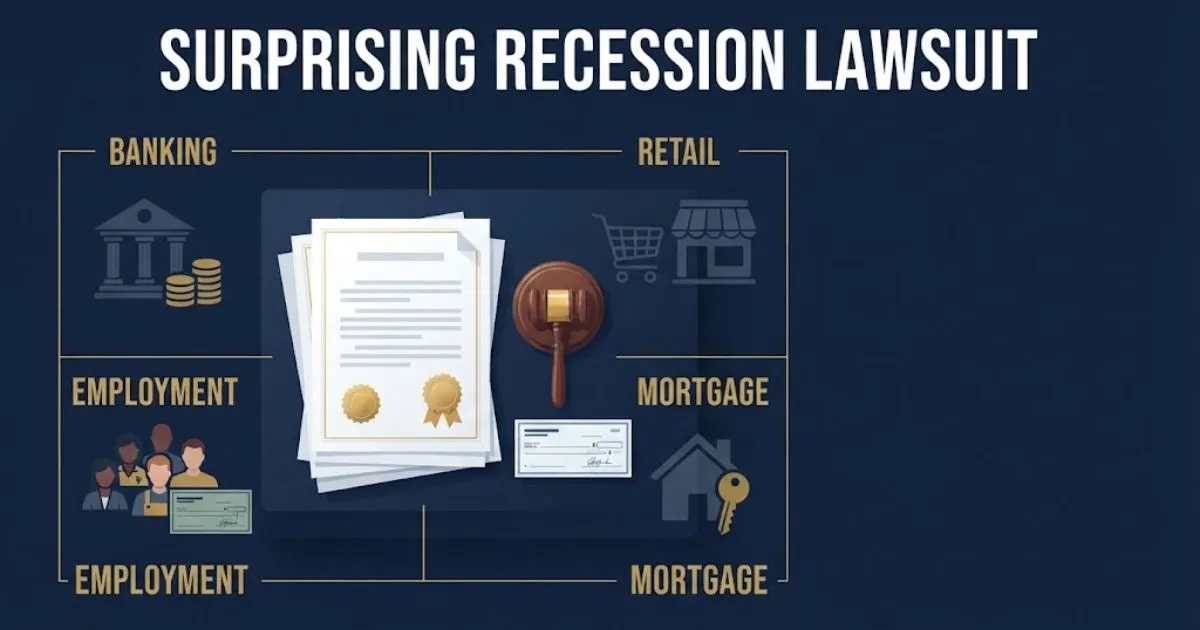
Not in the form earlier versions of this page described. A search of court records, regulator announcements and news found no multidistrict case combining bank fee, price gouging, layoff and mortgage claims, no $2.8 billion banking fund, no 14 million person class and no deadlines of July 31, 2026 or October 15, 2026. Those figures could not be traced to any docket or administrator, so they were removed.
Related: Recession Lawsuit 2026: Payouts, Deadlines, Who Qualifies
Economic downturns do produce real lawsuits, but they are filed company by company, each with its own court, class and rules. Nobody can file one claim form for “the recession.”
Real layoff lawsuits in 2026
The clearest recession-type claims are Worker Adjustment and Retraining Notification (WARN) Act suits, which seek up to 60 days of pay and benefits when employers close or lay off workers without 60 days of notice.
- Spirit Airlines: a proposed class action (Dionne et al. v. Spirit Aviation Holdings, Inc.) filed May 12, 2026 says nearly 17,000 employees lost their jobs when Spirit shut down on May 2, 2026 without the required 60 days of notice, and that final paychecks were withheld.
- Sonder Holdings: a second proposed class action, filed in the U.S. Bankruptcy Court for the District of Delaware in late May 2026 by a former New York City hospitality agent, alleges violations of the federal and New York WARN Acts after Sonder abruptly closed in November 2025.
Both are early-stage. We found no settlement, claim form or payout date for either one.
What to do if you were laid off or charged unfair fees
- Keep your termination letter, final pay stubs and any notice from your employer, or note that none was given.
- Look up your employer’s name on the federal court docket and in bankruptcy filings to see whether a class action already exists.
- File for unemployment benefits through your state workforce agency without delay.
- For bank fees or mortgage servicing problems, send a written dispute to the company and file a complaint with the Consumer Financial Protection Bureau.
Only join a settlement through the official website named in a court-approved notice. Never pay a fee to “register” for a recession payout.
Frequently asked questions
Is there one recession lawsuit I can join?
We could not verify one. Claims arising from layoffs, fees or mortgages are filed separately against individual companies.
How much could I get?
No verified recession settlement exists, so no payout amount applies. In a WARN Act case the claim is generally up to 60 days of back pay and benefits for affected workers, if the case succeeds.
What is the filing deadline?
There is no verified recession filing deadline. Earlier dates on this page were unsupported.
Do I need a lawyer?
Joining an existing class action does not require your own lawyer. If your employer closed without notice, an employment lawyer can explain WARN Act rights.
Bottom line: there is no single recession lawsuit with payouts and deadlines. Real claims exist only in separate company-specific cases.