

Key Takeaways
- Property title verification confirms who legally owns a property and whether its title is free of liens, disputes, and forged paperwork.
- U.S. real estate fraud losses hit $275.1 million in 2025, the FBI reported, up from about $173 million a year earlier.
- A full check covers the ownership history, encumbrances, the seller’s identity, and the authenticity of every document.
- Forged deeds are a core risk, so confirming a document is genuine matters as much as reading it.
- Issuers can add a QR verification layer, such as QR Mark, so buyers and lenders confirm a deed’s authenticity in seconds.
You find the right house, sign the paperwork, and wire the deposit. Months later, a stranger knocks and says the property is theirs. Their deed looks real. So does yours. Only one of them holds up.
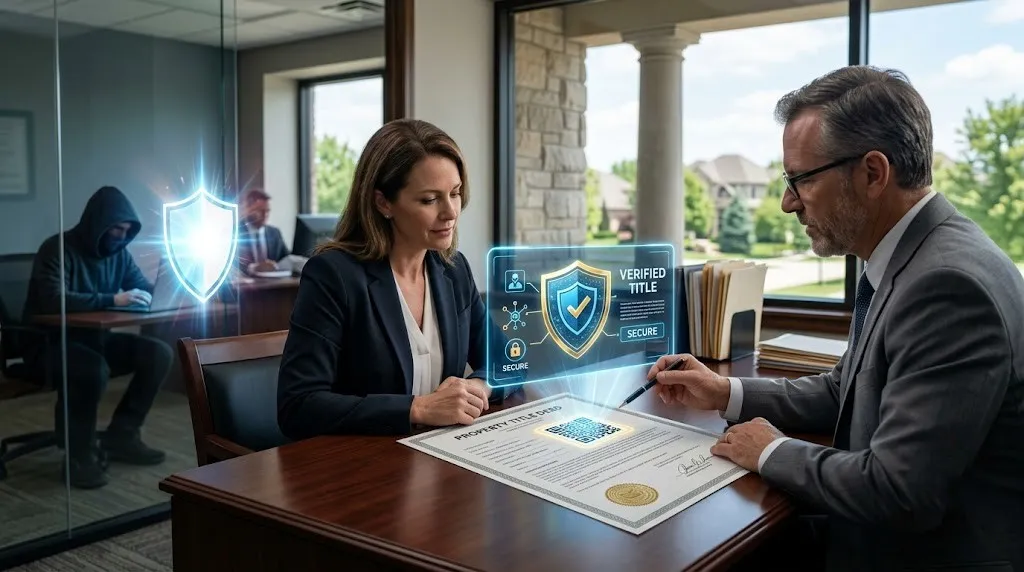
This is why property title verification matters. It is the process of confirming that a seller legally owns a property, that the title carries no hidden claims, and that every supporting document is genuine. Skip it, and you risk buying a home someone else can take back.
The threat is not rare. The FBI reported $275.1 million in U.S. real estate fraud losses in 2025, up from about $173 million the year before. This guide covers what a title check involves, why forged documents are the weakest link, and how to confirm that a deed is authentic before money changes hands.
What Does Property Title Verification Involve?
A proper title check answers two questions. Does the seller truly own the property, and is the title clean and legally transferable? A thorough review has four parts.
- Trace the chain of ownership. Review the deed history to confirm each past transfer was valid and that ownership flows cleanly to the current seller.
- Search for liens and encumbrances. Look for unpaid mortgages, tax liens, court judgments, or easements that could follow the property to you.
- Confirm the seller’s identity. Make sure the person selling is the legal owner with the right to sell, not an impostor using stolen details.
- Check that every document is authentic. Confirm the deed, title, and registration papers are genuine and have not been forged or altered.
A title company, real estate attorney, or title search usually handles the first three steps. The fourth step, document authenticity, is where many checks quietly fall short.
Why Forged Documents Are the Weak Point
Most title checks assume the paperwork in front of them is real. Skilled forgers rely on that assumption.
Fraud takes a few common forms. A criminal files a fake quit-claim deed to transfer a home they do not own. Someone alters a genuine record to change a name or a boundary. Increasingly, AI-generated IDs and spoofed documents pass a quick visual inspection. The FBI has warned property owners about a steady rise in deed theft, often called home title fraud.
The damage lands hardest on older owners. FBI 2025 data shows people over 60 made up about 19% of real estate fraud victims but 44% of the losses. A forged deed can let a criminal sell a home or borrow against it. By the time the fake surfaces, the money is gone and the dispute heads to court.
Reading a document carefully is not the same as proving it is genuine. That gap is exactly what a verification layer closes.
How to Confirm That a Property Document Is Authentic
If you want to confirm a deed is genuine without a days-long phone chain, verify it at the source. A growing number of registrars, builders, housing societies, and law firms now attach a scannable QR code to the documents they issue. The buyer or lender scans it and lands on a verification page hosted on the issuer’s own web domain. The page shows the document’s key details, so the verifier can confirm the record is real and was issued by the named authority.
Platforms such as QR Mark are built for this. QR Mark lets an issuer embed a unique QR code into property title deeds, land titles, lease agreements, and registration certificates. When someone scans it, a branded page on the issuer’s own domain confirms the document. You can see how QR-based property title verification works in practice on QR Mark’s site.
A few details make the approach practical:
- Domain-anchored trust. The verification page sits on the issuer’s own domain, so a fake page on a lookalike URL gives itself away.
- Selective disclosure. Issuers can show only chosen fields, such as the deed number, parties, and date, when the full document is confidential.
- No app required. Any smartphone camera or browser works, on both printed and PDF documents.
- Compliance built in. QR Mark is ISO 27001:2022, SOC 2, and GDPR compliant, which matters when records carry personal data.
Here is how the two approaches compare when a verifier needs to confirm a single document:
| Confirming a document | Manual callback | QR-based check |
| Speed | Hours to days | Seconds |
| Tools needed | Phone or email chain | Any camera or browser |
| Confirms the issuer | Only if you reach them | On every scan |
| Works on print and PDF | Inconsistent | Yes |
One caveat matters. A QR layer confirms that a document is authentic and was issued by the named party. It does not replace a full title search of public land records, and it only helps when the issuer has added the code and the verifier knows to check for it. Treat it as one strong layer in the process, not the whole process.
Used alongside a proper title search, it removes the slowest and most forgeable step. A buyer or bank can confirm a deed on sight instead of waiting days for a callback that may never come.
Title verification protects the largest purchase most people ever make. The work is real. A clean title search, a careful legal review, and proof that the documents are genuine all take time and judgment. Together they close the gaps that fraud relies on. The payoff is simple. You keep the home you paid for, and you avoid a legal fight that can cost six figures to unwind.
If you issue or handle property deeds and want buyers and lenders to confirm authenticity on sight, a QR verification layer is worth a look. It turns a days-long callback into a five-second scan.







