

The Olaplex lawsuit hair loss litigation is still active in 2026, and thousands of consumers are filing claims. People across the country say Olaplex products caused severe hair loss, breakage, bald spots, and scalp damage.
If you used Olaplex and lost hair, you might be owed money. This case has grown from a handful of complaints into a significant class action.
In this guide, you will find everything that matters. That includes who qualifies, estimated payouts, filing deadlines, which products are involved, and what evidence you need.
One stat that might shock you: the FDA received over 1,000 adverse event reports tied to Olaplex products between 2020 and 2023. That kind of volume is rare for a hair care brand.
Olaplex Lawsuit Hair Loss
The Olaplex lawsuit hair loss case centers on allegations that Olaplex hair care products contain ingredients that damage hair and scalp tissue. Consumers across the United States claim these products caused the exact opposite of what the company promised.
Instead of repairing broken hair bonds, users say Olaplex products triggered significant hair shedding. Some reported clumps of hair falling out in the shower. Others noticed visible thinning within weeks of regular use.
The first major lawsuit was filed in February 2023 in the U.S. District Court for the Central District of California. Plaintiff Jennifer Ruiz alleged she suffered extensive hair loss after using multiple Olaplex products.
Since then, additional complaints have been consolidated. The case has attracted attention from product liability attorneys nationwide.
The core legal argument is straightforward. Olaplex marketed its products as bond-building treatments that would strengthen hair. Plaintiffs say the products did the opposite and that Olaplex knew or should have known about the risks.
| Detail | Info |
|---|---|
| Case Type | Product liability, class action |
| Court | U.S. District Court, Central District of California |
| First Filed | February 2023 |
| Named Defendant | Olaplex Holdings, Inc. |
| Core Allegation | Products cause hair loss despite repair claims |
Olaplex Hair Loss Lawsuit
The Olaplex hair loss lawsuit is a collection of legal claims brought by consumers who experienced hair damage after using Olaplex products. These cases include both individual lawsuits and class action complaints.
What makes this case different from a typical product complaint is the scale. Hundreds of consumers reported similar injuries within a relatively short time frame. That pattern caught the attention of both attorneys and the FDA.
The lawsuits target Olaplex Holdings, Inc., the parent company behind the entire product line. Olaplex went public on NASDAQ under ticker OLPX in 2021, which means their financial disclosures and product safety claims face extra scrutiny.
Plaintiffs argue Olaplex engaged in deceptive marketing. The company positioned itself as a premium, salon-grade treatment. Prices ranged from $28 to $30 per bottle at retailers like Sephora and Ulta Beauty.
Consumers paid premium prices expecting superior results. Instead, many say they got damaged hair and medical bills.
The legal theories in these cases include:
- Negligence in product formulation and testing
- Breach of warranty for failing to deliver promised results
- Fraud and misrepresentation in advertising claims
- Violation of state consumer protection laws
Olaplex Class Action Lawsuit 2026
The Olaplex class action lawsuit in 2026 remains in active litigation with no final resolution yet reached. The case is still working through the pretrial phase as of early 2026.
Class certification is a major milestone in any class action. It determines whether the court will treat all affected consumers as a single group. As of 2026, the court is still evaluating whether the case meets the requirements for class certification.
For a class to be certified, plaintiffs must show:
- Numerosity: enough affected consumers to justify a class
- Commonality: shared legal and factual questions
- Typicality: named plaintiffs have claims similar to the class
- Adequacy: the legal team can fairly represent everyone
The good news for consumers is that the sheer volume of complaints works in their favor. When hundreds of people report the same injury from the same product line, it is hard for a company to argue each case is unique.
Discovery is ongoing. That means both sides are exchanging documents, internal emails, product testing data, and marketing materials. This phase often reveals whether a company knew about risks and failed to act.
| Milestone | Status (2026) |
|---|---|
| Complaint Filed | Complete |
| Class Certification | Pending |
| Discovery | Ongoing |
| Settlement Talks | Not publicly confirmed |
| Trial Date | Not yet scheduled |
Key Takeaway: The Olaplex class action is still active in 2026, with class certification pending and discovery ongoing, meaning new evidence could emerge at any time.
Olaplex Lawsuit Update 2026
The most recent Olaplex lawsuit update in 2026 shows the litigation is progressing through discovery with no settlement or trial date announced yet. The case remains in federal court in California.
Throughout 2024 and 2025, the court processed several procedural motions. Olaplex’s legal team filed motions to dismiss certain claims. Some were denied, which kept the core allegations alive.
One significant development was the court’s decision to allow expert testimony regarding the link between specific Olaplex ingredients and hair damage. This is a big deal. Expert testimony often shapes how juries perceive product liability cases.
Olaplex Holdings reported declining revenue in its 2024 and 2025 financial filings. The company’s stock price dropped significantly from its 2021 IPO highs. While financial pressure alone does not determine lawsuit outcomes, it can influence a company’s willingness to settle.
As of early 2026, no formal settlement offer has been made public. But attorneys on both sides have engaged in mediation discussions, according to court filings.
Here is what to watch for in the coming months:
- Class certification ruling, which could expand the case dramatically
- Expert report deadlines that may reveal new scientific findings
- Any settlement conference scheduled by the court
- Possible trial date if no settlement is reached by late 2026
Olaplex Lawsuit Settlement
No Olaplex lawsuit settlement has been finalized as of 2026. The case has not reached the settlement phase, though mediation discussions have reportedly occurred between the parties.
Think of lawsuit settlements like a negotiation over a used car. Both sides know roughly what the case is worth, but they need to agree on a number. That process takes time, especially when thousands of potential claimants are involved.
Several factors will influence whether Olaplex settles and for how much:
- Strength of the scientific evidence linking ingredients to hair loss
- Number of claimants who join the class
- Olaplex’s financial position and ability to pay
- Jury verdict risk that Olaplex wants to avoid
In similar cosmetic product liability cases, settlements have ranged widely. The WEN hair care class action settled for $26 million in 2020 after consumers reported similar hair loss claims. That case involved roughly 220 individual lawsuits and thousands of class members.
The WEN settlement gives a rough benchmark. But every case is different, and the Olaplex litigation may produce a higher or lower number depending on the evidence.
| Comparable Case | Settlement Amount | Year |
|---|---|---|
| WEN Hair Care | $26 million | 2020 |
| DevaCurl Class Action | Ongoing/confidential | 2020-present |
| Johnson & Johnson Talc | $8.9 billion (proposed) | 2025 |
Olaplex Settlement Payout
Individual Olaplex settlement payout amounts have not been determined yet because no settlement has been finalized. However, based on comparable cases and the structure of typical class action payouts, projections can be made.
In the WEN hair care settlement, individual payouts ranged from $25 for consumers with no documented injury to up to $20,000 for those with medical evidence of severe hair loss. Olaplex payouts could follow a similar tiered structure.
Here is a realistic projection of how payout tiers might work:
| Claim Tier | Estimated Payout | What You Need |
|---|---|---|
| Basic (product purchase only) | $25 to $75 | Proof of purchase |
| Moderate (documented hair loss) | $100 to $500 | Photos, receipts, written account |
| Severe (medical treatment required) | $500 to $5,000 | Medical records, dermatologist visit |
| Extreme (permanent damage) | $5,000 to $25,000+ | Extensive medical documentation |
These numbers are estimates based on precedent. Actual amounts will depend on the total settlement fund, the number of claimants, and the court-approved distribution plan.
One thing to understand: the more claimants who file, the smaller each individual payment tends to be. That is the tradeoff with class actions. You get access to legal representation without paying upfront, but the pie gets divided more ways.
Key Takeaway: While no official payout amounts exist yet, comparable cases suggest individual payments could range from $25 for basic claims to $25,000 or more for severe, well-documented hair loss injuries.
Olaplex Hair Loss Lawsuit Eligibility
You may be eligible for the Olaplex hair loss lawsuit if you purchased and used Olaplex products and then experienced hair loss, hair breakage, scalp irritation, or related damage. Eligibility is based on product use and documented harm.
The eligibility criteria that attorneys are currently screening for include:
- You purchased one or more Olaplex products (any number in the line)
- You used the product as directed or as recommended by a salon professional
- You experienced hair loss, thinning, breakage, bald spots, or scalp problems
- Your symptoms started during or after your use of Olaplex products
- You can provide some form of documentation (receipts, photos, medical records)
You do not need to have used every product in the Olaplex line. Even one product may be enough if you experienced harm.
Salon professionals who applied Olaplex to clients and then experienced personal hair loss may qualify too. Some hairstylists have reported hand irritation and personal hair damage from repeated product handling.
Geographic eligibility is broad. Since this is a federal case, consumers from any U.S. state can potentially join. There is no state-by-state restriction for the class action.
One common question: can you still join if you threw away the product? Yes. Credit card statements, online order confirmations, and loyalty program records from Sephora or Ulta can serve as proof of purchase.
How to File an Olaplex Lawsuit
Filing an Olaplex lawsuit starts with contacting a product liability attorney who is accepting Olaplex hair loss cases. Most attorneys offer free case evaluations with no upfront cost.
Here is the step-by-step process:
Step 1: Gather your documentation. Collect any purchase receipts, online order confirmations, product photos, before-and-after hair photos, and medical records related to your hair loss.
Step 2: Contact an attorney. Reach out to a law firm that handles product liability or mass tort cases. Many firms have specific Olaplex intake forms on their websites.
Step 3: Complete a case evaluation. The attorney will review your information and determine whether your case meets the criteria. This is typically free.
Step 4: Sign a retainer agreement. If your case qualifies, you will sign an agreement. Most Olaplex attorneys work on contingency, meaning they only get paid if you win or settle.
Step 5: Your attorney handles everything. Once you sign on, the legal team files your claim and manages all court proceedings. You might need to answer questions or provide additional documents, but the heavy lifting is on them.
| Filing Step | What Happens | Your Cost |
|---|---|---|
| Case Evaluation | Attorney reviews your claim | Free |
| Documentation | You provide receipts and records | Free |
| Retainer Signing | Formal agreement to represent you | $0 upfront |
| Claim Filed | Attorney submits legal paperwork | Included |
| Resolution | Settlement or verdict | Attorney takes percentage |
Olaplex Lawsuit Deadline 2026
There is no single fixed deadline to join the Olaplex lawsuit in 2026, but the window to file is not open forever. Statutes of limitations and class action deadlines will eventually close the door.
Product liability claims in most states have statutes of limitations ranging from two to four years from the date of injury or discovery of injury. If you noticed hair loss in 2023, your deadline could arrive as soon as 2025 or 2026 depending on your state.
Here are some key state deadlines to keep in mind:
| State | Statute of Limitations | Deadline if Injury Discovered in 2023 |
|---|---|---|
| California | 2 years | 2025 |
| New York | 3 years | 2026 |
| Texas | 2 years | 2025 |
| Florida | 4 years | 2027 |
| Illinois | 2 years | 2025 |
If you are in a state with a shorter limitation period, filing sooner is critical. Even if the class action has not been certified yet, having your individual claim on file preserves your rights.
The discovery rule can sometimes extend these deadlines. If you did not realize Olaplex caused your hair loss until later, the clock may start from the date you discovered (or should have discovered) the connection.
Key Takeaway: Statutes of limitations vary by state, and some consumers in states like California and Texas may face deadlines as early as 2025, so acting quickly in 2026 is essential.
Olaplex Lawsuit Evidence Needed
The strongest Olaplex claims are backed by documentation that connects your product use to your hair loss. Evidence is what separates a strong claim from a weak one.
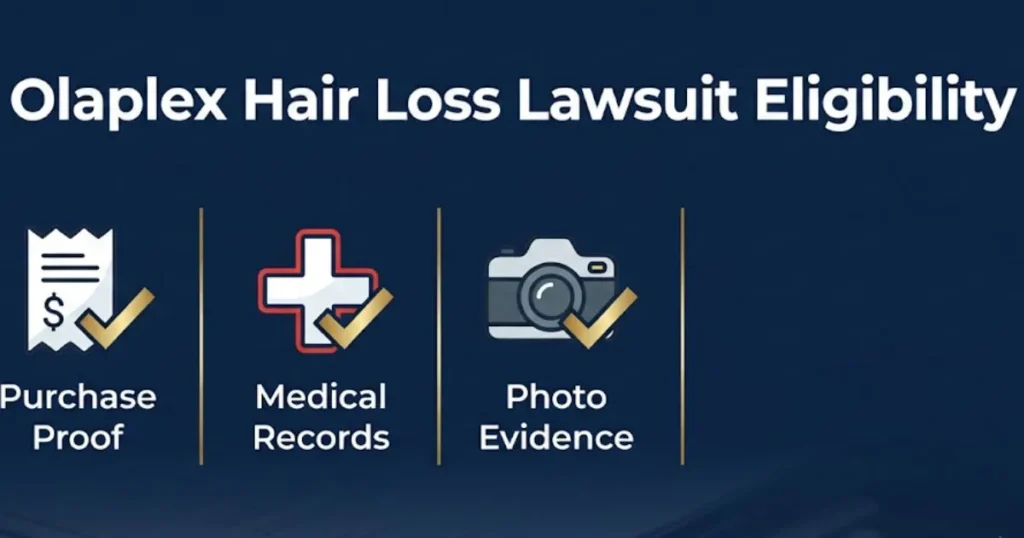
Here is what attorneys consider the most valuable types of evidence:
Purchase proof:
- Credit card or debit card statements showing Olaplex purchases
- Email order confirmations from Sephora, Ulta, Amazon, or Olaplex.com
- Loyalty program records from beauty retailers
- Photos of the actual product containers (even empty ones)
Medical documentation:
- Dermatologist visit records noting hair loss or scalp irritation
- Trichologist evaluations documenting hair thinning
- Lab results or scalp biopsies if performed
- Prescription records for any treatments prescribed for your condition
Visual evidence:
- Before-and-after photos of your hair
- Photos of hair clumps in your brush, shower drain, or on your pillow
- Dated selfies or social media posts that show the timeline of your hair changes
Written accounts:
- A personal timeline of when you started using Olaplex and when symptoms began
- Notes about which specific products you used and how often
- Statements from hairstylists or salon professionals who noticed changes
You do not need every item on this list. But the more documentation you have, the stronger your position.
Olaplex Hair Damage Claims
Olaplex hair damage claims go beyond simple hair loss and include a range of injuries reported by consumers and documented in FDA complaints. The damage described in these cases is sometimes severe and long lasting.
The types of damage reported by Olaplex users include:
- Excessive hair shedding beyond normal daily loss
- Hair breakage with strands snapping at various lengths
- Bald patches appearing on the scalp
- Scalp burns and irritation including redness and flaking
- Changes in hair texture becoming brittle, straw-like, or matted
- Permanent thinning that did not reverse after stopping use
- Emotional distress from sudden changes in appearance
Some claimants report spending thousands of dollars on corrective treatments. These include dermatology visits, PRP (platelet-rich plasma) therapy, hair restoration procedures, and prescription medications like minoxidil.
The financial cost of damage goes beyond medical bills. Many consumers also lost money on the Olaplex products themselves, which typically cost $28 to $30 per bottle at retail.
For salon professionals, the damage claims take another form. Some stylists say they experienced hand dermatitis and personal hair loss from repeated occupational exposure to Olaplex formulas.
| Type of Damage | Reported Frequency | Severity |
|---|---|---|
| Hair shedding | Very common | Moderate to severe |
| Breakage | Very common | Moderate |
| Bald patches | Common | Severe |
| Scalp irritation | Common | Mild to moderate |
| Texture changes | Moderate | Moderate |
| Permanent thinning | Less common | Severe |
Olaplex Lawsuit Ingredients
The Olaplex lawsuit ingredients at the center of the litigation include several chemicals that plaintiffs allege cause hair and scalp damage. The most scrutinized ingredient is lilial, also known as butylphenyl methylpropional.
Lilial was banned by the European Union in March 2022 for use in cosmetic products because of its classification as a suspected reproductive toxicant. The EU deemed it unsafe for any cosmetic application.
Despite the EU ban, lilial was still present in Olaplex products sold in the United States. The FDA does not automatically adopt EU cosmetic ingredient bans, which created a gap in consumer protection.
Other ingredients named in the lawsuits include:
- Bis-aminopropyl diglycol dimaleate: Olaplex’s patented “bond-building” ingredient. Some scientists question whether it can cause allergic reactions in sensitive individuals.
- Panthenol and various silicones: While generally considered safe, plaintiffs allege these ingredients were used to mask damage rather than prevent it.
- Sodium hydroxide: Used as a pH adjuster, but in high concentrations can cause chemical burns.
The ingredient issue is central to the legal case. If Olaplex knew certain ingredients posed risks and failed to warn consumers, that supports the fraud and negligence claims.
| Ingredient | Concern | EU Status |
|---|---|---|
| Lilial (butylphenyl methylpropional) | Suspected reproductive toxicant | Banned March 2022 |
| Bis-aminopropyl diglycol dimaleate | Possible allergic reactions | Under review |
| Sodium hydroxide | Chemical burn risk at high levels | Regulated |
Key Takeaway: The EU banned lilial in cosmetics in 2022, but Olaplex products containing this ingredient continued to be sold in the U.S., which is a core argument in the lawsuit.
Olaplex Hair Loss Symptoms
Olaplex hair loss symptoms typically begin within days to weeks of first use and can range from mild shedding to dramatic hair loss. Recognizing these symptoms early helps build a stronger legal claim.
The most commonly reported symptoms include:
Early signs (within 1 to 4 weeks):
- More hair than usual in the shower drain
- Hair strands breaking when brushing or styling
- A feeling of hair being “gummy” or “mushy” when wet
- Mild scalp itching or tenderness
Progressive symptoms (1 to 3 months):
- Noticeable thinning, especially around the crown and hairline
- Hair that looks flat and lifeless despite styling
- Increased breakage leading to uneven hair lengths
- Scalp redness or visible irritation
Severe symptoms (3 months or longer):
- Bald patches visible on the scalp
- Hair that does not regrow after stopping Olaplex use
- Chronic scalp sensitivity or burning
- Emotional distress, anxiety, or depression related to hair loss
What makes Olaplex-related hair loss tricky is that many people initially blame other factors. Stress, hormones, diet changes, and seasonal shedding are common scapegoats. It often takes weeks before consumers connect their new hair product to the problem.
A helpful test: if you stopped using Olaplex and the shedding slowed or stopped, that is a strong indicator. If you resumed use and the symptoms returned, that pattern is very useful evidence.
Olaplex FDA Complaints
The FDA received over 1,000 adverse event reports related to Olaplex products through its CFSAN Adverse Event Reporting System (CAERS). This volume of complaints is unusually high for a single hair care brand.
FDA adverse event reports are filed by consumers, healthcare professionals, and manufacturers. They serve as an early warning system. When a product generates a spike in complaints, it draws regulatory attention.
The complaints against Olaplex documented issues including:
- Hair loss and excessive shedding
- Scalp blisters, burns, and chemical irritation
- Allergic reactions including swelling and hives
- Hair breakage and texture damage
- Bald spots and permanent thinning
It is important to understand what FDA complaints are and what they are not. These reports do not prove that Olaplex products caused the injuries. But they establish a pattern. And in product liability law, patterns matter a great deal.
The FDA has not issued a formal recall of Olaplex products. The agency’s oversight of cosmetics historically has been limited compared to drugs and medical devices. However, the Modernization of Cosmetics Regulation Act (MoCRA), signed into law in December 2022, gave the FDA expanded authority over cosmetic products.
Under MoCRA, the FDA can now:
- Require adverse event reporting from cosmetic companies
- Order mandatory recalls if products pose a safety risk
- Require facility registration and product listing
- Mandate good manufacturing practices
This expanded authority could influence the Olaplex case going forward.
Olaplex Products Recalled
Olaplex products have not been formally recalled by the FDA or by the company as of 2026. Despite the volume of complaints, no mandatory or voluntary recall has been issued.
This surprises many consumers. With over 1,000 FDA complaints and active litigation, a recall seems logical. But the cosmetics industry historically has operated with less regulatory oversight than pharmaceuticals.
The products most frequently named in the lawsuits and complaints include:
| Product | Type | Price Range |
|---|---|---|
| Olaplex No. 0 | Intensive Bond Building Treatment | $28 |
| Olaplex No. 3 | Hair Perfector | $30 |
| Olaplex No. 4 | Bond Maintenance Shampoo | $30 |
| Olaplex No. 5 | Bond Maintenance Conditioner | $30 |
| Olaplex No. 6 | Bond Smoother | $30 |
| Olaplex No. 7 | Bonding Oil | $30 |
| Olaplex No. 8 | Bond Intense Moisture Mask | $30 |
Olaplex No. 3 is the most frequently cited product in complaints. It is designed for at-home use and is the brand’s best-selling item.
The company did reformulate some products in 2022 and 2023 to remove lilial from their formulations. Olaplex stated the reformulation was done to comply with EU regulations, not because the ingredient was unsafe. Plaintiffs argue the reformulation is an implicit admission that the original formula was problematic.
Key Takeaway: Despite over 1,000 FDA complaints and active lawsuits, Olaplex has not recalled any products, though the company did quietly reformulate several items to remove a banned ingredient.
Is Olaplex Safe to Use
Whether Olaplex is safe to use in 2026 depends on which formulation you are using and your individual sensitivity. The reformulated products no longer contain lilial, the most controversial ingredient.
Olaplex maintains that all its products are safe and effective. The company has pointed to internal testing and third-party studies that it says support the safety of its formulas. In public statements, Olaplex has called the lawsuits “meritless.”
On the other side, plaintiffs and their expert witnesses argue that certain ingredients cause damage in a subset of users. Not everyone who uses Olaplex experiences problems. But for those who do, the damage can be significant.
Here is a balanced breakdown:
| Factor | Current Status |
|---|---|
| Lilial content | Removed from reformulated products |
| FDA recall | None issued |
| Active lawsuits | Yes, ongoing |
| Independent safety studies | Limited and conflicting |
| Consumer complaints | Over 1,000 FDA reports |
| Company position | Products are safe |
If you choose to use Olaplex products in 2026, consider these precautions:
- Check the batch number and manufacturing date to ensure you have the reformulated version
- Do a patch test on a small section before full application
- Monitor your hair closely for any increased shedding or texture changes
- Stop use immediately if you notice unusual hair loss or scalp irritation
- Save your receipts and packaging in case you need them later
The reality is that cosmetic products affect people differently. What works perfectly for one person can cause real problems for another. The Olaplex litigation is a reminder that “salon quality” marketing does not guarantee safety for every consumer.
Frequently Asked Questions
How much money can I get from the Olaplex hair loss lawsuit?
No settlement amounts have been finalized yet.
Based on comparable cases like the WEN hair care settlement, individual payouts could range from $25 to $25,000 depending on the severity of your injury and your documentation.
Higher payouts go to claimants with medical records proving treatment for Olaplex-related hair damage.
Who qualifies to file an Olaplex lawsuit in 2026?
Anyone who purchased and used Olaplex products and experienced hair loss, breakage, or scalp damage may qualify.
You need some form of documentation such as purchase receipts, photos, or medical records.
Salon professionals who experienced personal hair damage from occupational use can qualify too.
What is the deadline to join the Olaplex class action lawsuit?
There is no single universal deadline, but statutes of limitations apply based on your state.
Most states allow two to four years from the date you discovered or should have discovered the injury.
Filing sooner rather than later protects your rights, especially in states with shorter limitation periods.
Which Olaplex products are named in the lawsuit?
The lawsuits name products across the Olaplex line, including No. 0 through No. 8.
Olaplex No. 3 Hair Perfector is the most frequently cited product in both lawsuits and FDA complaints.
Salon-use professional treatments are named as well.
Has Olaplex been recalled by the FDA?
No, the FDA has not issued a recall for any Olaplex products.
Despite over 1,000 adverse event reports, the products remain on store shelves.
Olaplex did reformulate certain products to remove lilial, a chemical banned in the EU, but the company says this was not safety related.
The Olaplex hair loss lawsuit is one of the biggest active cases in the beauty product space. If you used Olaplex and experienced hair loss, breakage, or scalp damage, 2026 may be your best window to act.
Gather your purchase records and medical documentation now. Contact a product liability attorney to get a free case review.
Do not wait for a deadline to pass. Protecting your rights starts with taking the first step today.







