You can search New York court cases by name using the free eCourts portal. The system covers civil, criminal, and family records across all 62 counties. This 2026 guide walks you through every available method.
New York courts process millions of filings each year. Finding a specific case used to require a courthouse visit. Online tools have changed that entirely.
You will learn how to use free search platforms. We cover criminal, civil, supreme, and family court lookups. You will also discover how to check active case status.
Over 3.5 million cases were filed in New York courts in 2024 alone. That volume makes knowing the right search tool essential.
New York Court Case Search by Name
A New York court case search by name lets you find records using a full legal name. You enter the name into the state eCourts portal. The system returns matching cases from all court types.
This method works across all 62 New York counties. You do not need a case number to begin. A partial last name can also produce results.
The Office of Court Administration maintains these records. Most case data updates within 24 to 48 hours. Sealed cases and juvenile records will not appear in results.
Name searches work best with uncommon last names. Common names like Smith may return thousands of matches. Adding a middle initial helps narrow the list significantly.
You can also filter by county or court type. This reduces irrelevant matches quickly. The system allows wildcard searches for uncertain spellings.
- Best for: Finding cases when you only know the person’s name
- Limitation: Common names produce large result sets
- Tip: Use middle initials and county filters to narrow results
New York Court Case Search Online
An online New York court case search uses web-based tools provided by the state. The primary platform is the eCourts system operated by the OCA. It is available 24 hours a day, seven days a week.
The online portal covers five main court databases. These include WebCivil Supreme, WebCivil Local, WebCriminal, WebFamily, and WebSurrogates. Each database handles a different type of case.
You access these tools through any web browser. No software download is required. The 2026 update added a mobile-responsive interface for phone users.
| Tool | Court Type | Records Available |
|---|---|---|
| WebCivil Supreme | Supreme Court civil | 1990 to present |
| WebCivil Local | Local civil courts | Varies by county |
| WebCriminal | Criminal courts | 2002 to present |
| WebFamily | Family courts | Limited access |
| WebSurrogates | Surrogate’s Court | Probate and estates |
The online system is the fastest way to start any search. Results appear within seconds of submitting a query.
New York Court Case Search Free
A free New York court case search is available through the official eCourts portal. You pay nothing to search by name, case number, or attorney. The state funds this service through court filing fees.
Free searches give you basic case information. This includes party names, filing dates, and case status. You can see the court part and assigned judge.
However, free searches do not include full document access. You cannot download complaints, motions, or court orders online. Getting those documents requires a separate request.
| Feature | Free (eCourts) | Paid (Third Party) |
|---|---|---|
| Basic Case Info | Yes | Yes |
| Full Docket History | Limited | Yes |
| Document Downloads | No | Varies |
| Cost | $0 | $10 to $50 |
Third-party background check sites charge for detailed reports. These sites pull from the same public data. The free state portal is always the best starting point.
Key stat: The eCourts portal processes over 2 million searches per month at no cost to users.
Key Takeaway: The official eCourts portal is free, covers all 62 counties, and is the best starting point for any New York court case search.
New York eCourts Case Search
The New York eCourts case search is the state’s primary online records system. It is operated by the Office of Court Administration. The platform launched its latest upgrade in early 2026.
eCourts consolidates data from all state trial courts. This includes Supreme Court, County Court, City Court, and Town and Village Courts. You search one portal instead of contacting each court separately.
To use eCourts, select the court type first. Then enter the party name or case index number. Results display within seconds on your screen.
The 2026 update improved search speed by roughly 40 percent. It also added real-time calendar data for upcoming appearances. The mobile interface now works smoothly on all major browsers.
- URL access: Available through the NYCourts.gov homepage
- Hours: 24/7 with brief maintenance windows on Sunday mornings
- Data refresh: Most records update overnight
Think of eCourts like a library card catalog for court cases. You type a name, and it tells you which shelf holds the file.
New York State Court Records Search
A New York state court records search covers all courts under the Unified Court System. This includes trial courts, appellate courts, and specialty courts statewide. The OCA oversees all record keeping.
State-level records differ from federal court records. Federal cases in New York go through the PACER system. State cases stay within the eCourts ecosystem.
State records include case filings, dispositions, and judgment details. You can find civil verdicts, criminal convictions, and family court orders. Appellate decisions are available through a separate law reporting service.
| Court Level | Examples | Record Access |
|---|---|---|
| Court of Appeals | Highest state court | Published opinions |
| Appellate Division | Four departments | eCourts and opinions |
| Supreme Court | Trial-level general | eCourts WebCivil |
| County Court | Outside NYC | eCourts WebCivil |
| City/Town/Village | Local matters | Varies by location |
Records from lower courts may be less complete online. Town and village court data can lag behind larger courts. Contact the local court clerk for the most current information.
NYC Court Case Lookup by Name
An NYC court case lookup by name targets the five boroughs specifically. New York City has its own Civil Court and Criminal Court systems. These operate separately from the upstate county courts.
NYC Civil Court handles cases up to $50,000 in damages. This includes landlord-tenant disputes, debt collection, and small claims. Housing Court is a part of NYC Civil Court.
NYC Criminal Court handles misdemeanors and violations. Felony cases start here but move to Supreme Court after indictment. The WebCriminal tool covers NYC Criminal Court records.
- Manhattan: New York County Civil and Criminal Courts
- Brooklyn: Kings County Civil and Criminal Courts
- Queens: Queens County Civil and Criminal Courts
- Bronx: Bronx County Civil and Criminal Courts
- Staten Island: Richmond County Civil and Criminal Courts
Each borough has its own clerk’s office for in-person requests. Online searches through eCourts cover all five boroughs at once. You do not need to search each borough separately.
Key Takeaway: NYC has separate civil and criminal courts for each borough, but eCourts lets you search all five at once.
New York Criminal Court Case Search
A New York criminal court case search reveals charges, arraignments, and case outcomes. The WebCriminal tool is the primary search platform. It covers cases from 2002 to the present.
Criminal records show the defendant’s name, charges, and court dates. You can see the case status and next appearance date. Disposition details appear after the case concludes.
New York handles criminal cases at multiple court levels. Felonies go through Supreme Court or County Court. Misdemeanors and violations stay in local criminal courts.
| Court Level | Cases Handled | Search Tool |
|---|---|---|
| Supreme Court | Felonies | WebCriminal |
| County Court | Felonies, Misdemeanors | WebCriminal |
| City Court | Misdemeanors | WebCriminal |
| NYC Criminal Court | Misdemeanors, Violations | WebCriminal |
Sealed criminal records will not appear in any search. New York’s 2019 sealing law expanded automatic sealing for certain convictions. Expunged records are completely removed from public databases.
Important: A criminal case search shows charges, not convictions. A pending case does not mean the person is guilty.
New York Civil Court Case Search
A New York civil court case search covers lawsuits between private parties. This includes personal injury claims, contract disputes, and property cases. WebCivil Supreme and WebCivil Local are the main tools.
WebCivil Supreme handles cases in the state Supreme Court. This is the main trial court for civil matters in New York. Cases involving more than $25,000 typically start here.
WebCivil Local covers smaller civil courts. This includes NYC Civil Court and district courts outside the city. Small claims and housing cases appear in this database.
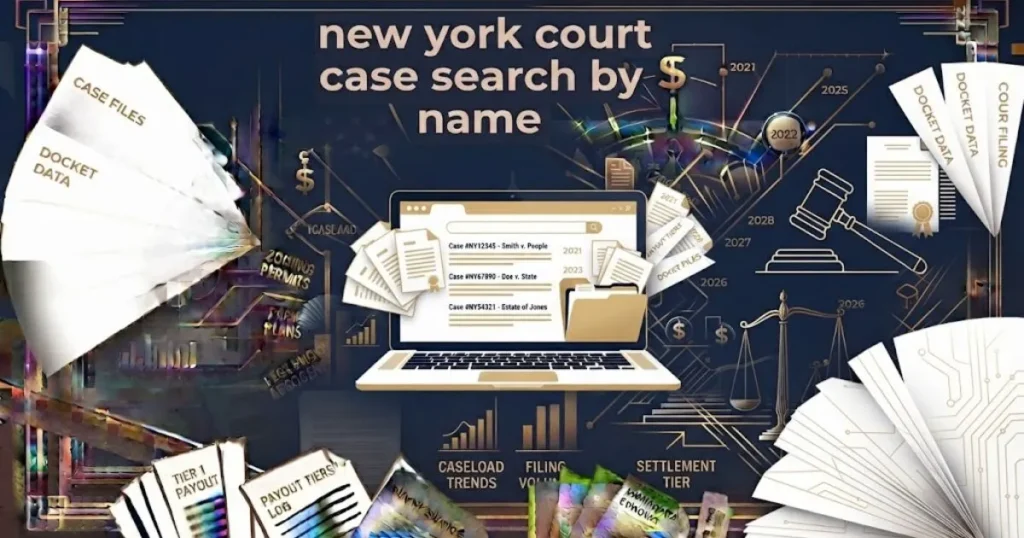
Civil case records show the plaintiff and defendant names. You can see the filing date, case type, and assigned judge. Motion history and conference dates are also available.
- Personal injury cases: Search WebCivil Supreme
- Landlord-tenant disputes: Search WebCivil Local
- Small claims under $10,000: Search WebCivil Local
- Commercial disputes: Search WebCivil Supreme
Civil records are among the most complete in the eCourts system. Data typically goes back to 1990 for Supreme Court cases.
Key Takeaway: Criminal searches use WebCriminal while civil searches use WebCivil Supreme or WebCivil Local depending on the case size and court.
New York Supreme Court Case Search
A New York Supreme Court case search targets the state’s primary trial court. Despite the name, this is not the highest court in New York. The Court of Appeals holds that position.
The Supreme Court handles major civil cases and felony criminal trials. Every county in New York has a Supreme Court branch. WebCivil Supreme covers the civil side of these cases.
You search by party name, attorney name, or index number. The index number format includes the year and a sequential case number. For example, 501234/2025 means the 501,234th case filed in 2025.
| Search Field | Example | Best Used When |
|---|---|---|
| Party Name | John Smith | You know the person involved |
| Attorney Name | Jane Doe, Esq. | You know the lawyer |
| Index Number | 501234/2025 | You have the exact case number |
| Case Type | Matrimonial | You want to browse by category |
Supreme Court records are the most detailed in the eCourts system. They include motion sequences, decision dates, and judgment amounts. This makes them valuable for legal research and background checks.
New York Family Court Case Search
A New York family court case search covers custody, support, and protection matters. The WebFamily tool provides limited access to these records. Privacy restrictions are stricter than in other court types.
Family court handles child custody, visitation, and child support cases. It also covers orders of protection, juvenile delinquency, and adoption proceedings. Most of these cases involve sensitive personal information.
Public access to family court records is restricted by law. You can search for case existence by name. Detailed filings and court orders are generally sealed from public view.
- Custody cases: Limited public access
- Child support: Basic case info only
- Orders of protection: Restricted access
- Adoption records: Fully sealed
- Juvenile delinquency: Fully sealed
To get detailed family court records, you typically need a court order. Parties to the case can request their own records from the clerk. Third parties face significant access barriers.
Think of family court records like a locked filing cabinet. You can see the label on the outside. Opening the drawer requires special permission.
New York Court Docket Search by Name
A New York court docket search by name reveals the chronological history of a case. The docket lists every filing, hearing, and court order in sequence. It is the most detailed view available online.
The eCourts system displays docket entries for most active cases. Each entry shows the date, document type, and filing party. You can track a case from initial complaint through final judgment.
Docket searches are especially useful for tracking active litigation. You can see upcoming court dates and motion deadlines. Attorneys use docket monitoring to stay current on opposing cases.
| Docket Entry Type | What It Shows |
|---|---|
| Complaint Filed | Case initiation date and claims |
| Answer Filed | Defendant’s response date |
| Motion Filed | Requests for court action |
| Conference Scheduled | Upcoming court appearance |
| Order Issued | Judge’s ruling on a matter |
| Judgment Entered | Final case resolution |
Docket data updates more frequently than other record types. Most entries appear within one business day of filing. This makes docket searches the most current source of case information.
Key Takeaway: Docket searches show the full timeline of a case and update faster than any other record type in the eCourts system.
How to Find Court Cases in New York
Finding court cases in New York starts with identifying the right court and search tool. The process takes about five to ten minutes for most searches. Here is the step-by-step approach.
First, determine whether the case is civil, criminal, or family. This tells you which eCourts database to use. Civil cases go to WebCivil. Criminal cases go to WebCriminal.
Second, gather the full name of the person involved. A middle initial helps with common names. If you have a case index number, that produces the most precise results.
| Step | Action | Time Required |
|---|---|---|
| 1 | Identify the court type | 1 minute |
| 2 | Visit the eCourts portal | 1 minute |
| 3 | Select the correct database | 1 minute |
| 4 | Enter the party name | 2 minutes |
| 5 | Review and filter results | 5 to 10 minutes |
Third, review the results carefully. Multiple people may share the same name. Check the county, case type, and filing date to confirm you found the right case.
If online searches return nothing, try the county clerk’s office. Some older records have not been digitized yet. In-person requests can reach back decades further than online databases.
New York Court Records by Defendant Name
Searching New York court records by defendant name works the same as a plaintiff search. You enter the defendant’s last name and first name into eCourts. The system searches both party roles automatically.
Defendant searches are common for background checks and due diligence. Employers, landlords, and attorneys use them regularly. The results show all cases where the person was named as a defendant.
In criminal cases, the defendant is the person charged with a crime. In civil cases, the defendant is the party being sued. The search results label each role clearly.
- Criminal defendant: Person charged by the state or city
- Civil defendant: Person or company being sued
- Respondent: Defendant equivalent in family court
- Appellee: Defendant equivalent in appellate court
One limitation exists for defendant searches in criminal cases. Arrest records without formal charges may not appear. The search only shows cases that reached the court filing stage.
Tip: Search both first-name-last-name and last-name-first-name formats. The eCourts system handles both, but formatting can affect result order.
New York County Court Case Lookup
A New York county court case lookup targets records from courts outside New York City. There are 57 counties outside the five NYC boroughs. Each has its own County Court and Supreme Court branch.
County Courts handle felony criminal cases and some civil matters. They operate in every county except the five NYC boroughs. In smaller counties, the County Court judge may also serve as Family Court judge.
To search county court records, select the specific county in eCourts. You can also search all counties at once. Filtering by county speeds up results for common names.
| Region | Counties | Primary Court |
|---|---|---|
| Long Island | Nassau, Suffolk | Supreme and County |
| Hudson Valley | Westchester, Rockland, Orange | Supreme and County |
| Capital Region | Albany, Rensselaer, Schenectady | Supreme and County |
| Central NY | Onondaga, Oneida, Broome | Supreme and County |
| Western NY | Erie, Monroe, Niagara | Supreme and County |
Rural counties may have less complete online records. Some town and village court data is still paper-based. Contact the county clerk directly for older case files.
Key Takeaway: County court records outside NYC may be less complete online, so contacting the local county clerk can fill gaps that eCourts misses.
New York Court Case Status Check
A New York court case status check tells you whether a case is active, pending, or closed. The eCourts system displays real-time status for most cases. This is the fastest way to get current information.
Case status categories include active, pending, disposed, and transferred. An active case has upcoming court dates. A disposed case has reached a final resolution.
Status checks are useful for tracking your own cases. They also help attorneys monitor opposing party litigation. Journalists and researchers use them for public interest reporting.
| Status | Meaning | Next Step |
|---|---|---|
| Active | Case is ongoing | Check for upcoming dates |
| Pending | Awaiting court action | Monitor for updates |
| Disposed | Case is closed | Review final judgment |
| Transferred | Moved to another court | Search the new court |
| Adjourned | Hearing postponed | Check new date |
The 2026 eCourts update added push notifications for status changes. You can sign up for email alerts on specific cases. This eliminates the need for repeated manual searches.
Status data updates overnight on most business days. Cases filed on Friday may not show updated status until Monday. Holiday weeks can cause additional delays.
Frequently Asked Questions
How do I search New York court cases by name for free?
Use the eCourts portal on the NYCourts.gov website. Enter the person’s full name and select the court type. The search is completely free and available 24 hours a day.
Can I find criminal court records in New York online?
Yes, the WebCriminal tool covers criminal cases from 2002 onward. You can search by defendant name or docket number. Sealed and expunged records will not appear in results.
How far back do New York court records go online?
WebCivil Supreme records go back to 1990 for most counties. WebCriminal records start around 2002. Older records require an in-person visit to the county clerk’s office.
Are New York family court records public?
Family court records have restricted public access due to privacy laws. You can confirm a case exists by name. Detailed filings and orders are generally sealed from public view.
How long does it take to get New York court records?
Online search results appear within seconds of submitting your query. Requesting physical document copies takes one to five business days. Certified copies may take up to two weeks.
Your next step is simple. Visit the eCourts portal and run your first name search today. Bookmark the specific database that matches your case type. Check back weekly for status updates on active cases. The tools are free, fast, and available around the clock.