

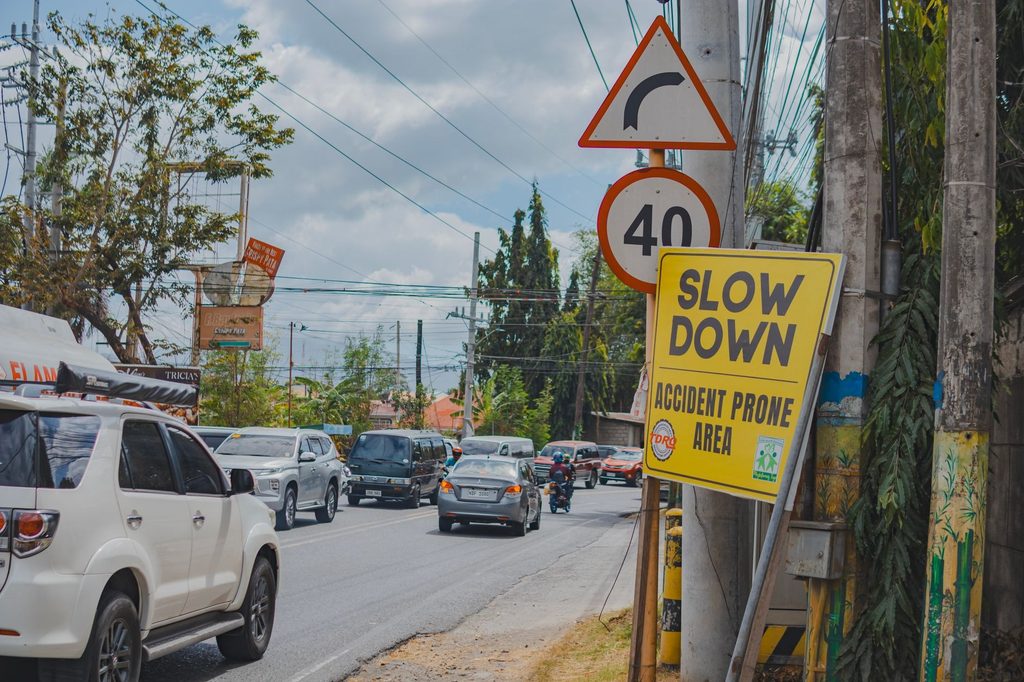
Georgia Department of Transportation preliminary figures show 63 fatal crashes on I-285 in 2023, the highest single-year toll on the Perimeter since 2016’s 68 deaths. That reverses four straight years of modest improvement. The spike landed hardest between mile markers 27 and 52 — the western arc from Chattahoochee River to Camp Creek Parkway — and came despite better vehicle safety systems and expanded shoulder-use programs.
NHTSA state-level data released in March put Georgia at 1,797 road deaths in 2023, up 4.1% from 2022. That gain ran counter to the national trend, which held essentially flat. The divergence matters for anyone filing a claim after a metro Atlanta crash: insurers are pricing Georgia risk higher, and adjusters are approaching high-value claims with tighter scrutiny.
The numbers are preliminary. GDOT’s full crash-narrative database won’t close until August. But the directional story is clear enough to change how you should think about driving the Perimeter — and what to expect if someone else’s mistake puts you in the right lane with your hazards on.
Why the Perimeter Turned More Dangerous Last Year
Fatality increases clustered in two windows. The first ran Memorial Day weekend through mid-July, when afternoon heat built thunderstorm cells that routinely reduced visibility to a quarter-mile inside twenty minutes. The second started the week before Thanksgiving and carried through January 8, tracking the compressed holiday-shopping and return-travel calendar.
Rush-hour crashes did not drive the fatality spike. Morning and evening peak periods — 6:30 to 9:00 a.m. and 4:00 to 7:00 p.m. — accounted for 38% of serious-injury collisions but only 29% of fatal crashes. The deadliest hours were 10:00 p.m. to 2:00 a.m., when speed differentials widened and impaired-driver incidents climbed. GDOT incident logs show an average closing speed of 71 mph in fatal nighttime Perimeter crashes, versus 54 mph in daytime injury collisions.
Commercial vehicle involvement rose year-over-year. Tractor-trailers appeared in 22% of I-285 fatal crashes in 2023, up from 17% in 2022. That tracks the broader increase in freight tonnage moving through Hartsfield-Jackson’s cargo terminals and the expanded warehouse footprint around I-85 south of the airport. More trucks mean longer stopping distances, bigger blind zones, and heavier consequences when something goes wrong at highway speed.
Georgia’s overall road-death trend pulled away from the national pattern in the second half of the year. FARS data shows U.S. traffic fatalities declining slightly in Q3 and Q4 of 2023, while Georgia’s count stayed elevated. The gap suggests state-specific factors — infrastructure condition, enforcement patterns, regional travel behavior — rather than nationwide trends like fleet-age turnover or post-pandemic driving habits.
The Seasonal Crash Calendar: When Georgia Roads Are Most Dangerous
Summer holiday weekends anchor the high-risk calendar. Memorial Day, Independence Day, and Labor Day each produce a 25–30% spike in serious crashes compared to non-holiday weekends, according to Georgia Governor’s Office of Highway Safety summaries. The pattern holds across metro and rural counties. Alcohol involvement rises sharply, but so do distraction-related collisions and simple overcorrection incidents when traffic volume doubles on roads designed for lower throughput.
August sees a concentrated surge tied to back-to-school schedules. The two weeks before Labor Day regularly post the year’s highest weekday crash totals on I-75 through Cobb County and I-85 through Gwinnett. School-zone hours shift commuter patterns, parents unfamiliar with carpool loops create bottlenecks, and teenage drivers new to solo operation flood the road mix. August 2023 logged 141 serious-injury crashes on metro Atlanta interstates, a 12% increase over the five-year August average.
June through August afternoon thunderstorms compound the risk. Weather Service radar archives show that convective cells develop over the city between 3:00 and 6:00 p.m. roughly 18 days per month in summer. Rainfall rates of two inches per hour are common. Visibility drops, pavement friction falls, and hydroplaning becomes likely above 45 mph once water depth reaches an eighth of an inch. Crash rates double during active precipitation, and rear-end collisions in stop-and-go rain traffic drive a significant share of whiplash and concussion claims.
The November-to-December corridor carries a different hazard profile. Early darkness after the time change in early November compresses the evening commute into full night. Pedestrian fatalities spike — nine fatal pedestrian strikes on I-285 service roads and on-ramps in November and December 2023 alone. Thanksgiving-week travel adds unfamiliar drivers, rental vehicles, and fatigue from long drives into an already crowded system.
February and March deliver a counterintuitive finding. Those months see fewer total crashes than summer peaks but a higher percentage of severe injuries. GDOT data shows that February and March collisions on metro interstates are 1.7 times more likely to produce incapacitating injury than crashes in June or July. The explanation appears to be speed. Dry pavement and lighter traffic in late winter encourage higher velocities, and when crashes occur they happen at closing speeds that exceed summer’s rain-slowed averages.
What Commercial Truck Volume Does to the Numbers
I-75 southbound from the Tennessee line through Atlanta and on to Macon functions as a freight artery connecting Midwest manufacturing to Southeast distribution centers. Port of Savannah processed a record 5.9 million twenty-foot-equivalent container units in fiscal 2023, and much of that volume moves inland on I-16 to I-75 and I-95 north to the Carolinas. Truck counts on I-75 south of the I-285 interchange regularly exceed 12,000 daily, with peak-hour concentrations above 1,400 per hour.
Correlation between truck volume and crash severity is well-documented. FMCSA data shows that crashes involving vehicles over 10,000 pounds produce fatal or incapacitating injury at more than twice the rate of passenger-vehicle-only collisions. The physics are straightforward: a loaded tractor-trailer at 65 mph carries roughly 40 times the kinetic energy of a sedan at the same speed. When a truck cannot stop, the outcome is rarely minor.
I-16 between Macon and Savannah saw 19 fatal crashes in 2023, the highest count in a decade. Eleven involved commercial vehicles. The corridor is two lanes each direction for most of its length, passing zones are limited, and driver frustration leads to risky overtakes. Rear-end collisions where a fast-moving truck strikes slowed or stopped passenger traffic account for a disproportionate share of catastrophic injuries. If you’re hit by a commercial vehicle, the legal and investigative process differs significantly from a standard car crash. Trucking companies operate under federal regulations that create additional evidence sources — electronic logging devices, maintenance records, and driver qualification files — but also bring corporate defense teams into play quickly. Talking to a truck accident lawyer in Atlanta soon after a commercial-vehicle collision can preserve access to that evidence before retention windows close or spoliation becomes an issue.
I-95 through coastal Georgia remains one of the state’s most dangerous stretches. The 112-mile run from the Florida line to South Carolina carries heavy tourist traffic, port-bound freight, and regional commuter flow on a road with limited shoulder width and aging bridge infrastructure. 23 fatal crashes in 2023 placed I-95 in Georgia’s top three deadliest interstate segments by total count, despite far lower overall traffic volume than metro Atlanta’s highways.
The Immediate Injury Puzzle: Why Time Between Crash and Symptom Matters in the Data
Emergency-department records capture only a fraction of crash injuries. NHTSA estimates that soft-tissue injuries — whiplash, ligament strain, herniated discs — produce delayed symptoms in 40–60% of cases, with pain, stiffness, or neurological deficits appearing days or even weeks after the collision. That gap creates a documentation problem. If your first medical visit happens ten days post-crash and you did not see a provider immediately after the incident, insurers will argue the injury came from another cause.
Soft-tissue injury timelines follow a predictable arc. Adrenaline and endorphins mask pain during the acute stress of a crash. Inflammation builds over the first 24 to 72 hours as damaged tissue releases chemical mediators. By day three or four, stiffness and pain peak, and range-of-motion restrictions become apparent. If the injury involves a disc or nerve root, radiating pain into the arms or legs may not surface until swelling compresses the nerve — often a week or more post-impact.
Georgia law does not require you to seek medical care immediately, but the practical reality is that delayed treatment invites claim denial. Adjusters are trained to view gaps in care as evidence that the injury is not crash-related. A two-week silence between collision and first doctor visit gives the insurer room to argue you were hurt doing something else — lifting boxes, sleeping wrong, playing weekend basketball. That argument succeeds more often than it should, especially when the claimant cannot produce a coherent narrative about symptom onset.
Getting evaluated within 48 hours closes that evidentiary gap. You do not need an appointment with a specialist or a referral from a primary-care physician. Walk-in clinics that focus on musculoskeletal injuries can document your condition, establish a treatment baseline, and create the contemporaneous record that insurers cannot dismiss. If you’re uncertain whether you need care, err toward getting checked. It is easier to close a claim when early documentation shows you took the injury seriously than to fight a denial built on the argument that you couldn’t have been hurt badly because you waited two weeks to see anyone. Options like a walk in chiropractor near me can provide same-day evaluation and start a paper trail that connects your symptoms directly to the collision date.
The documentation gap extends beyond medical records. Photos of vehicle damage, the accident scene, skid marks, and road conditions degrade in value quickly. Vehicles get repaired or totaled out. Skid marks fade. Witnesses forget details or become unreachable. Surveillance footage from nearby businesses typically overwrites every 7 to 14 days. If you wait a month to think about evidence, much of it will be gone.
Insurance Claim Denials Track Crash Trends — and Lag Behind Them
Claim denial rates in Georgia move in delayed rhythm with crash spikes. When serious collisions surge in a given quarter, denial rates rise 60 to 90 days later. The lag reflects adjuster caseload pressures and internal insurer directives to tighten scrutiny when payouts climb. The Georgia Department of Insurance complaint database shows a 16% increase in denied-claim complaints in Q1 2024 compared to Q1 2023, tracking the late-2023 fatality surge.
Adjusters apply heightened scrutiny in specific patterns. After high-volume months, they focus on soft-tissue injury claims where objective imaging — X-rays, MRI — shows no acute fracture or disc herniation. The argument becomes that subjective pain complaints are exaggerated or unrelated to the crash. Policy-limit disputes intensify in severe-injury cases where medical bills and lost wages approach or exceed the at-fault driver’s liability cap. If the other driver carries Georgia’s minimum $25,000 bodily-injury limit and your hospital bill alone is $40,000, expect the insurer to contest causation, pre-existing conditions, and treatment necessity.
Common denial reasons fall into predictable categories:
| Denial Reason | Frequency in GA DOI Complaints | Insurer’s Typical Argument |
|---|---|---|
| Pre-existing condition | 31% | Injury existed before crash; collision did not cause or worsen it |
| Treatment not medically necessary | 24% | Claimant over-treated; some visits were not required for recovery |
| Gap in care | 18% | Delay between crash and treatment suggests injury not serious or not related |
| Disputed liability | 14% | Claimant wholly or partly at fault; reduces or eliminates payout |
| Policy exclusion | 8% | Specific circumstance (e.g., permissive use, commercial activity) not covered |
| Late notice | 5% | Claimant did not report crash within required time window |
Knowing the common denial grounds does not eliminate the risk, but it clarifies where to focus your documentation. If you have a prior back injury, get a provider to state in writing whether the crash worsened the condition. If your treatment extends beyond a few weeks, ask your physician for a narrative explaining why ongoing care is necessary. If you miss appointments, reschedule quickly and document the reason for the gap.
Policy-limit disputes require a different strategy. Georgia law allows you to pursue the at-fault driver personally when their insurance is insufficient, but collecting a judgment from an individual defendant with no assets is often futile. Uninsured-motorist coverage on your own policy can fill the gap if you purchased it, but many drivers skip that option to lower premiums. If you are seriously injured and the other driver is underinsured, you are looking at negotiating with your own carrier — a process that can turn adversarial quickly, even though you are nominally on the same side.
What to Do in the 72 Hours After a Crash
The first 72 hours after a collision determine how smoothly your claim will resolve. Miss key steps in that window and you spend months fighting over facts that should never have been in dispute.
At the scene:
Take photos of all vehicles from multiple angles. Capture license plates, VIN stickers, and visible damage. Photograph the road layout, traffic signals, skid marks, and debris field. If the other driver says anything about fault, speed, distraction, or how the crash happened, write it down immediately. Memories fade; a note typed into your phone two minutes after the conversation is far more credible than your recollection six months later.
Get the other driver’s insurance information and take a photo of their insurance card. Do not rely on them to provide accurate details verbally. Confirm the police report was filed and get the report number from the responding officer. If police do not respond — common in minor-damage collisions — file an online crash report with GDOT within 48 hours. Georgia law requires a report for crashes causing injury, death, or vehicle damage requiring a tow.
Collect witness information while people are still present. Names, phone numbers, and a brief sentence about what they saw. Witnesses who leave the scene often become unreachable later. If nearby businesses or residences have visible security cameras, note the addresses and ask whether footage is available. Most businesses will not hand over footage without a subpoena, but knowing the camera exists gives your attorney a target for discovery.
Medical evaluation:
See a provider within 48 hours even if you feel fine. Explain that you were in a crash and describe any symptoms, no matter how minor. Headache, neck stiffness, back soreness, and numbness all belong in the medical record. If symptoms develop after your first visit, go back. Each documented visit strengthens the causal link between the crash and your injury.
Insurance notification:
Report the crash to your insurer within 24 hours. You are contractually obligated to notify them promptly, and late notice can jeopardize your coverage. Stick to objective facts: date, time, location, vehicles involved. Do not speculate about fault or minimize your injuries. If the adjuster asks whether you are hurt, say you are being evaluated and will provide medical records once available.
Do not give a recorded statement to the other driver’s insurer without talking to an attorney first. You are not legally required to provide one, and adjusters use recorded statements to lock you into early narratives that may contradict later medical findings. Politely decline and say you will provide information in writing after you have gathered all the facts.
Evidence preservation:
Request a copy of the police report as soon as it is available — usually within 7 to 10 business days. Review it for errors. If the report contains inaccuracies, file a written supplement with the investigating agency. Do not expect the report to be corrected, but your supplement becomes part of the file.
If your vehicle is drivable, do not repair it until the insurer has inspected the damage. If it is not drivable, take detailed photos before it is towed and ask the tow company where it will be stored. Insurers often total a vehicle quickly and send it to salvage auction, destroying your ability to have an independent mechanic examine it later.
Pull cell-phone records if there is any question about distraction. If the other driver was texting or calling at the moment of impact, phone records prove it. Carriers retain call and text logs for 90 days to a year, but you need to request them promptly.
The Metro-Rural Divide in Crash Outcomes
Georgia’s injury and fatality patterns split sharply along the metro-rural line. Metro Atlanta crashes — DeKalb, Fulton, Cobb, and Gwinnett counties — produce lower per-crash fatality rates than rural collisions, largely because EMS response times average 6 to 9 minutes and level-one trauma centers are accessible within 20 minutes from most crash sites. Rural counties see response times stretching to 15 to 25 minutes or longer, and seriously injured patients face an additional 30 to 60 minutes of transport time to a facility equipped for trauma care.
GDOT data shows that rural two-lane highway crashes result in fatal injury at nearly three times the rate of urban interstate collisions. The causes are layered: higher speeds, head-on collision geometry, older vehicle fleets without modern restraint systems, and longer intervals before medical intervention. A crash that might produce a concussion and broken collarbone on I-285 — serious but survivable — becomes a fatality on a rural stretch of U.S. 441 because the victim bleeds out before EMS arrives.
Long-term recovery differences are measurable. Trauma registries show that patients transported to a level-one center within the “golden hour” after injury have significantly better functional outcomes at six months and one year post-crash than patients who experience delayed care. The implication for rural Georgia residents is stark: the same collision that injures you on I-75 in Marietta might kill you on State Route 27 in Randolph County.
County-level prosecution variation compounds the disparity. District attorneys in metro counties handle hundreds of serious-injury cases annually and have specialized traffic-prosecution units. Rural DAs often operate with smaller staffs, and serious traffic cases compete for attention with drug offenses, domestic violence, and property crimes. If the at-fault driver in your crash faces criminal charges, the likelihood of prosecution and the severity of the penalty vary significantly depending on where the crash occurred. That affects the insurance claim indirectly, as criminal convictions provide liability proof that insurers struggle to dispute.
What the 2024 Numbers Will Likely Show
GDOT’s Q1 2024 crash summary, released in late April, suggests the fatality trend is not reversing. Preliminary data show 412 road deaths statewide through March 31, essentially flat with Q1 2023’s 419. I-285 fatalities are tracking slightly below last year’s pace, but I-75 south of Atlanta and I-85 north into South Carolina are both elevated. The pattern hints at a redistribution rather than an overall decline.
Several infrastructure projects will shape 2024 crash data. GDOT’s I-285 express-lane expansion from I-75 to I-85 north of the Perimeter is in active construction, with lane shifts, reduced speed limits, and overnight closures through at least November. Construction zones reliably increase rear-end collision rates. Expect Q3 and Q4 to show a spike in minor-injury crashes on that segment. The I-75 widening project in Henry County, adding a fourth lane southbound from Jodeco Road to the Spalding County line, has already produced seven serious crashes in its first four months, three involving work-zone barriers.
Early darkness patterns will intensify post-time change. Daylight saving time ends November 3 this year, compressing the evening commute into full night again. The two-week period after the time change produces a 20–25% uptick in pedestrian and bicycle fatalities, a pattern that has held for more than a decade. Drivers adjusting to the new schedule, combined with reduced visibility, create predictable risk.
Mile marker 33 on I-285 northbound near Cascade Road has logged more fatal and serious-injury crashes per mile in the past three years than any other single segment of the Perimeter. The stretch includes a downhill grade into a sharp curve, a high-volume merge from Campbellton Road, and frequent congestion backups from the I-20 interchange two miles ahead. If you drive that section daily, assume someone around you is not paying attention. Leave extra space, watch for brake lights three or four cars ahead, and keep an exit path open.
The useful takeaway is not that Georgia roads are uniquely dangerous or that every drive carries high risk. It is that risk is not evenly distributed. Certain highways, certain times of day, certain months, and certain weather conditions raise the odds sharply. The 2023 numbers confirm that those odds climbed last year. The 2024 numbers suggest they have not dropped back. Knowing where you sit in the distribution — Perimeter driver at 11:00 p.m., I-16 commuter behind a truck convoy, rural two-lane user fifty minutes from a trauma center — shapes the decisions you make and the precautions you take. If the worst happens anyway, the same data-driven awareness shapes what you do in the first seventy-two hours after the crash, when the choices you make determine whether your claim resolves smoothly or turns into a year-long fight over facts that were always knowable if someone bothered to document them.







