
No, you generally cannot go to jail for not paying a lawsuit. The United States abolished debtors prisons over 150 years ago. But there are important exceptions you need to know about.
The question “can you go to jail for not paying a lawsuit” comes up constantly. People worry after losing a civil case. They fear a knock on the door from law enforcement.
The reality is simpler than most people think. Civil debt alone will not put you behind bars. However, ignoring specific court orders can trigger real jail time.
Over 10 million Americans face civil judgments each year. Most never spend a single night in jail. This article breaks down exactly when jail is and is not a real risk.
Can You Go to Jail for Not Paying a Lawsuit?
No, you cannot go to jail for not paying a lawsuit judgment. Civil lawsuits involve money disputes between private parties. The law treats civil debt very differently from criminal offenses.
The U.S. abolished debtors prisons in the 1800s. The 14th Amendment reinforces this protection today. Every single state prohibits jailing someone for civil debt alone.
A civil judgment simply means you owe money. It does not mean you broke criminal law. No judge can lock you up for an unpaid bill.
Think of it like a restaurant tab. You owe the money, but police will not arrest you. The restaurant must use civil channels to collect.
The situation only changes when you defy a direct court order. Failing to appear at a hearing is a separate issue. Failing to follow a judge’s instructions can trigger contempt charges.
Quick Facts:
- Civil debt alone never carries jail time
- Debtors prisons were abolished over 150 years ago
- All 50 states ban imprisonment for civil debt
Can You Go to Jail for Not Paying a Civil Judgment?
A civil judgment alone cannot send you to jail in any U.S. state. The judgment is a court order to pay money. It is not a criminal conviction.
When a plaintiff wins a civil case, the court issues a judgment. This document states how much you owe. It gives the creditor legal tools to collect.
Those collection tools include wage garnishment and bank levies. Creditors can also place liens on your property. None of these actions involve jail time.
The key distinction is between owing money and defying a court. Owing money is a civil matter. Defying a judge’s direct order is a different story entirely.
Some states allow judges to issue a body attachment. This is a warrant for failing to appear at a debtor examination. You are jailed for skipping court, not for the debt itself.
| Detail | Info |
|---|---|
| Jail for civil debt | Not permitted |
| Jail for skipping court | Possible in some states |
| Primary collection method | Wage garnishment |
| Property liens | Allowed in all states |
What Happens If You Don’t Pay a Lawsuit Judgment?
If you don’t pay a lawsuit judgment, the creditor will pursue collection actions against you. Jail is not one of those actions. The consequences are financial, not criminal.
The creditor can request a writ of execution from the court. This allows them to seize your assets. They can take money directly from your bank account.
Wage garnishment is the most common collection method. Federal law limits garnishment to 25% of disposable earnings. Some states set even lower limits.
Your credit score will take a serious hit. Unpaid judgments stay on your credit report for seven years. This makes getting loans or housing much harder.
The creditor can also place a lien on your home. This means you cannot sell or refinance without paying. The lien attaches to the property title.
Key collection methods:
- Wage garnishment up to 25% of earnings
- Bank account levies
- Property liens on real estate
- Seizure of personal assets
Key Takeaway: You cannot go to jail for civil debt, but unpaid judgments trigger serious financial consequences like garnishment and liens.
Can You Be Arrested for Unpaid Debt?
You cannot be arrested for unpaid consumer debt in the United States. Federal law explicitly prohibits this practice. The Fair Debt Collection Practices Act makes it illegal to threaten arrest.
Debt collectors sometimes use scare tactics on the phone. They may threaten jail time to pressure you. These threats are illegal and completely false.
The only debts that can lead to arrest involve court orders. Child support is the most common example. Tax evasion can also trigger criminal charges.
Regular debts like credit cards and medical bills are different. Personal loans and car loans fall in the same category. None of these can result in your arrest.
If a collector threatens you with jail, report them. File a complaint with the Consumer Financial Protection Bureau. You may also have grounds for a lawsuit against the collector.
Debts that cannot lead to arrest:
- Credit card balances
- Medical bills
- Personal loans
- Student loans
- Auto loans
Contempt of Court for Not Paying
Contempt of court for not paying is possible only when you willfully defy a specific court order. The judge must find that you can pay but refuse. This is a narrow legal standard.
Civil contempt is the most common type in payment disputes. The court uses it to force compliance with an order. You hold the key to your own release.
The judge must prove you have the money available. If you genuinely cannot pay, contempt does not apply. Being broke is not the same as being defiant.
A contempt hearing gives you a chance to explain your finances. You can show bank statements and pay stubs. The judge will review your ability to pay.
If found in contempt, the judge can impose sanctions. These may include fines or short jail stays. The jail time ends when you comply with the order.
| Contempt Factor | What the Court Looks For |
|---|---|
| Ability to pay | Bank records, income proof |
| Willful refusal | Evidence of hidden assets |
| Prior warnings | Previous court orders ignored |
| Duration | How long you have not paid |
Can You Go to Jail for Not Paying a Court Order?
Yes, you can go to jail for not paying a court order if the judge finds you in contempt. This applies to specific types of orders, not all debts. The distinction matters enormously.
Court orders for child support carry the highest jail risk. Family court judges take these obligations very seriously. Repeat offenders can face months behind bars.
Orders to pay restitution in criminal cases also carry risk. The court views restitution as part of your sentence. Failing to pay can violate your probation terms.
Regular civil judgments are different from direct court orders. A judgment from a personal injury case is not the same. The court does not actively enforce those through contempt.
The critical factor is whether the judge issued a direct order. A money judgment is passive. A payment order is active and enforceable through contempt.
High-risk court orders:
- Child support payments
- Criminal restitution
- Alimony or spousal support
- Court-ordered fines and penalties
Key Takeaway: Contempt of court requires willful defiance of a direct order, and the judge must prove you have the ability to pay.
Civil vs Criminal Contempt of Court
Civil contempt and criminal contempt are two very different legal concepts. Civil contempt aims to force you to comply. Criminal contempt punishes you for disrespecting the court.
Civil contempt is coercive in nature. The judge jails you until you follow the order. You literally hold the keys to your own cell.
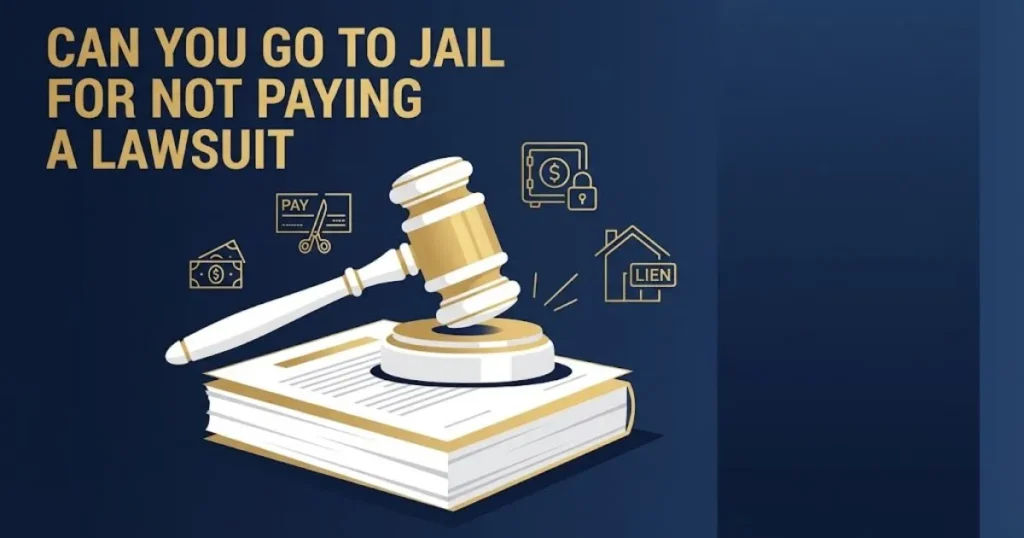
Criminal contempt is punitive. The judge imposes a fixed jail sentence as punishment. You serve the time regardless of later compliance.
In payment disputes, civil contempt is far more common. The court wants the money paid, not to punish you. Jail is a last resort to force compliance.
Criminal contempt usually involves courtroom behavior. Yelling at a judge or disrupting proceedings are examples. It rarely applies to payment issues alone.
The burden of proof differs between the two types. Civil contempt requires a lower standard of proof. Criminal contempt requires proof beyond a reasonable doubt.
| Feature | Civil Contempt | Criminal Contempt |
|---|---|---|
| Purpose | Force compliance | Punish behavior |
| Jail duration | Until you comply | Fixed sentence |
| Burden of proof | Preponderance of evidence | Beyond reasonable doubt |
| Common in debt cases | Yes | Rarely |
What Happens If You Ignore a Court Judgment?
Ignoring a court judgment will not send you to jail, but it makes your finances much worse. The creditor gains more power over time. Your options shrink as interest accumulates.
Judgments accrue interest from the date they are entered. State interest rates vary from 2% to 12% annually. A $10,000 judgment can double over a decade.
The creditor can renew the judgment before it expires. Most states allow renewals for another 5 to 20 years. This means the debt can follow you for decades.
Ignoring the judgment also means missing your chance to negotiate. Many creditors will accept a lump sum for less. Once you ignore it, they have no reason to deal.
Your employer may receive a garnishment order without warning. Your bank may freeze your accounts overnight. These actions happen faster when you ignore the judgment.
Timeline of escalating consequences:
- Month 1 to 3: Judgment entered, interest begins
- Month 3 to 6: Creditor files for garnishment
- Month 6 to 12: Liens placed on property
- Year 1 to 5: Judgment renewed, assets seized
Can You Go to Jail for Not Paying Small Claims?
No, you cannot go to jail for not paying a small claims court judgment. Small claims cases are civil matters involving smaller dollar amounts. The maximum varies by state but typically ranges from $5,000 to $25,000.
The small claims process is designed to be simple and fast. Judges hear cases without juries or lengthy trials. The rulings are binding but carry no criminal penalties.
If you lose in small claims court, you owe the money. The winning party must still collect on their own. The court does not send marshals to your door.
However, ignoring a small claims summons can cause problems. If you fail to show up, the judge enters a default judgment. This means you lose automatically without presenting your side.
Failing to appear at a post-judgment hearing is riskier. Some states allow body attachments for skipping debtor exams. The jail risk comes from skipping court, not from the debt.
| State | Small Claims Limit | Jail for Non-Payment |
|---|---|---|
| California | $12,500 | No |
| Texas | $20,000 | No |
| New York | $10,000 | No |
| Florida | $8,000 | No |
Key Takeaway: Small claims judgments carry no jail risk, but ignoring court summonses or debtor examinations can trigger warrants in some states.
Consequences of Not Paying a Legal Settlement
Not paying a legal settlement triggers the same collection actions as any civil judgment. The settlement agreement becomes a court order once the judge approves it. Breaking it carries financial consequences, not criminal ones.
Settlement agreements often include specific payment schedules. Missing a payment puts you in breach of the agreement. The other party can file a motion to enforce.
The court may convert the settlement into a formal judgment. This gives the plaintiff full collection powers. Wage garnishment and bank levies become available immediately.
In class action settlements, the defendant is usually a large corporation. Individual consumers rarely face settlement payment obligations. The risk of non-payment falls on the corporate side.
If you agreed to pay a settlement, act fast. Contact the other party before you miss a payment. Courts look favorably on good faith efforts to comply.
Settlement enforcement steps:
- Missed payment triggers a breach notice
- Plaintiff files a motion to enforce
- Court converts settlement to judgment
- Standard collection actions begin
Debtors Prison in 2026: Does It Still Exist?
Debtors prisons do not exist in the United States in 2026. The practice was abolished at the federal level in 1833. Every state has since eliminated imprisonment for civil debt.
However, critics argue that modern practices mimic debtors prisons. Some courts jail people for failing to pay court fines. These cases often involve low-income defendants who genuinely cannot pay.
The American Civil Liberties Union has documented these cases extensively. Their research shows thousands of people jailed annually over fines. Many were never given a hearing on ability to pay.
The Supreme Court ruled in Bearden v. Georgia that courts must assess ability to pay. This 1983 decision remains the controlling precedent in 2026. Judges cannot jail someone who is simply too poor to pay.
Despite this ruling, enforcement varies wildly by jurisdiction. Rural courts are more likely to violate the Bearden standard. Urban courts tend to follow it more closely.
Key dates in debtors prison history:
- 1833: Federal abolition of debtors prisons
- 1983: Bearden v. Georgia Supreme Court ruling
- 2015: DOJ Ferguson report on fine practices
- 2026: Ongoing reform efforts in 12 states
Can You Go to Jail for Not Paying Child Support?
Yes, you can go to jail for not paying child support. This is the single biggest exception to the no-jail-for-debt rule. Family courts treat child support as a top priority.
Child support orders are direct court orders to pay. Failing to pay is considered contempt of court. Judges can impose jail sentences of up to six months per violation.
The federal government also gets involved in extreme cases. Willful failure to pay child support across state lines is a felony. The penalty can include up to two years in federal prison.
State enforcement agencies have powerful tools at their disposal. They can suspend your driver’s license and professional licenses. They can intercept your tax refunds and lottery winnings.
The court will examine your ability to pay before imposing jail. If you lost your job and have no assets, jail is unlikely. If you quit your job to avoid paying, jail is very likely.
| Consequence | Likelihood |
|---|---|
| Wage garnishment | Very high |
| License suspension | High |
| Tax refund interception | High |
| Jail for contempt | Moderate |
| Federal felony charges | Low (extreme cases) |
Key Takeaway: Child support is the most common scenario where non-payment leads to jail, with both state and federal penalties available.
How Long Can You Avoid Paying a Judgment?
You can technically avoid paying a judgment for years, but the debt does not disappear. Judgments have expiration dates that vary by state. Most last between 5 and 20 years.
The creditor can renew the judgment before it expires. Many states allow unlimited renewals. This means the judgment can follow you for your entire life.
During the judgment period, interest accumulates continuously. A $5,000 judgment at 8% interest doubles in about nine years. The longer you wait, the more you owe.
Some people believe they can outlast the judgment by hiding assets. This strategy rarely works in practice. Creditors have sophisticated tools to locate bank accounts and property.
Being “judgment proof” is a real but temporary status. If you have no income and no assets, creditors cannot collect. But your financial situation will likely change over time.
Judgment duration by state (2026):
- California: 10 years, renewable
- Texas: 10 years, renewable
- New York: 20 years
- Florida: 20 years, renewable
- Illinois: 7 years, renewable
What Happens If You Can’t Afford to Pay a Judgment?
If you cannot afford to pay a judgment, the court will not send you to jail. Inability to pay is a valid legal defense against contempt. The law distinguishes between “won’t pay” and “can’t pay.”
You may qualify as “judgment proof” if you have minimal income. Social Security benefits are generally exempt from garnishment. Disability payments and veterans benefits also have protections.
The creditor can still file collection actions against you. They may attempt to garnish wages or levy bank accounts. But they cannot take exempt income or essential property.
You should attend all court hearings even if you cannot pay. Showing up demonstrates good faith to the judge. Skipping court is what creates real legal problems.
Consider filing for bankruptcy if the judgment is overwhelming. Chapter 7 can discharge most civil judgments entirely. Chapter 13 allows you to repay over three to five years.
Exempt assets in most states:
- Social Security income
- Disability benefits
- Veterans benefits
- Basic household goods
- Primary vehicle up to a set value
Can You Go to Jail for Unpaid Legal Fees?
No, you cannot go to jail for unpaid legal fees or attorney bills. Legal fees are treated as ordinary civil debt. Your former attorney must sue you and win a judgment to collect.
Attorneys sometimes threaten aggressive action to get paid. They may file a lien against your settlement or property. But they cannot have you arrested for an unpaid invoice.
If your attorney sues you and wins, the normal collection rules apply. They can garnish wages or levy bank accounts. They cannot bypass the civil process to seek jail time.
The situation is slightly different for court-ordered attorney fees. If a judge orders you to pay the other side’s legal fees, that is a court order. Defying that specific order could theoretically trigger contempt.
Even then, jail is extremely rare for unpaid legal fees. Judges prefer to use financial enforcement tools. Contempt is reserved for the most egregious cases of defiance.
Attorney fee collection methods:
- Civil lawsuit for breach of contract
- Charging lien on case proceeds
- Judgment and standard collection
- Credit reporting
Key Takeaway: Unpaid legal fees are civil debts with no jail risk, though court-ordered fee payments carry a small theoretical contempt risk.
Can a Creditor Have You Arrested?
No, a private creditor cannot have you arrested for an unpaid debt. Creditors have no law enforcement authority whatsoever. They must use the civil court system to collect what you owe.
Debt collectors may imply that arrest is possible during phone calls. This violates the Fair Debt Collection Practices Act. You can sue the collector for making false threats.
The only way a creditor can involve law enforcement is indirectly. They can ask the court to issue a body attachment for skipping a hearing. The warrant is for failing to appear, not for the debt.
Even then, the arrest is temporary. You will be brought before the judge to explain your absence. The judge will reschedule the hearing and typically release you.
If you receive a call threatening arrest over debt, hang up. Document the date, time, and caller information. Report the violation to your state attorney general.
Creditor powers vs. myths:
- Can do: Sue you, garnish wages, levy accounts
- Can do: Place liens on property
- Cannot do: Arrest you or threaten arrest
- Cannot do: Seize exempt income or property
Frequently Asked Questions
Can you go to jail for not paying a civil lawsuit?
No, civil lawsuits cannot result in jail time for non-payment. The U.S. abolished debtors prisons in 1833. Only contempt of court for defying a direct order carries jail risk.
What happens if you cannot pay a court judgment?
The creditor can garnish your wages, levy your bank account, or place liens on property. You will not go to jail for being unable to pay. Being judgment proof may temporarily shield your assets.
Can you go to jail for ignoring a court summons?
Yes, ignoring a court summons can lead to a bench warrant for your arrest. The arrest is for failing to appear, not for the underlying debt. Always respond to court documents promptly.
How long does a civil judgment last?
Civil judgments last between 5 and 20 years depending on your state. Most states allow the creditor to renew the judgment indefinitely. Interest accumulates throughout the entire period.
Can debt collectors threaten you with jail?
No, threatening arrest over civil debt violates federal law. The Fair Debt Collection Practices Act prohibits this practice. You can file a complaint and potentially sue the collector.
You will not go to jail for unpaid civil debt. The real risks are financial, not criminal. Wage garnishment, bank levies, and property liens are the actual threats you face.
Review your judgment paperwork carefully. Know your rights under state and federal law. Take action early before collection efforts escalate beyond your control.