

After a serious highway collision in California, fault is often established by piecing together evidence showing what each driver did in the seconds before impact. Important evidence can include the police collision report, electronic vehicle data, surveillance or dashcam footage, physical evidence from the scene, and witness statements.
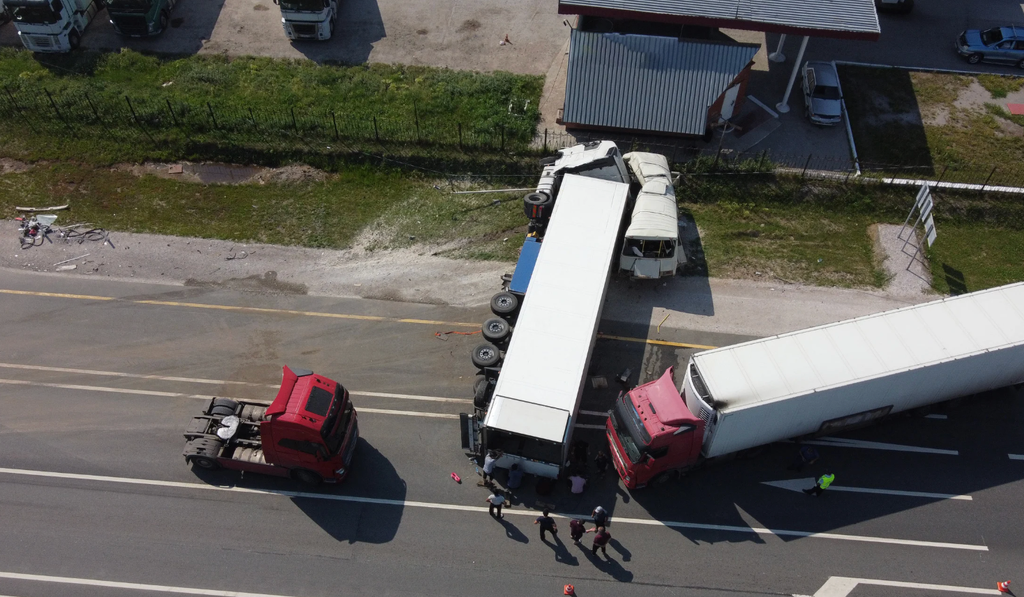
Who controls that evidence depends on the vehicles and parties involved. A private passenger vehicle may contain electronic crash data. A trucking company may possess driver logs, telematics, maintenance records, and other operational evidence. When a government vehicle is involved, potentially important footage and records may instead be held by the responsible public agency.
A case result reported by The May Firm illustrates why the source of that evidence can matter. The firm reports obtaining a $6.875 million settlement for a client who suffered a spinal injury after being T-boned by a police cruiser. For California car accident lawyers investigating a serious collision involving a public vehicle, identifying which agency controls relevant video, reports, and other records can therefore become an important part of the early investigation.
This guide explains the major types of evidence used after serious California highway crashes, what each can help prove, who may control it, and why preserving it early matters.
This guide explains each type of evidence, what it proves under California law, and how fast it can disappear.
Why Is Evidence So Important in California Highway Crashes?
Evidence matters because highway crashes happen fast and memories fade faster. At 70 mph, a car covers more than 100 feet every second.
In California, evidence also controls how fault is divided. The state uses pure comparative fault, a rule set by the California Supreme Court in Li v. Yellow Cab Co. (1975). Each driver is assigned a percentage of blame, and an injured person’s damages are reduced by their own share. Unlike Texas, California does not cut off recovery at 51%. Even a driver found 70% at fault can recover 30% of their damages.
That makes every percentage point worth fighting over.
What Does the Police Collision Report Show?
The police collision report is the officer’s first record of what happened. On state highways, the California Highway Patrol (CHP) usually investigates. On city streets, the local police department does.
The report usually includes:
- The date, time, and exact location
- The drivers, vehicles, and insurance information
- A diagram of the collision
- Road, lighting, and weather conditions
- The officer’s opinion on the primary collision factor
- Any Vehicle Code violations noted
Involved parties can request a copy from the CHP area office or the police department that took the report.
Note: California drivers must also file an SR-1 report with the DMV within 10 days if anyone was hurt or killed, or if property damage was more than $1,000. This is separate from the police report.
The report is helpful, but it is not the final word. Officers often arrive after the crash and rely on what drivers tell them.
What Is Black Box Data, and Who Can Get It in California?
Black box data is information saved by a vehicle’s event data recorder in the moments around a crash. It can show speed, braking, and steering right before impact.
California adds a rule many people do not know. Under California Vehicle Code Section 9951, recorder data generally cannot be downloaded without the vehicle owner’s consent or a court order, with limited exceptions. That means the other driver’s black box may require a formal legal request before anyone can read it.
Commercial trucks carry even more data:
- Engine control module (ECM): Speed, braking, and throttle
- Electronic logging device (ELD): Hours of driving and rest
- GPS and telematics: Location and route history
- Forward-facing cameras: Video of the road ahead
On busy freight routes like Highway 99 through Fresno and Bakersfield, or I-5 through the Central Valley, truck data is often the most important evidence in the case.
How Fast Can Electronic Evidence Disappear?
Electronic evidence can disappear in days or weeks. Many systems record over old data on a loop. A wrecked car may be sold for salvage. A truck may go back into service.
That is why a preservation letter should go out early. It is a written request asking the other side to save specific vehicles, data, video, and records.
What Happens If Someone Destroys Evidence in California?
California handles destroyed evidence, called spoliation, differently from some states. The California Supreme Court held in Cedars-Sinai Medical Center v. Superior Court (1998) that there is no separate lawsuit for intentional spoliation by a party to the case.
Instead, California relies on remedies inside the case:
- Jury instructions: Under California Evidence Code Section 413, a jury may consider a party’s willful suppression of evidence when weighing the facts.
- Discovery sanctions: A judge can penalize a party that destroys evidence after a lawsuit is filed.
These remedies work best when the other side was clearly told to preserve the evidence.
What Changes When a Government Vehicle Is Involved?
When a city, county, or state vehicle causes the crash, the rules change. California requires a written claim to the public entity before a lawsuit can be filed. Under Government Code Section 911.2, a claim for personal injury must generally be presented within six months.
The evidence is also different. Police cruisers often carry dashcams, and officers may wear body cameras. That footage, along with radio logs and vehicle data, is held by the agency itself. Asking for it early matters, because agencies follow their own retention schedules.
How Does Video Evidence Help?
Video shows what happened without relying on anyone’s memory. Sources include:
- Dashcams in either vehicle
- Police dashcams and body cameras
- Truck company cameras
- Gas station and business cameras near the road
- Phone videos from witnesses
Caltrans traffic cameras on routes like US-101 and I-5 often show live views without saving recordings, so they may not help later. Business cameras often record over themselves within days.
What Physical Evidence Matters at the Scene?
Physical evidence shows how the vehicles moved. Crash reconstruction experts use it to rebuild the collision.
Important clues include:
- Skid marks and yaw marks
- Where debris landed
- Damage patterns on each vehicle
- Final resting positions
- Gouges in the pavement
Photos taken right after the crash are often the only record. CHP and Caltrans crews work to clear highway lanes quickly.
Do Witness Statements and Phone Records Still Matter?
Yes. Independent witnesses can describe driver behavior that machines cannot capture, like weaving or looking down at a phone. Get names and numbers at the scene if you can.
Phone records can show whether a driver was texting or calling. California bans holding a phone while driving under Vehicle Code Section 23123.5, so phone use can be strong evidence of negligence. These records usually require a subpoena.
Medical records connect the injuries to the crash. Gaps in treatment are often used by insurers to argue an injury came from something else.
How Does All the Evidence Fit Together?
The evidence fits together like a timeline:
- The collision report sets the basic facts.
- Black box data shows speed and braking.
- Video shows lane position and movement.
- Scene evidence confirms the angle and force.
- Witnesses fill in driver behavior.
- Phone records explain distraction.
- Medical records connect the crash to the injuries.
When these line up, fault becomes much harder to dispute.
Remember:
- Fault after a California highway crash is proven by combining several types of evidence.
- California uses pure comparative fault, so damages are reduced by your share of blame but not cut off at 51%.
- Vehicle Code Section 9951 limits who can download black box data without consent or a court order.
- Destroyed evidence is handled through jury instructions and sanctions, not a separate lawsuit.
- Claims against public entities generally must be filed within six months. Most other injury lawsuits must be filed within two years.
The first few days after a crash shape the whole case. Knowing who holds each piece of evidence, and asking for it early, is often the difference between a disputed story and a clear one.







