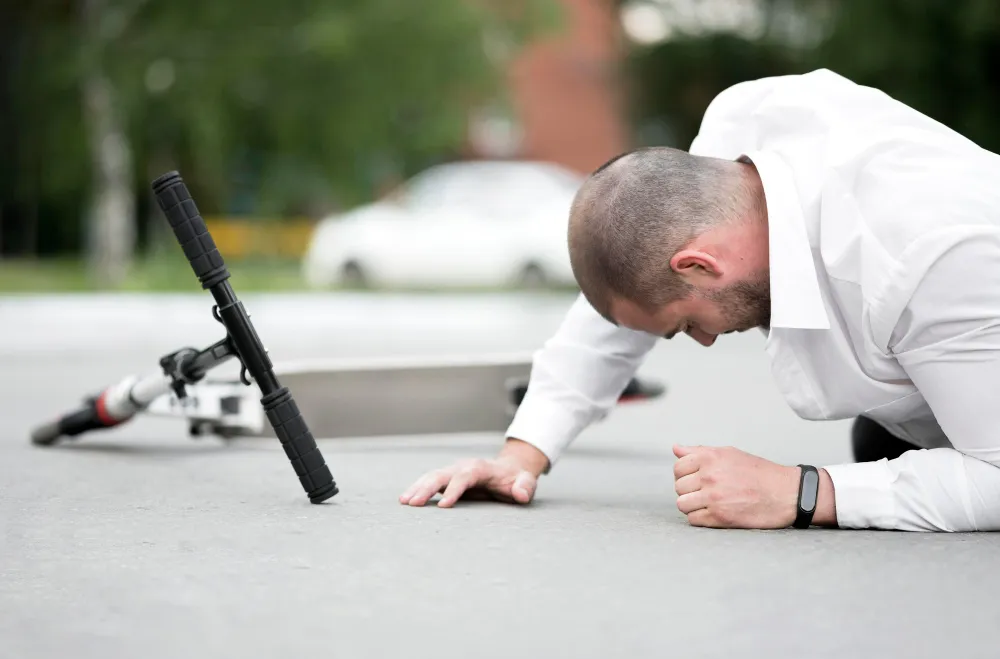
A bicycle accident lawsuit can recover thousands, sometimes hundreds of thousands, of dollars for injured cyclists when a driver, property owner, or government agency is at fault. If you or someone you know was hit while riding a bike in 2026, the law gives you real options.
This article breaks down exactly how these lawsuits work. You’ll learn who qualifies, what damages are available, how fault is calculated, and what settlements actually look like.
The numbers might surprise you. According to the National Highway Traffic Safety Administration, bicycle fatalities have been rising steadily over the past decade. That makes knowing your legal rights more urgent than ever.
We cover the full process from the crash scene to the courtroom, including specific guidance for Phoenix, Arizona and Santa Ana, California.
What Is a Bicycle Accident Lawsuit?
A bicycle accident lawsuit is a legal claim filed by an injured cyclist seeking financial compensation from the person or entity responsible for causing the crash.
It falls under personal injury law. The injured cyclist, called the plaintiff, files a civil case against the at-fault party, called the defendant.
The goal is to recover money for medical bills, lost income, physical pain, and other harms caused by the accident. Most cases never reach a courtroom. They settle during negotiations between attorneys and insurance companies.
But having a lawsuit filed, or the credible threat of one, is often what forces insurance companies to offer fair money.
| Lawsuit Type | Description |
|---|---|
| Negligence claim | Driver failed to exercise reasonable care |
| Product liability | Defective bike or road equipment caused the crash |
| Government liability | Poorly maintained road or bike lane caused harm |
| Wrongful death | Family files claim after cyclist is killed |
The most common type involves a driver who failed to yield, ran a red light, opened a car door into the bike lane, or simply wasn’t paying attention.
How to File a Bicycle Accident Lawsuit Step by Step
Filing a bicycle accident lawsuit starts with gathering evidence, then moves through insurance negotiations, and only escalates to court if a fair settlement isn’t reached.
Here’s the actual sequence most cases follow in 2026:
Step 1: Seek medical treatment immediately. Your health comes first, and medical records become critical evidence.

Step 2: Report the accident to police. A police report establishes an official record of what happened.
Step 3: Document the scene. Photos, witness names, and the driver’s insurance info are gold.
Step 4: Notify your own insurance company. Even if the other driver is at fault, your policy may have uninsured motorist protection.
Step 5: Consult a personal injury attorney. Most work on contingency, meaning no upfront cost to you.
Step 6: Your attorney sends a demand letter. This opens negotiations with the at-fault party’s insurer.
Step 7: Negotiate or litigate. If the insurer refuses a fair offer, your attorney files a formal lawsuit.
Think of it like a job application. You don’t walk into a company and demand a salary on day one. You build your case, present your qualifications, and negotiate. A lawsuit is the same process, just with medical bills and legal filings instead of a resume.
Who Can File a Bicycle Accident Claim?
Any person injured in a bicycle accident caused fully or partially by someone else’s negligence can file a claim.
This includes adult cyclists, minors (through a parent or guardian), and family members of cyclists who died in the crash.
You don’t need to have been wearing a helmet to qualify, though your state’s laws may affect how much your compensation is reduced if you weren’t. You don’t need to have been riding in a designated bike lane either.
| Who Can File | Details |
|---|---|
| Adult cyclist | Directly files claim or lawsuit |
| Minor cyclist | Parent or guardian files on their behalf |
| Family of deceased cyclist | Files wrongful death lawsuit |
| Passenger on a tandem bike | Can file separately if injured |
| Cyclist hit by uninsured driver | Can file against own insurer |
The key requirement is proof that someone else’s negligent or reckless behavior caused or contributed to your injuries.
Bicycle Accident Lawsuit Eligibility: Do You Qualify?
You likely qualify to file a bicycle accident lawsuit if you were injured, the other party was at least partially at fault, and the accident happened within your state’s statute of limitations.
Courts look at four basic elements to determine eligibility:
- Duty of care: Did the defendant owe you a duty to act safely? Drivers always owe a duty of care to cyclists.
- Breach: Did they violate that duty by driving recklessly, distracted, or drunk?
- Causation: Did their breach directly cause your injuries?
- Damages: Did you suffer real, measurable harm, whether physical, financial, or emotional?
If all four boxes are checked, you have a viable claim.
One thing people often overlook: you can still qualify even if you share some fault for the crash. Most states allow recovery even when the injured party is partially responsible. The amount you recover gets reduced, not eliminated.
Key stat: According to the Insurance Research Council, about 52% of bicycle accident claims involve some degree of shared fault between the cyclist and driver.
Key Takeaway: You can file a bicycle accident lawsuit if someone else’s negligence caused your injuries, even if you share partial fault for the crash.
Bicycle Accident Fault and Liability: Who Pays?
Fault in a bicycle accident lawsuit is assigned to whoever acted negligently, and that determination drives every dollar of compensation.
In most crashes involving a car and a bicycle, the driver is at fault. Common driver behaviors that create liability include:
- Failing to yield at an intersection
- Opening a car door into the bike lane (called “dooring”)
- Driving distracted or under the influence
- Running a stop sign or red light
- Passing too closely or aggressively
But liability doesn’t always land on just one person. A poorly maintained road can make a city or county liable. A defective bike component can make a manufacturer liable. A construction company can be liable for blocking a bike path without proper warning.
| Liable Party | Example Scenario |
|---|---|
| Driver | Ran red light, struck cyclist in intersection |
| City or municipality | Pothole in bike lane caused crash |
| Bike manufacturer | Brake failure due to product defect |
| Property owner | Dangerous driveway caused fall |
| Employer of driver | Driver was on the clock during crash |
Whoever’s negligence contributed to your injuries can be named in the lawsuit. Sometimes multiple parties share liability.
How Comparative Fault in Bicycle Accident Cases Affects Your Payout
Comparative fault means your compensation gets reduced by the percentage of the accident that was your own fault.
So if you were found 20% responsible for a crash and your total damages are $100,000, you’d collect $80,000, not the full amount.
Two main versions of this rule exist across states:
Pure comparative fault (used in California): You can recover compensation no matter how high your percentage of fault is. Even at 90% fault, you still get 10% of your damages.
Modified comparative fault (used in Arizona): You can only recover if you were less than 50% at fault. At 50% or more, you get nothing.
This distinction is huge. A cyclist in Santa Ana, California has more protection than a cyclist in Phoenix, Arizona if they’re found significantly at fault.
| Rule Type | States | Recovery Limit |
|---|---|---|
| Pure comparative fault | California (Santa Ana) | Can recover at any fault level |
| Modified comparative fault (50% bar) | Arizona (Phoenix) | Must be less than 50% at fault |
Insurance adjusters know these rules. They will try to assign you as much fault as possible to lower your payout.
What Damages Can You Claim in a Bicycle Accident Lawsuit?
You can claim both economic damages (measurable financial losses) and non-economic damages (pain, suffering, and life impact) in a bicycle accident lawsuit.
Economic damages include:
- Emergency room and hospital bills
- Ongoing physical therapy and rehabilitation
- Future medical care for permanent injuries
- Lost wages from missed work
- Loss of future earning capacity
- Property damage to your bicycle and gear
Non-economic damages include:
- Physical pain and suffering
- Emotional distress and anxiety
- Loss of enjoyment of activities you loved
- Disfigurement or permanent scarring
- Loss of consortium (impact on your relationship with a spouse)
In rare cases involving extreme recklessness, such as a drunk driver, courts may also award punitive damages. These are meant to punish the defendant and deter similar behavior.
Key stat: The average bicycle accident case with serious injuries includes non-economic damages that often exceed the economic losses by 1.5 to 3 times.
Key Takeaway: Bicycle accident lawsuits cover both hard financial losses like medical bills and softer but equally real harms like pain, trauma, and lost quality of life.
Bicycle Accident Settlement Amounts: What Are Cases Worth in 2026?
Bicycle accident settlement amounts in 2026 range from a few thousand dollars for minor injuries to well over $1 million for catastrophic or fatal crashes.
The range is wide because settlements depend on the severity of injuries, how clearly the other party was at fault, and what state you’re in.
Here’s a general breakdown:
| Injury Severity | Typical Settlement Range (2026) |
|---|---|
| Minor injuries (cuts, bruises, sprains) | $5,000 to $25,000 |
| Moderate injuries (fractures, concussions) | $25,000 to $150,000 |
| Serious injuries (TBI, spinal damage) | $150,000 to $500,000 |
| Catastrophic injuries (paralysis, amputation) | $500,000 to $2,000,000+ |
| Wrongful death | $500,000 to $5,000,000+ |
These are general ranges, not guarantees. Your specific case depends on factors like the defendant’s insurance policy limits, your ability to prove damages, and whether you had pre-existing conditions.
Cases in high-cost cities like those in California also tend to settle higher because medical care costs more and local jury verdicts have historically been larger.
Bicycle Accident Injuries and Compensation: From Bruises to Brain Trauma
The type and severity of your injury is one of the biggest factors in how much compensation you can recover from a bicycle accident lawsuit.
Cyclists are exposed. Unlike car drivers, they have no steel frame around them. That means even a low-speed crash can cause serious harm.
Common injuries and their compensation impact:
- Road rash: Usually resolves without surgery. Lower settlements in the $5,000 to $15,000 range.
- Broken bones: Arm, wrist, and collarbone fractures are frequent. Settlements often reach $30,000 to $80,000 depending on surgery requirements.
- Head and brain injuries: Traumatic brain injuries (TBI) are the most costly. Cases with TBI regularly settle above $200,000, and severe cases go much higher.
- Spinal cord injuries: These can cause permanent disability. Settlements frequently exceed $1 million.
- Internal organ damage: Often requires surgery and extended recovery. Mid-range settlements of $100,000 to $300,000 are common.
Helmet use matters here too. Wearing one doesn’t guarantee a lower settlement, but not wearing one can give the defense ammunition to argue you contributed to your own head injuries.
Bicycle Accident Lawsuit Evidence: What You Need to Win
Strong evidence is the foundation of any successful bicycle accident lawsuit. Without it, your case depends on your word against the driver’s.
The most powerful evidence includes:
- Police report: Documents the scene, identifies parties, and sometimes assigns preliminary fault.
- Medical records: Establish the nature and severity of your injuries and connect them to the crash.
- Photos and video: Scene photos, traffic cameras, dashcam footage, and surveillance video are extremely valuable.
- Witness statements: Independent witnesses who saw the crash carry significant weight.
- Expert testimony: Accident reconstruction specialists can recreate the crash using physics and data.
- Driver records: A history of traffic violations or prior accidents strengthens your negligence argument.
| Evidence Type | Why It Matters |
|---|---|
| Police report | Official record of crash details |
| Medical records | Proves injuries and treatment costs |
| Photos/video | Visual proof of fault and scene conditions |
| Witness statements | Independent corroboration |
| Expert witnesses | Technical credibility in court |
Gather what you can immediately. Evidence fades fast. Witnesses forget details. Cameras overwrite footage.
Key Takeaway: Evidence collected in the hours and days after a bicycle accident can be the deciding factor between a strong settlement and a dismissed case.
Filing a Bicycle Accident Lawsuit Against a Driver
Filing a lawsuit directly against a driver is the most common path in bicycle accident cases where a vehicle was involved.
You file against the driver personally, their insurance company typically steps in to defend them and pay any judgment up to policy limits.
Here’s what that process looks like:
- Your attorney files a civil complaint in the appropriate state court.
- The driver (defendant) is served with the lawsuit papers.
- Their insurer assigns a defense attorney.
- Both sides exchange evidence through a process called discovery.
- Depositions are taken from the driver, witnesses, and experts.
- Negotiations often intensify once the evidence is fully on the table.
- If no settlement is reached, the case goes to trial.
Most drivers carry liability coverage between $25,000 and $100,000. If your damages exceed policy limits, you may need to pursue the driver’s personal assets or your own underinsured motorist coverage.
Important: If the driver fled the scene, a hit-and-run lawsuit is still possible through your own insurer’s uninsured motorist provisions.
Bicycle Accident Lawsuit Timeline: From Crash to Resolution
A bicycle accident lawsuit typically takes between six months and three years to fully resolve, depending on the complexity of the case and how quickly both sides reach agreement.
Here’s a realistic timeline:
| Phase | Typical Duration |
|---|---|
| Medical treatment and recovery | 1 to 6 months |
| Attorney investigation and demand letter | 1 to 3 months |
| Insurance negotiation | 2 to 6 months |
| Filing lawsuit (if needed) | 1 to 2 months after negotiations fail |
| Discovery phase | 6 to 12 months |
| Trial (if no settlement) | Add 6 to 18 months |
Simple cases with clear fault and moderate injuries often settle within 6 to 12 months. Complex cases with severe injuries, disputed fault, or multiple defendants can take two to three years.
Patience matters here. Accepting a fast, low settlement before you know the full extent of your injuries is one of the most common mistakes cyclists make. Once you settle, you can’t go back for more.
Bicycle Accident Lawsuit Filing Deadline: Don’t Miss Your Window
The filing deadline for a bicycle accident lawsuit is set by your state’s statute of limitations, and missing it means losing your right to sue entirely.
This is not a soft deadline. Courts will dismiss your case if you file after the cutoff, no matter how strong your claim is.
| State | Statute of Limitations | Notes |
|---|---|---|
| Arizona | 2 years from the accident date | Applies to most personal injury claims |
| California | 2 years from the accident date | Standard personal injury rule |
| Against a government entity (AZ) | 180 days to file a notice of claim | Much shorter window |
| Against a government entity (CA) | 6 months to file a government claim | Strict administrative requirement |
If a city pothole caused your crash, or a government vehicle hit you, the deadline to put that entity on notice is dramatically shorter than two years.
The clock starts ticking on the date of the accident, not the date you decided to take legal action.
Key stat: According to legal filing data, a significant percentage of bicycle accident victims wait too long and lose their ability to file due to statute of limitations expiration.
Key Takeaway: Missing the statute of limitations deadline is an absolute case-killer, and government-related claims can have deadlines as short as 180 days.
Phoenix Bicycle Accident Lawsuit: What Arizona Riders Need to Know
A Phoenix bicycle accident lawsuit follows Arizona law, which uses modified comparative fault and requires cyclists to prove the driver was more than 50% responsible for the crash to recover any damages.
Phoenix has seen significant growth in cycling infrastructure over the past decade. But crashes remain common on high-speed arterials like Camelback Road, Indian School Road, and the surface streets around Tempe and Scottsdale.
Arizona law treats cyclists as vehicle operators. That means cyclists must follow traffic laws, but it also means drivers owe them the full duty of care owed to other vehicles on the road.
Key Arizona-specific rules:
- Modified comparative fault: You must be less than 50% at fault to recover anything.
- 2-year statute of limitations: From the date of the accident.
- Government notice requirement: 180 days if the city of Phoenix or a state agency contributed to the crash.
- No helmet law for adults: But lack of a helmet may be used to argue you worsened your own injuries.
| Factor | Arizona / Phoenix Rule |
|---|---|
| Fault standard | Modified comparative fault (50% bar) |
| Filing deadline | 2 years from crash date |
| Government notice | 180 days |
| Helmet law (adults) | None required |
| Minimum driver liability insurance | $25,000 per person |
Maricopa County Superior Court handles most Phoenix area bicycle accident lawsuits. Cases involving city infrastructure failures go through a preliminary government claims process before reaching court.
Santa Ana Bicycle Accident Lawsuit: California Rules and Local Factors
A Santa Ana bicycle accident lawsuit is governed by California law, which uses pure comparative fault and gives injured cyclists stronger recovery rights than most other states.
Santa Ana sits in Orange County and has dense traffic, active bike lanes along major corridors like Bristol Street and First Street, and a high volume of cycling activity. Crashes happen frequently in intersections and near commercial areas.
California’s pure comparative fault rule is the most cyclist-friendly standard in the country. You can recover compensation even if you were 80% at fault. Your payout is simply reduced by your percentage of fault.
Key California-specific rules:
- Pure comparative fault: You can recover at any fault level. $100,000 award at 70% fault still pays you $30,000.
- 2-year statute of limitations: From the date of injury.
- Government claim: Must be filed within 6 months if a public entity is involved.
- Three-foot passing law: California requires drivers to give cyclists at least three feet of clearance when passing.
| Factor | California / Santa Ana Rule |
|---|---|
| Fault standard | Pure comparative fault (no bar) |
| Filing deadline | 2 years from injury date |
| Government notice | 6 months |
| Three-foot passing law | Yes, strictly enforced |
| Dooring law | Yes, drivers liable for opening into bike path |
Orange County Superior Court handles Santa Ana area bicycle accident cases. California juries historically award higher verdicts than the national average, which affects settlement negotiations significantly.
How Long Does a Bicycle Accident Lawsuit Take?
A bicycle accident lawsuit takes anywhere from a few months to several years, depending on whether the case settles or goes to trial.
The short version: most cases settle without a full trial. When they do, it often happens within 6 to 18 months. When they don’t settle, cases can stretch to three years or more.
Here’s what drives the timeline longer:
- Disputed liability: When both sides disagree on who was at fault, more investigation and expert testimony is needed.
- Severe injuries: Attorneys typically wait until you’ve reached “maximum medical improvement” before settling, so they know the full extent of your damages.
- Multiple defendants: More parties mean more attorneys, more depositions, and more negotiation.
- Court backlog: Some county courts have crowded dockets that push trial dates back by a year or more.
What speeds things up:
- Clear video evidence of fault
- Defendant’s insurance company willing to negotiate early
- Moderate injuries with a defined recovery period
- A single, clearly responsible party
Key stat: According to legal industry data, approximately 95% of personal injury cases, including bicycle accident lawsuits, resolve before reaching trial.
Patience is strategic. Rushing to settle before your medical picture is complete almost always results in leaving real money on the table.
Key Takeaway: Most bicycle accident lawsuits settle within a year or two, but the timeline depends entirely on how clear the fault is and how serious the injuries are.
Frequently Asked Questions
How much is a bicycle accident lawsuit worth in 2026?
Bicycle accident lawsuit values in 2026 range from $5,000 for minor injuries to over $1 million for catastrophic harm.
The exact figure depends on your injuries, the strength of the evidence, and the at-fault party’s insurance coverage.
Cases involving traumatic brain injuries or permanent disability regularly settle in the six and seven-figure range.
Who is at fault in a bicycle accident with a car?
Fault in a bicycle accident is determined by which party acted negligently, and in most car-versus-bike crashes, the driver is primarily at fault.
Drivers have a legal duty to watch for cyclists, yield appropriately, and maintain safe distances.
However, cyclists can share partial fault if they ran a red light, rode against traffic, or violated other traffic laws.
How long do I have to file a bicycle accident lawsuit?
In most states, you have two years from the date of the accident to file a bicycle accident lawsuit.
Arizona and California both follow the two-year rule for standard personal injury claims.
If a government entity is involved, the notice deadline can be as short as 180 days, so acting quickly is essential.
What evidence do I need for a bicycle accident lawsuit?
The strongest evidence for a bicycle accident lawsuit includes a police report, medical records, photos of the scene, and witness statements.
Video footage from traffic cameras, dashcams, or nearby businesses can be extremely powerful.
Expert accident reconstruction testimony may be needed in disputed cases to establish how the crash happened.
Can I sue if I was partially at fault in a bicycle accident?
Yes, you can still file a bicycle accident lawsuit if you were partially at fault, but the rules differ by state.
California uses pure comparative fault, meaning you can recover compensation at any fault level.
Arizona uses modified comparative fault, meaning you must be less than 50% at fault to recover anything.
Closing
Bicycle accident lawsuits give injured cyclists a real path to financial recovery. Whether you’re dealing with a broken arm from a Phoenix intersection crash or a more serious injury from a Santa Ana street collision, your legal rights are clear and enforceable in 2026.
Check your state’s statute of limitations now. Missing that window closes the door permanently.
Start by gathering every piece of evidence you have, get your injuries documented, and connect with a personal injury attorney who handles bicycle cases. Most work on contingency, so the process costs you nothing unless you win.