Latest update (November 11, 2026): The Allstate data collection class action is a consolidated case against Allstate and its subsidiary Arity in the U.S. District Court for the Northern District of Illinois (In re Allstate & Arity Consumer Privacy Litigation, No. 25 CV 407). On March 3, 2026, Judge Jeremy C. Daniel let key privacy and wiretap claims continue while dismissing others. No class certification or settlement has been reported.
What’s next: Watch for further rulings in the Illinois case and any class certification motion. There is no claim form or deadline today. We’ll update this page if new details emerge.
Last updated: November 2026
The Allstate data collection class action lawsuit accuses the insurance giant and its subsidiary Arity of secretly harvesting driving data from millions of Americans through everyday mobile apps. If you used popular apps like Life360, GasBuddy, or Fuel Rewards in recent years, your data may have been collected and sold without your knowledge.
Related: Android User Data Collection Lawsuit: Google Settlement Update 2026
This case is moving through federal court. Multiple lawsuits have been consolidated, and a federal judge let key privacy claims continue in March 2026.
In this guide, you will find out who may be affected, what the court has decided so far, whether any settlement or claim process exists, and what to watch next. One striking detail: Arity reportedly collected data from over 45 million drivers across the United States.
That is not a typo. Forty-five million people may have had their location, speed, braking habits, and driving routes tracked without ever agreeing to it.
What Is the Allstate Data Collection Class Action Lawsuit?
The Allstate data collection class action lawsuit is a series of consolidated legal actions alleging that Allstate and its data analytics subsidiary, Arity, secretly collected detailed driving behavior data from tens of millions of consumers through third-party mobile apps. The core claim is that this data was gathered without proper consent and then used to influence insurance pricing.
Arity embedded its software development kit (SDK) into popular consumer apps. These SDKs operated in the background, tracking users’ locations, driving speeds, braking patterns, acceleration habits, and trip routes. Most users had no idea this tracking was happening.
The collected data was then funneled back to Allstate and sold to other insurance companies. Insurers used it to adjust premiums, sometimes raising rates on drivers who had never filed a claim or received a ticket.
| Key Case Details | Information |
|---|---|
| Primary Defendant | Allstate Corporation and Arity LLC |
| Lead Court | U.S. District Court, Northern District of Illinois |
| Case Number | No. 25 CV 407 (consolidated) |
| Number of Affected Consumers | Estimated 45 million or more |
| Core Allegation | Unauthorized collection and sale of driving data |
| Primary Laws Cited | State privacy laws, FTC Act, common law privacy |
The lawsuits were initially filed in multiple states. Texas Attorney General Ken Paxton brought one of the most aggressive state-level actions. Private class action attorneys followed with federal filings.
These cases have been increasingly consolidated for efficiency. The class action component targets Allstate’s broader lawsuit exposure rather than individual incidents.
Allstate Data Collection Lawsuit Update 2026
As of November 11, 2026, the consolidated federal case against Allstate and Arity is still in litigation. On March 3, 2026, Judge Jeremy C. Daniel of the Northern District of Illinois granted in part and denied in part the defendants’ motion to dismiss.
That ruling let the main privacy claims continue, including wiretap claims, Fair Credit Reporting Act claims against Arity, a California pen register claim, and privacy and unjust enrichment claims. Computer hacking claims and a few others were dismissed. No class certification ruling or settlement has been reported.
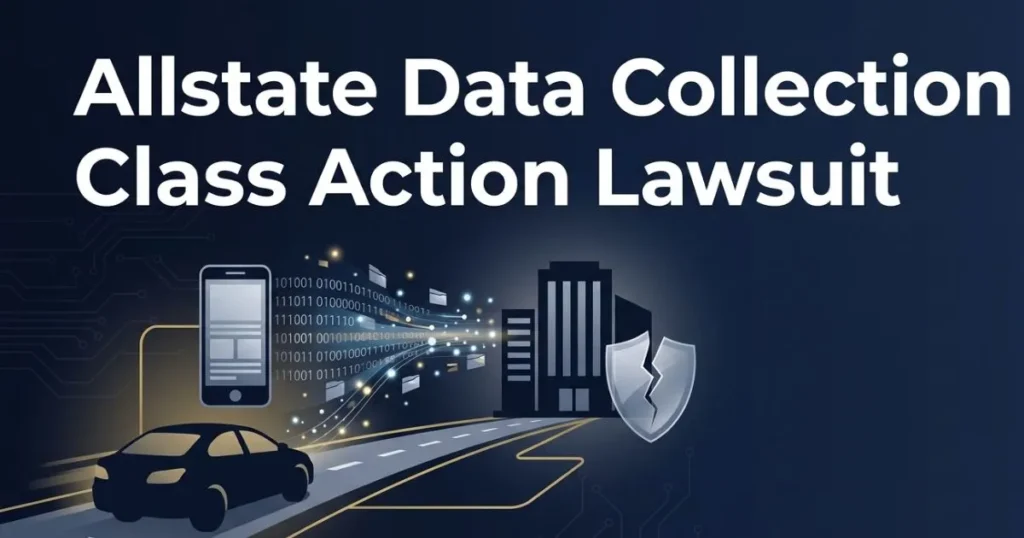
Plaintiffs allege that Arity’s software collected driving data without meaningful consent and that the data was used to raise premiums. Allstate argues that its privacy policies made clear data could be collected and that sharing was opt-in through Arity-powered apps.
Key developments:
- March 3, 2026: motion to dismiss granted in part and denied in part
- Wiretap, Fair Credit Reporting Act and privacy claims continue
- No class certification or settlement has been reported
The Texas Attorney General sued Allstate and Arity in January 2025, but on April 10, 2025, a Montgomery County judge ruled the court lacked jurisdiction over both companies, which ended those claims in that court.
What to watch next: further rulings in the Illinois case, any class certification motion, and whether the parties announce a settlement.
Who Is Affected by the Allstate Data Lawsuit?
You may be affected if you used a mobile app that contained Arity’s tracking software, according to the allegations. You do not need to be an Allstate customer for that to be true.
Arity embedded its software into apps used by the general public. So even if you have never held an Allstate policy, your driving data may have been harvested and sold.
People most likely to be affected include:
- You used one or more apps known to contain Arity’s SDK
- You used those apps during the data collection period (approximately 2020 to 2024)
- You are a U.S. resident
- Your app had location services enabled on your phone
- You did not receive clear, specific consent notifications about driving data collection
| Eligibility Factor | Qualifies | Does Not Qualify |
|---|---|---|
| Used an Arity-embedded app | Yes | Did not use any listed app |
| Time period of use | 2020 to 2024 | Before 2020 only |
| Location services on phone | Enabled during app use | Always disabled |
| Allstate policyholder | Not required | Not a disqualifier |
| U.S. resident | Required | Non-U.S. residents excluded |
No class has been certified yet, so the group of people covered could still change.
If you are unsure whether your app was affected, check the list of known Arity partner apps. Several have been publicly identified through court filings and investigative reporting.
Key Takeaway: You do not need to be an Allstate customer to be affected; anyone who used an app with Arity’s tracking software during the period may be covered by the allegations.
How Does the Allstate Arity Data Tracking Lawsuit Work?
The Allstate Arity data tracking lawsuit centers on the mechanics of how Arity’s technology infiltrated consumer apps and collected data covertly. Understanding this tech is important because it explains why millions of people were affected without their knowledge.
Arity is a data analytics company that Allstate created in 2016. Its stated mission was to use driving data to improve road safety and insurance accuracy. In practice, plaintiffs allege, it became a massive data harvesting operation.
Here is how the tracking worked in simple terms. Arity created a piece of software called an SDK. Think of it like a tiny invisible program. App developers integrated this SDK into their apps, often in exchange for payment from Arity. Once embedded, the SDK quietly ran in the background whenever you opened the app.
What the SDK collected:
- GPS location data (where you drove and when)
- Speed and acceleration patterns
- Hard braking events
- Trip duration and frequency
- Time of day you drove
- Phone usage while driving
The SDK did not announce itself. It did not create a separate pop-up asking for consent. It piggybacked on the app’s existing location permissions. So when you gave GasBuddy permission to find gas stations near you, you were unknowingly giving Arity permission to track every mile you drove.
This data was sent to Arity’s servers. From there, it was packaged into driver risk profiles. Those profiles were sold to insurance companies, including Allstate and its competitors. Insurers used this information to raise premiums on drivers deemed “high risk” based on their tracked behavior.
The lawsuit argues this entire chain of events happened without meaningful consumer consent.
Is There an Allstate Data Collection Lawsuit Settlement?
No. As of November 11, 2026, no settlement has been reported in the consolidated federal case. We could not confirm any mediation date, settlement fund or approval hearing.
If a settlement is announced, it would need court approval after notice to class members, and we will add the details here.
How Much Will I Get From the Allstate Data Lawsuit?
Nothing has been awarded and no payout amount has been set. No settlement has been reported, so any per-person figure you see online is a guess.
If a settlement is reached, the amount per person would depend on the total fund, the number of valid claims and the settlement’s payment rules.
Key Takeaway: There is no confirmed payout amount in this case yet.
Can I File a Claim in the Allstate Data Collection Case?
Not right now. No settlement or claims process has been announced in the federal case, so there is no claim form or settlement website to use.
Right now, you can take several preparatory steps. Check your phone’s app download history. Both Apple and Google keep records of every app you have ever downloaded. Look for apps known to contain Arity’s SDK.
Save any insurance documents showing premium increases during the 2020 to 2024 period. If your rates went up without any accidents, tickets, or claims on your record, that could support a higher-tier claim.
| Preparation Step | How To Do It |
|---|---|
| Check app download history | Apple: App Store > Profile > Purchased. Google: Play Store > Manage Apps |
| Save insurance rate records | Download or screenshot policy renewal notices showing premium changes |
| Document location permissions | Check phone settings for apps with location access enabled |
| Sign up for case updates | Check this page or the court docket; no claims administrator exists yet |
If a class or settlement is approved later, class counsel would represent the class and filing a claim is normally free. Speak with an attorney if you want advice on an individual claim.
Is There an Allstate Data Collection Lawsuit Deadline?
No. No settlement or claims process exists, so there is no claim deadline. Do not trust a site or ad that gives you a filing date unless it links to a court order or an official notice.
To follow the case, check the court docket or this page, which we update when new details emerge.
The Texas Attorney General’s separate action is not a claims process either. A Texas state court ruled in April 2025 that it lacked jurisdiction over Allstate and Arity.
Key Takeaway: There is no claim deadline because there is no settlement, so nothing needs to be filed right now.
Who Might Be Covered by a Class?
No class has been certified, so there is no official eligibility list. The people most likely to be covered, based on the allegations, are U.S. drivers who used apps containing Arity’s software with location sharing on, roughly between 2020 and 2024.
One nuance worth understanding: some apps buried Arity’s data collection in lengthy terms of service agreements. The lawsuit argues that these disclosures were so hidden and vague that they did not constitute real consent. The court’s ruling on this issue will affect who ultimately qualifies.
If you never installed any of the affected apps, or kept location sharing off, you are unlikely to be affected.
What Apps Did Arity Use to Track Drivers?
Arity embedded its tracking SDK into dozens of popular consumer apps that had nothing to do with insurance. The apps ranged from gas station finders to weather apps to family safety trackers. Most users would never have suspected these apps were feeding their driving data to an insurance company.
Confirmed and reported Arity partner apps include:
- Life360 (family location sharing)
- GasBuddy (gas price comparison)
- Fuel Rewards (gas station loyalty program)
- MyRadar (weather radar)
- Routely (driving and navigation)
- Various other navigation and utility apps
| App Name | App Category | Estimated Users |
|---|---|---|
| Life360 | Family Safety | 33 million+ |
| GasBuddy | Gas Prices | 18 million+ |
| Fuel Rewards | Loyalty Rewards | 10 million+ |
| MyRadar | Weather | 8 million+ |
| Routely | Navigation | Unknown |
The total number of apps containing Arity’s SDK may be much larger than what has been publicly identified. Court discovery documents are expected to reveal the full list. Some reports suggest more than 40 apps were involved.
What makes this especially troubling is the mismatch between app purpose and data use. When someone downloads a weather app, they expect it to show radar images. They do not expect it to track their braking habits and sell that information to insurance companies.
The SDK worked silently within these apps. It did not add a separate icon to your phone. It did not send you notifications. It simply collected data whenever the host app was running, and in some cases, even when the app was running in the background.
App developers received financial compensation from Arity for integrating the SDK. This created a business model where app companies profited from their users’ data without transparency.
How Did Allstate Profit From Selling Driving Data?
Allstate profited from selling driving data by using Arity as a middleman that turned raw consumer information into packaged risk profiles sold to insurers across the industry. This was not a side project. It was a deliberate revenue stream built on consumer data most people never knew they were sharing.
Arity collected driving behavior data from millions of app users. That raw data was processed through algorithms that scored each driver based on perceived risk. Factors like speeding frequency, hard braking events, late-night driving, and phone usage behind the wheel all fed into these scores.
How the data monetization chain worked:
- Consumer downloads a popular app (like GasBuddy)
- Arity’s SDK silently collects driving data through the app
- Data is transmitted to Arity’s servers
- Algorithms generate a “driving risk score” for each user
- Risk scores are sold to insurance companies
- Insurers use scores to adjust premiums
The insurance companies purchasing this data used it to raise rates on drivers flagged as risky. Some consumers saw premium increases of 15% to 40% without understanding why their rates jumped. They had no accidents. No tickets. No claims. But their data told insurers they braked too hard or drove late at night.
| Revenue Stream | Description |
|---|---|
| Direct data sales | Arity sold risk profiles to competing insurers |
| Internal use | Allstate used data for its own underwriting decisions |
| Data licensing | Ongoing subscriptions for access to driver behavior databases |
| Behavioral analytics products | Packaged insights sold to fleet companies and marketers |
The lawsuit alleges this entire business model was built on a foundation of non-consent. Allstate did not just collect data for internal use. It created an entire commercial enterprise around data that consumers never agreed to share.
Key Takeaway: Allstate did not just collect driving data for its own use; through Arity, it built a commercial data-selling operation that generated revenue by selling consumer driving profiles to competing insurance companies.
Is There an Allstate Arity Settlement Payout?
No. As of November 11, 2026, no Allstate Arity settlement or payout has been reported. Any dollar figure you see online for this case is a guess, not a confirmed amount.
Some state privacy laws allow statutory damages, which is why part of those claims was allowed to continue. Any amount would be decided by the court or by a settlement.
Understanding the Allstate Data Privacy Class Action
The Allstate data privacy class action is rooted in violations of both state privacy statutes and common law principles of consent and fair dealing. This is not just a corporate embarrassment. It represents one of the largest alleged consumer privacy violations in the insurance industry’s history.
The legal theories behind the case include:
- Invasion of privacy: Collecting personal data without informed consent
- Violation of state privacy laws: Including the Texas DPSA, California CCPA, and Illinois laws
- Unjust enrichment: Allstate profited from data it had no right to collect
- Consumer fraud: Deceptive practices in how data collection was hidden
- Negligence: Failure to implement proper consent mechanisms
| Legal Theory | What It Means | Potential Damages |
|---|---|---|
| Invasion of privacy | Tracking without consent is a privacy violation | Compensatory damages |
| State privacy law violations | Specific state statutes provide set penalties | Statutory damages up to $7,500 per violation |
| Unjust enrichment | Allstate must return profits gained unfairly | Disgorgement of revenue |
| Consumer fraud | Hiding data collection practices is deceptive | Treble (triple) damages in some states |
What sets this case apart from typical data breach lawsuits is the intentionality. This was not a hacker stealing data. This was a Fortune 100 company allegedly designing a system to collect data covertly. That distinction matters in court because it suggests willful conduct, which can increase damages.
The consolidated case combines about 15 lawsuits against Allstate and Arity into one proceeding, which is more efficient for the court. It is a proposed class action, and no class has been certified.
Allstate Driving Data Lawsuit: Where Things Stand
The consolidated case, In re Allstate & Arity Consumer Privacy Litigation (No. 25 CV 407), is in the U.S. District Court for the Northern District of Illinois before Judge Jeremy C. Daniel. On March 3, 2026, the court granted in part and denied in part the motion to dismiss.
What the March 3, 2026 ruling decided:
- Federal and state wiretap claims, and Fair Credit Reporting Act claims against Arity, can continue
- A California pen register claim, privacy claims and unjust enrichment claims can continue
- State consumer protection claims can continue only for statutory damages
- Computer hacking claims, a New York SHIELD Act claim and a Pennsylvania privacy claim were dismissed
We did not find a reported class certification ruling, settlement or trial date in this case.
Key Takeaway: As of November 11, 2026, key claims have survived a motion to dismiss, but there is no settlement, claim form or deadline yet.
Allstate Data Lawsuit Payout Timeline
There is no payout timeline because no settlement has been reported. If one is reached, it would need court approval and a notice and claims process before payments are sent.
Class action payouts never happen quickly. Even after a settlement is announced, there are mandatory legal steps that add months to the process.
Typical steps after any settlement are preliminary approval, notice to class members, a claim window, a fairness hearing and final approval. None of these steps has begun in this case.
Allstate Consumer Data Privacy Violation Explained
Allstate’s consumer data privacy violation involves the collection, processing, and sale of personal driving information without obtaining the type of clear, informed consent required by both state and federal privacy standards. This is not just a technical legal issue. It affected real people’s wallets and privacy.
The violation has several layers. First, consumers were never clearly told that apps they downloaded contained Arity’s tracking SDK. Second, even when some apps included vague references to data sharing in their terms of service, these disclosures failed to meet the standard of “informed consent” under most state privacy laws. Third, the data was not just collected. It was sold commercially for profit.
What makes this a privacy violation:
- Data was collected without clear, affirmative consent
- Users could not reasonably know tracking was occurring
- The purpose of data collection (insurance risk scoring) was never disclosed
- Data was sold to third parties for commercial gain
- Users had no meaningful way to opt out
Several state laws specifically prohibit this type of conduct. The Texas Data Privacy and Security Act requires businesses to obtain consent before collecting sensitive personal data. The California Consumer Privacy Act gives residents the right to know what data is being collected and to opt out of its sale.
| Privacy Law | Key Protection | Relevance to Allstate Case |
|---|---|---|
| Texas DPSA | Consent required for sensitive data collection | Arity allegedly collected without consent in Texas |
| California CCPA | Right to know and opt out of data sales | California users had no opt-out mechanism |
| Illinois privacy laws | Strong protections for personal data | Illinois is the jurisdiction for the federal case |
| FTC Act Section 5 | Prohibits unfair and deceptive practices | FTC reportedly investigating Allstate/Arity |
The harm was not abstract. People saw their insurance rates go up based on data they never consented to share. That is a real financial consequence that flowed directly from the privacy violation.
Is This an Allstate Data Breach Class Action?
This case is not technically a data breach class action, although it shares some similarities with data breach lawsuits. The distinction matters because it affects how damages are calculated and what plaintiffs need to prove.
In a data breach, an outside party (usually a hacker) gains unauthorized access to a company’s systems and steals consumer data. The company is typically sued for failing to protect that data adequately. Famous examples include the Equifax and Target breaches.
The Allstate case is different. Here, the company itself is the one that collected the data improperly. There was no hacker. There was no security failure. Instead, Allstate’s subsidiary deliberately built a system to harvest consumer data covertly. The data went exactly where Allstate intended it to go.
Key differences between this case and a data breach:
| Factor | Data Breach | Allstate Data Collection Case |
|---|---|---|
| Who accessed the data | Unauthorized hackers | The company itself (Arity/Allstate) |
| Was the collection intentional | No, it was a security failure | Yes, it was by design |
| Type of data exposed | SSNs, credit cards, passwords | Driving behavior, location, habits |
| Legal theory | Negligence, failure to protect | Invasion of privacy, deception |
| Damages focus | Identity theft risk | Privacy invasion, financial harm from rate increases |
Some people may refer to it casually as a “data breach,” and that is understandable. The end result feels the same: a company had your personal information that it should not have had. But in legal terms, this is a data collection and privacy violation case, not a breach case.
This distinction actually benefits plaintiffs. Proving intentional misconduct is often more powerful in court than proving negligence. It can lead to higher damages, including punitive damages designed to punish the company for willful behavior.
Key Takeaway: This is not a traditional data breach case caused by hackers; it is an intentional data collection case where Allstate’s subsidiary Arity deliberately built systems to harvest driving data without consumer consent, which could lead to even higher damages.
Frequently Asked Questions
Is there a deadline to file a claim in the Allstate data collection lawsuit?
No. As of November 11, 2026, no settlement or claims process has been reported, so there is no claim deadline.
The case is still moving through the Northern District of Illinois after a March 2026 ruling on motions to dismiss.
Be careful with websites or ads that promise a claim form. None exists unless a court-approved notice says so.
How do I know if Arity tracked my driving data through an app?
Check your phone’s app download history for known Arity partner apps like Life360, GasBuddy, Fuel Rewards, and MyRadar.
If you had any of these installed with location permissions enabled between 2020 and 2024, your data may have been collected.
A full list of affected apps has not been confirmed publicly. Check court filings and company statements for updates.
Do I need proof of data collection to take part?
There is no claim process yet, so no proof is required today.
If you want to prepare, app download records, insurance renewal notices and screenshots of location permissions can help show whether you used an app that contained Arity’s software.
Keeping this evidence now can help if a claims process opens or you decide to speak with an attorney.
Can I join the Allstate data lawsuit if I live outside Texas?
The federal case in Illinois combines lawsuits from across the country, and in March 2026 the judge let claims under the laws of 20 states move forward. It is a proposed class action and no class has been certified, so there is nothing to join yet.
The Texas Attorney General’s case was a separate state action. On April 10, 2025, a Montgomery County judge ruled that the court lacked jurisdiction over Allstate and Arity, which ended the state’s data collection claims in that court.
Your state’s privacy laws may affect how strong a claim is if the case later proceeds as a class action.
Will there be Allstate data collection lawsuit payments?
No payments have been announced. As of November 11, 2026, no settlement has been reported in the consolidated federal case, so there is no fund, claim form or payment date.
Any settlement would need court approval, followed by a notice and claims process, before payments go out.
If a settlement is announced, we will explain how payments would be sent.
This case is one of the larger consumer privacy fights in the insurance industry. If you used popular apps like Life360 or GasBuddy between 2020 and 2024, your driving data may have been collected, according to the allegations.
Right now, there is nothing to file. You can check your app history, save your insurance records, and watch for court updates.
If a settlement or claims process is announced, we will update this page.