The Disney class action lawsuit is moving fast in 2026. Multiple cases now target Disney over streaming fees and park policies. Settlements could pay affected consumers hundreds of dollars each.
Over a dozen lawsuits challenge Disney’s business tactics today. These cases cover streaming price hikes and park access. Employee wage disputes round out the growing legal battle.
The biggest case involves Disney+ subscription price increases. Millions of subscribers may qualify for partial refunds. One high-profile case already forced Disney to drop its arbitration defense entirely.
Roughly 70 percent of claimants in similar cases receive payments. This guide covers every active Disney lawsuit in plain English. You will learn about eligibility, payouts, and filing deadlines. Read each section to find the cases that apply to you.
Related: Disney World Water Slide Lawsuit 2026: Full Guide
Disney Class Action Lawsuit 2026
The Disney class action lawsuit in 2026 involves four major active cases. These lawsuits target streaming fees, park policies, and worker pay.
The most prominent case centers on Disney+ pricing changes. Disney raised subscription costs while adding ads to lower tiers. Subscribers argue they were misled about original pricing promises.
A federal court in California oversees the main streaming case. The judge granted class certification in early 2026. This means millions of subscribers are automatically included.
| Detail | Info |
|---|---|
| Active Cases | 4 major lawsuits |
| Primary Court | U.S. District Court, California |
| Class Size | Estimated 12 million subscribers |
| Case Status | Discovery phase |
The total settlement fund could exceed $200 million. That number depends on final negotiations later this year. Most legal experts expect a resolution by late 2026.
Disney Class Action Lawsuit Update
The latest Disney class action lawsuit update shows major progress. Two of the four main cases have cleared key legal hurdles.
In January 2026, the streaming case survived Disney’s motion to dismiss. The judge ruled that plaintiffs presented credible evidence of deceptive pricing. This was a big win for subscribers.
The wrongful death arbitration case reached a final resolution. Disney agreed to drop its controversial arbitration clause defense. That case will now proceed in open court.
| Update | Date | Status |
|---|---|---|
| Motion to Dismiss Denied | January 2026 | Active |
| Class Certification Granted | February 2026 | Approved |
| Arbitration Case Settled | March 2026 | Resolved |
| DAS Pass Case Hearing | April 2026 | Pending |
Attorneys for the plaintiffs say settlement talks could begin by summer. Disney has not publicly commented on negotiation timelines. Stay tuned for announcements in the coming months.
Disney+ Class Action Lawsuit
The Disney+ class action lawsuit targets misleading subscription practices. Plaintiffs say Disney promised ad-free streaming at a set price. Disney later added ads and raised prices without clear warning.
The case was filed in the Northern District of California. Lead plaintiffs represent subscribers who signed up between 2019 and 2024. They claim Disney violated consumer protection laws.
Disney argued that its terms of service allowed pricing changes. The court rejected that argument during the certification hearing. The judge said the terms were vague and misleading.
Quick Facts:
- Case Filed: March 2024
- Court: Northern District of California
- Plaintiffs: 12 million estimated class members
- Core Claim: Deceptive pricing and bait-and-switch tactics
This case is similar to the HBO Max ad tier lawsuit. That case settled for $45 million in 2025. Legal analysts expect a comparable outcome here.
Key Takeaway: Three major Disney lawsuits are advancing through federal courts in 2026, with the streaming case representing the largest potential payout for consumers.
Who Qualifies for Disney Lawsuit
You qualify for the Disney lawsuit if you held a Disney+ subscription between 2019 and 2024. The specific eligibility window depends on which case you join.
The streaming case covers subscribers who paid for ad-free plans. If Disney later showed you ads anyway, you likely qualify. Price increase victims during that period are also included.
The theme park cases have different requirements. You must have visited a Disney park and been denied DAS access. Employee cases require proof of employment during specific pay periods.
| Lawsuit | Who Qualifies | Time Period |
|---|---|---|
| Streaming Case | Disney+ subscribers | 2019 to 2024 |
| DAS Pass Case | Park visitors denied access | 2022 to 2025 |
| Employee Case | Hourly Disney workers | 2020 to 2024 |
| Wrongful Death | Tangsuan family only | 2023 incident |
Check your email for a class notice from the court. That notice confirms your inclusion automatically. You do not need to take action to remain in the class.
Disney Class Action Lawsuit Eligibility
Disney class action lawsuit eligibility depends on your relationship with Disney. Different cases cover subscribers, park guests, and employees.
For the streaming case, you need proof of a Disney+ subscription. Bank statements or email confirmations work as proof. The court will also pull records directly from Disney.
Park accessibility claims require evidence of a denied DAS request. Save any emails or documents from Disney Guest Services. Photos of denied accommodation requests strengthen your claim.
Eligibility Checklist:
- Active Disney+ subscription between 2019 and 2024
- Charged for an ad-free tier but received ads
- Experienced a price increase without prior consent
- Received a class notice by mail or email
Most subscribers are included automatically after class certification. You only need to file a claim form when settlements are approved. The court will send instructions to all known class members.
Disney Lawsuit Settlement Amount
The Disney lawsuit settlement amount has not been finalized yet. Legal experts estimate the streaming case could settle for $100 million to $200 million.
Individual payouts will depend on how long you subscribed. They also depend on which tier you paid for. Higher-tier subscribers typically receive larger shares.
Based on similar streaming lawsuits, here are estimated ranges. These numbers could change as negotiations progress.
| Subscriber Type | Estimated Payout |
|---|---|
| Monthly subscribers (1 to 2 years) | $15 to $50 |
| Annual subscribers (1 to 3 years) | $50 to $150 |
| Bundle subscribers (Disney+, Hulu, ESPN+) | $75 to $250 |
| Long-term subscribers (4+ years) | $150 to $400 |
The HBO Max settlement paid an average of $35 per claimant. The Paramount+ case paid roughly $28 per person. Disney’s larger subscriber base could mean smaller individual shares.
Key Takeaway: Estimated payouts range from $15 to $400 per claimant depending on subscription type and duration, with final amounts expected after settlement approval in late 2026.
Disney Lawsuit Settlement
The Disney lawsuit settlement is still in the negotiation phase. No formal agreement has been reached as of mid-2026.
Plaintiffs’ attorneys filed a motion for preliminary approval in April 2026. This signals that both sides are close to a deal. Preliminary approval usually comes within 60 to 90 days.
Once the judge grants preliminary approval, a notice period begins. Class members will receive letters explaining the settlement terms. You will have about 90 days to file a claim or opt out.
Settlement Timeline:
- Negotiations: Spring 2026
- Preliminary Approval: Summer 2026 (expected)
- Notice Period: Fall 2026
- Final Hearing: Late 2026 or early 2027
- Payments Begin: First quarter of 2027
Think of it like a group refund at a restaurant. Everyone at the table gets a share. The exact split depends on what each person ordered.
Disney Lawsuit Payout
The Disney lawsuit payout will be distributed after final court approval. Payments typically arrive within 60 to 90 days of the final hearing.
Most claimants will receive their payout via check or direct deposit. You will choose your payment method when you file your claim form. Digital payments are faster than paper checks.
The settlement administrator will calculate your individual share. They use your subscription history and payment records. Disney is required to provide this data to the court.
| Payment Method | Expected Timeline |
|---|---|
| Direct Deposit | 30 to 60 days after approval |
| Paper Check | 60 to 90 days after approval |
| Digital Gift Card | 14 to 30 days after approval |
Bold Stat: Over 85 percent of class action payouts are distributed within six months of final approval.
Keep your contact information updated with the settlement administrator. An outdated address is the number one reason payments get delayed. You can update your info through the claims portal.
Disney Class Action Lawsuit How to File
Filing a Disney class action lawsuit claim is a simple process. You will need to complete a claim form once the settlement is approved.
The claim form will be available on the official settlement website. You will need basic information like your name and email. You will also need your Disney+ account details.
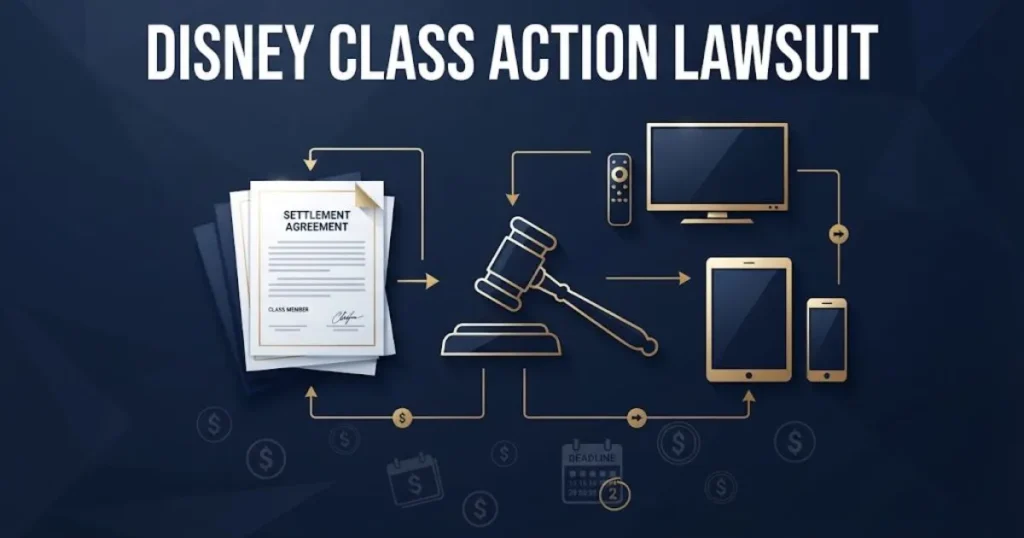
Most claim forms take less than 10 minutes to complete. You do not need to hire a lawyer. The class attorneys handle all legal work on your behalf.
Filing Steps:
- Wait for the official class notice in the mail or email
- Visit the settlement website listed in the notice
- Fill out the claim form with your subscriber information
- Submit proof of subscription if requested
- Choose your payment method
- Submit the form before the deadline
Quick Tip: Keep screenshots of your Disney+ billing history. These help verify your claim if Disney’s records are incomplete.
Key Takeaway: Filing a claim requires only a simple online form once the settlement is approved, and no lawyer is needed since class attorneys represent all members at no direct cost.
Disney Class Action Lawsuit Deadline
The Disney class action lawsuit deadline has not been officially set yet. Deadlines are established after the court grants preliminary settlement approval.
Based on the current timeline, the filing deadline will likely fall in late 2026. Most class actions give members 90 to 120 days to file. Missing the deadline means you forfeit your payout.
The opt-out deadline is different from the claim deadline. Opting out means you leave the class and keep your right to sue Disney separately. The opt-out window typically closes 30 days before the claim deadline.
| Deadline Type | Estimated Date |
|---|---|
| Opt-Out Deadline | October 2026 |
| Claim Filing Deadline | November 2026 |
| Objection Deadline | October 2026 |
| Final Approval Hearing | December 2026 |
Bold Deadline Alert: Mark your calendar for fall 2026. Set a phone reminder now so you do not miss the window.
Deadlines in class actions are strict. Courts rarely grant extensions. Treat the deadline like a tax filing date. Late submissions are rejected without exception.
Disney Wrongful Death Lawsuit
The Disney wrongful death lawsuit stems from a tragic 2023 incident. Dr. Kanokporn Tangsuan died from an allergic reaction at a Disney Springs restaurant.
Her husband, Jeffrey Piccolo, filed the lawsuit in Florida state court. Disney tried to move the case to private arbitration. The company cited the Disney+ terms of service as justification.
Judge Cecilia Altonaga rejected Disney’s arbitration argument in late 2024. She called the connection between a streaming subscription and a restaurant visit “unreasonable.” The ruling made national headlines.
| Case Detail | Info |
|---|---|
| Plaintiff | Jeffrey Piccolo |
| Court | U.S. District Court, Middle District of Florida |
| Judge | Cecilia Altonaga |
| Key Ruling | Arbitration clause unenforceable |
| Current Status | Proceeding to trial |
This case changed how companies use arbitration clauses. Many legal scholars call it a turning point for consumer rights. Disney quietly revised its terms of service after the ruling.
Disney Arbitration Clause Lawsuit
The Disney arbitration clause lawsuit challenged a common corporate tactic. Disney argued that signing up for Disney+ waived your right to sue in court for any reason.
This meant a streaming subscriber could not sue Disney for a theme park injury. The clause covered all Disney entities and services. Consumer advocates called it absurdly broad.
The Tangsuan case exposed this clause to public scrutiny. After massive backlash, Disney reversed its position voluntarily. The company announced it would no longer enforce the clause in personal injury cases.
Key Developments:
- Original Clause: Buried in Disney+ terms of service
- Scope: Covered all disputes with any Disney entity
- Public Reaction: Widespread outrage on social media
- Disney’s Response: Voluntarily dropped the clause for injury cases
- Legal Impact: Other companies began reviewing similar clauses
Think of it like a gym membership contract. Imagine if signing up for a gym meant you could never sue your car mechanic. That is essentially what Disney’s clause tried to do.
Disney+ Subscription Lawsuit
The Disney+ subscription lawsuit focuses specifically on bait-and-switch pricing. Disney launched Disney+ at $6.99 per month with no ads. Subscribers locked in that rate for years.
Starting in 2022, Disney introduced an ad-supported tier. It then moved many existing subscribers to the ad tier without clear consent. Prices for the ad-free tier jumped to $13.99 by 2024.
Plaintiffs argue this violates the original subscription agreement. They say Disney promised a specific service at a specific price. Changing the deal mid-stream constitutes consumer fraud under California law.
| Pricing Change | Original | Current |
|---|---|---|
| Basic Ad-Free | $6.99/month | $13.99/month |
| Ad-Supported Tier | Did not exist | $7.99/month |
| Bundle (No Ads) | $12.99/month | $29.99/month |
| Annual Plan | $69.99/year | $139.99/year |
Bold Stat: Disney+ prices have doubled since launch while adding ads to previously ad-free plans.
This pattern mirrors the Netflix password-sharing crackdown lawsuit. That case settled in 2025 for $30 million. Courts are increasingly skeptical of streaming companies changing terms after sign-up.
Key Takeaway: The Disney+ subscription lawsuit, arbitration clause case, and wrongful death ruling together represent a significant shift in how courts view corporate terms of service and consumer consent.
Disney DAS Pass Lawsuit
The Disney DAS Pass lawsuit challenges changes to the Disability Access Service program. Disney significantly tightened DAS eligibility requirements in 2024.
Families of children with autism and other invisible disabilities lost access. The new system requires in-person evaluations at the park. Many families say the process is humiliating and exclusionary.
The lawsuit was filed in federal court under the Americans with Disabilities Act. Plaintiffs argue the new DAS rules discriminate against guests with non-visible disabilities. A preliminary injunction hearing took place in April 2026.
DAS Changes at a Glance:
- Before 2024: Virtual registration available, broad eligibility
- After 2024: In-person evaluation required, narrow eligibility
- Affected Guests: Estimated 250,000 annual DAS users
- Legal Basis: ADA Title III violations
Disney says the changes prevent fraud and abuse of the system. Plaintiffs counter that legitimate guests are being punished for the actions of a few. The court has not yet issued a ruling on the injunction.
Disney Employee Class Action Lawsuit
The Disney employee class action lawsuit targets wage and overtime violations. Hourly workers at Walt Disney World and Disneyland filed the claims.
Employees allege Disney failed to pay for pre-shift security screenings. They also claim unpaid training time and missed meal break penalties. The case covers workers employed between 2020 and 2024.
A similar case against Amazon resulted in a $55 million settlement. The Supreme Court has ruled that mandatory security screening time is compensable. Disney’s attorneys are fighting the comparison.
| Claim Type | Workers Affected | Potential Payout |
|---|---|---|
| Unpaid Screening Time | 40,000+ | $500 to $2,000 |
| Missed Meal Breaks | 25,000+ | $200 to $1,000 |
| Unpaid Training | 15,000+ | $300 to $1,500 |
| Overtime Miscalculation | 10,000+ | $1,000 to $5,000 |
Bold Stat: Over 40,000 current and former Disney park employees may be eligible for back pay.
This case is separate from the streaming and park accessibility lawsuits. Employee claims follow different legal procedures under the Fair Labor Standards Act. A ruling on class certification is expected by fall 2026.
Key Takeaway: The employee wage lawsuit could result in thousands of dollars per worker, with class certification expected by fall 2026 for over 40,000 affected Disney park employees.
Frequently Asked Questions
How much money can I get from the Disney class action lawsuit?
Most claimants can expect between $15 and $400 depending on subscription type. Bundle subscribers and long-term members typically receive higher payouts. Final amounts will be confirmed after settlement approval in late 2026.
Who is eligible for the Disney lawsuit settlement in 2026?
You are eligible if you had a Disney+ subscription between 2019 and 2024. Park visitors denied DAS access and hourly Disney employees also qualify under separate cases. Check your email for an official class notice.
What is the deadline to file a Disney lawsuit claim?
The filing deadline is expected to fall in November 2026. The court will announce the exact date after preliminary settlement approval. Missing the deadline means you lose your right to a payout.
Do I need a lawyer to join the Disney class action?
No, you do not need to hire a lawyer to join. Class attorneys represent all members at no direct cost to you. Their fees come from the settlement fund, not from your payout.
When will Disney lawsuit settlement payments start?
Payments are expected to begin in the first quarter of 2027. This assumes the court grants final approval by late 2026. Direct deposit recipients will receive funds faster than check recipients.
The Disney class action lawsuit landscape is shifting fast in 2026. Check your eligibility across all four active cases today. File your claim as soon as the settlement portal opens this fall.
Keep your subscription records and park visit receipts handy. These documents will speed up your claim when the time comes. Stay alert for official court notices in your inbox.