The developing television lawsuit of 2026 targets major smart TV makers. Companies like Samsung, Vizio, LG, and Roku face growing class action claims. They allegedly collected your viewing data without proper consent.
Over 80 million smart TVs in American homes are affected. That number keeps climbing as more households go digital. Your TV may be watching you back.
This article explains who qualifies for the current lawsuits. You will learn about expected settlement amounts and key filing deadlines. We break down each case in plain language so you can act.
The average smart TV collects over 500 data points per day. Most owners never knowingly agreed to this tracking. The legal fallout is just getting started.
Developing Television Lawsuit 2026
The developing television lawsuit in 2026 centers on illegal smart TV data harvesting. Multiple manufacturers face federal class action claims this year. The cases are moving faster than many expected.
Plaintiffs allege that smart TV makers turned on tracking features by default. These features record everything you watch. The data then gets sold to advertisers and data brokers.
Think of it like a store following you through every aisle. Now imagine that store sells your shopping list to strangers. That is essentially what these lawsuits claim happened.
The litigation spans several federal districts. Cases are active in California, Illinois, and New York. More filings are expected before mid-2026.
| Detail | Info |
|---|---|
| Primary Legal Theory | Violation of federal wiretap laws |
| Number of Affected Consumers | 80 million plus |
| Key States with Active Cases | California, Illinois, New York |
| Expected Case Resolution | Late 2026 to early 2027 |
Smart TV Privacy Lawsuit
The smart TV privacy lawsuit challenges how manufacturers collect viewing data. Automatic Content Recognition technology is at the heart of every claim. This tech identifies what plays on your screen in real time.
ACR technology captures audio and visual snippets from your TV. It matches those snippets against a massive content database. The result is a detailed log of your viewing habits.
Most buyers never knew this feature existed. It was buried deep in settings menus. Many TVs had it enabled right out of the box.
Plaintiffs say this violates the Electronic Communications Privacy Act. State wiretap laws in California and Illinois also apply. The legal theory is straightforward and gaining traction in court.
Key stat: Over 70% of smart TVs sold since 2019 have ACR enabled by default.
Television Data Collection Class Action
The television data collection class action groups millions of consumers into one legal fight. Instead of suing individually, affected TV owners join a single case. This approach gives everyday people real bargaining power.
The class period generally covers purchases from 2018 through 2025. If you bought a smart TV during that window, you may be included. You do not need to have filed anything yet.
Class actions like this one take time to resolve. The court must first certify the class. Then discovery begins, followed by settlement talks or trial.
Right now, most of these cases are in the discovery phase. Internal company documents are being subpoenaed. Email chains about data monetization strategies are surfacing.
| Phase | Status as of 2026 |
|---|---|
| Class Certification | Granted in two districts |
| Discovery | Active and ongoing |
| Settlement Talks | Preliminary discussions started |
| Trial Date | Not yet scheduled |
Key Takeaway: The developing television lawsuit targets smart TV makers for secretly collecting viewing data, and over 80 million consumers may be affected across multiple federal cases.
Who Qualifies for the TV Lawsuit
You qualify for the TV lawsuit if you owned a smart TV from an affected brand. The class period runs from January 2018 through December 2025. Your TV must have had internet connectivity enabled.
You do not need to prove you were personally harmed. The law presumes harm when data is collected without consent. Simply owning the device during the class period is enough.
Eligibility extends to all 50 states. Some states have stronger consumer protection laws. Residents of California, Illinois, and New York may see higher payouts.
Here is a quick eligibility checklist:
- You purchased or leased a smart TV between 2018 and 2025
- The TV was made by Samsung, Vizio, LG, or Roku
- The TV was connected to the internet at any point
- You did not manually disable all data tracking features
Even if you gave the TV away or threw it out, you can still qualify. Proof of past ownership is sufficient.
TV Lawsuit Settlement Amount
The TV lawsuit settlement amount varies by brand and claim type. Current estimates range from $25 to $400 per household. The final number depends on total claim volume.
Early settlement discussions suggest a tiered payout structure. Households with multiple affected TVs may receive more. Those in states with stricter privacy laws could also see higher amounts.
| Brand | Estimated Payout Range |
|---|---|
| Samsung | $50 to $400 |
| Vizio | $75 to $350 |
| LG | $30 to $250 |
| Roku | $25 to $200 |
These numbers are projections based on similar past cases. The Vizio FTC settlement of 2017 paid $2.2 million. That case involved far fewer consumers than the current litigation.
Final amounts will be determined after the claims period closes. The more people who file, the smaller each individual share becomes. Filing early does not guarantee a larger payout.
Key Takeaway: Eligibility requires owning a connected smart TV from an affected brand between 2018 and 2025, and estimated payouts range from $25 to $400 per household depending on the manufacturer.
Samsung Smart TV Lawsuit
The Samsung smart TV lawsuit is the largest of the active cases. Samsung sold over 40 million smart TVs in the U.S. during the class period. Their ACR implementation was particularly aggressive.
Court filings allege Samsung tracked viewing data even when users opted out. The opt-out process required navigating through seven separate menu screens. Most consumers never found it.
Samsung’s data partnerships with advertising firms are under heavy scrutiny. Subpoenaed documents reportedly show revenue sharing agreements tied to viewer data. These deals allegedly generated hundreds of millions in ad revenue.
The Samsung case is filed in the Northern District of California. Class certification was granted in early 2026. Discovery is expected to continue through the summer.
| Case Detail | Information |
|---|---|
| Court | Northern District of California |
| Lead Plaintiffs | Three households from CA and IL |
| Class Size Estimate | 40 million plus |
| Current Phase | Discovery |
Vizio Data Privacy Lawsuit Update
The Vizio data privacy lawsuit update for 2026 shows significant momentum. Vizio was already fined $2.2 million by the FTC in 2017. That earlier case laid the groundwork for the current litigation.
New allegations go beyond what the FTC uncovered. Plaintiffs claim Vizio continued collecting data after the 2017 settlement. The methods allegedly became more sophisticated and harder to detect.
Vizio’s business model relies heavily on data revenue. The company earns more from advertising than from hardware sales. This financial incentive is central to the plaintiffs’ argument.
A Vizio spokesperson has denied the new allegations. The company says all data collection complies with current laws. The court will decide whether that defense holds up.
Bold stat: Vizio reportedly earns over $100 million annually from viewer data monetization.
Roku Lawsuit 2026
The Roku lawsuit in 2026 focuses on the Roku Channel and Roku OS. Unlike traditional TV makers, Roku operates a platform layer. This gives them access to data across multiple TV brands.
Plaintiffs argue Roku tracks viewing habits regardless of the TV brand. Even if you own a TCL or Hisense TV with Roku built in, your data is captured. This makes the potential class enormous.
The Roku case is still in its early stages. Filed in late 2025, it has not yet reached class certification. A ruling on certification is expected by fall 2026.
Roku has filed a motion to dismiss. They argue that users agreed to data collection in the terms of service. Plaintiffs counter that the terms were vague and misleading.
| Detail | Info |
|---|---|
| Filing Date | November 2025 |
| Court | Central District of California |
| Class Certification | Pending |
| Estimated Class Size | 60 million plus Roku accounts |
Key Takeaway: Samsung faces the largest case with over 40 million affected TVs, Vizio continues to fight new allegations beyond its 2017 FTC settlement, and Roku’s platform-level tracking could create the broadest class of all.
LG Television Class Action
The LG television class action targets the webOS platform on LG smart TVs. LG’s webOS tracks viewing data through built-in apps and live TV inputs. Plaintiffs say this tracking was hidden from consumers.
LG sold approximately 20 million smart TVs in the U.S. during the class period. The webOS platform was pre-installed on nearly all of them. Data collection began the moment the TV connected to Wi-Fi.
The LG case is filed in the Northern District of Illinois. Illinois has one of the strongest biometric and privacy laws in the country. This could lead to higher per-person payouts for Illinois residents.
LG has not yet entered settlement discussions. The company is actively fighting the claims in court. A trial date has not been set.
Affected LG models include most OLED and NanoCell TVs sold between 2018 and 2025. Check your model number against the court filings for confirmation.
How to File a TV Lawsuit Claim
Filing a TV lawsuit claim requires completing a claim form through the settlement administrator. As of early 2026, official claims portals are not yet open for most cases. You can register to be notified when they launch.
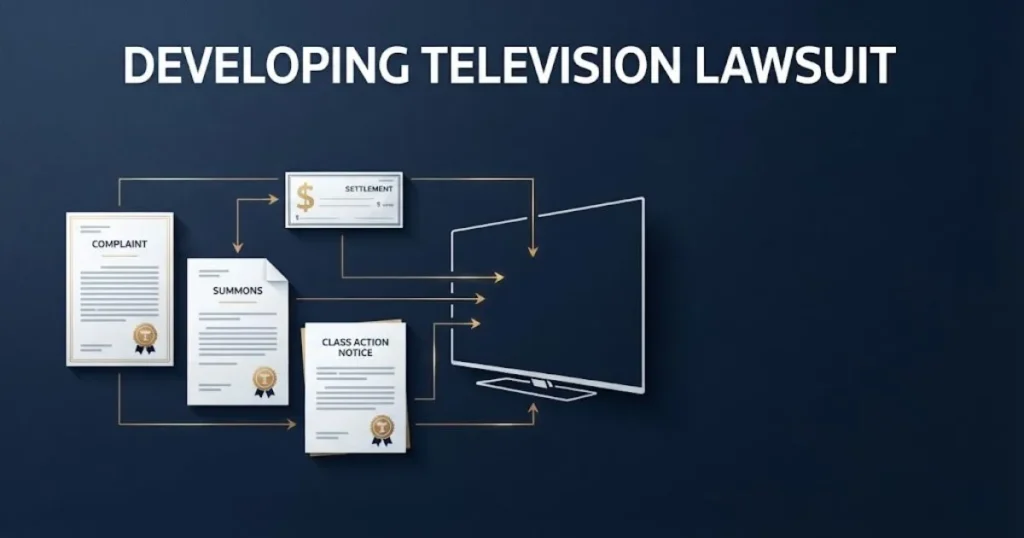
The process will likely follow a standard class action pattern. First, the court approves a settlement. Then a claims period opens for 60 to 90 days. You submit your form during that window.
Here are the steps to prepare right now:
- Locate your TV purchase receipt or order confirmation email
- Note the brand, model number, and purchase date
- Take a photo of your TV’s serial number if you still own it
- Save any emails from the TV manufacturer about data settings
You will not need to hire your own lawyer. Class action settlements cover legal fees from the settlement fund. Your payout will not be reduced by attorney costs.
Important: Do not pay any website that asks for money to file your claim. Legitimate class action claims are always free to submit.
Television Lawsuit Filing Deadline
The television lawsuit filing deadline has not been officially set yet. Most of these cases are still in the discovery or settlement negotiation phase. Deadlines are established only after a settlement is reached.
Based on the current pace, expect claims windows to open in late 2026 or early 2027. The typical claims period lasts 60 to 90 days after court approval. Missing the deadline means forfeiting your payout.
| Case | Expected Claims Window |
|---|---|
| Samsung | Q4 2026 to Q1 2027 |
| Vizio | Q3 2026 to Q4 2026 |
| LG | Q1 2027 to Q2 2027 |
| Roku | Q2 2027 or later |
These are projections based on case timelines. Actual dates will be announced through court orders. The settlement administrator will send notices to known class members.
Set your calendar reminder now. Deadlines in class actions are strict. Courts rarely grant extensions for late filings.
Key Takeaway: To file a claim, gather your purchase records now and wait for the official claims portal to open, with most deadlines expected between late 2026 and early 2027 depending on the manufacturer.
Smart TV Spying Lawsuit
The smart TV spying lawsuit uses strong language for a reason. Plaintiffs allege that TV makers essentially turned living rooms into surveillance zones. The term “spying” reflects the covert nature of the data collection.
ACR technology captures screen content every few seconds. It does not just log channel numbers. It identifies specific shows, movies, and even video game content.
This level of detail allows advertisers to build incredibly precise profiles. They know your political leanings from news choices. They know your health concerns from medical drama viewing.
The legal argument rests on consent. Plaintiffs say meaningful consent was never obtained. Burying a tracking toggle in a sub-menu does not count as permission.
Federal wiretap laws prohibit intercepting electronic communications without consent. Smart TV data collection may qualify as interception under these statutes. Several courts have signaled openness to this theory.
Bold stat: A 2025 Princeton study found that 69% of smart TV apps share data with third-party trackers.
TV Lawsuit Payout Timeline
The TV lawsuit payout timeline depends on when each case settles. After a settlement is approved, payments typically take 6 to 12 months to distribute. Appeals can delay things further.
Here is the most likely sequence of events:
- Settlement agreement reached between plaintiffs and defendants
- Court holds a fairness hearing to approve the deal
- Claims period opens for 60 to 90 days
- Claims are reviewed and validated by the administrator
- Payments are issued via check or digital transfer
The earliest payouts could arrive in mid-2027 if the Vizio case settles quickly. The Samsung and LG cases may take longer. Roku payouts are likely the furthest out.
| Milestone | Estimated Date |
|---|---|
| First Settlement Approval | Late 2026 |
| Claims Period Opens | Early 2027 |
| First Payments Issued | Mid 2027 |
| All Cases Resolved | 2028 or later |
Patience is part of the process. Class action payouts are never instant. But the money is real once the checks arrive.
Television Consumer Protection Lawsuit
The television consumer protection lawsuit draws on both federal and state laws. The Federal Trade Commission Act prohibits deceptive business practices. State laws like the California Consumer Privacy Act add extra teeth.
These consumer protection claims run parallel to the wiretap allegations. They focus on misleading marketing and hidden data practices. TV makers advertised “smart” features without disclosing the data cost.
The CCPA gives California residents the right to know what data is collected. It also grants the right to opt out of data sales. Plaintiffs say TV makers violated both provisions.
Illinois residents benefit from the state’s Biometric Information Privacy Act. While BIPA typically covers fingerprints and face scans, some courts have extended it to viewing patterns. This remains a developing legal question.
New York’s SHIELD Act also plays a role. It requires businesses to protect consumer data with reasonable safeguards. Plaintiffs argue that smart TV data was stored without adequate security.
Key Takeaway: Smart TV data collection is being challenged under wiretap laws, consumer protection statutes, and privacy acts across multiple states, with payouts expected to begin as early as mid-2027.
Developing TV Lawsuit News
The developing TV lawsuit news cycle is accelerating in 2026. New filings are expected against additional manufacturers. Hisense and TCL could face claims by the end of the year.
Congress is also paying attention. A bipartisan group of senators introduced the Smart TV Privacy Act in early 2026. The bill would require clear opt-in consent before any data collection.
The FTC has signaled renewed interest in smart TV practices. A new enforcement sweep is rumored for the second half of 2026. This could pressure companies to settle existing cases faster.
Industry insiders report that some manufacturers are already changing their practices. Samsung reportedly updated its 2026 TV firmware to make opt-out easier. Whether this is genuine reform or damage control remains to be seen.
Stay alert for official court notices. The settlement administrator will mail postcards to known purchasers. You can also check the court docket for your specific case.
| Development | Timeline |
|---|---|
| New manufacturer filings | Expected Q3 2026 |
| Smart TV Privacy Act vote | Possible late 2026 |
| FTC enforcement action | Expected H2 2026 |
| Samsung firmware update | Already rolling out |
Frequently Asked Questions
How much money can I get from the developing television lawsuit?
Most claimants can expect between $25 and $400 per household.
The exact amount depends on your TV brand and state of residence.
Final payouts will be determined after the claims period closes in 2027.
Do I need proof of purchase to join the TV lawsuit?
A purchase receipt or order confirmation is the strongest form of proof.
If you lost your receipt, a bank statement or warranty registration may work.
The settlement administrator will specify acceptable documentation when claims open.
What smart TV brands are included in the 2026 lawsuit?
Samsung, Vizio, LG, and Roku are the primary defendants in active cases.
Hisense and TCL may face similar claims later in 2026.
Check your TV brand and model against the official class notice for confirmation.
How long will the television lawsuit settlement take to pay out?
Expect the first payments to arrive around mid-2027 at the earliest.
The full process from settlement approval to payment typically takes 6 to 12 months.
Appeals by defendants could push the timeline into 2028.
Can I still file a claim if I sold my smart TV?
Yes, you can still file if you owned an affected TV during the class period.
Past ownership counts as long as the TV was connected to the internet.
Keep any records of your previous purchase to support your claim.
The developing television lawsuit is one of the biggest consumer privacy fights of 2026. Gather your purchase records now and watch for official claims notices. Filing is free and takes only a few minutes once the portal opens. Do not wait until the deadline passes. Your data was taken without your permission, and you deserve your share of the settlement.
===============================================================