

A Utah court case lookup lets you search public records online in 2026. The XChange portal is the fastest way to find active and closed case details.
You can search by full name, case number, or filing date. Records cover criminal, civil, family, and juvenile matters across all 29 Utah counties.
More than 2.3 million court filings occur in Utah every year. Most become publicly accessible within 48 hours of the initial filing.
This guide walks through every search method and court type available. You will learn how to locate any Utah court record quickly. We also cover free access tools and key 2026 updates.
Utah Court Case Lookup
A Utah court case lookup is a search of public court records online. The state maintains these records through its centralized XChange database.
The system covers all 29 counties in Utah. It includes records from district, justice, juvenile, and appellate courts.
In 2026, the database holds over 12 million active and archived cases. New filings appear within one to two business days.
You do not need to be a party in the case. Utah law treats most court records as public documents under GRAMA.
Quick Facts:
- System: XChange (Utah State Courts)
- Coverage: All 29 Utah counties
- Record types: Criminal, civil, family, probate
- Update speed: Daily on business days
- Basic cost: Free for summary results
The tool works on phones, tablets, and desktops. Results show the case title, date, parties, and status.
How to Find Court Records in Utah
The easiest way to find court records in Utah is through the XChange portal. You can also visit a courthouse clerk’s office in person.
Start by going to the Utah State Courts website. Select the XChange search tool from the main page.
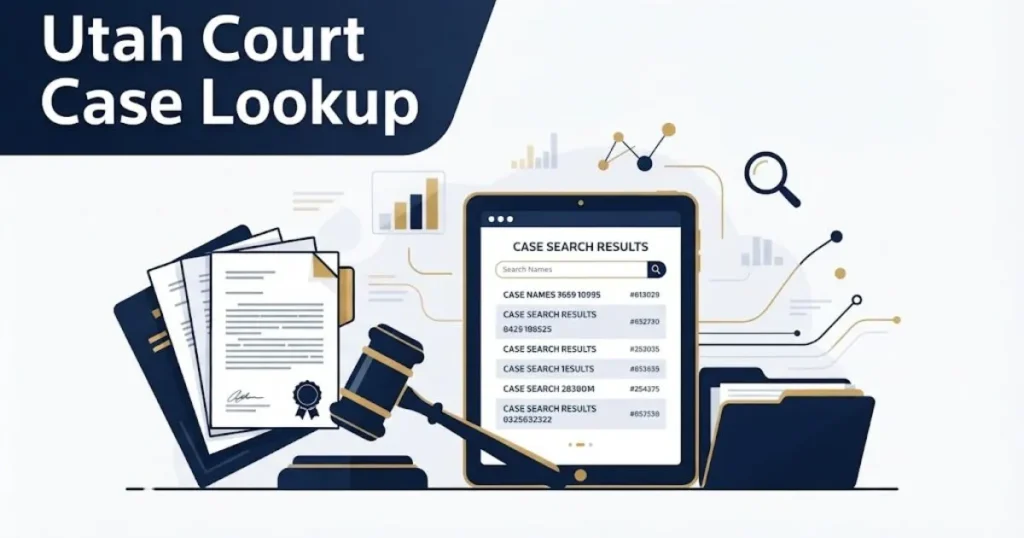
Enter the person’s name or the case number. The system will return matching results from all Utah courts.
Think of it like searching a phone book. You type in what you know, and the system narrows it down.
| Method | Speed | Cost | Detail Level |
|---|---|---|---|
| XChange Online | Minutes | Free to $0.10/page | High |
| Courthouse Visit | Same day | $0.25/page | Highest |
| Mail Request | 2 to 4 weeks | Varies | Medium |
| Third-Party Sites | Minutes | $1 to $30 | Low to Medium |
In-person visits give you access to sealed or restricted documents. You will need a valid photo ID and a written request form.
Utah Court Records XChange
Utah court records XChange is the official online database for the state judiciary. It launched in 2007 and received a major upgrade in early 2026.
The 2026 update added faster search filters and improved mobile compatibility. You can now filter results by court type, date range, and case category.
XChange pulls data directly from the court clerks’ filing systems. This means the records are as current as the last business day.
Key 2026 XChange Features:
- Name search: Search by first, last, or business name
- Case number search: Enter the exact docket number
- Date range filter: Narrow results by filing period
- Court type filter: District, justice, juvenile, or appellate
- Document preview: View the first page of filings free
A basic name search costs nothing. Downloading full documents runs $0.10 per page in 2026. That is cheaper than most states charge.
Key Takeaway: The XChange portal is your single best tool for finding any Utah court record online in 2026.
Utah Court Case Search by Name
A Utah court case search by name lets you find cases using a person’s full legal name. This is the most common search method for everyday users.
Go to the XChange portal and select “Name Search.” Type the last name first, then the first name.
The system will return all matching cases across Utah. Results include both active and closed cases.
If the name is common, you may get hundreds of results. Use the date range and court type filters to narrow things down.
| Search Tip | Why It Helps |
|---|---|
| Use middle initial | Reduces false matches |
| Try alternate spellings | Catches clerical errors |
| Filter by county | Narrows large result sets |
| Add date range | Removes old irrelevant cases |
One thing to watch for: the name on the record may differ from the name you know. Clerks sometimes enter names with typos or abbreviations.
If your search returns zero results, try a broader spelling. You can also search by the opposing party’s name instead.
Utah Court Case Search by Case Number
A Utah court case search by case number is the most precise way to find a specific record. Every Utah case gets a unique number when it is filed.
The case number follows a standard format. It starts with the year, then the court code, then a sequential number.
For example, a 2026 Salt Lake County district court case might look like 261901234. The “26” is the year. The “190” is the court code.
Enter the full number into the XChange search bar. The system will pull up that exact case in seconds.
Case Number Format Breakdown:
- Digits 1 to 2: Filing year (26 = 2026)
- Digits 3 to 5: Court location code
- Digits 6 to 9: Sequential case number
- Suffix (if any): Case type indicator
This method works best when you already have the number from a court notice or legal document. It eliminates all guesswork and returns one exact match.
Key Takeaway: Searching by name is flexible, but searching by case number gives you one exact result every time.
Utah Court Records Free
Utah court records free access is available through the XChange portal for basic case summaries. You can view case titles, dates, and party names at no cost.
The state does not charge for the initial search. You only pay when you download full document pages.
In 2026, the download fee is $0.10 per page. A typical court filing runs 5 to 20 pages, so expect to pay $0.50 to $2.00 per document.
Some third-party websites claim to offer free records but hide fees behind paywalls. Stick with the official XChange system for transparent pricing.
| What You Get | Cost |
|---|---|
| Case summary and status | Free |
| Party names and filing dates | Free |
| Court calendar and hearing dates | Free |
| Full document download | $0.10 per page |
| Certified copy | $5 to $15 per document |
If you need records for a legal proceeding, budget for certified copies. Regular printouts are not always accepted in court.
Utah District Court Case Lookup
A Utah district court case lookup covers the state’s primary trial courts. Utah has 8 judicial districts with courthouses in every major county.
District courts handle the most serious cases. These include felony criminal charges, large civil lawsuits, divorce, and probate matters.
In 2026, district courts process roughly 180,000 new filings per year. Salt Lake County District Court is the busiest in the state.
To search district court records, use XChange and filter by “District Court.” You can also select a specific judicial district.
| District | Counties Served | Main Location |
|---|---|---|
| First | Box Elder, Cache, Rich | Logan |
| Second | Davis, Morgan, Weber | Ogden |
| Third | Salt Lake, Summit, Tooele | Salt Lake City |
| Fourth | Juab, Millard, Utah, Wasatch | Provo |
| Fifth | Beaver, Iron, Washington | St. George |
| Sixth | Garfield, Kane, Piute, Sanpete, Sevier, Wayne | Richfield |
| Seventh | Carbon, Emery, Grand, San Juan | Price |
| Eighth | Daggett, Duchesne, Uintah | Vernal |
Key Takeaway: District courts handle the heaviest caseloads in Utah, and their records make up the bulk of XChange search results.
Utah Justice Court Records Search
A Utah justice court records search covers the state’s local municipal and county courts. Justice courts handle smaller matters like traffic tickets, misdemeanors, and small claims.
Utah has over 130 justice courts spread across cities and counties. Each one feeds its records into the XChange system.
In 2026, justice courts process more than 600,000 cases annually. Most of these are traffic violations and Class B or C misdemeanors.
To search justice court records, select “Justice Court” in the XChange filter menu. You can narrow by city or county.
Common Justice Court Case Types:
- Traffic infractions: Speeding, running red lights
- Misdemeanors: DUI, petty theft, disorderly conduct
- Small claims: Disputes under $15,000
- Ordinance violations: Noise complaints, zoning issues
Justice court records are sometimes less detailed than district court records. The filings are shorter and the dockets move faster.
If you received a traffic ticket in Utah, your case is almost certainly in a justice court. Search by your name and the city where you got the ticket.
Utah Appellate Court Case Search
A Utah appellate court case search covers the Utah Court of Appeals and the Utah Supreme Court. These courts review decisions made by lower trial courts.
The Utah Court of Appeals handles most appeals. The Utah Supreme Court takes select cases involving major legal questions.
In 2026, the Court of Appeals decides roughly 500 cases per year. The Supreme Court issues about 60 to 80 opinions annually.
Appellate records are fully public and available on XChange. You can also find published opinions on the Utah State Courts website.
| Court | Cases Per Year | Record Type |
|---|---|---|
| Court of Appeals | ~500 | Briefs, opinions, orders |
| Supreme Court | ~70 | Petitions, opinions, oral arguments |
Appellate case numbers use a different format than trial courts. They start with the year followed by a sequential number and a court code.
Searching appellate records is useful if you want to see how a lower court ruling was challenged. The opinions often explain the legal reasoning in plain language.
Key Takeaway: Appellate court records are smaller in volume but richer in legal detail, making them valuable for research and case tracking.
Utah Juvenile Court Records Lookup
A Utah juvenile court records lookup is more restricted than adult court searches. Juvenile records involve minors and are protected under Utah Code Section 78A-6-209.
Most juvenile court records are not publicly accessible through XChange. Only certain parties can view them, including parents, guardians, and attorneys.
In 2026, Utah juvenile courts handle about 25,000 cases per year. These include delinquency, abuse, neglect, and dependency matters.
If you are a parent or legal guardian, you can access your child’s records through the MyCase portal. You will need to verify your identity first.
Who Can Access Juvenile Records:
- Parents and legal guardians: Full access via MyCase
- Attorneys of record: Full access via XChange with credentials
- Law enforcement: Limited access for active investigations
- General public: No access in most cases
Some juvenile records become public if the minor is charged as an adult. This typically happens in serious felony cases involving youth aged 16 or 17.
If you cannot find a juvenile case on XChange, it is likely sealed by law. Contact the juvenile court clerk directly for guidance.
Utah Criminal Case Lookup
A Utah criminal case lookup lets you find records of arrests, charges, and convictions. These records are among the most frequently searched in the state.
Criminal records are public in Utah under GRAMA. You can search for felony, misdemeanor, and infraction cases through XChange.
In 2026, Utah courts process roughly 120,000 new criminal cases per year. Drug offenses, DUI, and assault charges are the most common.
To run a criminal case lookup, select “Criminal” in the XChange case type filter. Enter the defendant’s name or case number.
| Charge Level | Court | Public Access |
|---|---|---|
| Felony | District Court | Full |
| Class A Misdemeanor | District or Justice | Full |
| Class B Misdemeanor | Justice Court | Full |
| Class C Misdemeanor | Justice Court | Full |
| Infraction | Justice Court | Full |
One important note: an arrest record is not the same as a conviction. The case status will show whether charges were filed, dismissed, or resulted in a guilty plea.
Expunged criminal records will not appear in XChange searches. Utah allows expungement for certain offenses after a waiting period.
Key Takeaway: Criminal records are fully public in Utah, but expunged and sealed cases will not show up in any online search.
Utah Court Docket Search
A Utah court docket search lets you view the chronological log of every action in a case. The docket lists filings, hearings, orders, and rulings in date order.
Think of a docket like a timeline of the case. Each entry shows what happened and when it happened.
To search a docket, find the case in XChange first. Then click on the case number to open the full docket sheet.
Docket entries are updated in real time when the clerk processes new filings. In 2026, most entries appear within 24 hours.
Common Docket Entry Types:
- Complaint filed: The case officially begins
- Summons issued: The defendant is notified
- Motion filed: A party requests a court action
- Hearing scheduled: A date is set for court
- Order entered: The judge makes a ruling
- Judgment filed: The case reaches a final decision
Docket sheets are free to view on XChange. Downloading the full docket as a PDF costs $0.10 per page.
If you are tracking an active case, check the docket weekly. New entries can appear at any time during business hours.
Utah Court Case Status Check
A Utah court case status check tells you where a case stands right now. The status shows whether the case is active, pending, closed, or dismissed.
To check a case status, search for the case in XChange. The status field appears at the top of the case summary.
In 2026, XChange uses standardized status labels across all courts. This makes it easier to understand the current phase of any case.
| Status Label | What It Means |
|---|---|
| Active | The case is ongoing with upcoming hearings |
| Pending | Filed but no hearing date set yet |
| Closed | Final judgment has been entered |
| Dismissed | The case was dropped by the court or parties |
| Stayed | The case is paused by court order |
| Appealed | The case has moved to a higher court |
A status check is useful if you are waiting for a court date or a ruling. It saves you from calling the clerk’s office repeatedly.
If the status says “Closed” but you believe the case is still active, contact the court directly. Clerical errors do happen on occasion.
Key Takeaway: A quick status check on XChange tells you exactly where a case stands without any phone calls or courthouse visits.
Utah Court Case History Online
Utah court case history online gives you access to the full timeline of a case from filing to resolution. This includes every motion, hearing, and ruling.
XChange stores case history for all active cases and most closed cases going back to 2007. Older records may require an in-person visit to the courthouse.
In 2026, the state completed a digitization project for pre-2007 records. Many older cases are now searchable online for the first time.
To view case history, open the case in XChange and click “Full History.” This shows every docket entry in reverse chronological order.
What Case History Includes:
- Original filing date and complaint
- All motions and responses
- Hearing dates and outcomes
- Judicial orders and rulings
- Final judgment or dismissal
- Post-judgment actions like appeals
Case history is especially useful for background checks and legal research. It gives you the full story, not just the current status.
If you need a certified copy of the case history, contact the court clerk. Certified copies carry an official seal and cost $5 to $15.
Utah Court Filing Search
A Utah court filing search lets you find specific documents within a case. This includes complaints, motions, orders, and judgments.
Each filing in a Utah case gets its own docket entry. You can search for filings by document type, date, or filing party.
In 2026, Utah courts accept electronic filings through the eFile system. This means most new filings appear online within hours.
To search for a specific filing, open the case docket in XChange. Scroll to the date range you need or use the document type filter.
| Filing Type | Typical Page Count | Download Cost |
|---|---|---|
| Complaint | 5 to 30 pages | $0.50 to $3.00 |
| Motion | 3 to 15 pages | $0.30 to $1.50 |
| Court Order | 1 to 5 pages | $0.10 to $0.50 |
| Judgment | 2 to 10 pages | $0.20 to $1.00 |
| Transcript | 20 to 200 pages | $2.00 to $20.00 |
Some filings are sealed by court order and will not be available for download. The docket entry will note that the document is restricted.
If you need a filing that is not available online, submit a records request to the court clerk. Processing takes 3 to 10 business days.
Key Takeaway: Filing searches let you dig into the specific documents within a case, not just the summary overview.
Utah Court Calendar Lookup
A Utah court calendar lookup lets you find upcoming hearing dates and trial schedules. This is useful if you need to know when a case goes before a judge.
The XChange portal includes a calendar search feature. You can search by judge name, courtroom, date, or case number.
In 2026, Utah courts schedule over 800,000 hearings per year. Most are listed on the public calendar at least two weeks in advance.
To check the calendar, go to the “Court Calendars” section on the Utah State Courts website. Select your county and court type.
Calendar Search Options:
- By date: See all hearings on a specific day
- By judge: View a specific judge’s full schedule
- By case number: Find the next hearing for your case
- By courtroom: See what is happening in a specific room
Court calendars update in real time as judges add or reschedule hearings. Always check the calendar the morning of your hearing for any last-minute changes.
If your hearing was postponed, the new date will appear on the calendar within 24 to 48 hours. The docket will also reflect the change.
Frequently Asked Questions
How do I look up a court case in Utah for free?
Go to the XChange portal on the Utah State Courts website. Basic case summaries, party names, and filing dates are completely free to view.
What is the XChange system for Utah court records?
XChange is the official online database for all Utah state court records. It covers district, justice, juvenile, and appellate courts across all 29 counties.
Can I search Utah court cases by someone’s name?
Yes, you can search by full name on the XChange portal. Enter the last name first for the most accurate results.
How far back do Utah court records go online?
XChange contains records going back to 2007 for most courts. A 2026 digitization project added many pre-2007 records to the system.
Why can’t I find my Utah court case online?
The case may be sealed, expunged, or too new to appear yet. Juvenile cases are also restricted from public view. Contact the court clerk for help.
You now have everything you need to search Utah court records in 2026. Start with the XChange portal for the fastest results. Use name searches for broad lookups and case numbers for precision. Check back often if you are tracking an active case, because new filings appear daily.







