

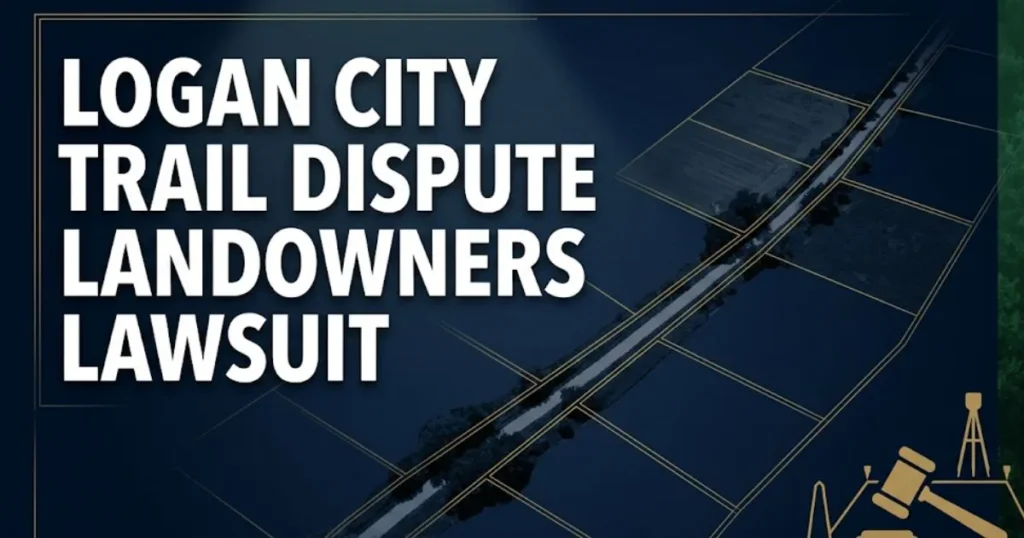
The Logan City trail dispute landowners lawsuit is one of the most closely watched property rights conflicts in Utah heading into 2026. Property owners along Logan’s expanding trail corridors are taking legal action after years of frustration over access, easements, and what they say is the city taking or using their land without proper compensation.
This case matters beyond Logan. It raises questions every property owner in Cache County and across Utah should understand.
In this article, you’ll get a clear breakdown of the dispute, who is affected, what the law says, and what your options are if your land is involved.
Logan City Trail Dispute Landowners Lawsuit: What You Need to Know
The Logan City trail dispute landowners lawsuit is a legal conflict between private property owners and Logan City, Utah, over the city’s trail expansion and easement acquisition practices.
At the heart of the dispute is a question that’s both simple and legally explosive: can a city use, cross, or effectively take private land to build or expand public trails without paying fair compensation?
Several landowners say Logan City has done exactly that.
The complaints center on trail corridors, including routes near the Logan River Parkway system, where city-approved trail access allegedly encroaches on private property. Some landowners say they were never properly notified. Others say they were pressured into easement agreements without understanding what they were signing.
| Core Dispute Element | Detail |
|---|---|
| Location | Logan City, Cache County, Utah |
| Type of Action | Property rights lawsuit, potential inverse condemnation |
| Affected Property Types | Residential, agricultural, and undeveloped parcels near trail corridors |
| Year Lawsuit Gained Traction | 2024, with 2026 proceedings underway |
| Primary Legal Claim | Unlawful taking without just compensation |
The stakes are real. Land that borders a public trail can lose privacy, market value, and use rights. Landowners say the city has not made them whole.
Logan City Trail Lawsuit 2026: Where Things Stand Right Now
As of 2026, the Logan City trail lawsuit is in active litigation in Utah’s First District Court in Cache County.
The case has moved past initial filings and into discovery, meaning both sides are now gathering evidence, taking depositions, and building their arguments for trial or potential settlement.
No trial date has been officially set as of early 2026, but legal observers expect significant developments in the second half of the year.
Logan City has maintained that its trail expansion efforts followed proper legal channels and that any easements were acquired lawfully. The city’s legal team argues that public trail access serves a legitimate government interest and that affected landowners were given appropriate notice and opportunity to respond.
Landowners and their attorneys dispute this. They contend the process was rushed, the compensation offered was inadequate, and some properties were accessed without any formal easement at all.
| 2026 Case Milestone | Status |
|---|---|
| Initial filing | Completed |
| Discovery phase | Active |
| Mediation attempt | Scheduled or pending |
| Trial date | Not yet set; expected late 2026 |
| Settlement talks | Ongoing |
The outcome of this case could set a precedent for how Utah cities handle trail expansion across the state.
Landowners Suing Logan City Over Trail Access: The Full Story
A group of Cache County property owners filed suit against Logan City after claiming the city allowed or encouraged public use of private land as part of its trail network without securing valid legal access.
The dispute began as a slow burn. For years, landowners near trail routes noticed increased foot traffic on their property. Signs went up. Trails were graded or maintained on land the owners say the city had no right to touch.
Some owners received easement requests from the city. Others say they got nothing at all.
When property owners pushed back or refused easement requests, some reported the trail use continued anyway. That’s where the trespass and inverse condemnation arguments entered the picture.
Think of it this way: if a neighbor built a permanent fence six feet into your yard and then told you it was for the community’s benefit, you’d want compensation. That’s roughly the argument these landowners are making, just with a city and a trail instead of a neighbor and a fence.
The lawsuit names Logan City as the primary defendant. Some filings also challenge the adequacy of the city’s environmental and property review processes that preceded trail development.
Key allegation: The city treated private property as a public resource without going through the full legal taking process first.
Who Qualifies for the Logan City Trail Lawsuit
Property owners who have land that abuts, overlaps with, or has been accessed by Logan City trail corridors without a valid, properly compensated easement may qualify to participate in or file a related legal claim.
Eligibility is not limited to people who already received an easement offer. Owners who experienced unauthorized trail use on their land, lost property value due to trail proximity, or were pressured into signing easement documents under unclear circumstances may also have standing.
| Eligibility Factor | Qualifies | May Not Qualify |
|---|---|---|
| Property borders a Logan City trail | Yes | Property has no trail contact |
| City used land without easement | Yes | Voluntary easement signed with full disclosure |
| Received inadequate compensation for easement | Yes | Accepted fair market value offer |
| Property value decreased due to trail | Possible, with appraisal | No documented value impact |
| Experienced trespass by trail users | Yes, with documentation | No trespass incidents |
Geographic scope matters too. The lawsuit primarily covers properties in Logan City limits and adjacent Cache County areas where the city’s trail network was expanded.
If you’re unsure whether your parcel is inside the affected zone, a property survey and a review of Logan City’s trail master plan documents can help clarify your position.
Key Takeaway: Eligibility for the Logan City trail lawsuit is broader than most landowners realize. Unauthorized access, inadequate compensation, and undisclosed easements are all grounds to explore a legal claim.
Logan City Trail Easement Property Rights Explained
A trail easement is a legal right granted to one party (in this case, Logan City or the public) to use a portion of another person’s property for a specific purpose, in this case, trail access.
Easements don’t transfer ownership. The landowner still holds the title. But they do restrict what you can do with that strip of land, and they can significantly affect your property’s value and privacy.
There are two ways a city typically acquires a trail easement. First, the city negotiates with the landowner and pays fair market value. Second, the city uses eminent domain, which forces the taking but still requires just compensation.
What’s alleged in the Logan City case is a third path that isn’t legally recognized: the city allowing or encouraging trail use without securing a proper easement through either method.
| Easement Type | Compensation Required | Landowner Consent |
|---|---|---|
| Negotiated easement | Yes, agreed-upon amount | Yes, voluntary |
| Eminent domain easement | Yes, judicially determined | No, forced |
| Alleged unauthorized access | None offered | No, no process followed |
The third column is the crux of what landowners in the Logan City dispute are contesting.
If the city effectively took a permanent right to use your property, it owes you compensation regardless of whether it went through formal channels.
Can Logan City Legally Take Land for a Trail
Yes, Logan City can legally acquire land for a public trail, but only by following specific legal procedures and paying fair compensation.
Under Utah law and the U.S. Constitution’s Fifth Amendment, governments have eminent domain authority. That means they can compel a property taking for public use. Trails and recreational paths have been found to qualify as valid public uses in multiple courts.
The constitutional requirement, though, is that the taking must be for a legitimate public purpose and the owner must receive just compensation.
The dispute in Logan isn’t really about whether the city can build trails. It’s about whether the city followed the rules when doing it.
Landowners claim the city either skipped the formal process entirely or offered compensation far below what their property and its diminished use rights were worth.
| Legal Requirement | What It Means | Alleged Violation |
|---|---|---|
| Public use justification | Trail must serve the public | Not specifically disputed |
| Proper notice to landowner | Owner must be formally notified | Some owners say notice never came |
| Just compensation | Fair market value must be paid | Owners say offers were too low or nonexistent |
| Formal easement documentation | Legal documents must be recorded | Some parcels allegedly accessed with no paperwork |
If any of these requirements were skipped, the legal taking becomes an unlawful one. That opens the door to inverse condemnation claims.
Utah Eminent Domain and Trail Easement Law
Utah’s eminent domain law is governed primarily by Utah Code Title 78B-6, which sets out the procedures a government entity must follow when taking private property for public use.
The process requires a formal condemnation proceeding, a fair market value appraisal, a good-faith offer to the landowner, and if the owner refuses, a court-supervised process to determine just compensation.
For trail easements specifically, the city must identify the exact scope of the taking: which part of the land, how wide, for what purpose, and whether the easement is temporary or permanent.
Permanent trail easements have a much higher value than temporary construction access. A city that pays for temporary access but then builds a permanent trail has arguably committed a separate taking.
Utah Code 78B-6-511 requires that just compensation be paid before or at the time of the property taking, not after the trail is already built and in use.
That sequence matters. If the trail opened before compensation was finalized, Utah courts have found that timeline can support an inverse condemnation claim.
| Utah Eminent Domain Requirement | Code Reference | Relevance to Trail Dispute |
|---|---|---|
| Fair market value appraisal | 78B-6-511 | Was the appraisal done correctly? |
| Good-faith written offer | 78B-6-513 | Were written offers made? |
| Court determination if disputed | 78B-6-519 | Was a court process bypassed? |
| Compensation before taking | 78B-6-511 | Was the trail built before payment? |
Key Takeaway: Utah law has clear, specific steps a city must follow before taking or using private land. Any deviation from those steps can form the basis of a legal challenge.
What Is an Inverse Condemnation Claim in Utah
Inverse condemnation is a legal claim that says a government entity has effectively taken or damaged your property without going through the official eminent domain process, and you are owed compensation because of it.
The word “inverse” captures the flip: instead of the government initiating a formal taking, the property owner has to sue to get the compensation they were never offered.
In the Logan City trail context, inverse condemnation applies when the city’s trail activity substantially interfered with a landowner’s use and enjoyment of their property without securing a formal easement or paying for one.
Utah courts have recognized inverse condemnation claims in situations involving flooding caused by government infrastructure, road projects that cut off access, and yes, trail and recreational use that encroached on private land.
| Inverse Condemnation Element | What You Must Show |
|---|---|
| Government action | City authorized or constructed the trail |
| Property interference | Trail use substantially affects your parcel |
| No formal taking process | No eminent domain proceeding was completed |
| Damages | Loss of use, privacy, or market value |
The key is “substantial interference.” A trail that runs directly through your backyard or cuts off access to part of your land is a much stronger claim than a trail that runs along a distant boundary.
Property owners in the Logan City dispute are making exactly these arguments, and Utah case law gives them a real foundation to stand on.
Cache County Property Rights and Trail Corridor Disputes
Cache County has seen a rise in property disputes tied to recreational trail development as both Logan City and surrounding municipalities push to expand their trail networks.
The county’s unique geography, running along the Logan River, Cache Valley floor, and surrounding foothills, makes trail corridors both attractive to planners and complicated from a property rights standpoint.
Many parcels in the area are long-held family land. Some have been in the same family for generations. The idea that a city can run a public trail across that land without meaningful negotiation or compensation feels like a direct attack on something deeply personal.
That’s not just emotion. Utah courts have acknowledged that longstanding ownership carries weight in determining the scope of harm from a government taking.
| County Trail Corridor | Affected Property Types | Dispute Status |
|---|---|---|
| Logan River Parkway expansion | Residential, riparian parcels | Active litigation |
| Foothill trail routes | Agricultural, undeveloped | Complaints filed |
| East-side connector trails | Residential subdivisions | Easement negotiations disputed |
Cache County property owners who are not within Logan City limits but are affected by jointly planned trail projects may still have claims depending on which entity authorized the trail use on their specific parcel.
Key Takeaway: The trail dispute isn’t just a Logan City problem. Cache County landowners outside city limits may also have valid claims tied to regional trail planning decisions.
Logan City Trail Lawsuit Compensation for Landowners
Compensation in a trail easement lawsuit depends on the type of taking, the size of the parcel affected, the property’s market value, and the degree of interference with the owner’s use rights.
There is no flat payout figure. Each property is appraised individually. But looking at comparable Utah property rights cases gives a realistic range.
For a permanent trail easement forced through inverse condemnation, compensation typically covers the difference in fair market value before and after the easement, any documented loss of business or agricultural income, costs to restore or remediate disturbed land, and attorney fees in some cases.
| Compensation Category | Typical Value Range | Depends On |
|---|---|---|
| Fair market value reduction | 10% to 40% of affected parcel value | Property type, location, easement width |
| Loss of use damages | Varies by use (agricultural, commercial) | Income documentation |
| Trespass damages | $500 to $5,000 or more per incident | Frequency, severity |
| Attorney fees (if awarded) | Case-dependent | Court discretion under Utah law |
In some Utah inverse condemnation cases, landowners have recovered well above the initial city offer. In one notable Cache County adjacent case, a property owner received three times the city’s initial appraisal figure after a court-ordered independent appraisal.
Getting your own independent appraisal before accepting any settlement offer is one of the most important steps you can take.
Logan City Trail Settlement 2026: What to Expect
Settlement talks in the Logan City trail dispute are reportedly underway, though no final agreement has been announced as of 2026.
Settlement in a case like this is common. Cities don’t love the publicity of losing an inverse condemnation trial, and landowners often want resolution without the delay of a full court proceeding.
What a settlement might look like varies significantly based on how many landowners are involved and the range of property types. A settlement might include individual compensation packages for affected parcels, a revised easement agreement that properly documents trail access going forward, and commitments from the city to follow proper eminent domain procedures for future trail work.
| Settlement Component | Likely Included | Uncertain |
|---|---|---|
| Per-parcel compensation | Yes | Exact amounts |
| Revised easement documentation | Yes | Scope and terms |
| Procedural reforms for future trail work | Possibly | Binding vs. advisory |
| Attorney fees for plaintiffs | Negotiated | Amount |
One thing settlement typically does not include is an admission of wrongdoing by Logan City. Governments almost never admit fault as part of a civil settlement.
If a settlement is reached, affected landowners who are not already part of the lawsuit may still have a window to participate, depending on how the agreement is structured.
Logan City Trail Lawsuit Court Ruling and Legal Outcomes
If the case proceeds to a ruling rather than settling, the court will decide whether Logan City’s trail activities constituted an unlawful taking under Utah and federal constitutional standards.
A ruling in favor of landowners would mean Logan City owes just compensation for each affected parcel, potentially with interest calculated from the date the unlawful taking began. It could also force the city to either purchase formal easements or remove trail improvements from private land.
A ruling in favor of Logan City would mean the court found the city followed proper procedures or that the interference was insufficient to constitute a taking. That would be a significant setback for the landowners, though appeals are always possible.
| Possible Court Outcome | What It Means for Landowners |
|---|---|
| Landowners win on inverse condemnation | City must pay just compensation, possibly with interest |
| Landowners win on trespass claim | Damages awarded per incident, injunction possible |
| City wins procedural argument | Claims dismissed, landowners may appeal |
| Partial ruling | Some claims succeed, others dismissed |
| Case sent to jury | Jury determines compensation amount |
Legal analysts who follow Utah property rights cases note that the facts as alleged, specifically, trails built and used before proper easements were secured, favor the landowners on at least some of their claims.
Key Takeaway: Whether the case settles or goes to judgment, the legal outcomes will directly affect how much compensation each affected landowner ultimately receives, and getting proper legal representation before any offers are accepted is essential.
How to File a Claim in the Logan City Trail Dispute
Filing a claim in the Logan City trail dispute starts with documenting your property’s relationship to the contested trail corridor.
This is not a typical class action where you fill out an online form. Property rights cases require individual legal analysis of each parcel.
Here are the steps most affected landowners should take in 2026:
- Step 1: Gather your property deed, survey, and title documents to confirm exact boundary lines.
- Step 2: Document all evidence of trail use on your property: photos, dates, witness accounts.
- Step 3: Request copies of any easement communications from Logan City through a public records request.
- Step 4: Get an independent property appraisal to establish your land’s fair market value before and after the trail.
- Step 5: Contact a Utah property rights or eminent domain attorney to evaluate whether you have a viable claim.
- Step 6: File a notice of claim with Logan City before filing a lawsuit. Utah law requires this step.
| Filing Step | Purpose | Time Required |
|---|---|---|
| Gather deed and survey | Establishes your legal boundary | 1 to 2 weeks |
| Document trail use | Builds evidence base | Ongoing |
| Public records request | Reveals city’s communications | 10 business days |
| Independent appraisal | Establishes compensation baseline | 2 to 4 weeks |
| Attorney consultation | Evaluates legal viability | 1 to 3 days |
| Notice of claim to city | Required pre-suit step under Utah law | Immediate |
Missing the notice of claim step is one of the most common mistakes landowners make. Utah’s Governmental Immunity Act requires this notice before suing a city.
Logan City Trail Lawsuit Timeline from Filing to Resolution
The legal timeline for the Logan City trail dispute stretches across several years, from early property rights complaints through the 2026 litigation phase.
Understanding where the case stands and where it’s heading helps landowners plan their next steps.
| Timeline Phase | Approximate Period | Key Events |
|---|---|---|
| Early complaints and access disputes | 2021 to 2022 | Landowners report unauthorized trail use |
| City easement requests and negotiations | 2022 to 2023 | Some owners sign, others refuse |
| Formal lawsuit filing | 2023 to 2024 | Legal action initiated in First District Court |
| Discovery phase | 2024 to 2025 | Evidence gathered, depositions taken |
| Mediation and settlement talks | 2025 to 2026 | Parties attempt resolution |
| Trial (if no settlement) | Late 2026 or 2027 | Court hearing on merits |
| Judgment or settlement | 2026 to 2027 | Final resolution for affected landowners |
For landowners who haven’t yet filed, time is a real factor. Utah’s statute of limitations for inverse condemnation claims is generally six years under Utah Code 78B-2-307, but the clock can start running from the date the taking first occurred, not the date you first noticed it.
If the trail has been in use on your property since 2020 or 2021, some claims could be approaching that window. Acting sooner is clearly better than waiting.
Logan City Forced Trail Access: Legal Options for Property Owners
Property owners facing forced or unauthorized trail access by Logan City have several legal tools available, and they are not limited to joining the existing lawsuit.
Each option carries different costs, timelines, and potential outcomes. Knowing your choices helps you make a more strategic decision.
Option 1: Join or file a related lawsuit. If your property is within the affected corridor, your attorney may be able to link your claim to the existing litigation or file a separate action.
Option 2: Demand a formal easement negotiation. Sometimes the right move is to force the city to the negotiating table with a formal legal demand letter. Cities often respond to these more seriously than informal complaints.
Option 3: Seek an injunction. If trail activity is actively damaging your property or causing ongoing harm, a court can order the city to halt that activity while the legal dispute is resolved.
Option 4: File for quiet title. If ownership of the affected strip of land is in question, a quiet title action establishes the record clearly, which strengthens any subsequent compensation claim.
| Legal Option | Best For | Timeline |
|---|---|---|
| Joining existing lawsuit | Owners clearly within the affected corridor | Ongoing, join before cutoff |
| Formal easement negotiation | Owners who want a deal without litigation | Months |
| Injunction request | Owners facing active, ongoing property damage | Weeks for emergency relief |
| Quiet title action | Owners with disputed boundary or easement scope | Months to a year |
No single option fits every situation. The right path depends on your specific parcel, the nature of the trail’s use, and what outcome matters most to you.
What Evidence Do Landowners Need in a Trail Easement Lawsuit
Strong evidence is the difference between a winning property rights claim and one that gets dismissed before trial.
In a trail easement lawsuit, the most compelling evidence is documentation that proves three things: the government acted, it affected your specific property, and you suffered real harm as a result.
Here is what attorneys representing landowners in similar Utah cases typically recommend gathering:
- Property deed and recorded survey: Proves exact boundary lines and confirms the trail is on your land.
- Aerial or satellite photos over time: Shows when trail use or construction started on your parcel.
- Photos and video of current trail use: Documents foot traffic, signage, grading, or amenities placed on your land.
- Communications from Logan City: Any letters, emails, or notices about easement requests or trail plans.
- Independent appraisal reports: Before-and-after property valuations showing value loss.
- Witness statements: Neighbors, farm workers, or others who observed unauthorized trail access.
- Income records if applicable: For agricultural or commercial property, documentation of lost income tied to trail disruption.
| Evidence Type | Strength in Court | How to Obtain |
|---|---|---|
| Recorded property deed | Very high | County recorder’s office |
| Survey with boundary markers | Very high | Hire a licensed surveyor |
| Time-stamped aerial photos | High | Google Earth historical data, drone footage |
| City communications | High | Public records request (GRAMA) |
| Independent appraisal | Very high | Hire a certified appraiser |
| Witness statements | Medium to high | Document and have witnesses sign |
Key Takeaway: Evidence gathered now, before any settlement is reached or trial begins, will directly determine how strong your claim is and how much compensation you may ultimately recover.
Frequently Asked Questions
What is the Logan City trail dispute lawsuit about?
The Logan City trail dispute landowners lawsuit centers on claims that Logan City used or allowed public use of private property for trail access without securing proper legal easements or paying just compensation.
Affected landowners argue this constitutes an unlawful taking under both Utah law and the U.S. Constitution’s Fifth Amendment.
The case is currently in active litigation in Cache County’s First District Court as of 2026.
Who can join the Logan City trail landowner lawsuit in 2026?
Property owners whose land abuts, overlaps with, or has been used by a Logan City trail corridor without a valid, fully compensated easement may be eligible to file or join a related claim.
Eligibility depends on your specific parcel’s location, the nature of the trail access, and whether the city followed proper legal procedures before using your land.
Consulting a Utah property rights attorney is the most reliable way to confirm your eligibility before any legal deadlines pass.
How much compensation can landowners get from the Logan City trail dispute?
Compensation varies by parcel but typically covers the reduction in fair market value caused by the easement, loss-of-use damages, and in some cases, trespass damages.
In comparable Utah inverse condemnation cases, successful landowners have recovered amounts ranging from modest easement fees to multiples of the city’s original offer.
An independent property appraisal is essential to establish what your specific claim is worth.
What is inverse condemnation and how does it apply to the Logan City trail case?
Inverse condemnation is a legal doctrine that allows property owners to sue for compensation when a government entity effectively takes or damages their property without going through the formal eminent domain process.
It applies to the Logan City case because landowners allege the city allowed trail use on their property without completing the legally required easement and compensation process.
Utah courts have upheld inverse condemnation claims in similar government infrastructure and recreational access disputes.
What is the filing deadline for the Logan City trail lawsuit in 2026?
Utah’s statute of limitations for inverse condemnation and property rights claims is generally six years under Utah Code 78B-2-307, but the clock begins running from the date the unlawful taking first occurred.
For properties where trail access began in 2020 or 2021, some claims may be approaching their deadline window in 2026.
Before filing, Utah law also requires a formal notice of claim to be served on Logan City under the Utah Governmental Immunity Act.
The Bottom Line for Affected Landowners
The Logan City trail dispute is not just a local news story. It’s an active legal fight over whether property owners in Cache County got a fair deal when the city expanded its trail network onto their land.
If your property touches any Logan City trail corridor, your rights may have been affected. The legal window to act is real, and in some cases, it may be closing.
Gather your property documents, photograph any trail use on your land, and talk to a Utah property rights attorney about your specific situation. The law gives you tools. The question is whether you use them before the deadline arrives.







